
Fine Motor Skills Extra Challenge ABC Order Worksheets for 3-Year-Olds
7 filtered results
Difficulty Level
Grade
Age
-
From - To
Subject
Activity
Standards
Boost your child's fine motor skills with our engaging "Fine Motor Skills Extra Challenge ABC Order Worksheets" tailored for 3-year-olds. Designed to blend fun and learning, these worksheets encourage young learners to practice letter recognition and improve dexterity through various activities. From tracing letters to matching tasks, children will enhance their hand-eye coordination while mastering the alphabet in order. Each activity is crafted with colorful illustrations and enjoyable themes to captivate your child's interest. Perfect for children at home or in preschool, these worksheets provide a valuable resource for developing essential skills in an entertaining manner. Embrace a creative learning experience today!
Favorites
With answer key
Interactive
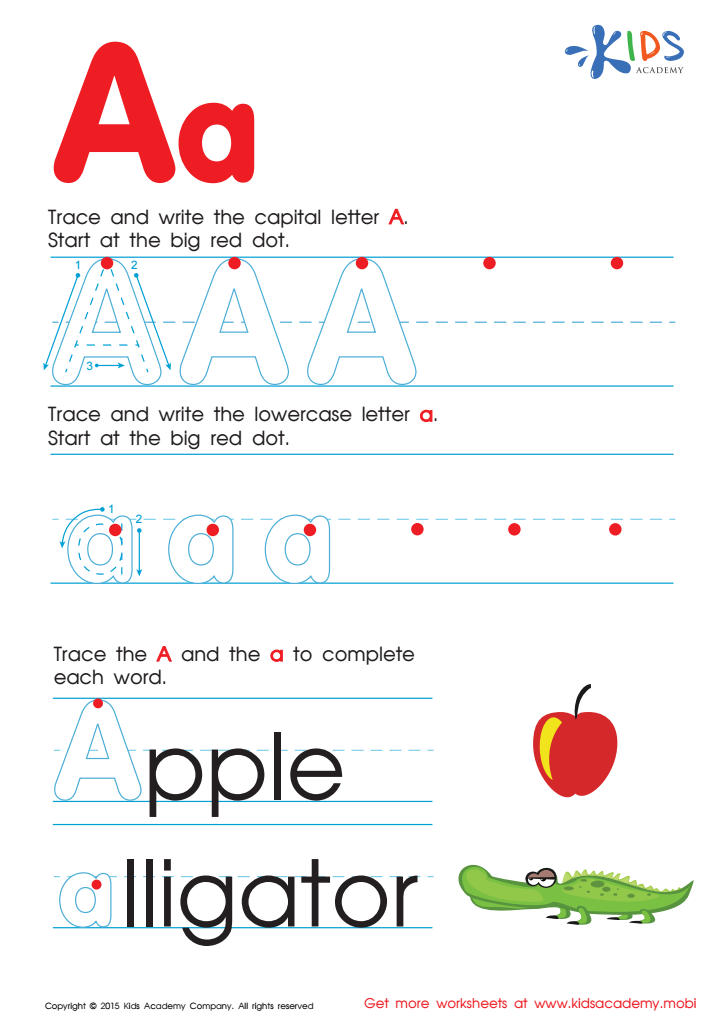
Letter A Tracing Page
Trace and write the letter "A"! Start with the big red dot, then do the capital and lowercase versions. Then write it again with two words - apple and alligator. Download more tracing worksheets at Kids Academy.
 Assign to My Students
Letter A Tracing Page
Worksheet





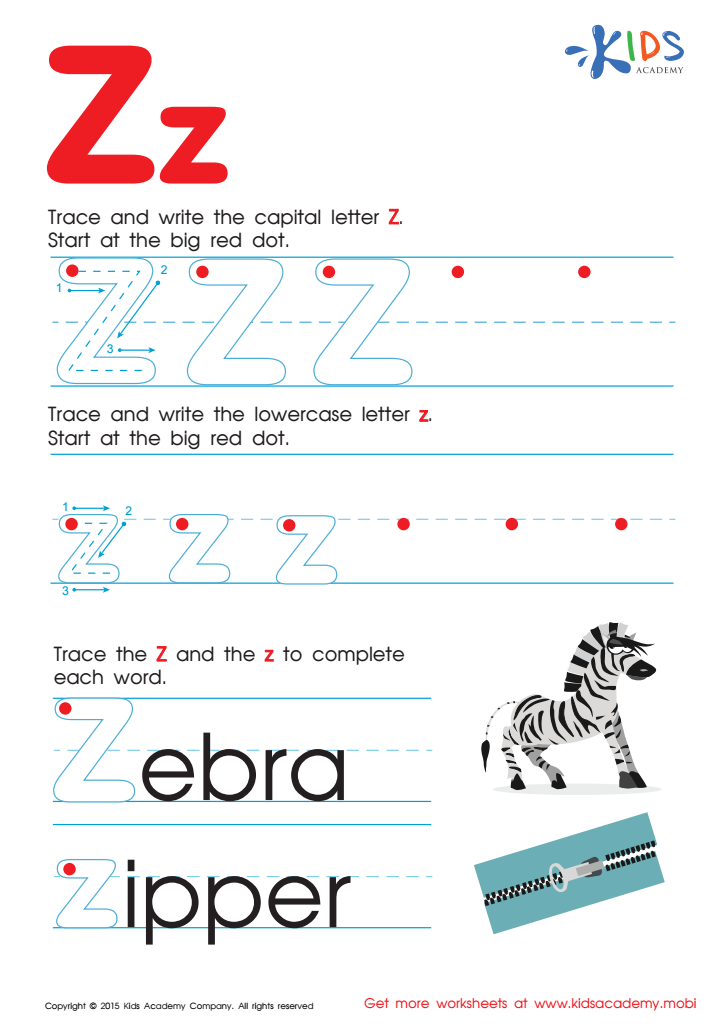
Letter Z Tracing Page
Trace and write capital "Z" and lowercase "z". Complete words "zebra" and "zipper". Be attentive and have fun! (80 words)
Letter Z Tracing Page
Worksheet
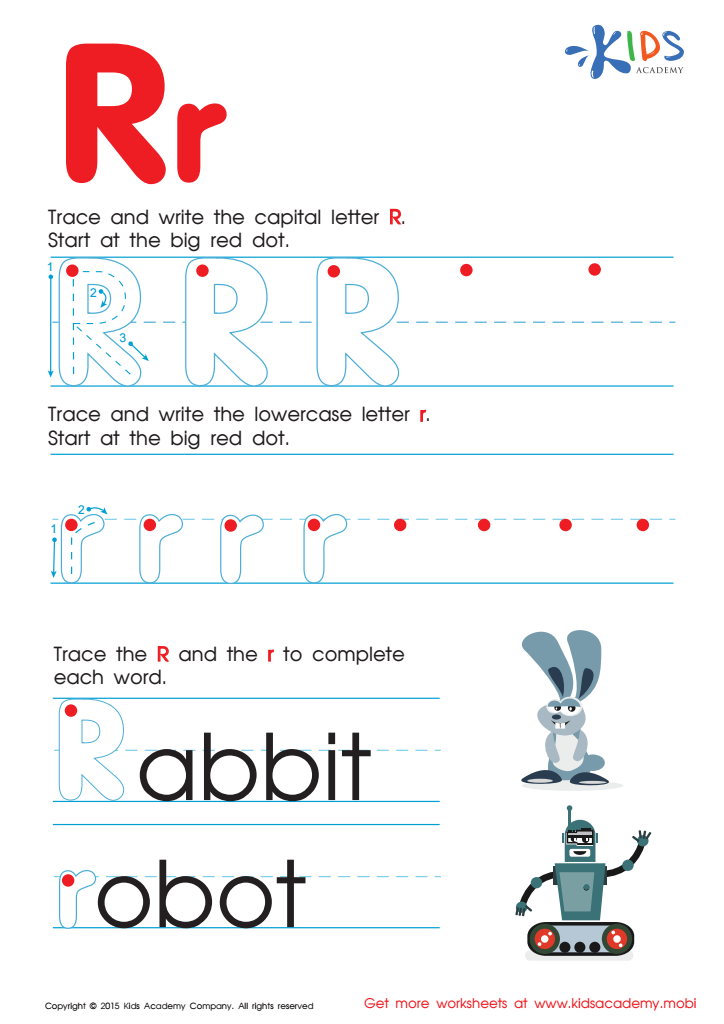
Letter R Tracing Page
Trace and write the letter "R" with this worksheet for kindergarten. Start with the uppercase, then move on to the lowercase. Write the letters several times for practice. Then help complete the words for the rabbit and robot, spelling carefully. More ABC worksheets can be found at Kids Academy.
Letter R Tracing Page
Worksheet
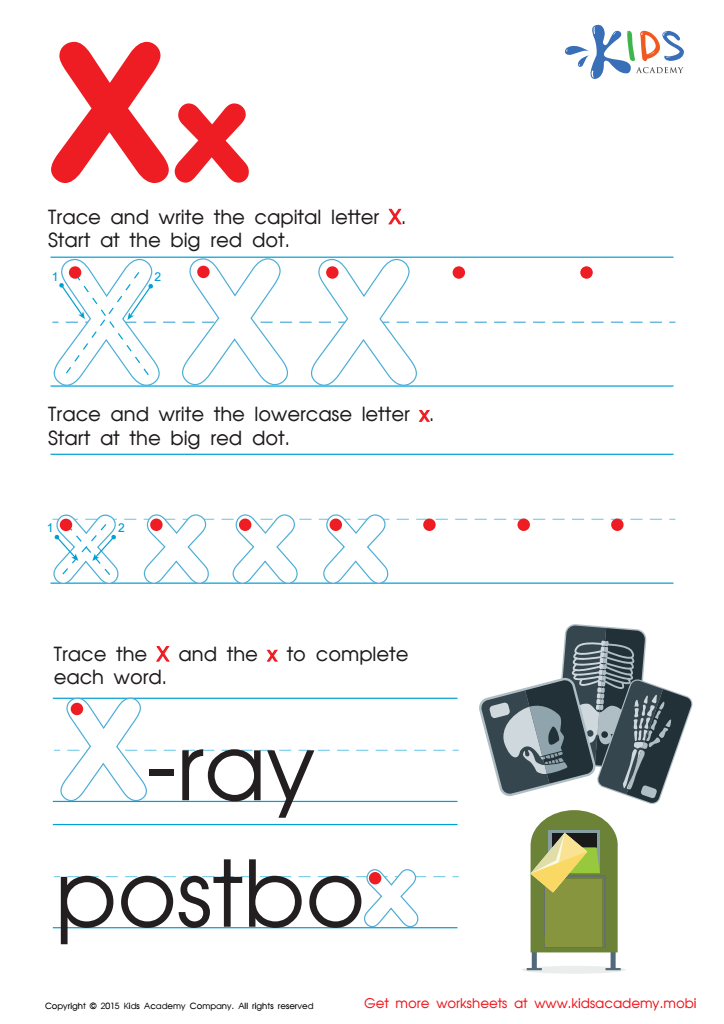
Letter X Tracing Page
Trace the uppercase letter "X" to learn, then write it yourself and practice. Then do the same with the lowercase "x" before completing the words "X-ray" and "postbox". Enjoy our alphabet printables!
Letter X Tracing Page
Worksheet
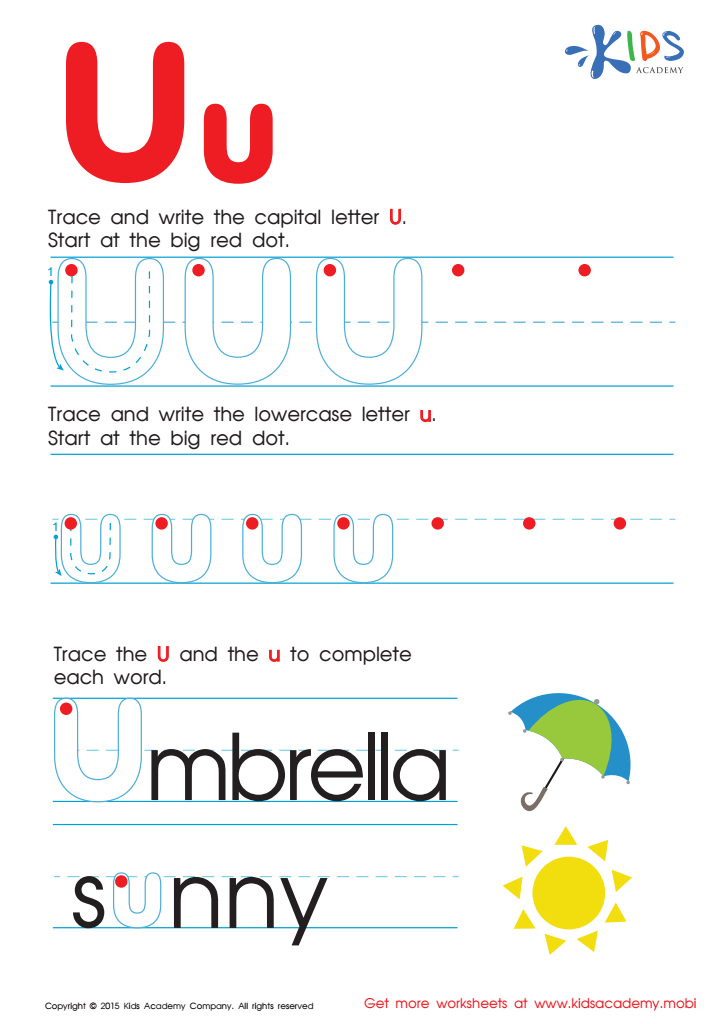
Letter U Tracing Page
Ready to trace and write the letter "U"? Use our worksheet and practice tracing both uppercase and lowercase letters. Complete the words "umbrella" and "sunny" with a capital "U". Check our full collection of alphabet printables for more activities.
Letter U Tracing Page
Worksheet
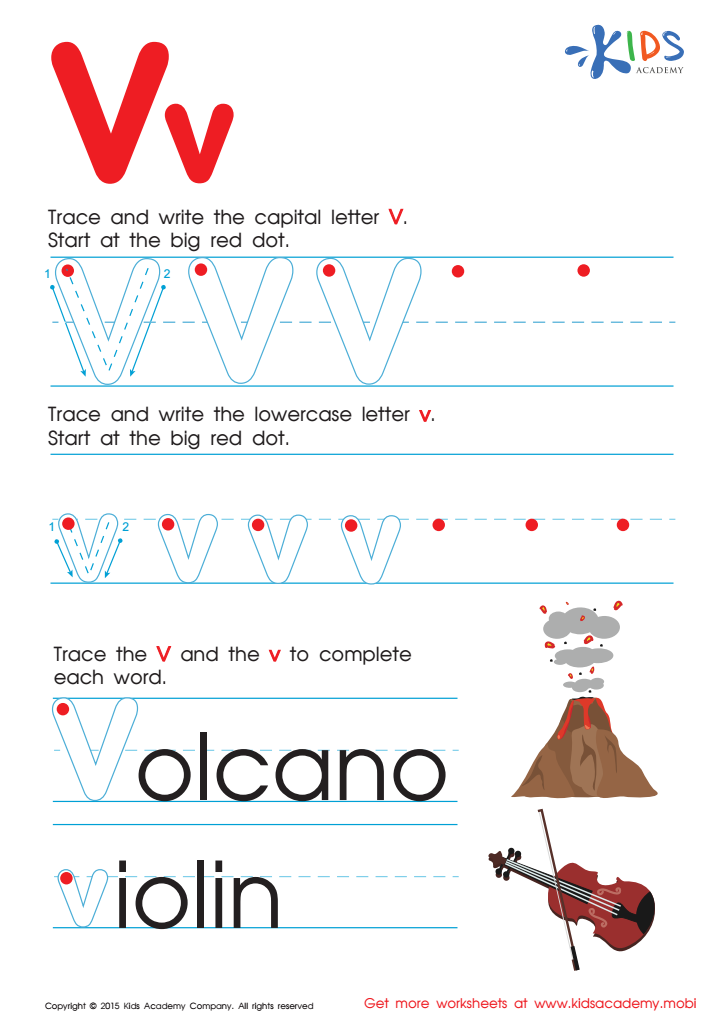
Letter V Tracing Page
Trace the uppercase and lowercase letter "V" with our kindergarten tracing worksheet. Begin at the red dot and follow the lines. Write it several times. Complete the words "Volcano" and "violin". Get more alphabet activities at Kids Academy.
Letter V Tracing Page
Worksheet
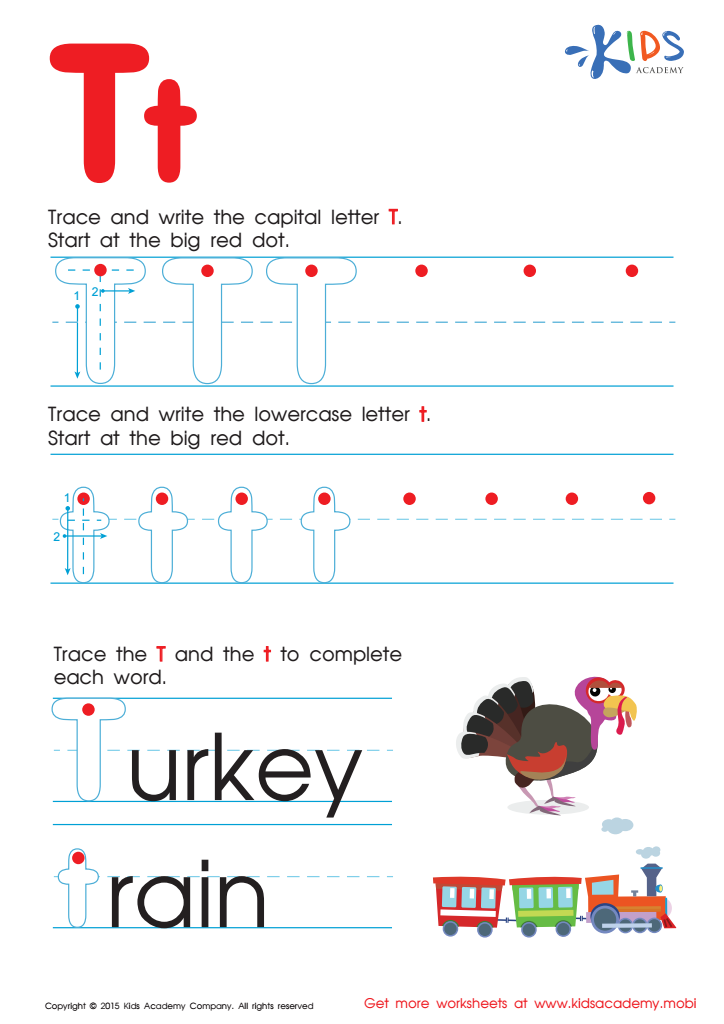
Letter T Tracing Page
Trace letters, complete words, draw pictures and see your kids having fun!
Kids Academy offers alphabet tracing worksheets to learn to write letters. Start with the big red dot, trace the letter, then write it. Practice uppercase and lowercase. Have fun completing words with a Turkey or a rain-train and draw pictures. Get more printable worksheets to make learning enjoyable.
Letter T Tracing Page
Worksheet
Join Kids Academy for Free
Who is primarily going to use this learning content?







Fine motor skills are crucial for young children's overall development, particularly at the age of three. Engaging in activities like the Fine Motor Skills Extra Challenge ABC Order helps children refine these essential skills as they learn to control small muscles in their hands and fingers. This control is necessary for everyday tasks such as writing, buttoning shirts, and using scissors.
By participating in these challenges, children not only enhance their dexterity but also engage in foundational literacy skills as they learn the order of the alphabet. Recognizing and writing letters in sequential order strengthens their understanding of language and lays a solid foundation for later reading and writing proficiency.
Furthermore, such activities encourage cognitive development by promoting hand-eye coordination, spatial awareness, and problem-solving abilities. Parents and teachers play a crucial role in scaffolding this learning experience. By prioritizing fine motor skill development through engaging and fun activities, they help foster confidence and independence in young learners.
Ultimately, the ability to master fine motor tasks enhances a child's readiness for school and boosts their learning potential, making it imperative for caregivers to integrate these activities into daily routines. Engaging children in these experiences contributes to holistic development during these formative years.








