Mathematical reasoning Extra Challenge Worksheets for 3-Year-Olds
4 filtered results
-
From - To
Welcome to our "Mathematical Reasoning Extra Challenge Worksheets for 3-Year-Olds"! Designed to spark curiosity and enhance early math skills, these engaging worksheets provide fun and stimulating activities that promote critical thinking and problem-solving. Your little ones will explore concepts such as counting, shape recognition, and simple patterns through interactive tasks that are age-appropriate and enjoyable. Carefully crafted with vibrant illustrations, these worksheets not only support mathematical learning but also foster creativity and concentration. Perfect for home or classroom use, our extra challenges will help young learners build a strong foundation in math while having a great time! Start your child's math journey today!
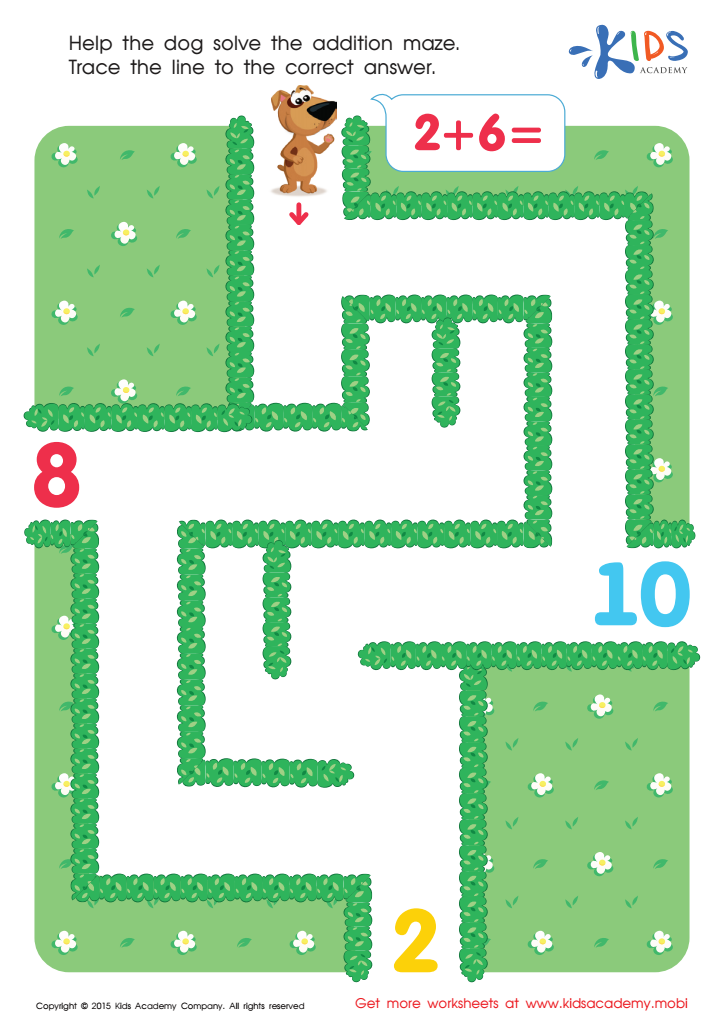
Two Plus Six Addition Worksheet
 Assign to My Students
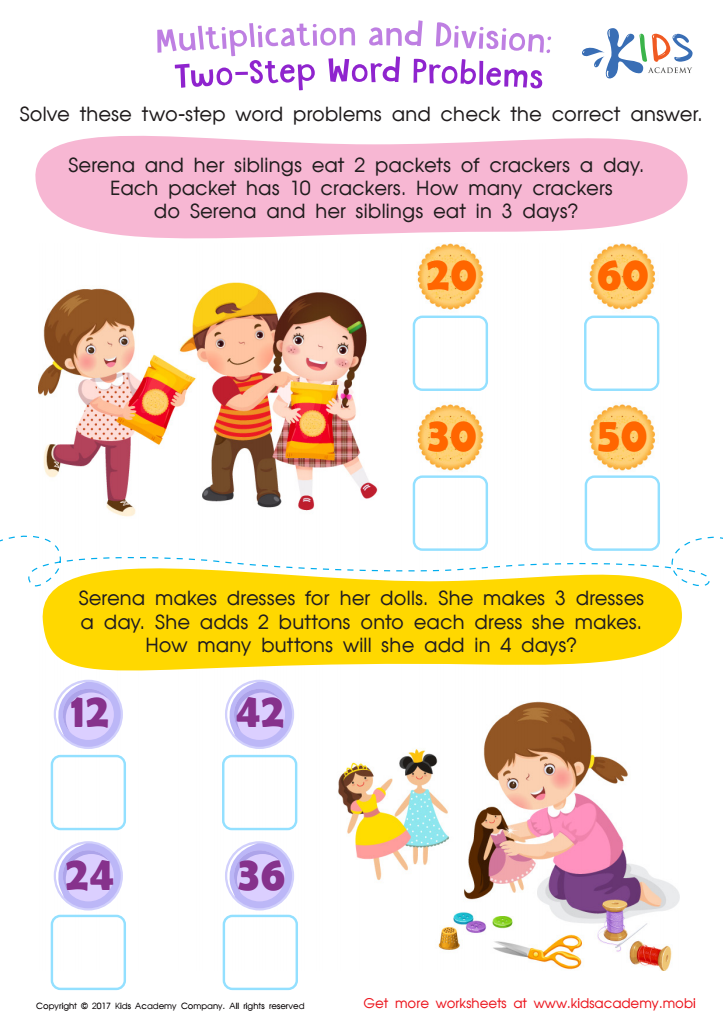
Two Step Word Problems Worksheet
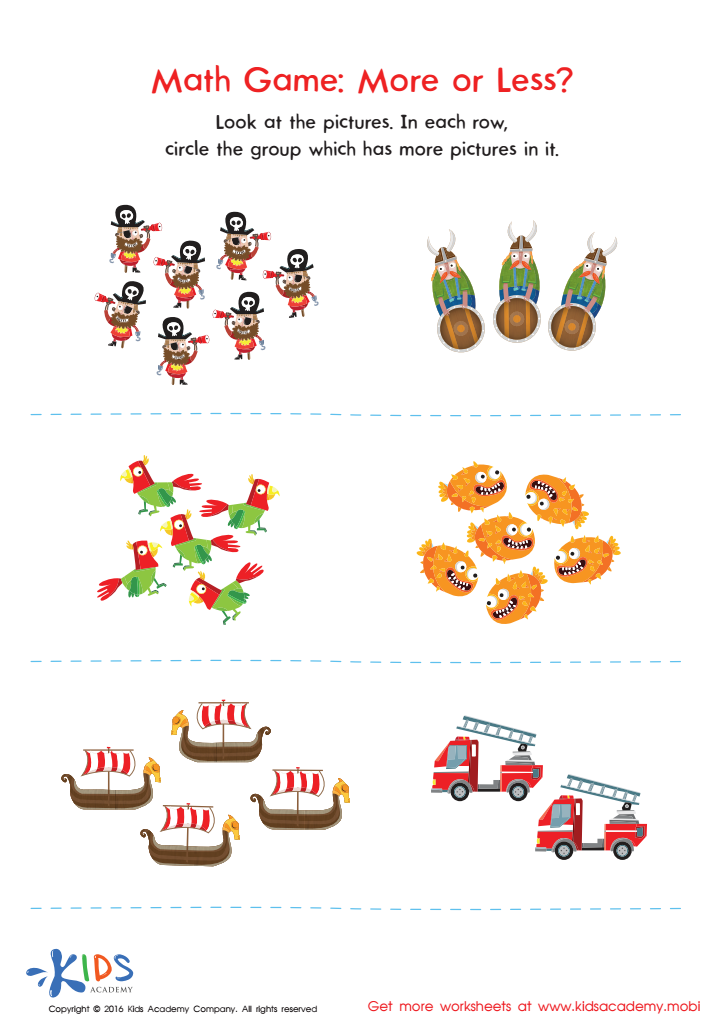
More or Less Worksheet
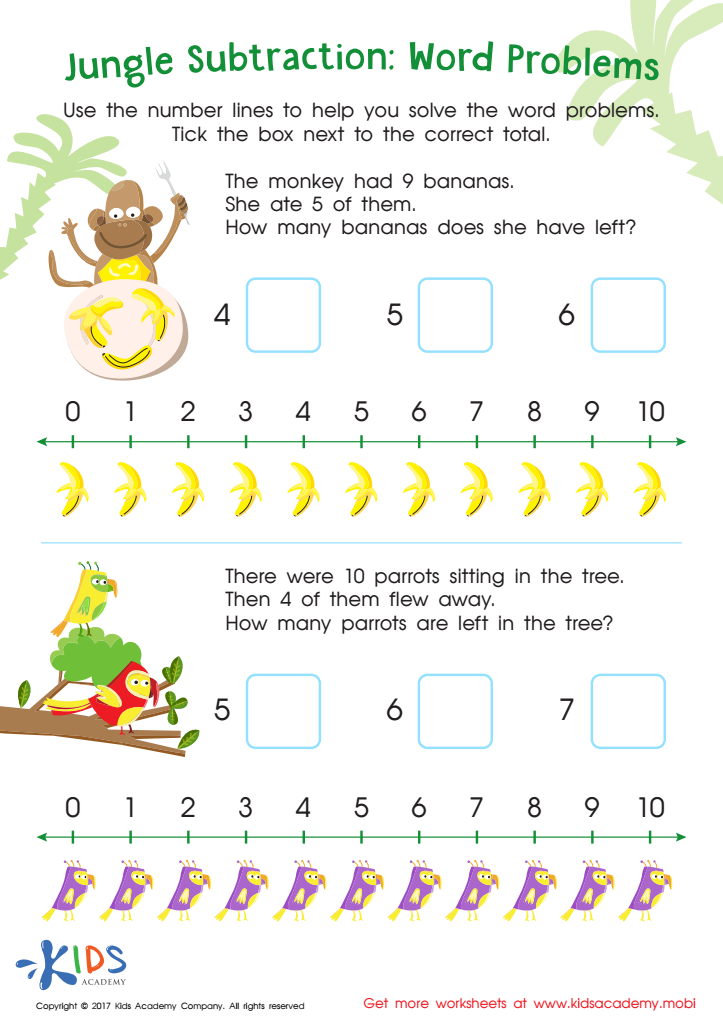
Jungle Subtraction Word Problems Substraction Worksheet







Mathematical reasoning is crucial even at an early age, as it lays the foundation for a child's cognitive development. Introducing Mathematical reasoning extra challenges for 3-year-olds helps develop critical thinking skills that go beyond simple counting. These challenges promote problem-solving abilities while encouraging children to make connections, observe patterns, and understand relationships, fostering a sense of curiosity and exploration.
Parents and teachers should care because these skills contribute to essential developmental milestones—skills that serve as a springboard for future mathematical learning. Engaging in early mathematical reasoning encourages children to think analytically and articulate their thoughts, which enhances communication abilities.
Additionally, early exposure to math-related challenges can boost children's confidence in their abilities, leading them to approach future learning experiences with enthusiasm instead of apprehension. When parents and teachers create a stimulating environment, they not only support the child's academic growth but also nurture a love for learning.
Overall, nurturing mathematical reasoning in young children sets the stage for lifelong skills, while equipping them to navigate their world with critical understanding and resilience. Thus, investing in extra challenges for 3-year-olds aligns with the goals of fostering well-rounded, capable learners prepared for academic success.








