Money recognition Extra Challenge Money Worksheets for 3-Year-Olds
4 filtered results
-
From - To
Enhance your 3-year-old's learning experience with our "Money Recognition Extra Challenge Money Worksheets." Designed for little learners, these engaging worksheets introduce the foundations of money recognition in a fun and interactive way. Children will explore the various denominations, identifying coins and bills through colorful illustrations and simple activities. Perfect for reinforcing essential math skills, these worksheets promote cognitive development and strengthen counting abilities. Encourage your child's financial literacy early, making learning both enjoyable and educational. Download now to help your child master money recognition and prepare for future math challenges! Unlock their potential with our playful learning resources today.
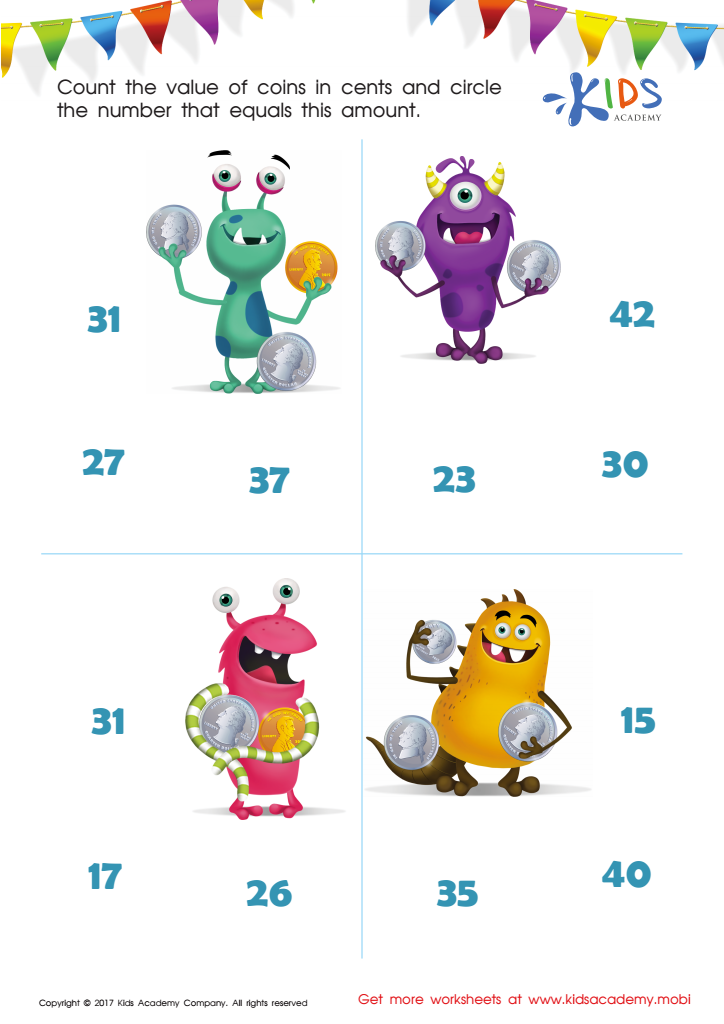
How Many Coins Money Worksheet
 Assign to My Students
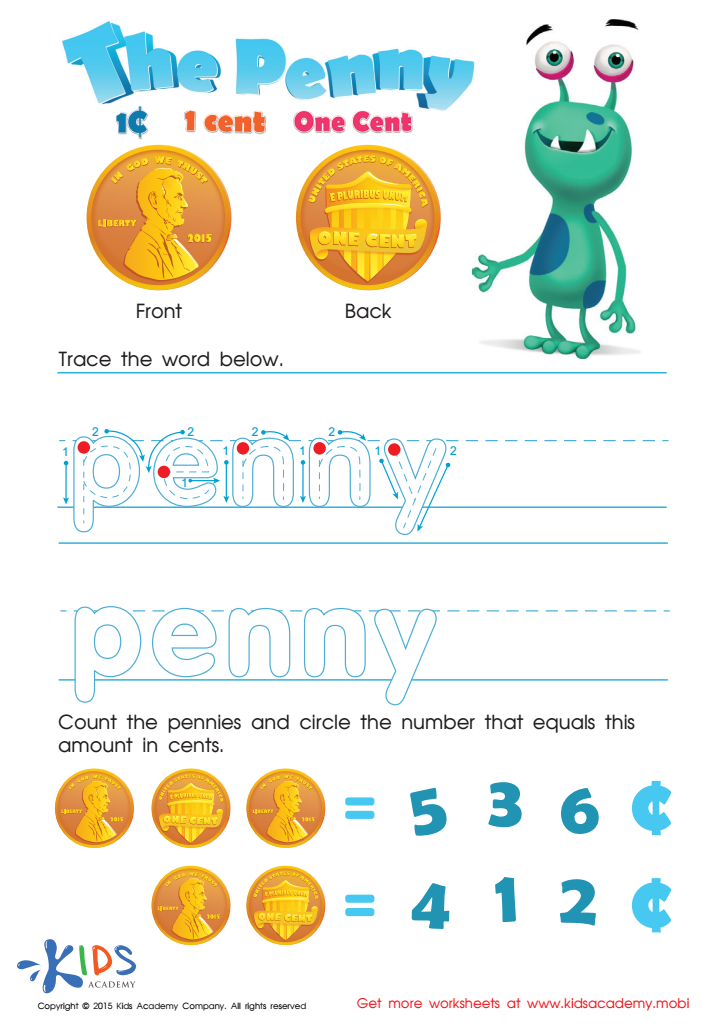
One Cent or the Penny Money Worksheet
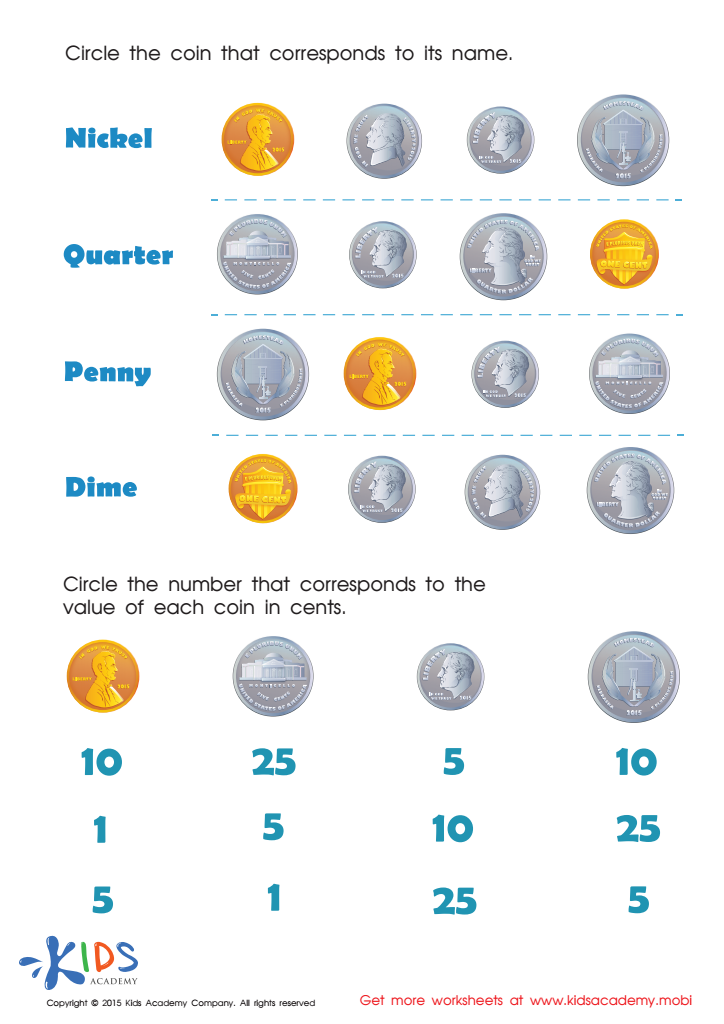
Coin Names and Values Money Worksheet
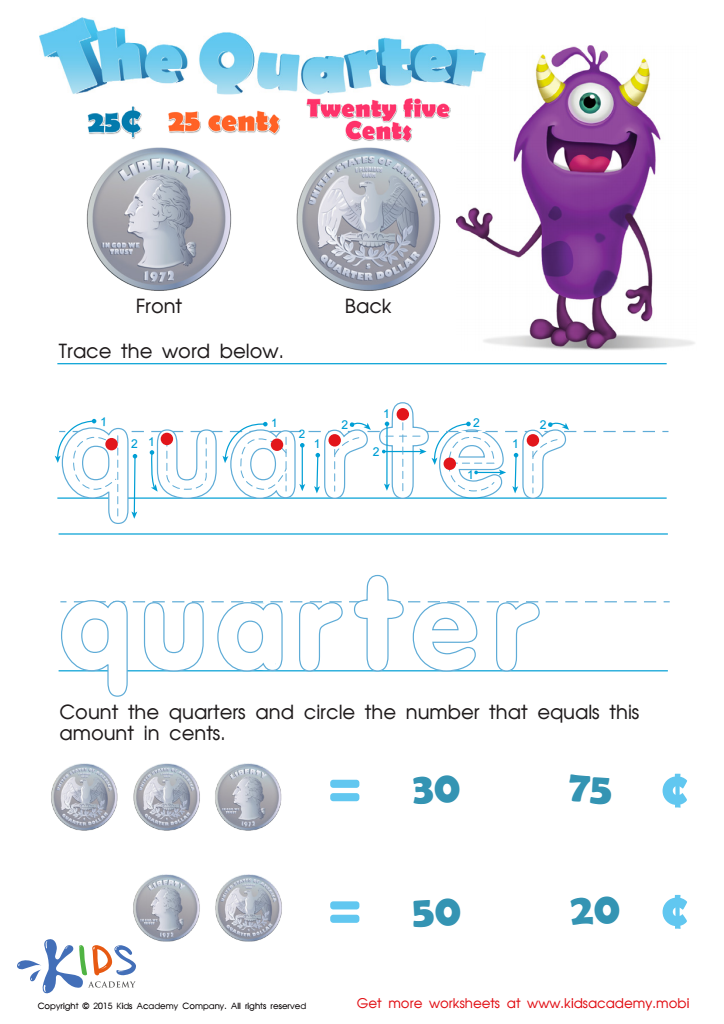
Twenty Five Cents or the Quarter Money Worksheet








Money recognition is a crucial skill for young children, laying the foundation for financial literacy and responsibility. For 3-year-olds, engaging them in recognizing different types of money—such as coins and bills—can significantly enhance their cognitive development and understanding of value.
First, money recognition fosters math skills. By identifying coins and their values, children begin grasping concepts of counting, categorization, and simple addition. This foundational understanding sets the stage for more complex mathematical concepts later on.
Second, recognizing money encourages critical thinking and decision-making skills. When children learn the different denominations and their uses, they develop an awareness of everyday transactions and decision-making processes, helping them understand the importance of saving, spending, and sharing.
Additionally, introducing money recognition in a fun and engaging way—like play pretend shopping or using toys—can increase children's interest in financial literacy. It also creates opportunities for discussions about money, budgeting, and responsible spending, reinforcing values that will benefit them throughout life.
Lastly, parental and teacher involvement in teaching money recognition promotes a strong adult-child relationship and emphasizes educational play, making learning both enjoyable and meaningful.








