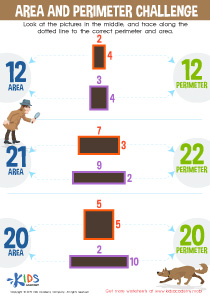
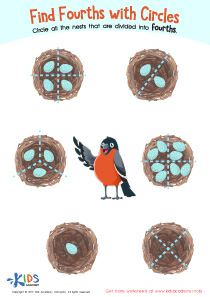
Shape Recognition Extra Challenge 2D Shapes Worksheets for Ages 4-5
4 filtered results
-
From - To
Enhance your child's shape recognition skills with our "Shape Recognition Extra Challenge 2D Shapes Worksheets for Ages 4-5." Designed for eager young learners, these engaging worksheets offer a fun and educational way to master the basics of geometry. Children will explore and identify various 2D shapes like circles, squares, triangles, and more. Perfect for preschool and kindergarten-age kids, each worksheet is crafted to boost cognitive development, fine motor skills, and spatial reasoning. Introduce your child to a world of shapes and set a strong foundation for future math success with these interactive and colorful activities.
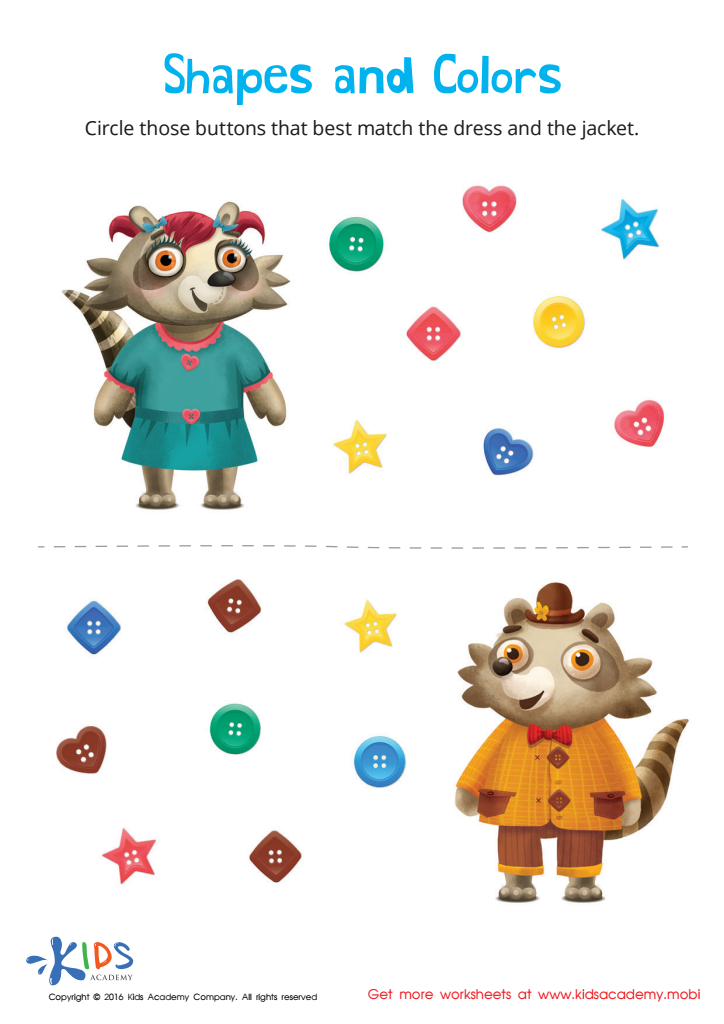
Matching: Shapes and Colors Worksheet
 Assign to My Students











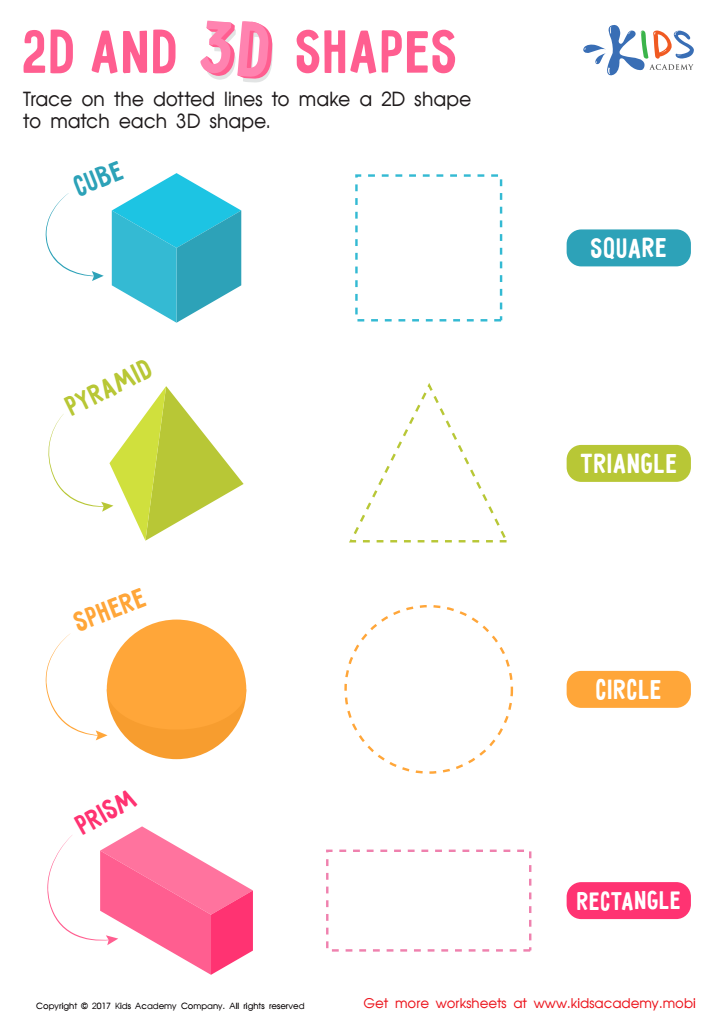
2D and 3D Shapes Worksheet
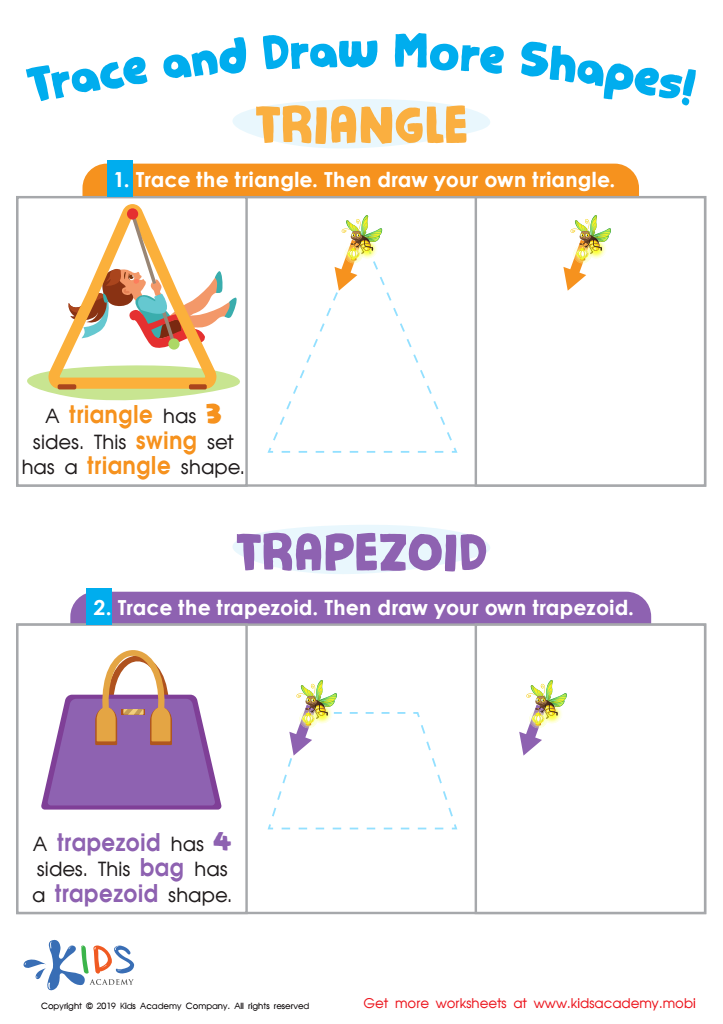
Trace and Draw More Shapes Worksheet
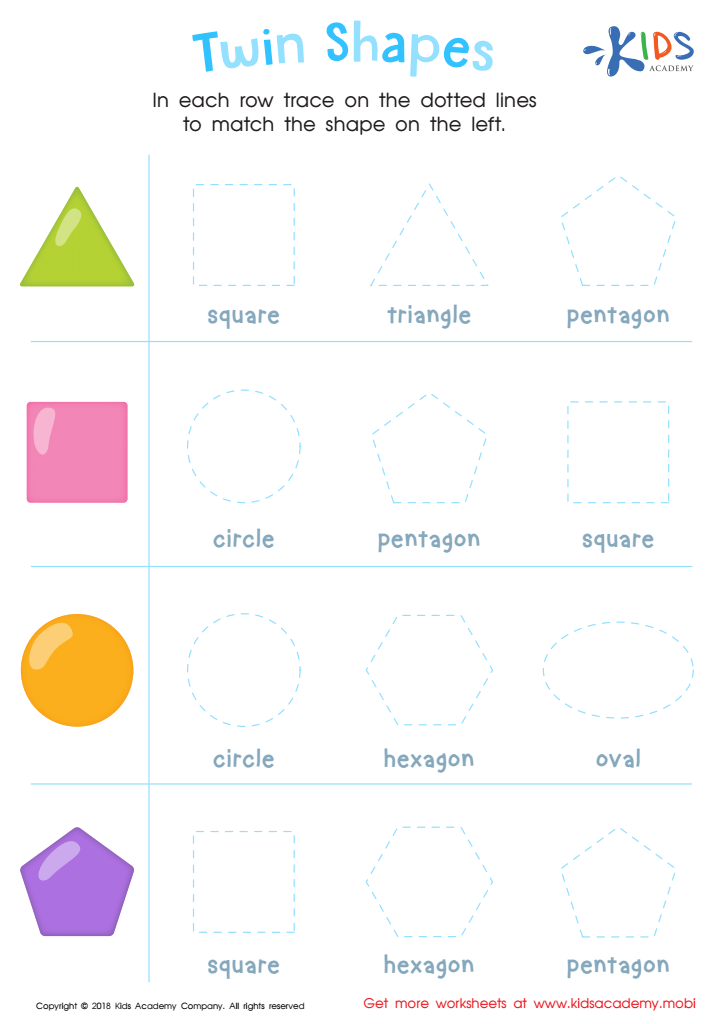
Twin Shapes Dot-to-Dot Worksheet








Shape recognition is a foundational skill for young learners, pivotal for numerous cognitive and academic developments. For parents and teachers, engaging children in Shape Recognition Extra Challenge 2D Shapes at ages 4-5 is immensely important for multiple reasons.
Firstly, understanding shapes is a key component of early geometry, introducing children to spatial awareness, properties of shapes, and vocabulary such as edges and vertices. This foundational knowledge is crucial for more advanced math concepts they will encounter later in school.
Secondly, shape recognition enhances fine motor skills and hand-eye coordination. Activities like drawing, cutting, or assembling shapes motivate young learners to manipulate objects with precision and control, essential for writing and other critical tasks.
Thirdly, developing the ability to distinguish and categorize different shapes helps with visual perception and cognitive processing. This plays a considerable role in reading readiness, as children learn to identify shapes in letters and numbers, fostering literacy and numeracy skills in a fun and engaging way.
Moreover, the challenges associated with shape recognition encourage problem-solving and critical thinking, traits vital for lifelong learning. Engaging with shapes in diverse contexts also promotes creativity and artistic expression.
By nurturing these skills early, parents and teachers can lay a multifaceted foundation, crucial for children’s holistic development, ensuring they are well-prepared for future educational milestones.