Addition skills Extra Challenge Worksheets for Ages 4-6
10 filtered results
-
From - To
Unlock the joy of learning with our "Addition Skills Extra Challenge Worksheets" designed specifically for ages 4-6! These engaging and vibrant worksheets provide an excellent opportunity for young learners to enhance their addition skills. Packed with fun activities that challenge their understanding of basic math concepts, children will practice counting, number recognition, and simple addition in an interactive way. Ideal for homeschooling or supplementary practice, each worksheet fosters critical thinking and helps build confidence in early mathematicians. Parental guidance is encouraged to support learning and make math enjoyable. Let’s make addition exciting and help your child excel today!
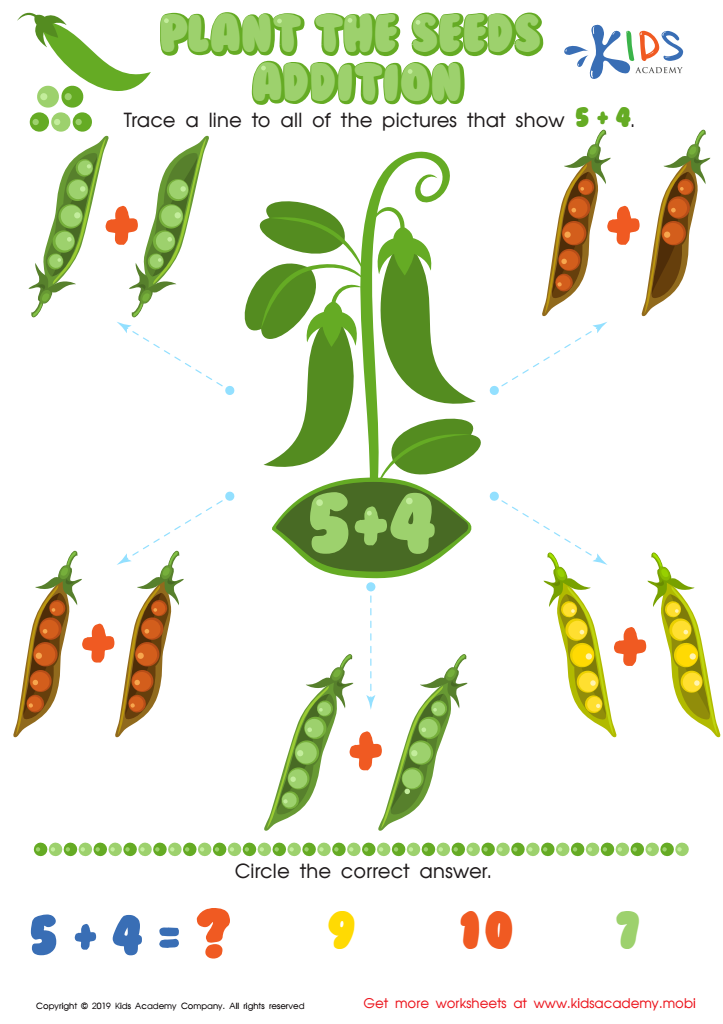
Plant the Seeds Addition Worksheet
 Assign to My Students
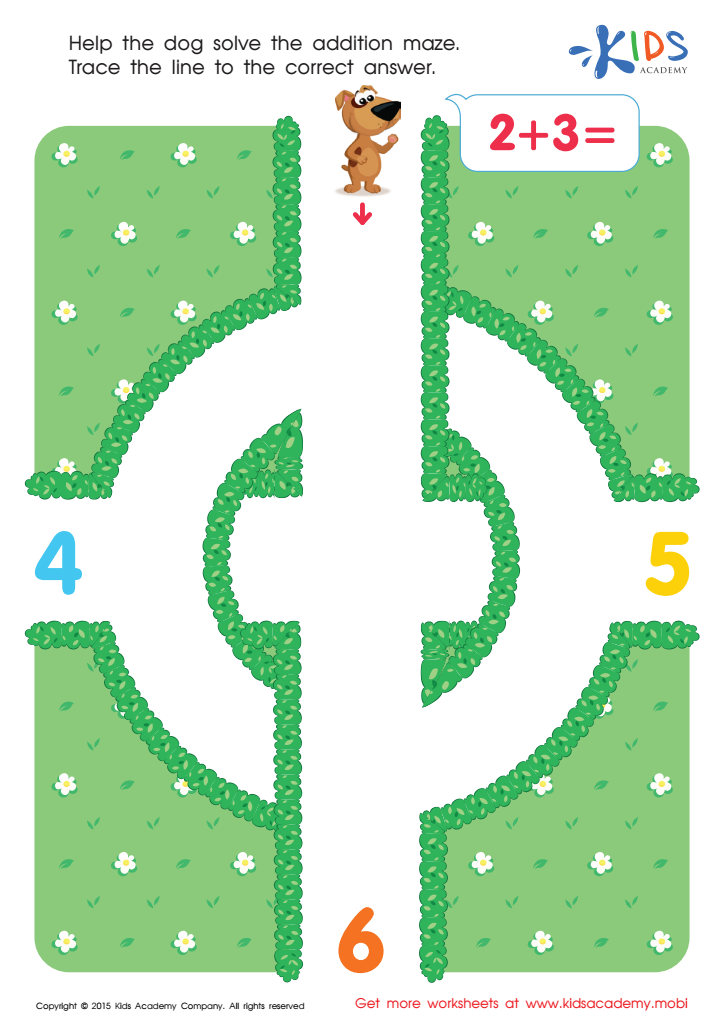
Two And Three Addition Worksheet
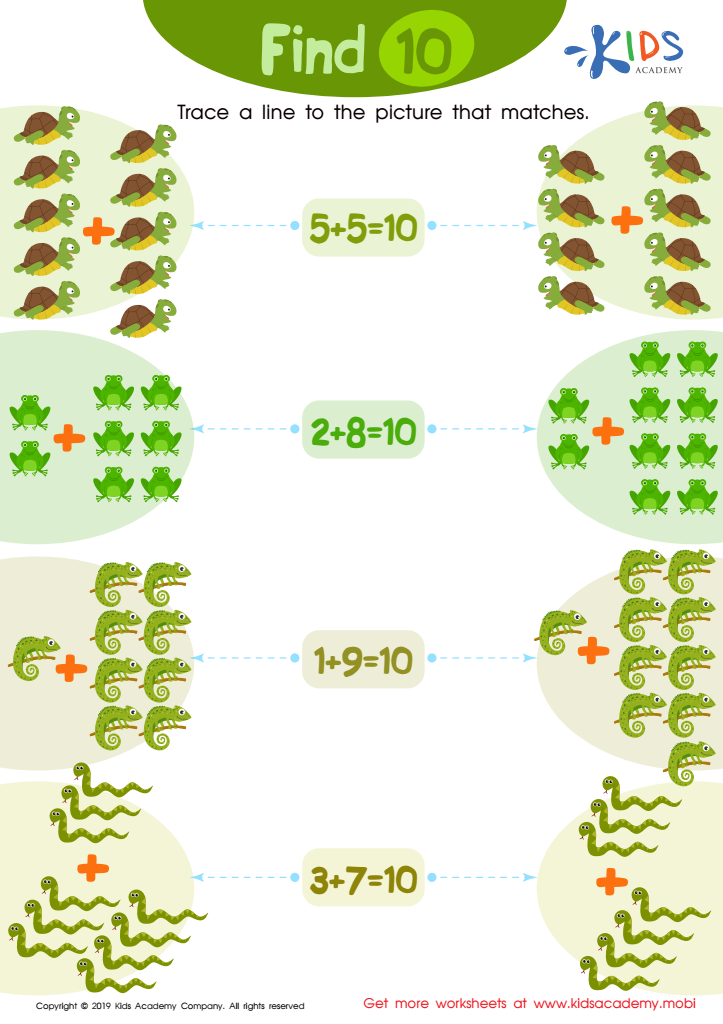
Find 10 Worksheet
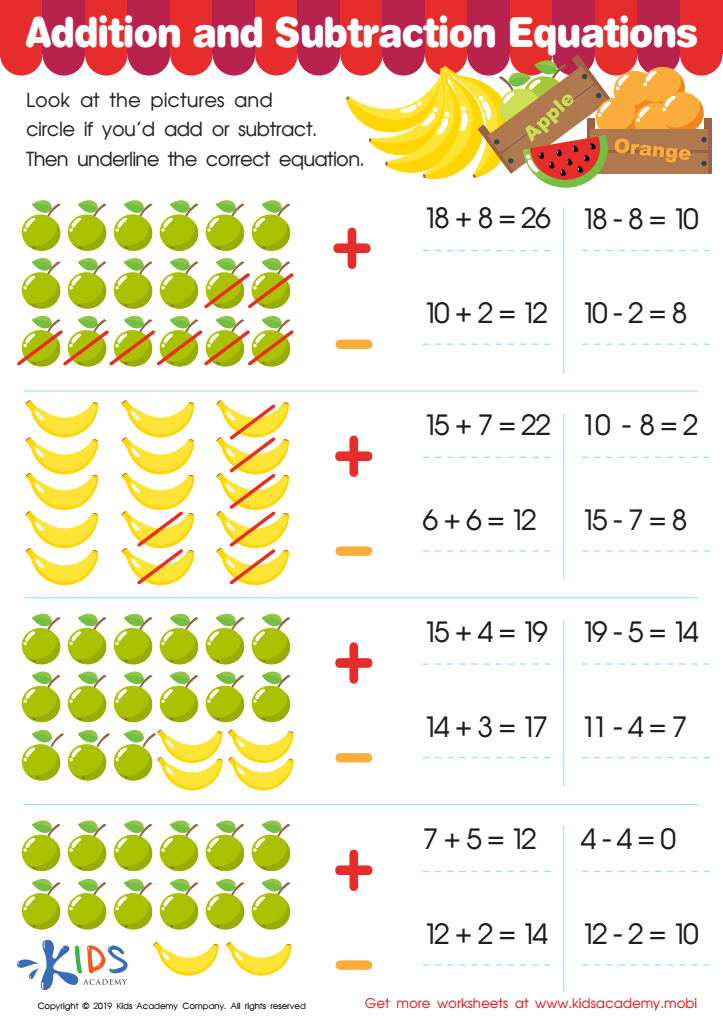
Addition and Subtraction: Equations Worksheet
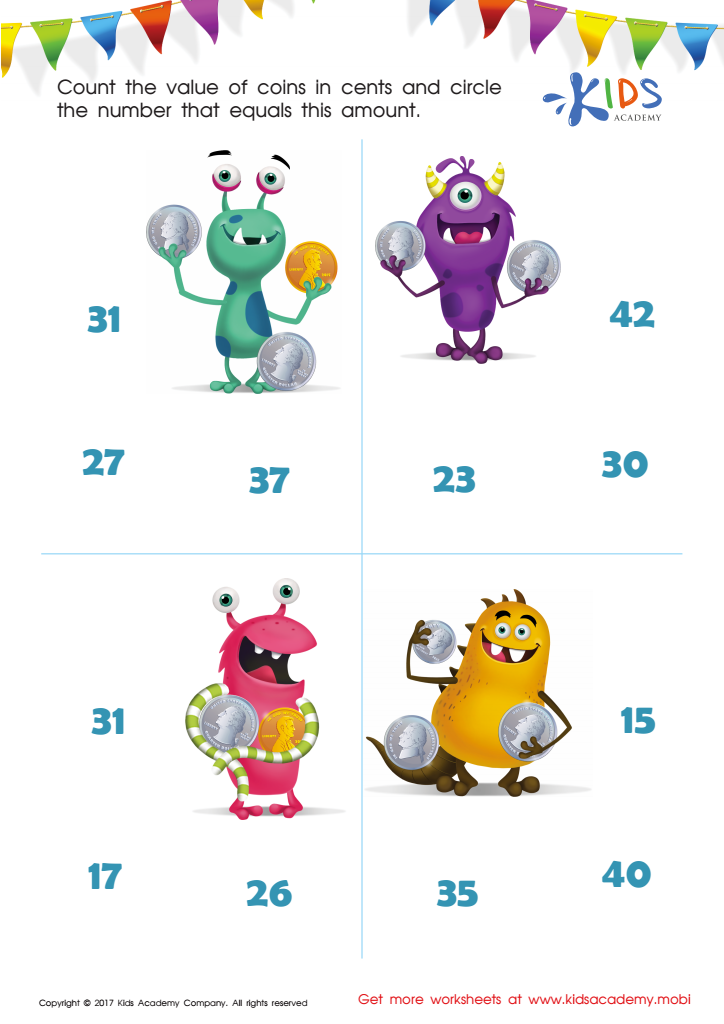
How Many Coins Money Worksheet
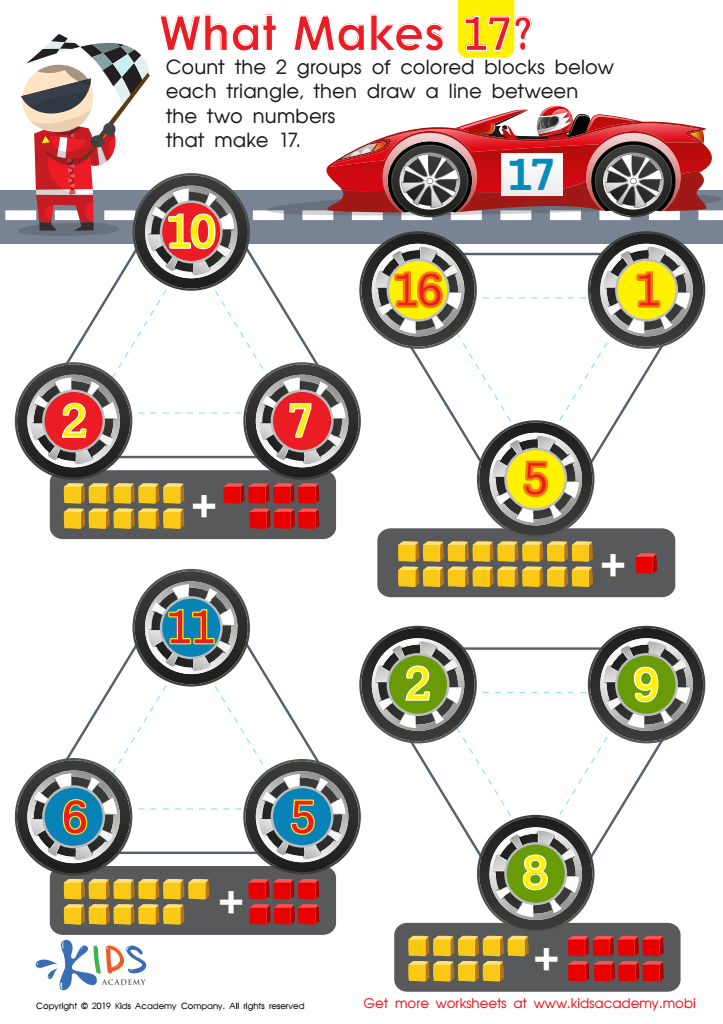
What Makes 17 Worksheet
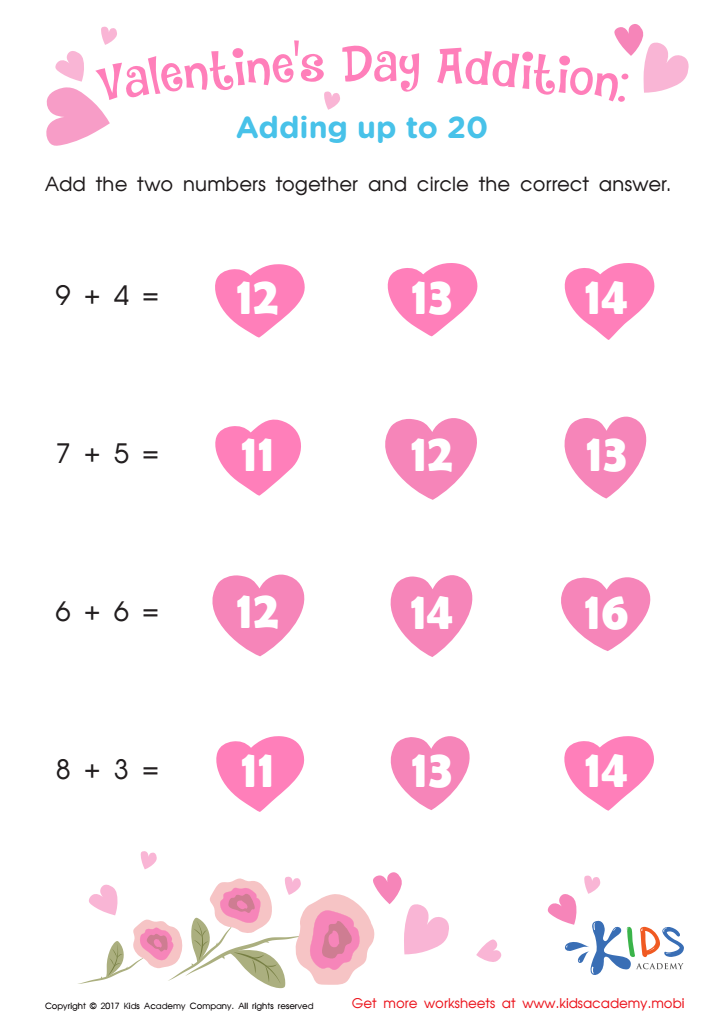
Valentine's Day Addition Worksheet
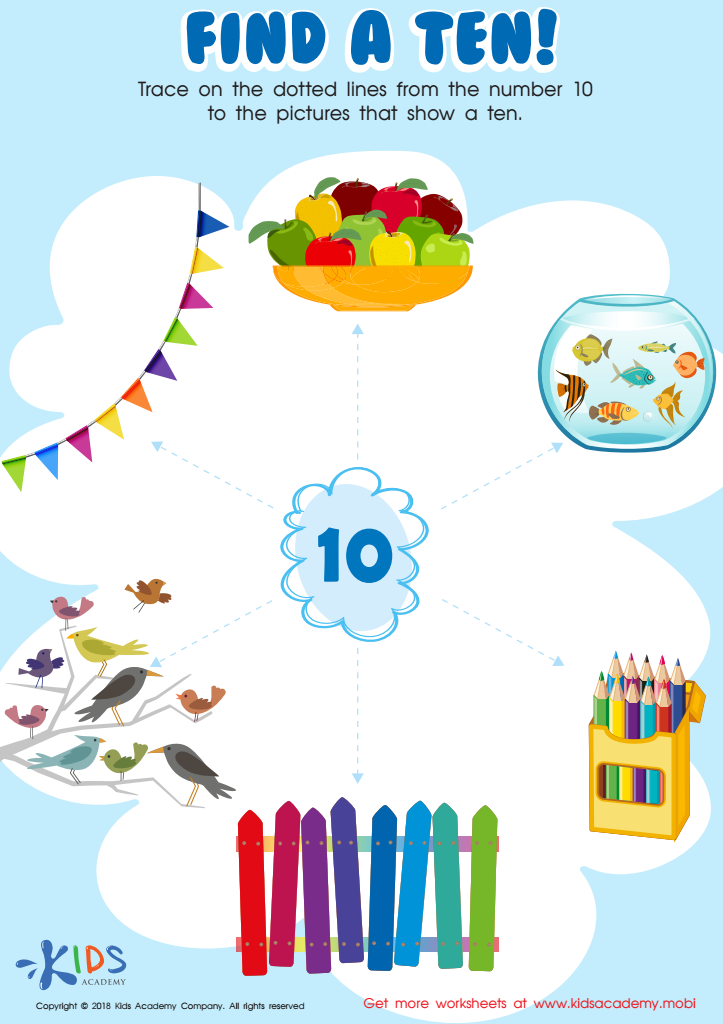
Kindergarten Math Worksheet: Find a Ten
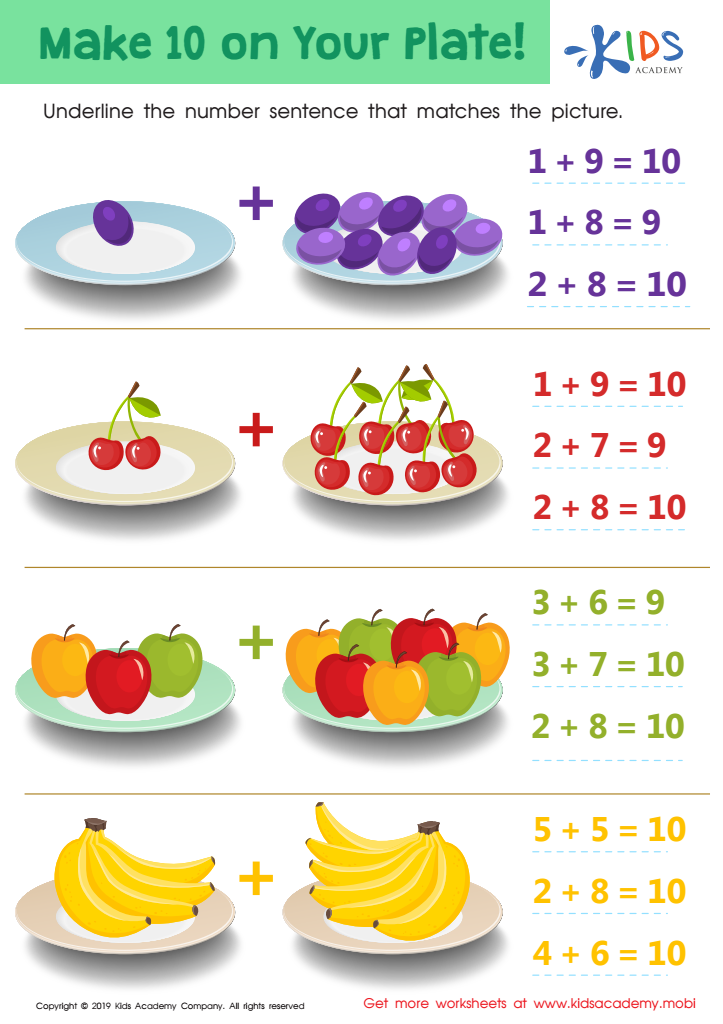
Make 10 on Your Plate! Worksheet
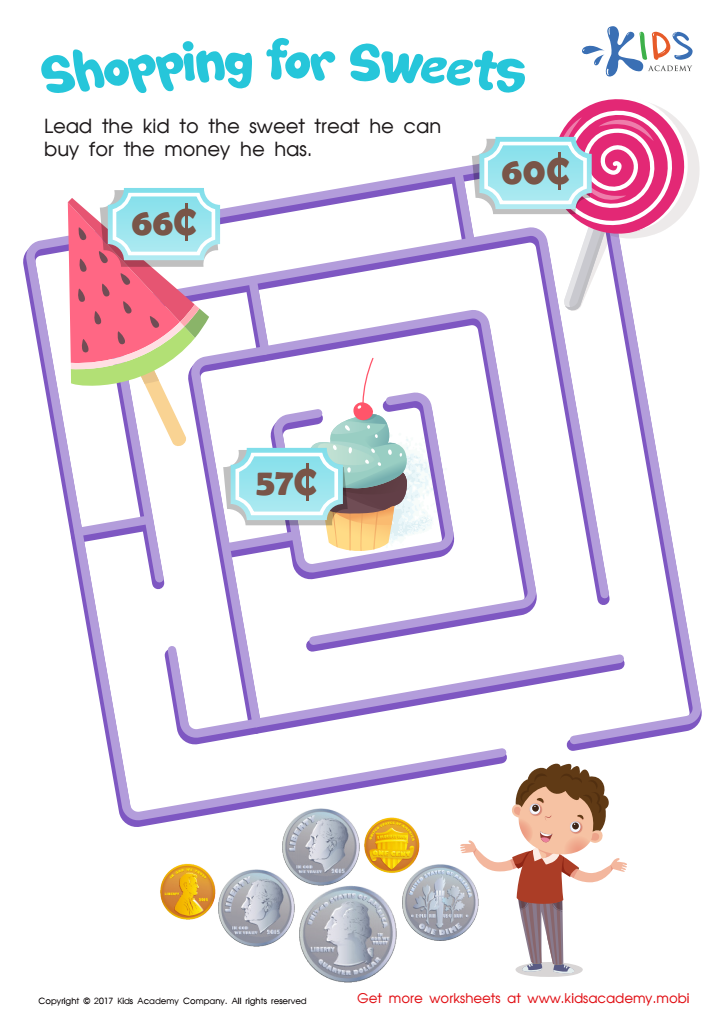
Shopping for Sweets Worksheet







Addition skills are fundamental building blocks for early mathematics and critical thinking, making effective instruction crucial for children ages 4-6. For parents and teachers, fostering these skills early on has far-reaching benefits. First, understanding addition helps children grasp more complex math concepts later in their education, setting them up for academic success. Strong addition skills also enhance problem-solving abilities, enabling children to tackle real-world scenarios that require numerical reasoning.
Moreover, promoting such skills through challenges can engage and motivate young learners, turning mathematical concepts into entertaining and enjoyable activities. This engagement supports workshops in creative ways, encouraging exploration and curiosity, which are vital at this developmental stage.
Additionally, when parents and teachers work together to emphasize addition skills, they foster a supportive and enriched learning environment. This collaboration helps build confidence in children's abilities, allowing them to see math as a fun and achievable subject rather than a daunting task.
In essence, nurturing addition skills in young children through challenges transforms their learning experience, equipping them with foundational skills they will use lifelong while also developing passions for learning. Hence, both parents and teachers should prioritize this essential educational component.








