
Noun identification Extra Challenge Worksheets for Ages 4-6
3 filtered results
Difficulty Level
Grade
Age
-
From - To
Subject
Activity
Standards
Enhance your child's language skills with our "Noun Identification Extra Challenge Worksheets" tailored specifically for ages 4-6! These engaging worksheets are designed to make learning fun while helping young learners identify nouns in various contexts. With vibrant illustrations, interactive exercises, and diverse activities, children will improve their vocabulary and comprehension abilities. Each worksheet provides an extra layer of challenge, ensuring kids are not only learning but are also excited about the process. Foster a love for language and boost critical thinking skills with our thoughtfully crafted resources. Discover the joy of learning nouns today and empower your child’s educational journey!
Favorites
With answer key
Interactive
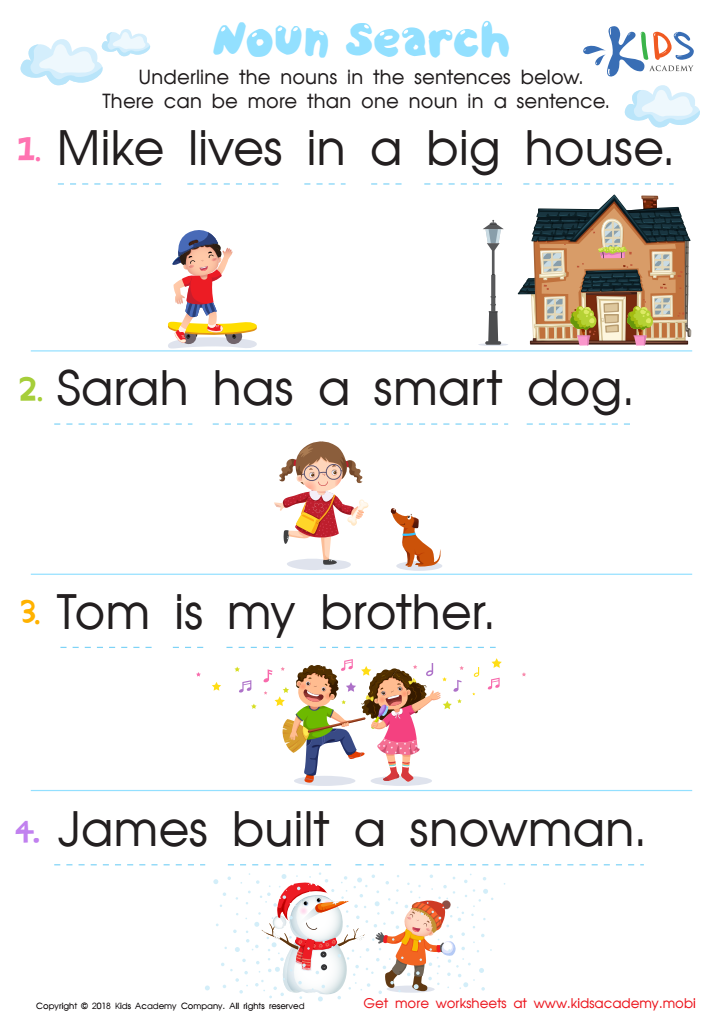
Noun Search Worksheet
To help your children learn the basics of grammar, start with nouns, verbs, adverbs and adjectives. This noun search worksheet will help your child understand the most common part of speech - the noun. Ask them to underline the nouns in each sentence. This is a great way to start learning proper grammar.
 Assign to My Students
Noun Search Worksheet
Worksheet
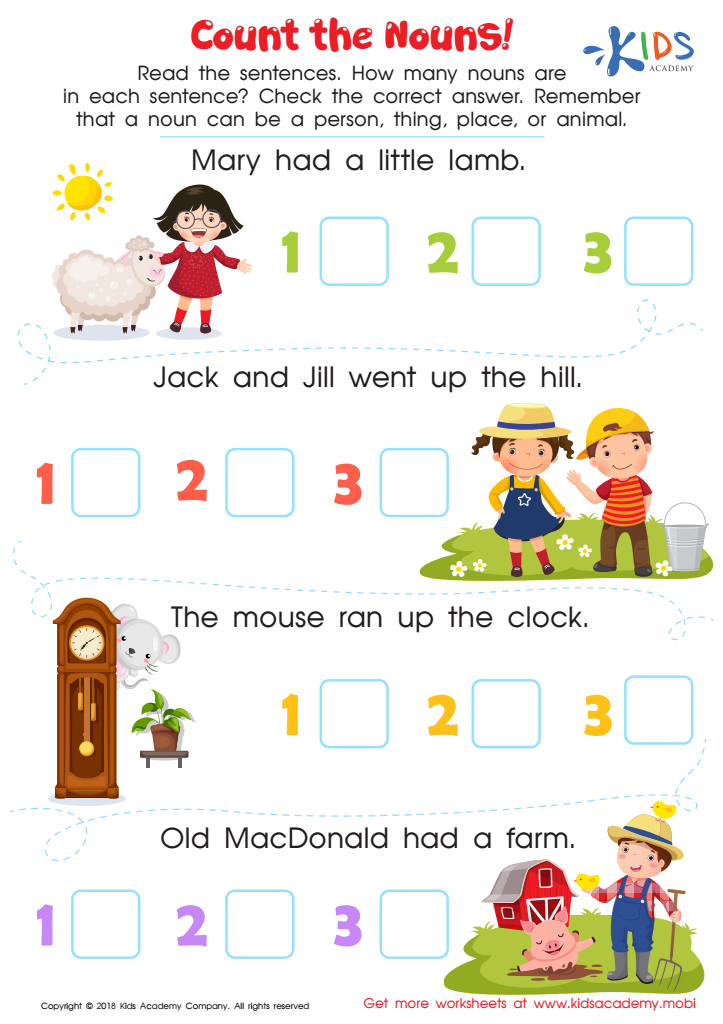
Count the Nouns Worksheet
Read the sentences with your children and ask them to find the nouns. Explain that nouns are names of people, animals, places or things. Point out the boxes with the answers to check.
Count the Nouns Worksheet
Worksheet
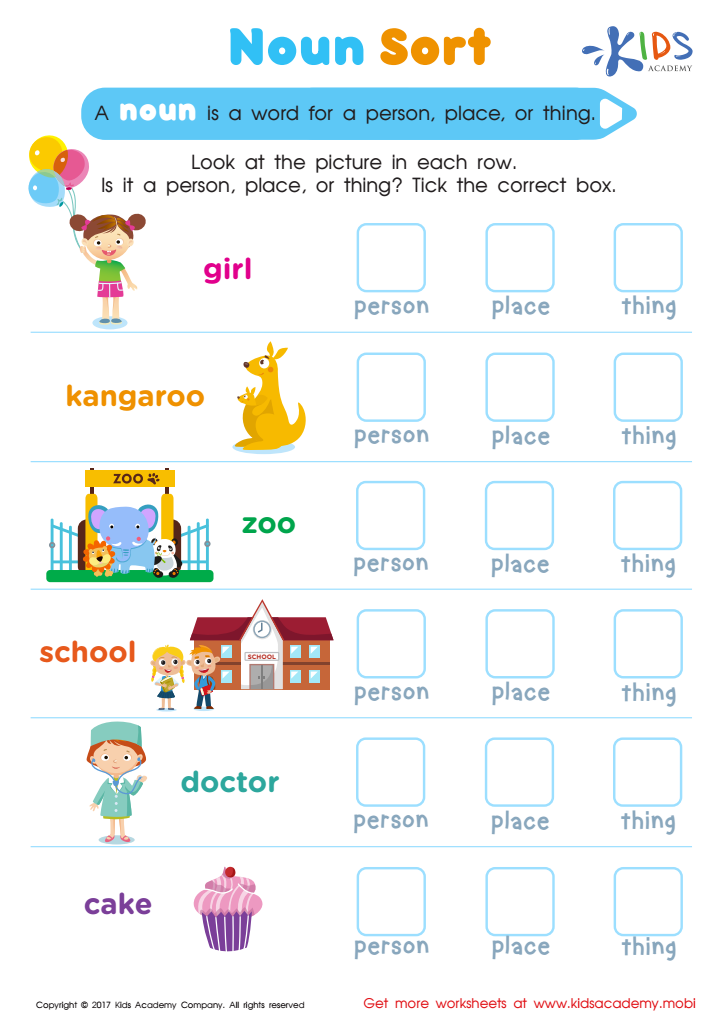
Noun Sort Printable
This printable worksheet helps kids sort nouns into person, place, or thing categories. Perfect for learning the basics of grammar!
This printable worksheet helps kids learn parts of speech by sorting nouns into person, place, or thing categories using familiar images. Perfect for mastering basic grammar!
Noun Sort Printable
Worksheet
Join Kids Academy for Free
Who is primarily going to use this learning content?








Noun identification is a fundamental language skill that lays the groundwork for literacy development in young children. For ages 4-6, the "Noun Identification Extra Challenge" can enhance this learning process in several key ways. Firstly, it helps children expand their vocabulary, as they learn to recognize and categorize different nouns—person, place, thing, or idea. This expansion not only enriches their language but also boosts their confidence in using new words effectively during conversations and creative writing activities.
Moreover, repeated noun identification activities can improve comprehension skills. As children become familiar with the concept of nouns, they can better understand sentences and stories, a crucial aspect as they start reading fluently. Additionally, involving parents and teachers in this challenge encourages a supportive learning environment. It fosters collaboration, as adults can engage with children in playful and meaningful discussions about the nouns they encounter in everyday life or literature.
Lastly, strengthening noun identification skills lays the foundation for more complex grammar concepts. By valuably investing time in these activities during early years, parents and teachers empower children with essential tools for effective communication, cognitive development, and academic success in the future. Ultimately, nurturing these skills today can lead to thriving learners tomorrow.








