Understanding plurals Extra Challenge Worksheets for Ages 4-6
3 filtered results
-
From - To
Welcome to our "Understanding Plurals Extra Challenge Worksheets" for ages 4-6! Designed to enhance early literacy skills, these engaging worksheets introduce young learners to the concept of plurals in a fun and interactive way. Each worksheet features vibrant illustrations and engaging activities that encourage critical thinking and reinforce learning. Kids will practice recognizing and forming plurals through games and exercises geared toward their developmental stage. Our extra challenge niveau ensures that even the most curious minds are stimulated, making it perfect for home or classroom use. Foster your child's love for language with our thoughtfully crafted resources designed for young learners!
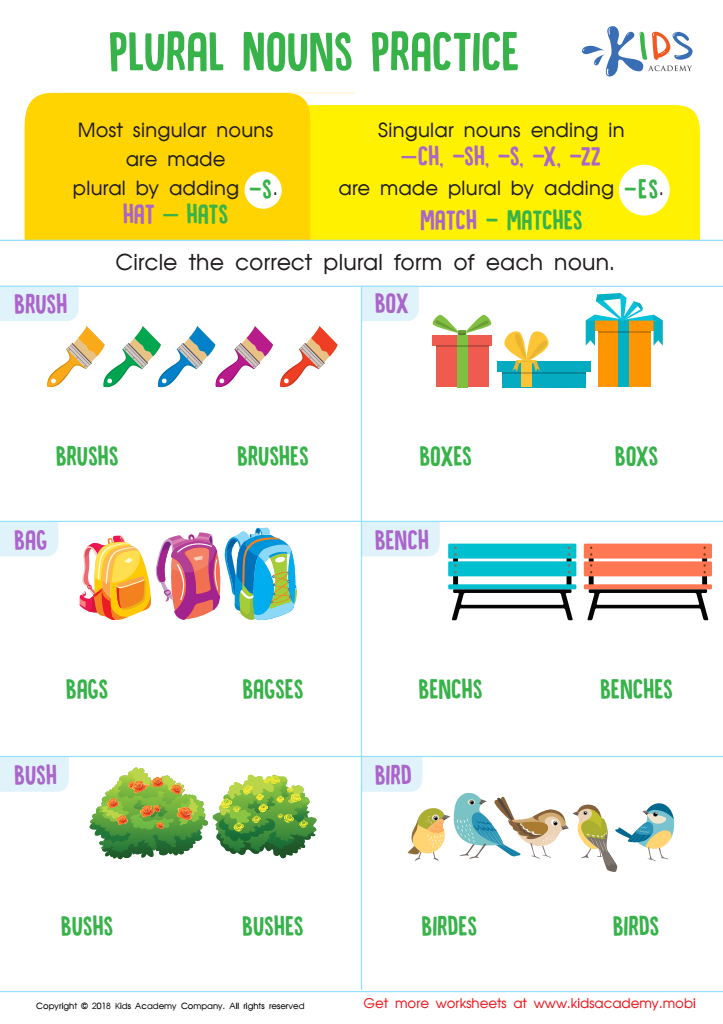
Plural Nouns Practice Worksheet
 Assign to My Students
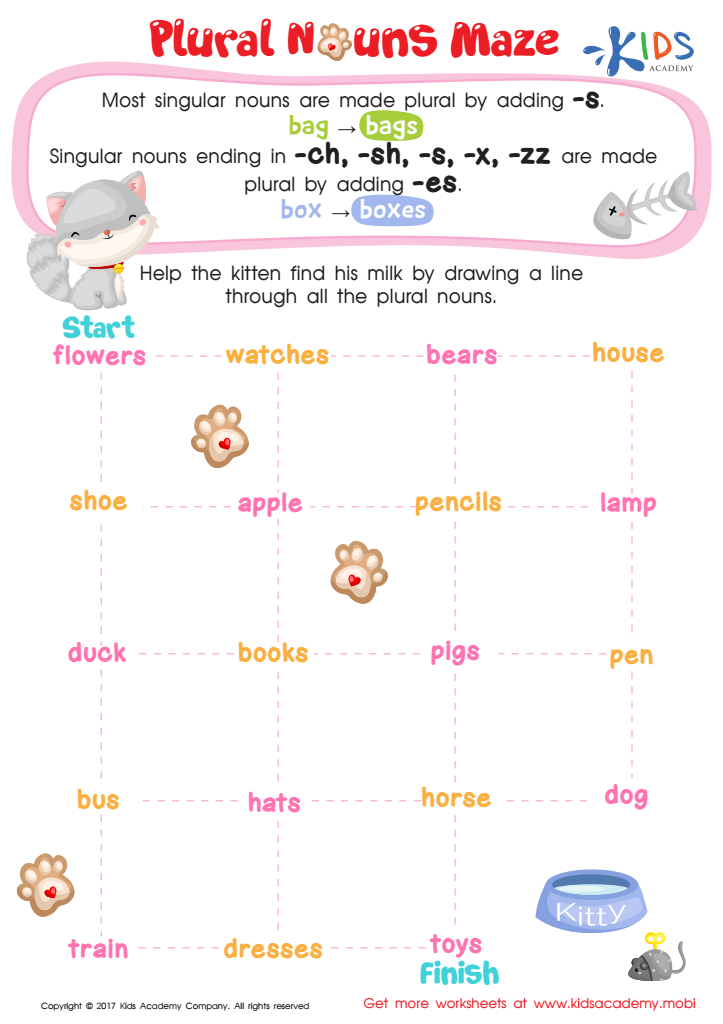
Plural Nouns Maze Worksheet
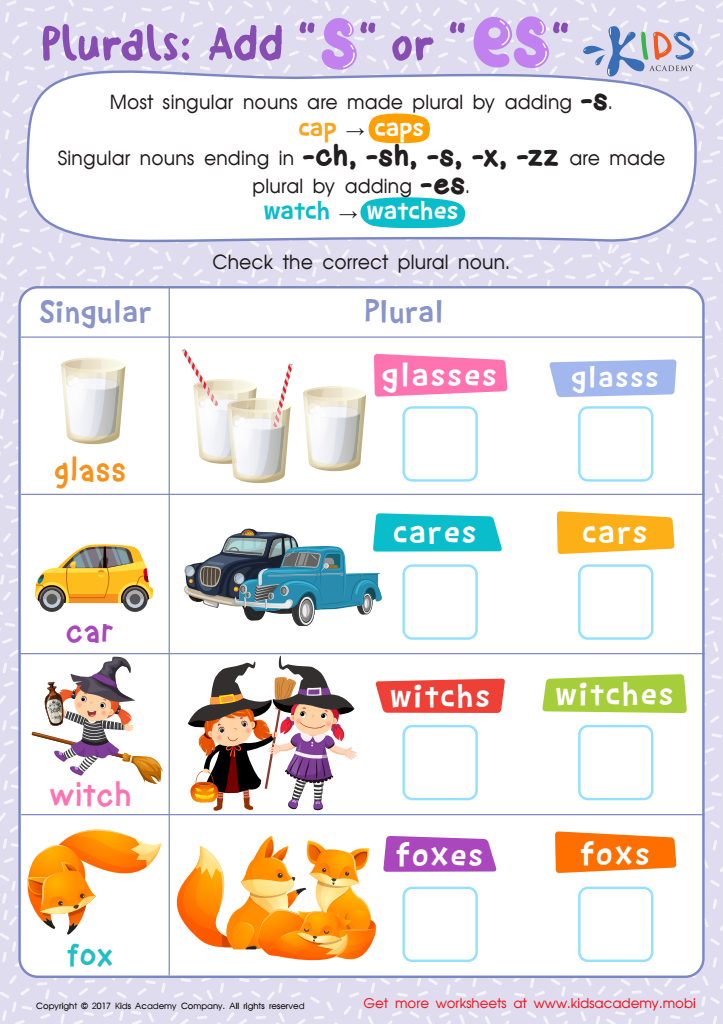
Plurals: "–es" or "–es"? Worksheet







Understanding plurals is essential for children aged 4-6 as it lays the foundation for language development and communication skills. When children grasp the concept of plurals, they enhance their vocabulary and become more proficient in expressing themselves. Learning to identify and use plural forms helps children differentiate between one and many, which is fundamental in mathematics as well.
Moreover, engaging with plurals through the Extra Challenge fosters critical thinking and problem-solving skills. For example, when a child is asked to correctly apply plurals in various contexts, they must analyze words, recognize patterns, and utilize rules, which strengthens their cognitive abilities.
In addition, a strong grasp of pluralization enhances children's literacy skills. When they read stories or discover new texts, recognizing plurals helps them comprehend the material better, resulting in a richer understanding of language and effective storytelling.
By nurturing plural awareness during early learning, parents and teachers empower children to articulate their thoughts more clearly, interact with the world around them, and build confidence in their communication. Ultimately, a strong foundation in linguistic concepts like plurals not only supports academic success but also enriches social development and collaboration skills.








