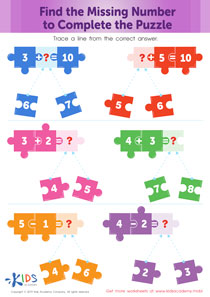
Problem-Solving Skills Extra Challenge Addition Worksheets for Ages 4-6
4 filtered results
-
From - To
Enhance your child's mathematical abilities with our "Problem-Solving Skills Extra Challenge Addition Worksheets" designed specifically for ages 4-6. These engaging worksheets foster critical thinking and boost confidence while children practice their addition skills in fun and interactive ways. With colorful illustrations and thoughtfully crafted problems, kids will learn to approach math challenges strategically. Perfect for homeschoolers and classroom educators, these worksheets promote not just arithmetic proficiency but also essential problem-solving skills. Guide your little learners on their journey to becoming independent thinkers and confident math whizzes. Download these worksheets today and watch your child's math skills flourish!
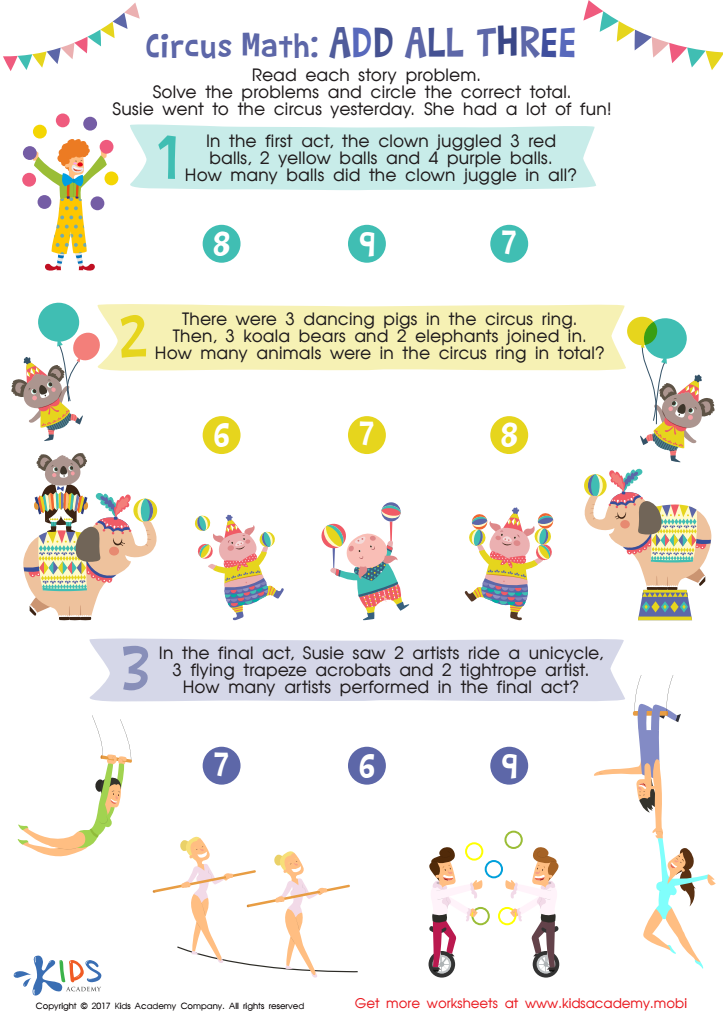
Circus Math Printable
 Assign to My Students
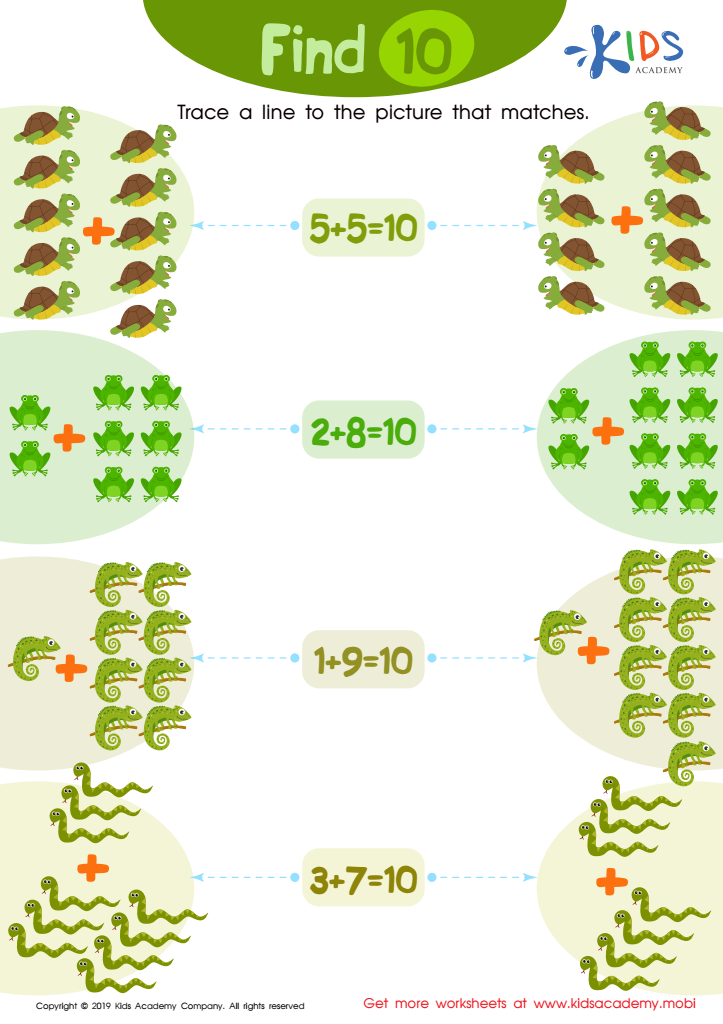
Find 10 Worksheet
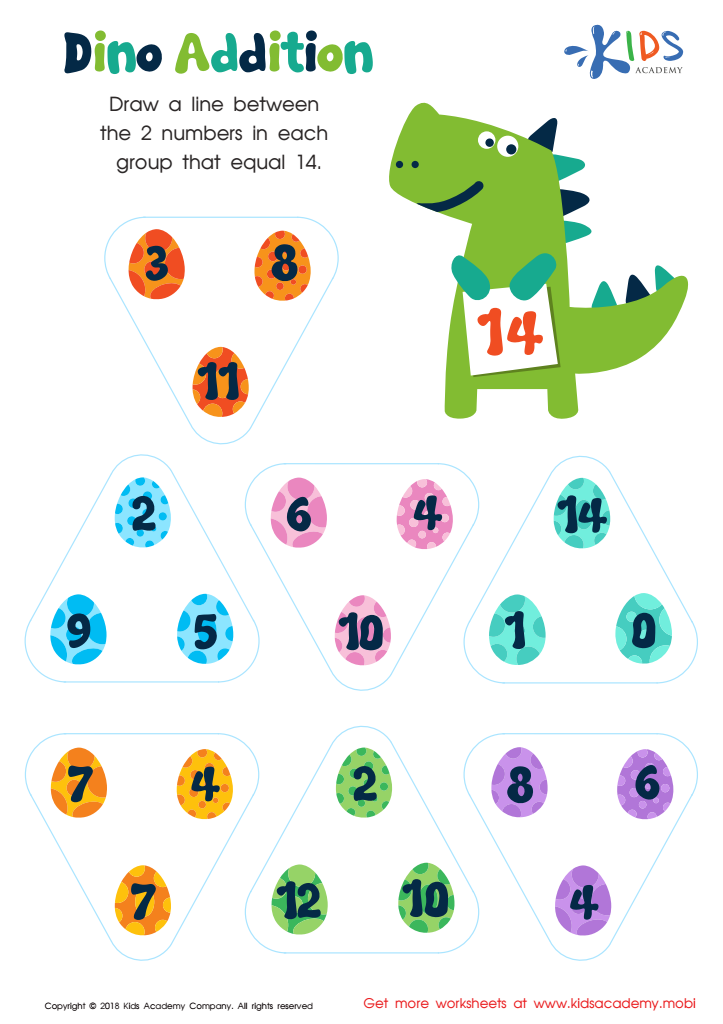
Dino Addition Worksheet
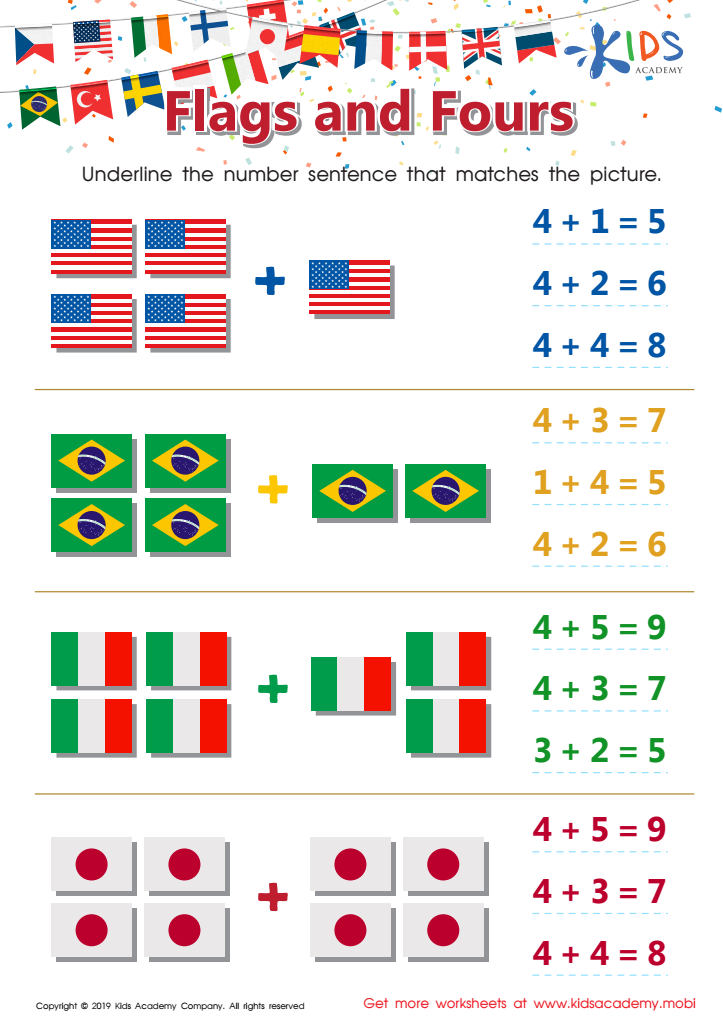
Flags and Fours Worksheet








Parents and teachers should care about developing problem-solving skills in young children, especially through challenging activities like extra challenge addition for ages 4-6, because these skills lay the foundation for future academic success and life skills. Problem-solving fosters critical thinking, encourages creativity, and enhances cognitive abilities. When young children engage in activities that involve extra challenge addition, they learn to approach problems systematically by breaking them down into smaller, manageable parts, promoting a growth mindset.
Moreover, these activities encourage perseverance, as children may encounter difficulties in finding solutions. This resilience is crucial as they face increasingly complex challenges in school and beyond. Additionally, fostering a love for math at an early age can lead to a stronger predisposition toward STEM fields in the future.
Through collaboration and discussion, young learners also improve their communication skills, learning to articulate their thought processes and listen to different perspectives. Overall, emphasizing problem-solving skills like extra challenge addition equips children with the essential toolbox for navigating both academic environments and everyday situations, ensuring they become confident, capable individuals in an increasingly complex world. Therefore, supporting these skills should be a priority for both parents and educators.