Basic geometry understanding Extra Challenge Geometry Worksheets for Ages 4-6
3 filtered results
-
From - To
Unlock the wonder of geometry with our Extra Challenge Geometry Worksheets for Ages 4-6! These expertly designed worksheets offer engaging activities for young learners to develop their basic geometry understanding. Tailored for children aged 4 to 6, each worksheet inspires curiosity and builds foundational skills through fun-filled exercises. From identifying simple shapes to recognizing patterns and spatial relationships, your child will experience hands-on learning that promotes critical thinking and visual-spatial intelligence. Ideal for young minds eager to explore and excel, our worksheets make early math adventure exciting and achievable. Get started now and watch your child’s confidence soar in geometry!
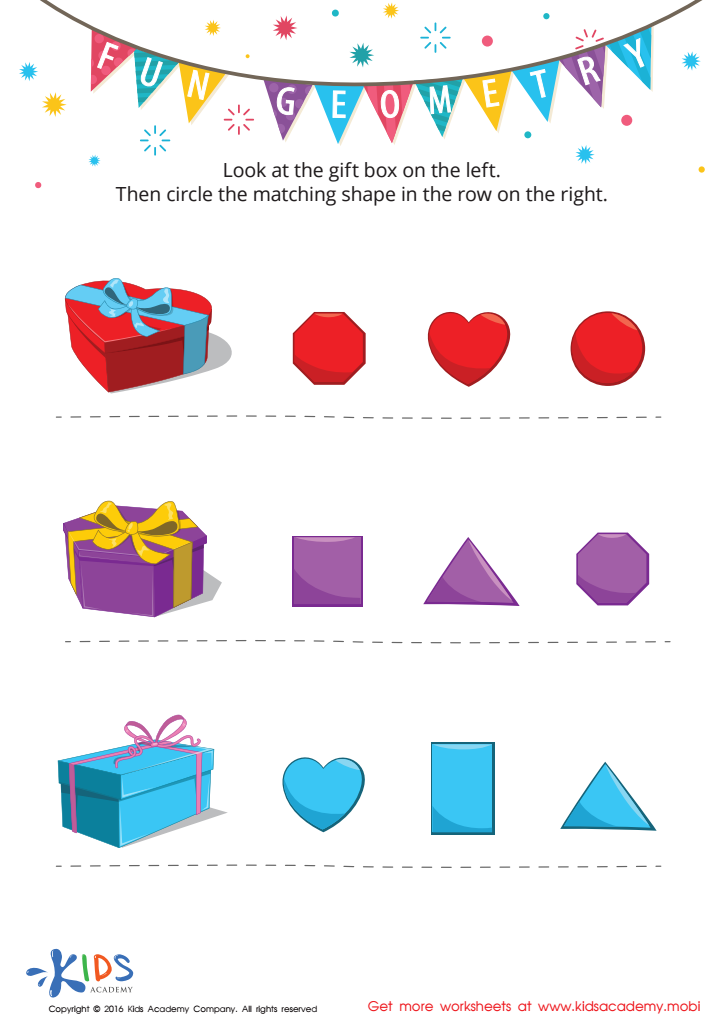
Fun Geometry Worksheet
 Assign to My Students











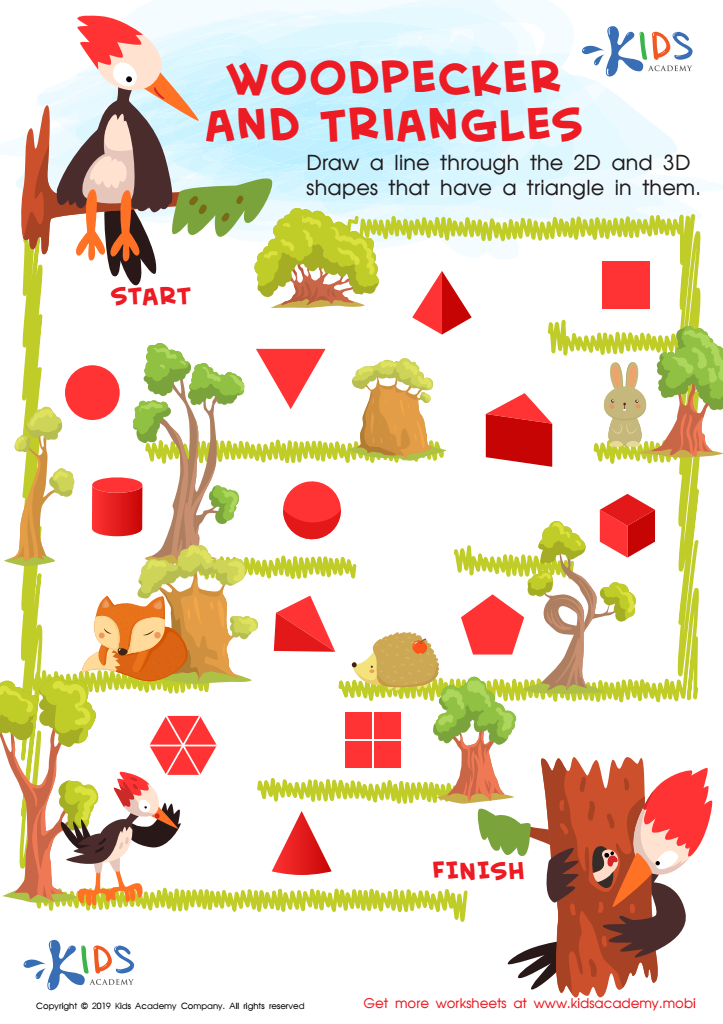
Woodpecker and Triangles Worksheet
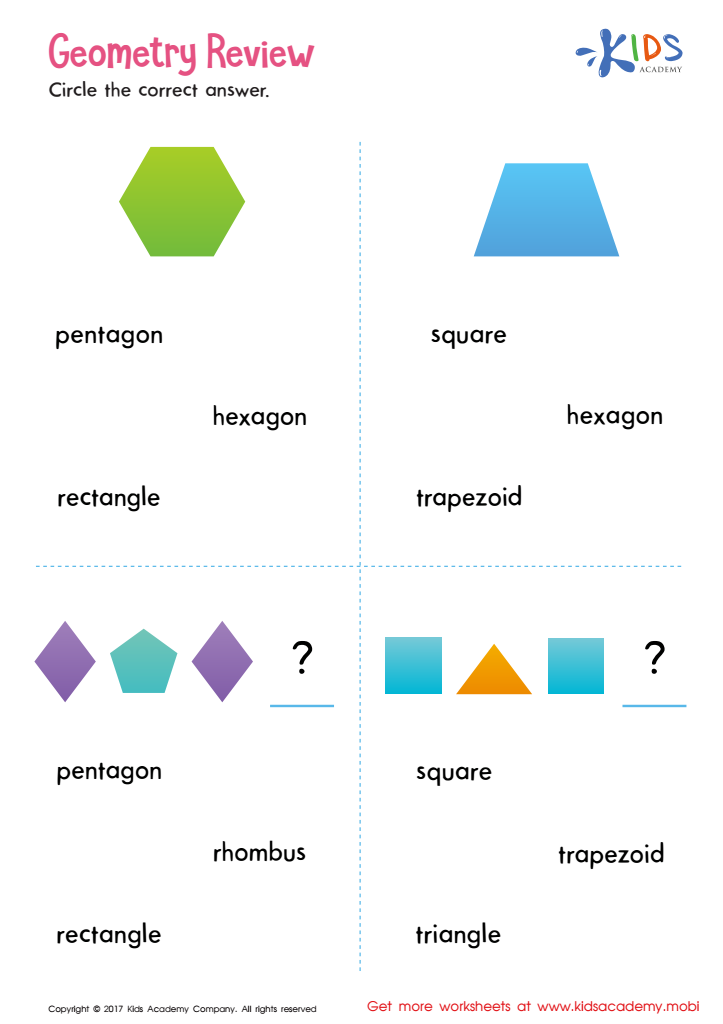
Geometry Review Printable








Introducing basic geometry concepts to children aged 4-6 is crucial for their cognitive development and lays the foundation for future mathematical learning. Basic geometry not only enhances a child's spatial awareness and visual perception but also aids in developing critical thinking and problem-solving skills. When parents and teachers nurture an interest in geometry through extra challenges, they actively foster an environment where children can explore and make sense of the world around them.
Engaging young learners with hands-on activities such as identifying shapes, building structures, and solving simple spatial puzzles can bring abstract concepts to life. This hands-on approach promotes fine motor skills and hand-eye coordination. Additionally, understanding geometric vocabulary like "square," "circle," "triangle," and positional terms such as "above," "below," and "beside" boosts language development.
Moreover, tackling extra challenge geometry tasks encourages persistence, patience, and a growth mindset. Children learn to experiment with different strategies, fostering creativity and flexibility in thinking. As geometry is a cumulative subject, early exposure gives children a head start, making them more confident and competent in future math endeavors.
By prioritizing early geometry education, parents and teachers prepare children not only for academic success but also for everyday challenges that require spatial reasoning and a structured problem-solving approach.