Introduce your young learners to the fascinating world of chess with our Chess Strategy Learning Extra Challenge Worksheets, designed exclusively for ages 4-7. These engaging worksheets are perfect for developing critical thinking and advanced problem-solving skills, customized to suit their growing minds. Through exciting activities, children will master basic chess moves, identify strategic positions, and learn essential game tactics. Ideal for both beginners and more advanced young players, our worksheets provide an enjoyable, hands-on way to cultivate a love for this timeless game while expanding cognitive abilities. Equip your child with the tools needed for a successful chess journey today!

Check out this FREE Trial Lesson on Chess for age 4-7!

Special Moves: En Passant

Favorites
With answer key
Interactive
  • 4-7
  • Chess strategy learning
  • Chess
  • Extra Challenge
King and Queen Mate Strategy: Part 1 Worksheet

King and Queen Mate Strategy: Part 1 Worksheet

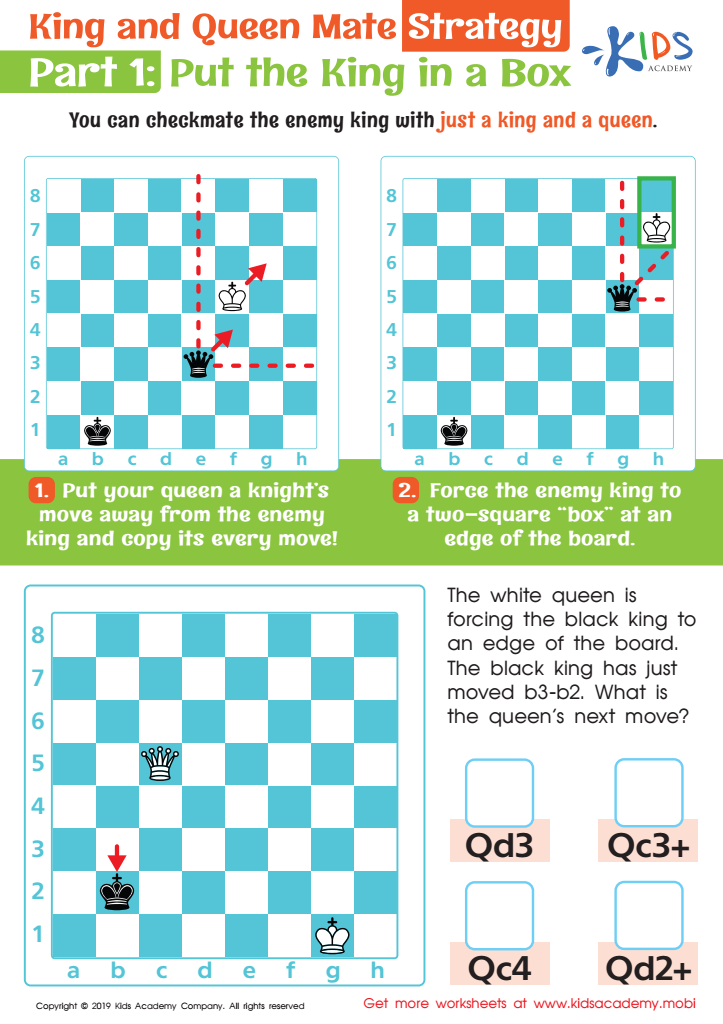
This worksheet will help your young chess player strategize. They’ll learn how to checkmate the opponent’s king using just a king and a queen. Descriptive sample boards will show them the strategy and then a practice board will test their knowledge. Allowing them to plan the queen’s next move to checkmate the opposing king.
King and Queen Mate Strategy: Part 1 Worksheet
Worksheet
En Passant: Tricky Pawn Capture Worksheet

En Passant: Tricky Pawn Capture Worksheet

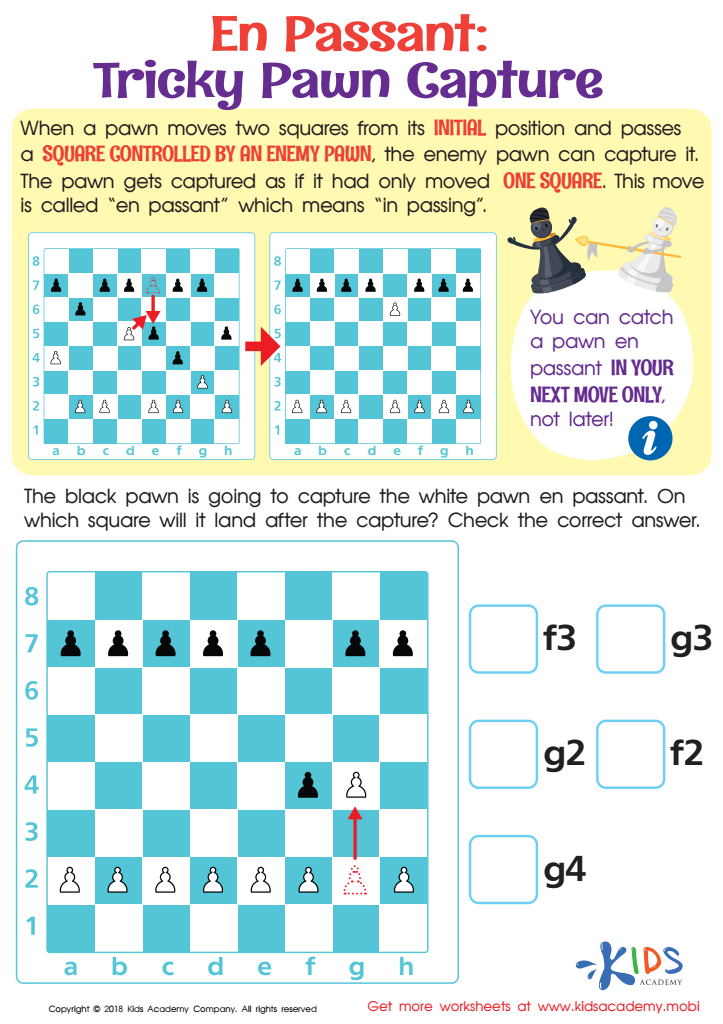
When a pawn moves two squares from its initial position and enters a square controlled by an enemy, the enemy can capture it as if it had moved one square. This move is called "en passant" (in passing). Ask your child which square the black pawn will land on after capturing the white pawn en passant using the provided chessboard.
En Passant: Tricky Pawn Capture Worksheet
Worksheet
Two Rook Mate Strategy Worksheet

Two Rook Mate Strategy Worksheet

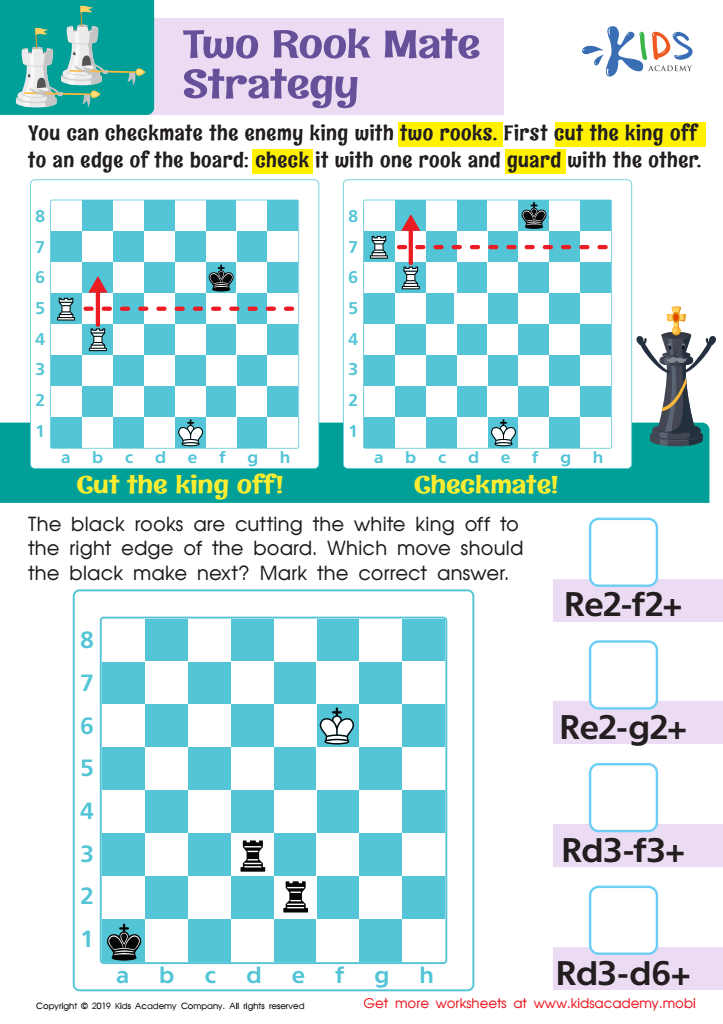
Kids who can play stress gain better reasoning, logic and critical thinking skills. This worksheet can teach kids the Two Rook Mate strategy to checkmate their opposite king. They'll discover how to close in the enemy king and protect with another rook, all the while enjoying a screen-free activity!
Two Rook Mate Strategy Worksheet
Worksheet
En Passant: Writing it Down Worksheet

En Passant: Writing it Down Worksheet

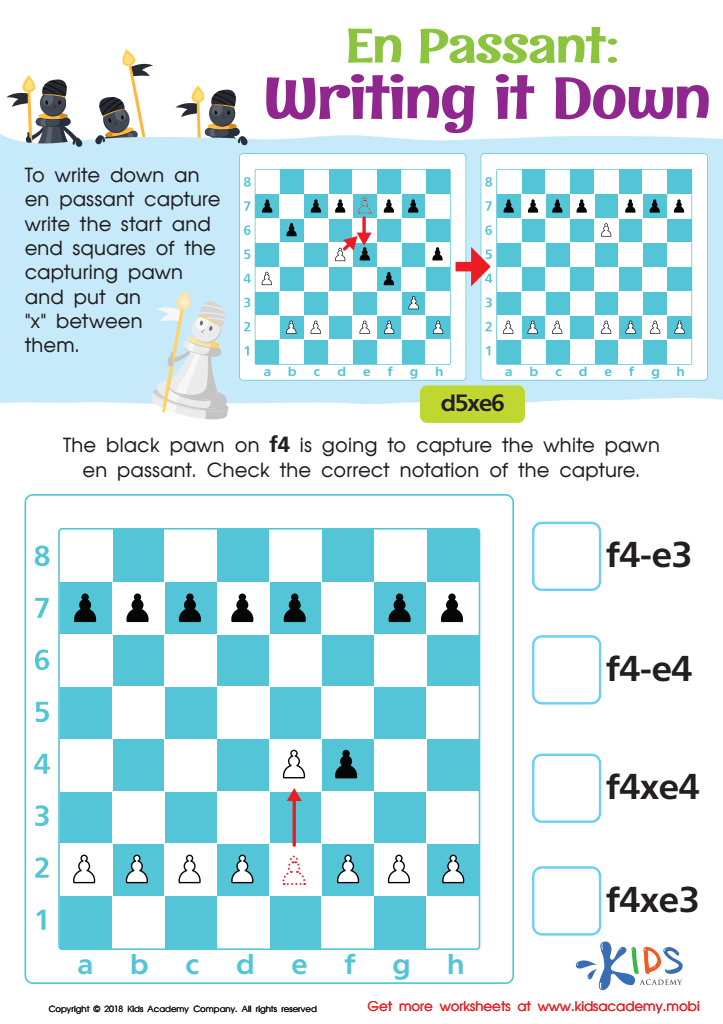
Properly documenting moves in chess is often overlooked. En passant captures require your child to note the starting and ending squares (e.g. d5xe6) with an "X" in between them. Ask your children to review the worksheet and ensure they've notated the captures correctly. (80 words)
En Passant: Writing it Down Worksheet
Worksheet
Two Rook Mate Practice Worksheet

Two Rook Mate Practice Worksheet

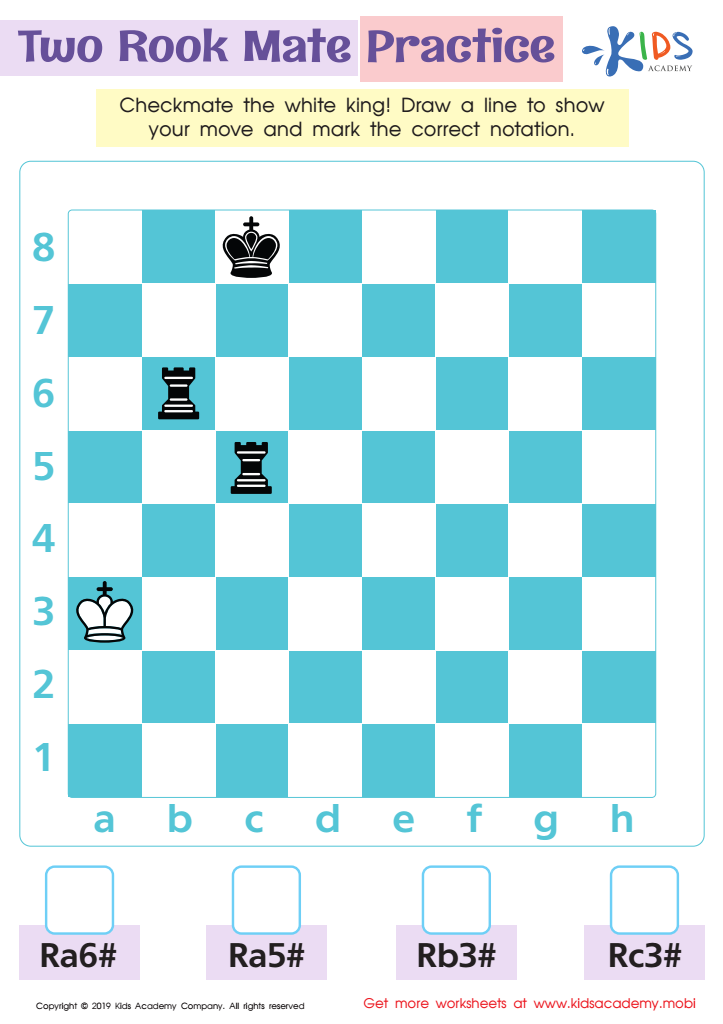
Chess is all about checkmating your opponent. This free Two Rook Mate practice worksheet is a fun way for your mini strategist to do just that. They can draw a line showing their move then pick the correct notation for the mate! A great way for them to practice fine motor skills, too.
Two Rook Mate Practice Worksheet
Worksheet
Find Stalemate! Worksheet

Find Stalemate! Worksheet

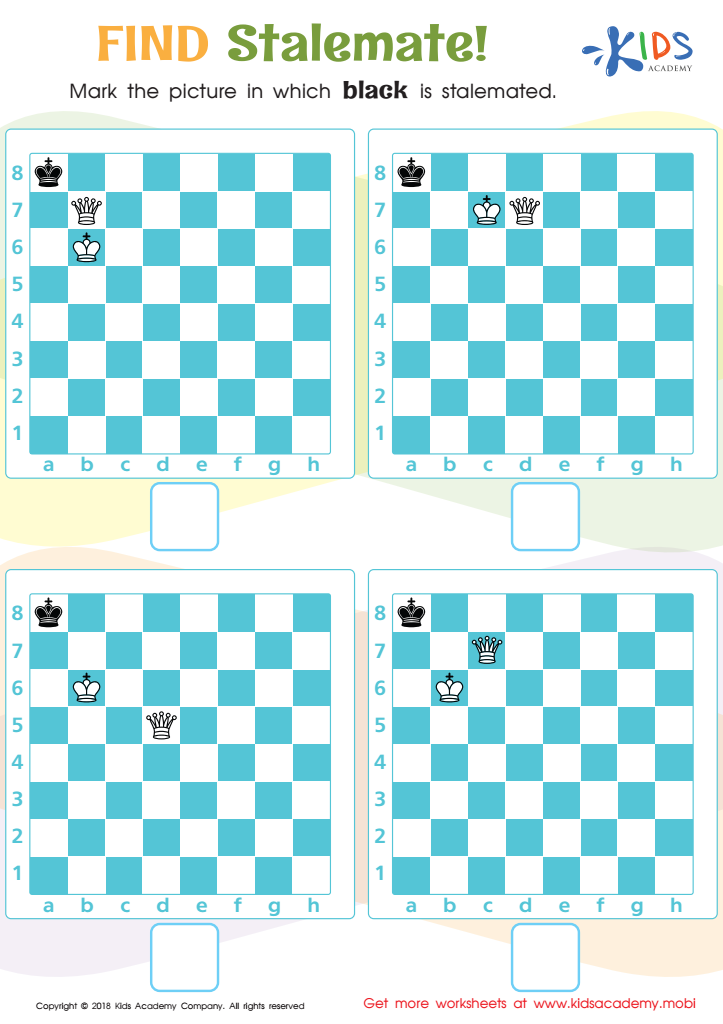
Teach your kids Chess and give them more than a hobby - equip them with critical thinking, rationale and problem-solving skills! This free worksheet helps them understand stalemates by examining various sample boards. By providing visual discernment and the joy of the game, your child's logical skills will soar!
Find Stalemate! Worksheet
Worksheet
Notation of Checkmate Worksheet


Notation of Checkmate Worksheet
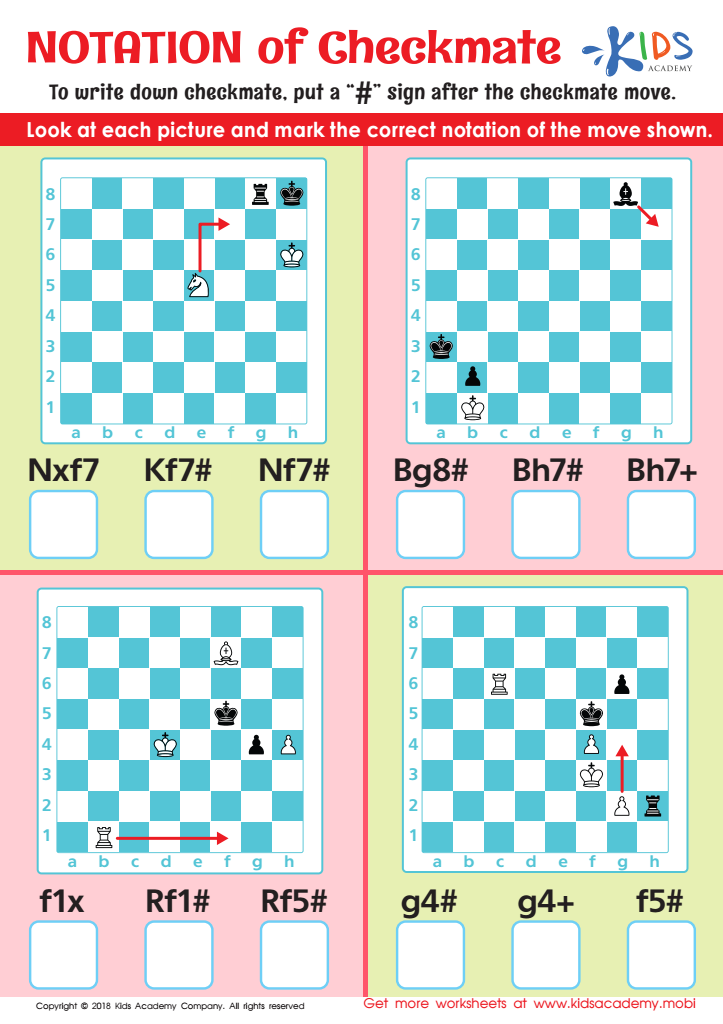
Checkmate is the thrilling, ultimate move in chess! Teach your child to make it and notate it properly with this free worksheet. They'll love being able to capture the king and it's great for brain-building too! Have them look at the sample boards and place a # sign after the checkmate move for notation.
Notation of Checkmate Worksheet

Worksheet


Introducing young children aged 4-7 to Chess strategy through programs like Extra Challenge Chess provides immense educational and developmental benefits. Chess helps enhance critical thinking, problem-solving, and decision-making skills. These cognitive abilities are foundational and can significantly aid their overall academic performance, fostering an early love for learning and analytical thinking.

Chess also teaches patience, planning, and foresight. Children learn to think ahead and anticipate potential challenges, which bolsters their capacity for strategic planning in various contexts outside the game. Such mental discipline and focus can be particularly beneficial in maintaining attention and concentration within a classroom setting.

Social and emotional growth is another significant advantage. Chess encourages accountability for one's actions, as each move carries consequences. This sense of responsibility, combined with the concepts of fair play and turn-taking, nurtures sportsmanship and respectful behavior.

Moreover, the inclusive nature of Chess makes it accessible to children of different backgrounds and abilities, promoting equity in learning opportunities. Parents and teachers who support Chess strategy learning foster an environment where children can thrive intellectually and emotionally. By investing in programs like Extra Challenge Chess, adults play a crucial role in developing well-rounded individuals who value strategic thought, patience, and respectful interaction.