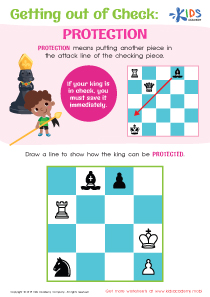
Strategic thinking development Extra Challenge Chess Worksheets for Ages 4-7
3 filtered results
-
From - To
Unlock your child's potential with our "Strategic Thinking Development Extra Challenge Chess Worksheets" designed specifically for ages 4-7. These engaging worksheets introduce young learners to the fascinating world of chess while fostering essential cognitive skills like critical thinking, problem-solving, and strategic planning. Each worksheet features fun puzzles and challenges that promote creativity and logical reasoning, making learning enjoyable. Ideal for home or classroom use, our materials encourage children to think several moves ahead as they enhance their understanding of game strategies. Boost your child's confidence and cognitive abilities today with these exciting and educational chess activities!
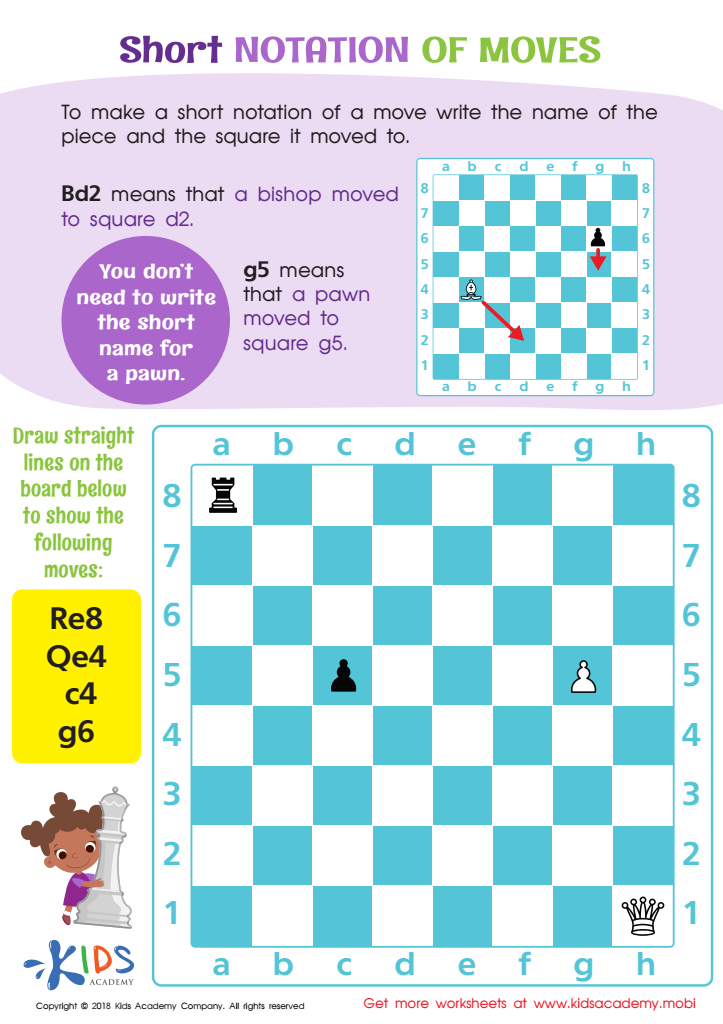
Short Notation of Moves Worksheet
 Assign to My Students
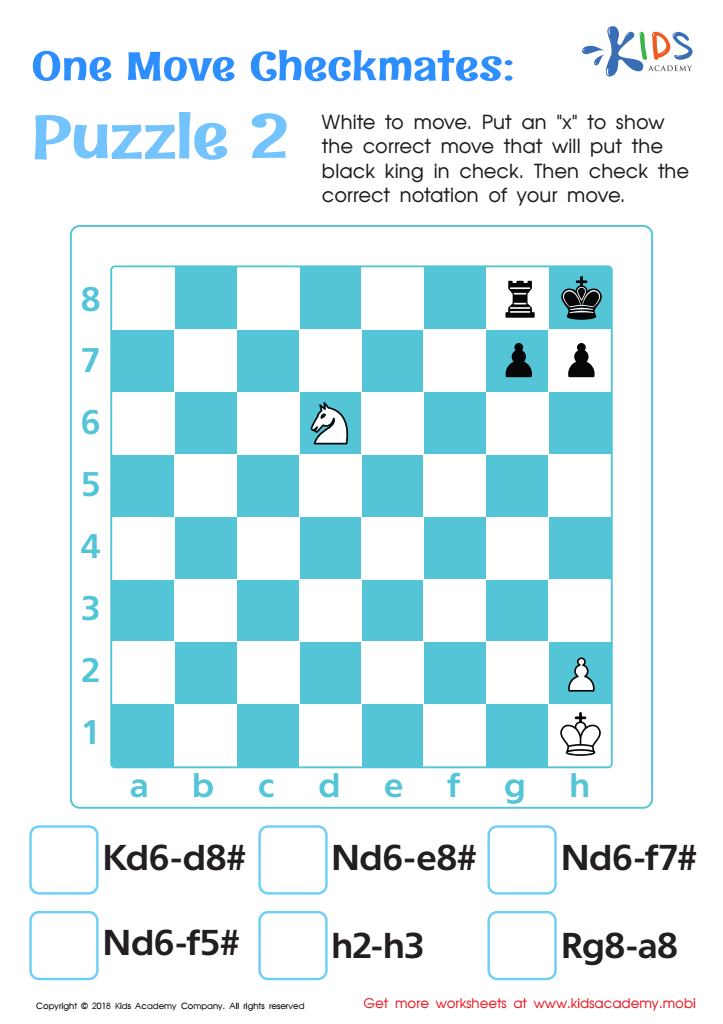
One Move Checkmates: Puzzle 2 Worksheet
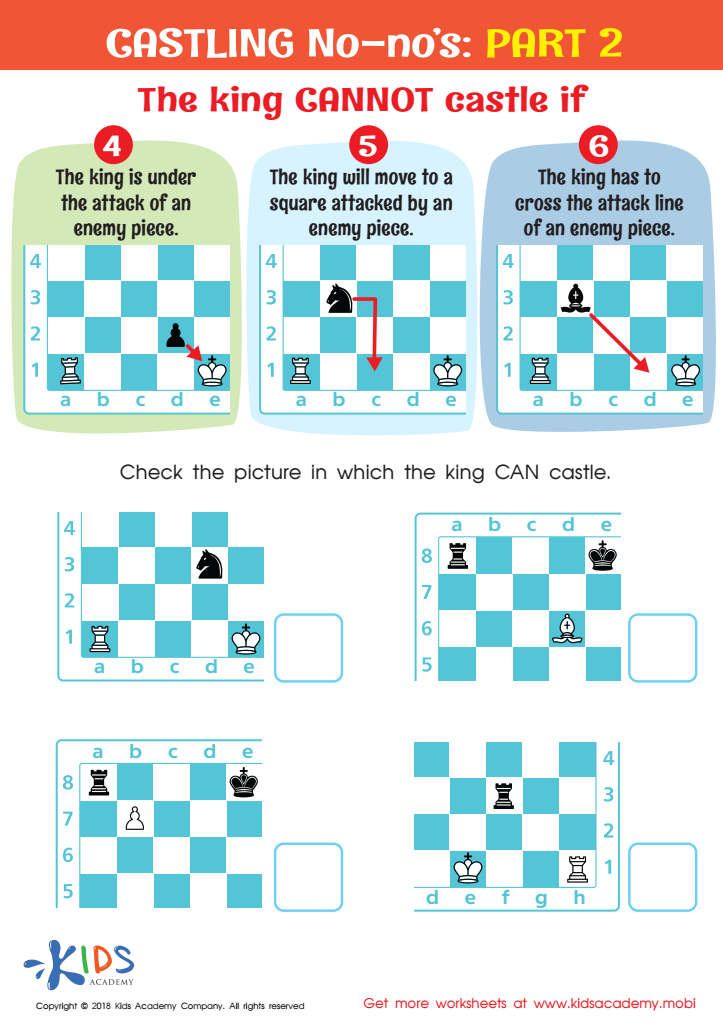
Castling No - no's: Part 2 Worksheet



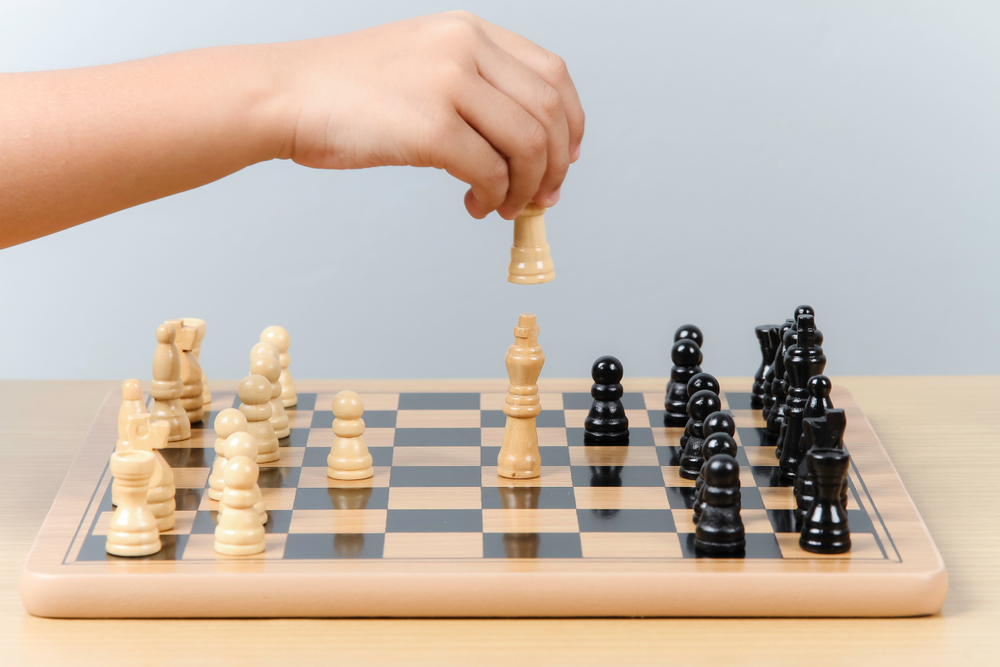



Strategic thinking is a vital skill that lays the foundation for effective problem-solving, critical thinking, and decision-making. Introducing children aged 4-7 to concepts through platforms like Extra Challenge Chess can significantly nurture these abilities. Chess is inherently a game of strategy, requiring players to think ahead, anticipate outcomes, and consider multiple perspectives—all skills that are invaluable as students encounter increasingly complex tasks in school and life.
Parents and teachers should care about this development for multiple reasons. Firstly, engaging with chess promotes cognitive skills such as memory, focus, and logic. As children learn to plan their moves while also considering their opponent's strategies, they develop the ability to think critically and creatively. Furthermore, working in this intellectually stimulating environment fosters perseverance and resilience, as children learn to navigate wins and losses gracefully.
Extracurricular activities like chess also serve to enhance social skills: kids learn to collaborate and communicate effectively with peers. By supporting strategic thinking development through chess, parents and educators are not only enhancing children's academic readiness but also equipping them with skills needed for real-world success, promoting holistic development in an increasingly competitive landscape.