Comparing objects Extra Challenge Worksheets for Ages 4-7
3 filtered results
-
From - To
Unleash your child's analytical skills with our Comparing Objects Extra Challenge Worksheets for ages 4-7. These engaging worksheets offer a variety of fun activities designed to help young learners practice comparing sizes, lengths, weights, and more. Perfect for developing critical thinking and mathematical skills, each worksheet provides an enjoyable challenge that enhances observational abilities and problem-solving techniques. Ideal for classroom enrichment or home study, these printable worksheets are a valuable resource for any early grade teacher or parent aiming to boost their child's confidence and proficiency in comparing objects. Help your child excel with these exciting extra challenges!
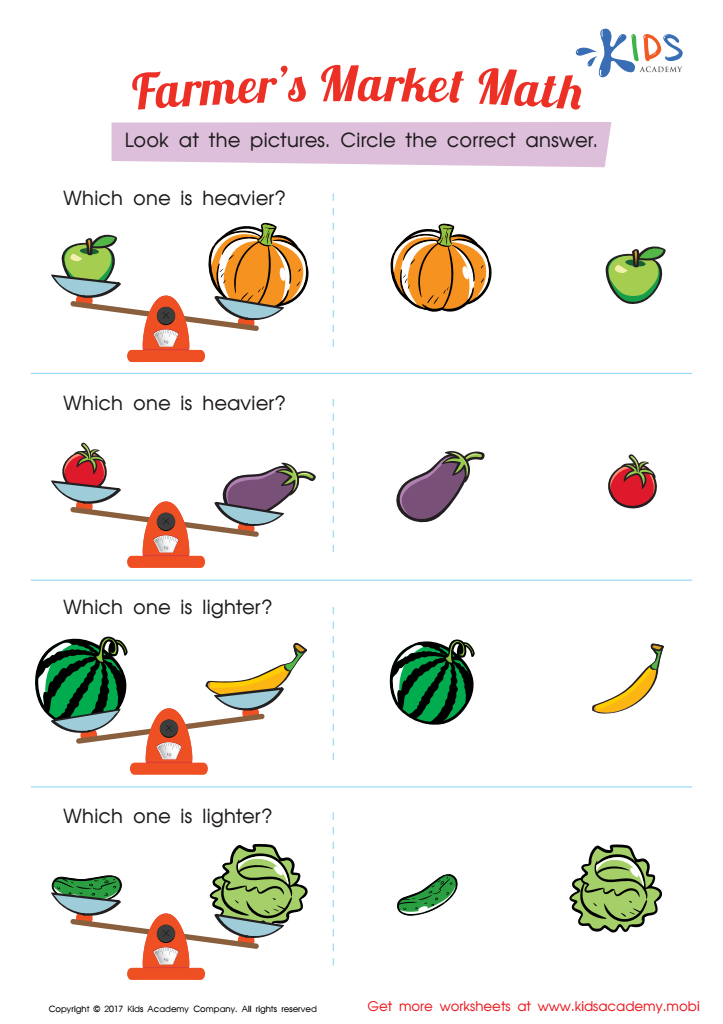
Which One Is Heavier Worksheet
 Assign to My Students
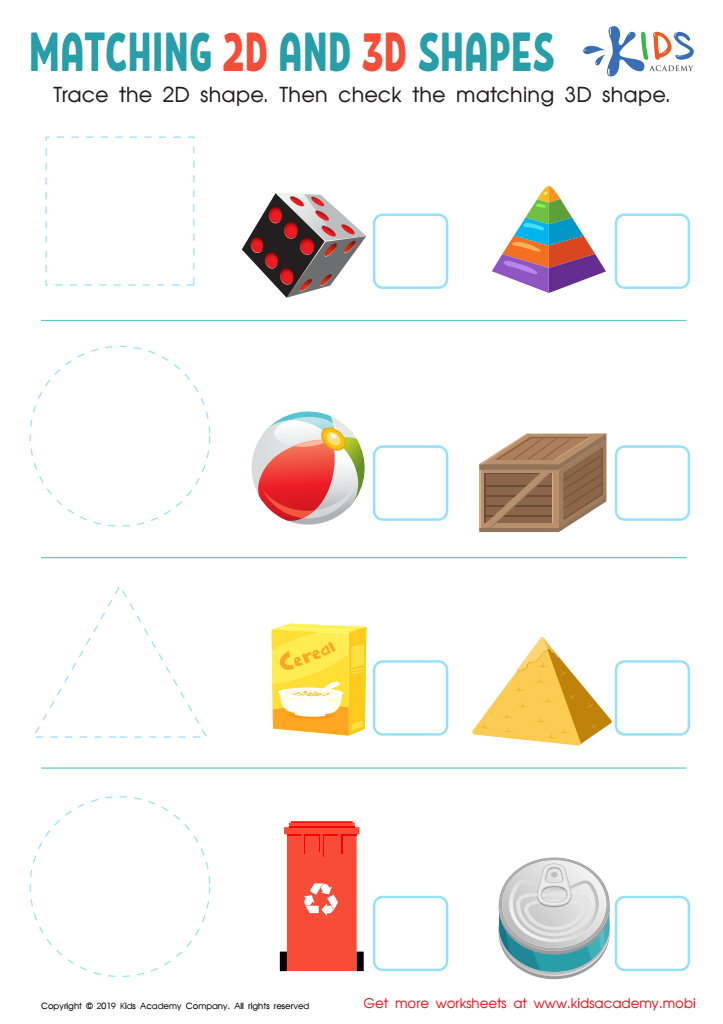
Matching 2D and 3D Shapes Worksheet
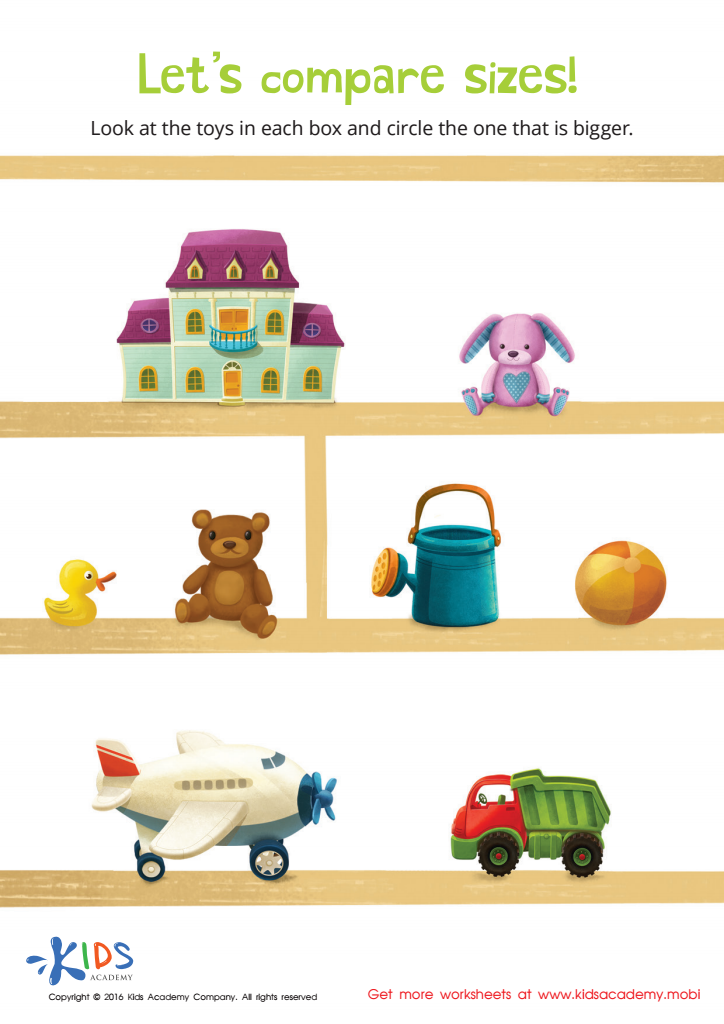
Classifying by Size Sorting Worksheet


%20(1).jpg)



Comparing objects is a fundamental skill for young children aged 4-7 and incorporating extra challenges in this area offers numerous benefits for their development. This activity not only helps children grasp basic mathematical concepts such as measurement, size, and quantity but also aids in developing critical thinking and reasoning skills. When children engage in comparing objects, they learn to observe details, identify similarities and differences, and categorize items based on specific attributes, which lays the groundwork for more complex problem-solving abilities.
For parents and teachers, emphasizing these skills is crucial because mastery of these basic concepts builds a strong foundation for future learning. It fosters a sense of curiosity and encourages analytical thinking. Furthermore, incorporating extra challenges pushes children to stretch their thinking and adapt to new, slightly more complex tasks, enhancing their cognitive flexibility and resilience.
Activities that involve comparing objects can also promote important social skills, such as cooperating with peers during group activities, communicating their thoughts clearly, and respecting others' ideas. These skills are indispensable for both academic success and social interactions. By making comparing objects a frequent and progressively challenging part of early education, parents and teachers can significantly enhance their children's cognitive, social, and emotional development.








