Strategic thinking development Extra Challenge Worksheets for Ages 4-7
3 filtered results
-
From - To
Enhance your child's problem-solving abilities with our "Strategic Thinking Development Extra Challenge Worksheets" designed for ages 4-7. These engaging and thoughtfully crafted worksheets encourage young learners to think critically and strategically, fostering skills that are essential for academic success and everyday challenges. Each activity is tailored to boost creativity, reasoning, and decision-making, making learning both fun and effective. Ideal for parents and educators, these worksheets provide extra challenges that will captivate your child’s imagination while reinforcing core learning concepts. Watch your little ones develop confidence and strategic acumen as they tackle our delightful exercises. Start nurturing their potential today!
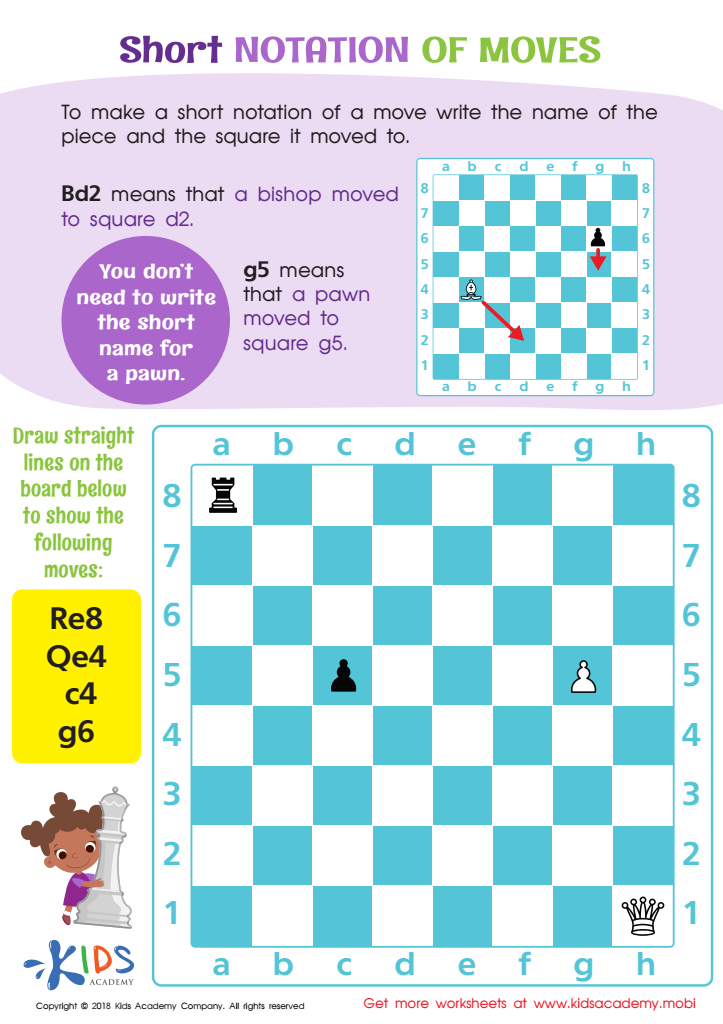
Short Notation of Moves Worksheet
 Assign to My Students
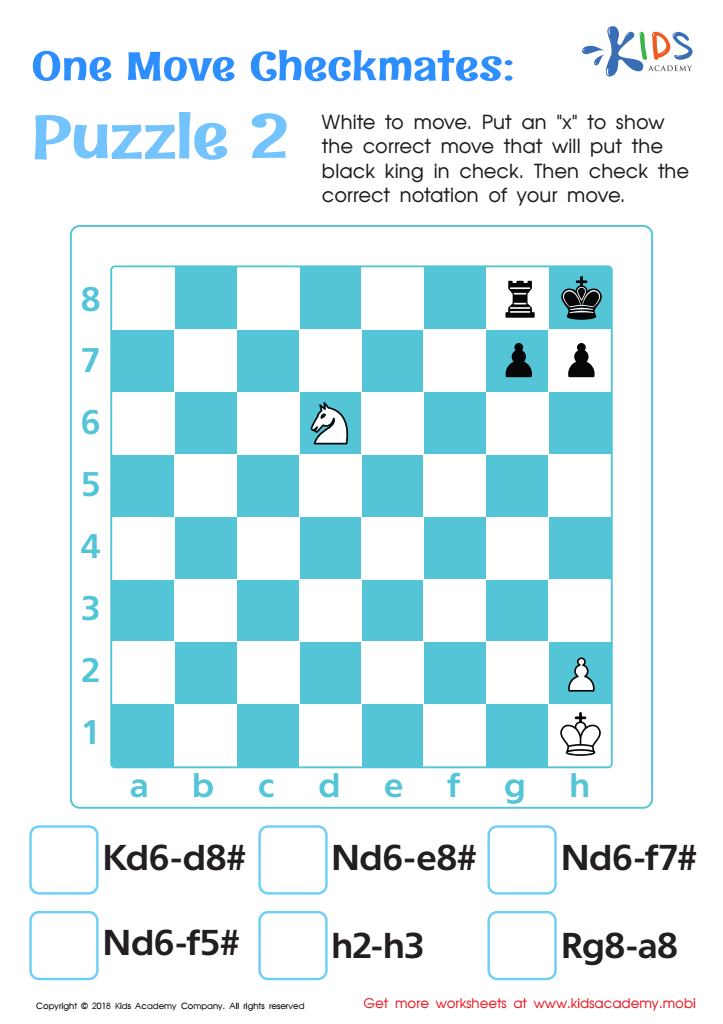
One Move Checkmates: Puzzle 2 Worksheet
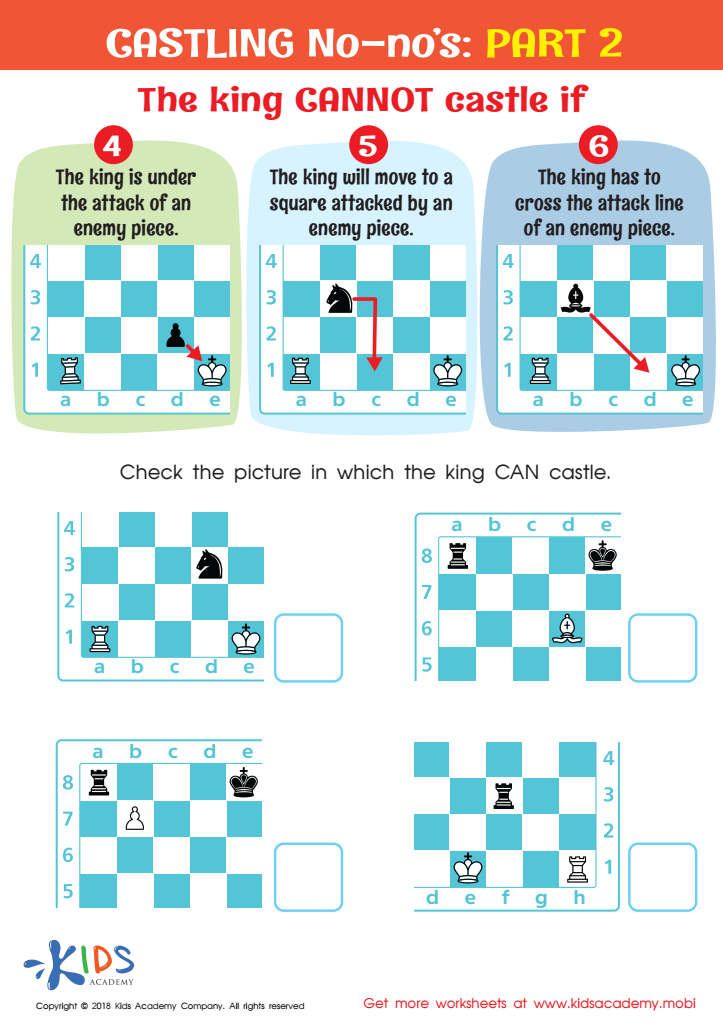
Castling No - no's: Part 2 Worksheet







Strategic thinking development in children aged 4-7 is crucial for fostering their cognitive, social, and emotional growth. Parents and teachers should be invested in this process because it lays the foundation for problem-solving and critical thinking skills that will benefit children throughout their lives. Strategic thinking involves anticipating outcomes, considering various possibilities, and making informed decisions, all of which are essential skills in academics and daily situations.
Engaging children in activities that promote strategic thinking—such as puzzles, games, and collaborative projects—encourages them to think critically and learn how to work with others. These experiences not only enhance cognitive abilities but also contribute to emotional intelligence, as children learn to negotiate, empathize, and communicate effectively.
Additionally, fostering strategic thinking helps children develop resilience and adaptability, allowing them to face challenges and setbacks with confidence. As they grow, these skills will be invaluable in both their personal lives and future careers.
By prioritizing strategic thinking development, parents and teachers equip children with the tools they need to navigate an increasingly complex world, establishing a strong foundation for lifelong learning and success. Ultimately, supporting children in this area is an investment in their future.








