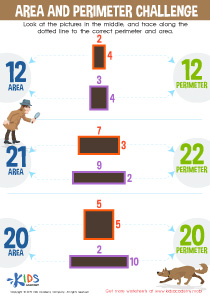
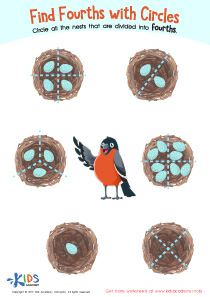
Spatial awareness Extra Challenge 2D Shapes Worksheets for Ages 4-7
3 filtered results
Difficulty Level
Grade
Age
-
From - To
Subject
Activity
Standards
Boost your child's spatial awareness skills with our engaging Extra Challenge 2D Shapes Worksheets designed for ages 4-7! These printable worksheets encourage young learners to recognize, analyze, and manipulate various 2D shapes in fun and interactive ways. Each activity is tailored to enhance problem-solving abilities through puzzles, matching exercises, and creative visuals. As children fill out these worksheets, they'll strengthen their understanding of shapes, improve their fine motor skills, and develop critical thinking. Our resource is perfect for parents and teachers seeking to enrich their students' math foundation while promoting an enjoyable learning experience. Download now and spark curiosity!
Favorites
With answer key
Interactive
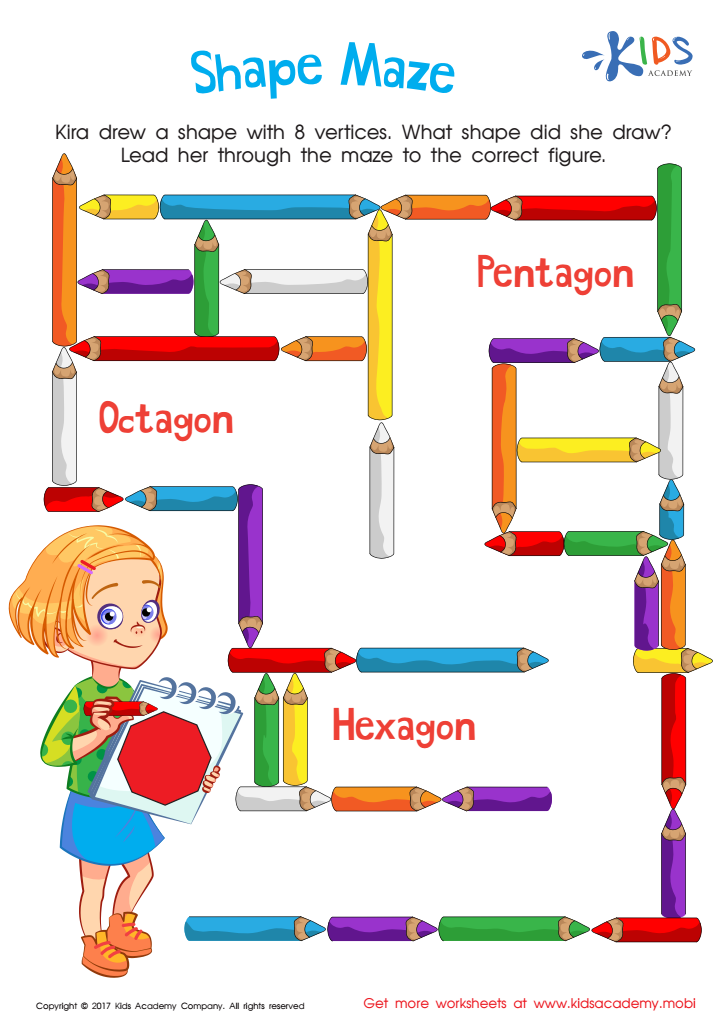
Shape Maze Worksheet
Test your child's geometry knowledge with this fun printable maze! They'll need to identify shapes with 8 vertices to find their way through the maze and get the correct answer.
 Assign to My Students
Shape Maze Worksheet
Worksheet


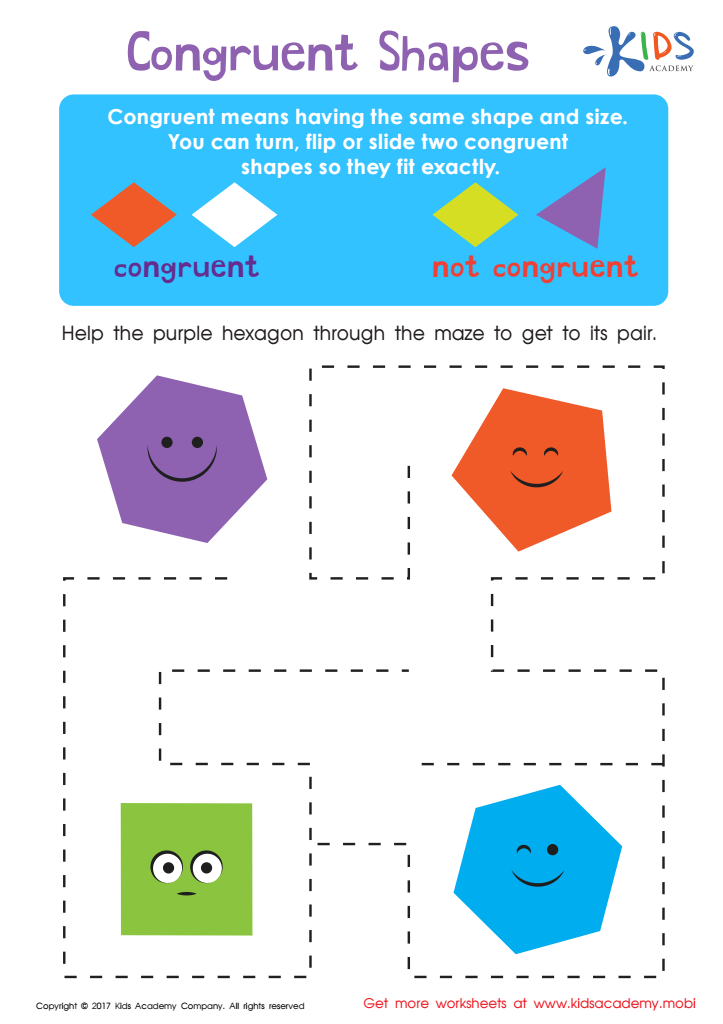
Congruent Shapes Worksheet
Help your child find the twin of the purple hexagon! This congruent shapes worksheet is great for increasing vocabulary while challenging mental rotation skills.
Congruent Shapes Worksheet
Worksheet
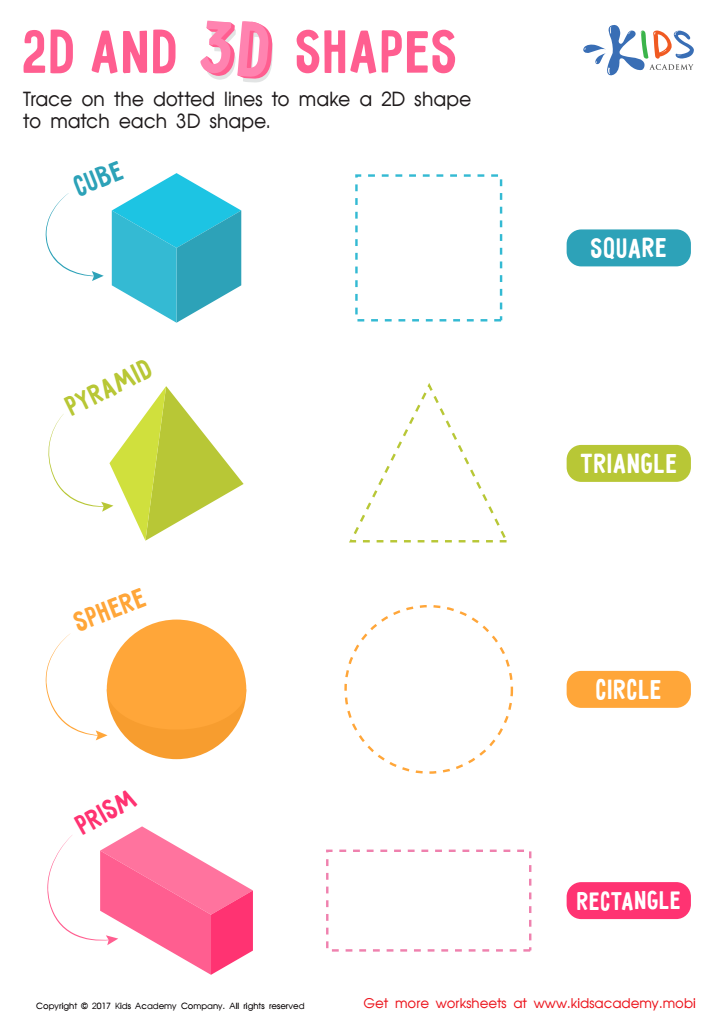
2D and 3D Shapes Worksheet
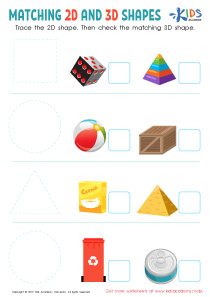
Introduce your child to 3D and 2D with this traceable worksheet. With dotted lines, help them trace and make a 2D shape for each 3D shape: square, triangle, rectangle, and circle. Show them there's more than one way to draw! You may have taken them to a 3D movie, or they've seen some fantastic 3D art. Now they can wonder no more.
2D and 3D Shapes Worksheet
Worksheet
Join Kids Academy for Free
Who is primarily going to use this learning content?








Spatial awareness is a vital skill that helps children understand how objects relate to one another in space. For children aged 4 to 7, developing this skill is essential for their academic growth and everyday navigation of the world. Focusing on 2D shapes during this stage enhances their ability to visualize, manipulate, and differentiate between various shapes, such as squares, triangles, and circles.
Parents and teachers should care about spatial awareness because it lays the foundation for critical future skills, particularly in mathematics, science, and problem-solving. Recognizing and working with 2D shapes aids in understanding geometry, which is a significant component of math curricula. This understanding also fosters cognitive development; children learn to organize information and make connections between shapes, enhancing creativity and critical thinking.
Moreover, activities that emphasize spatial awareness are engaging and fun, offering children hands-on learning experiences. These experiences cultivate confidence and persistence as they solve visual challenges. Overall, nurturing spatial awareness at this young age can profoundly impact a child's learning approach and interest, setting them up for lifelong success. Thus, parents and teachers play a pivotal role in facilitating this important aspect of early childhood education.