Fraction visualization Extra Challenge Math Worksheets for Ages 4-7
3 filtered results
-
From - To
Boost your child's understanding of fractions with our Fraction Visualization Extra Challenge Math Worksheets, designed specifically for ages 4-7. These engaging worksheets offer an interactive approach to mastering fractions by combining fun visuals and practical exercises. Each worksheet presents a variety of challenges that promote critical thinking and reinforce fraction concepts through relatable, everyday situations. Ideal for both home and classroom settings, our easy-to-follow format will captivate young learners and make complex ideas accessible. Help your child build a strong foundation in math with these extra challenge worksheets that enhance their fraction visualization skills while making learning enjoyable!
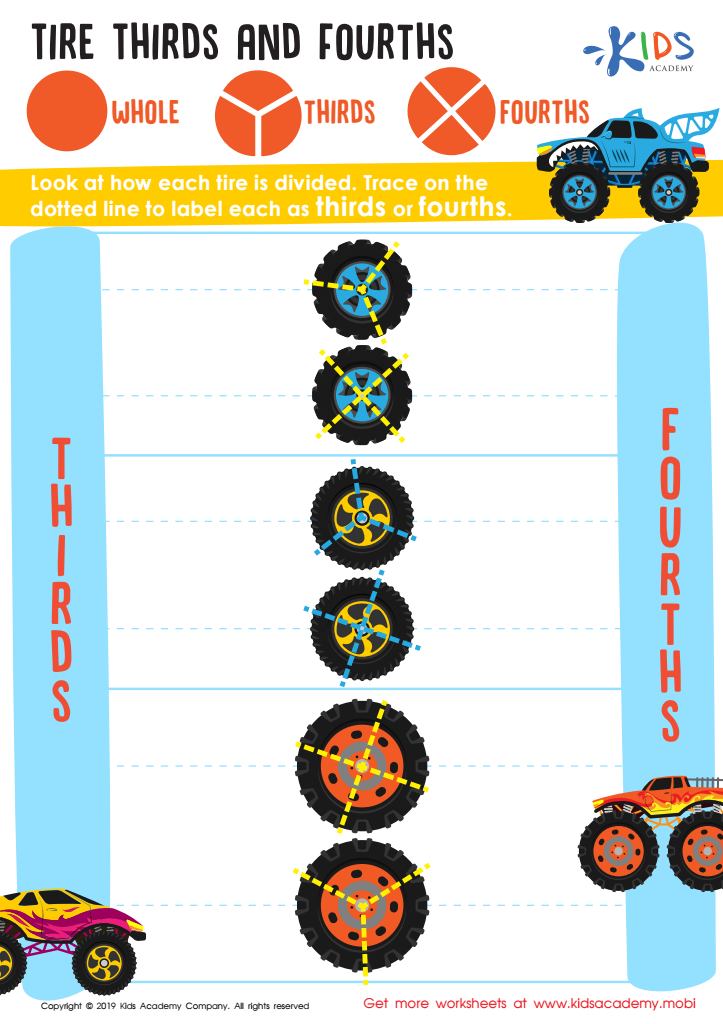
Tire Thirds and Fourths Worksheet
 Assign to My Students
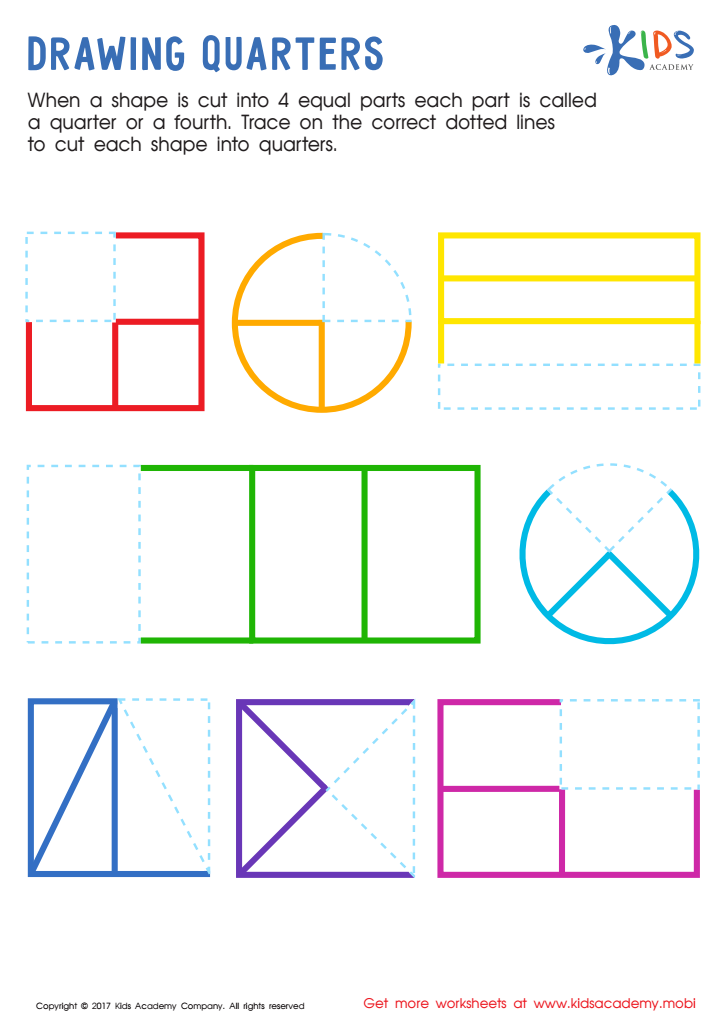
Drawing Quarters Worksheet
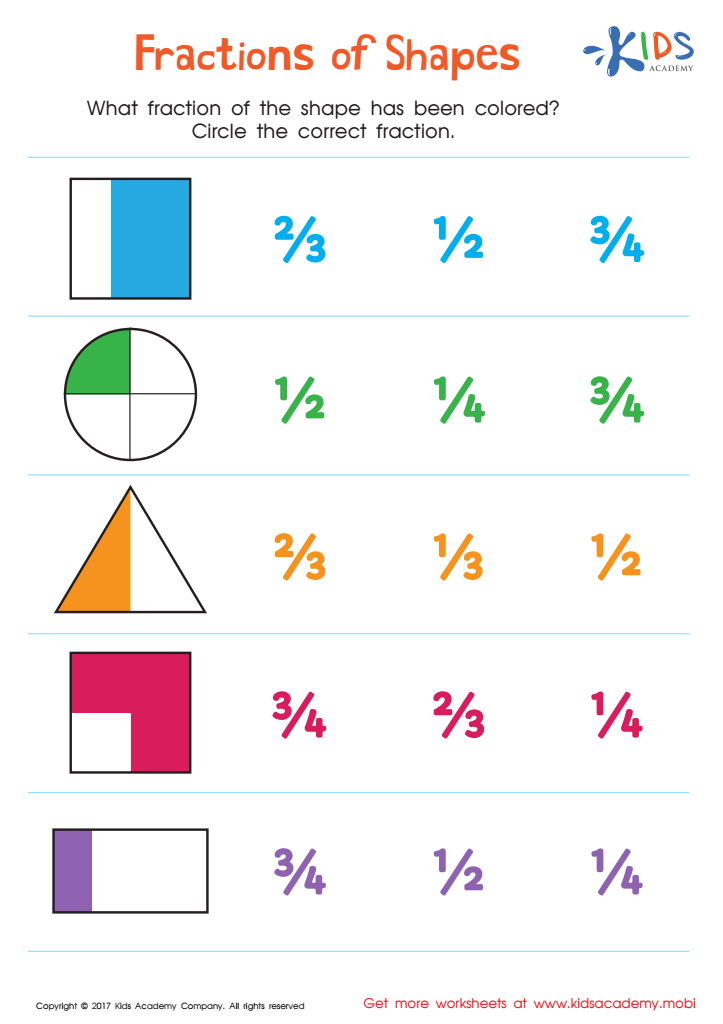
Fractions of Shapes: Math Concept Worksheet





Fraction visualization is an essential component of early math education for children aged 4-7, and both parents and teachers should prioritize it for several reasons. Firstly, understanding fractions lays the foundation for more advanced mathematical concepts, such as division and ratios, which are critical as students progress in their education. When children can visualize fractions—such as seeing one-half visually represented in pie charts or number lines—they develop a tangible understanding of parts of a whole.
Furthermore, fraction visualization fosters critical thinking and problem-solving skills. Engaging with visual aids encourages children to explore various patterns and relationships, enhancing their analytical abilities. It also supports multiple learning styles—particularly for visual learners, who benefit from concrete representations rather than abstract numbers.
Additionally, cultivating a strong grasp of fractions at an early age prepares students for real-life situations, such as cooking, budgeting, and dividing items fairly, thereby enriching their everyday experiences. By incorporating fraction visualization techniques into learning environments, parents and teachers provide children not just with mathematical skills, but also with confidence and a positive attitude toward math, ultimately influencing their academic trajectory and love for learning.








