
Financial literacy Extra Challenge Worksheets for Ages 4-8
3 filtered results
Difficulty Level
Grade
Age
-
From - To
Subject
Activity
Standards
Unlock your child's potential with our "Financial Literacy Extra Challenge Worksheets for Ages 4-8." These specially designed worksheets offer a fun and engaging way for young learners to grasp essential financial concepts. Through age-appropriate activities, kids will develop skills like recognizing coins, understanding basic saving, and learning the value of money. Perfect for both classroom settings and at-home practice, these resources aim to build a strong financial foundation from an early age. Empower your child today with the knowledge they need to navigate the world of finance confidently and competently. Join us in nurturing smarter, more informed future spenders!
Favorites
With answer key
Interactive
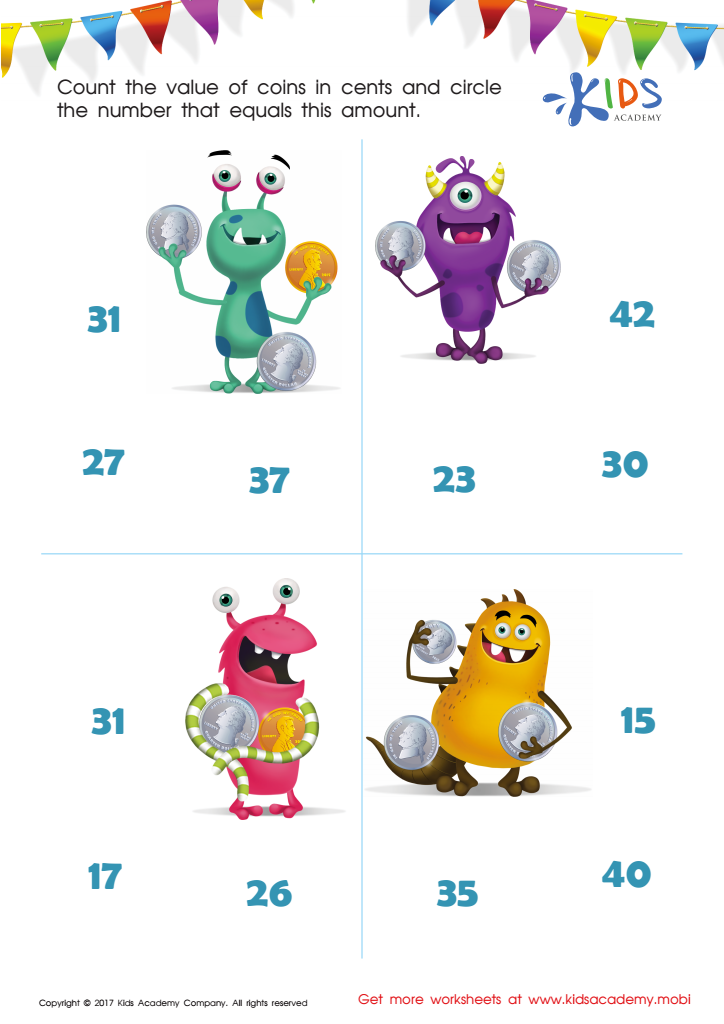
How Many Coins Money Worksheet
Have fun while counting coins: look at the monsters and count the coins in their hands. Challenge your little learners to count and write down the number of coins each one has. Enjoy the time together!
 Assign to My Students
How Many Coins Money Worksheet
Worksheet
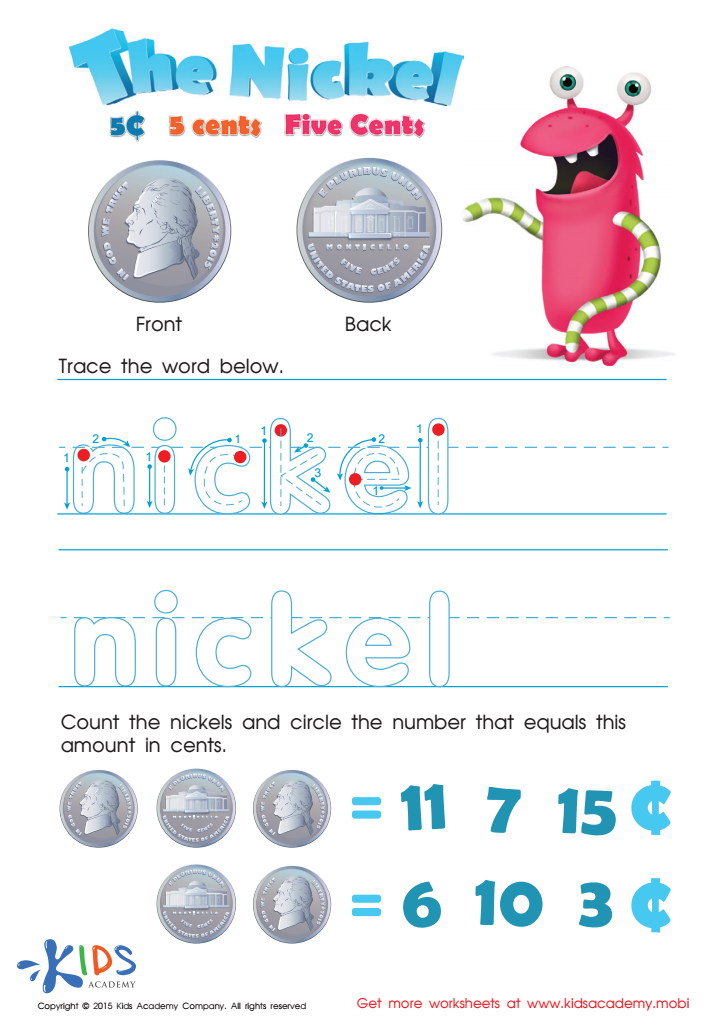
Five Cents or the Nickel Money Worksheet
Counting money games help kids make learning money fun and easy. Next up: the 5 cent coin, or nickel. Look at both sides and remember them. Then, trace the word "nickel" to help you remember. Finally, count the nickels and work out amounts in cents. Let's do this! Kids Academy helps make money learning easy and fun!
Five Cents or the Nickel Money Worksheet
Worksheet
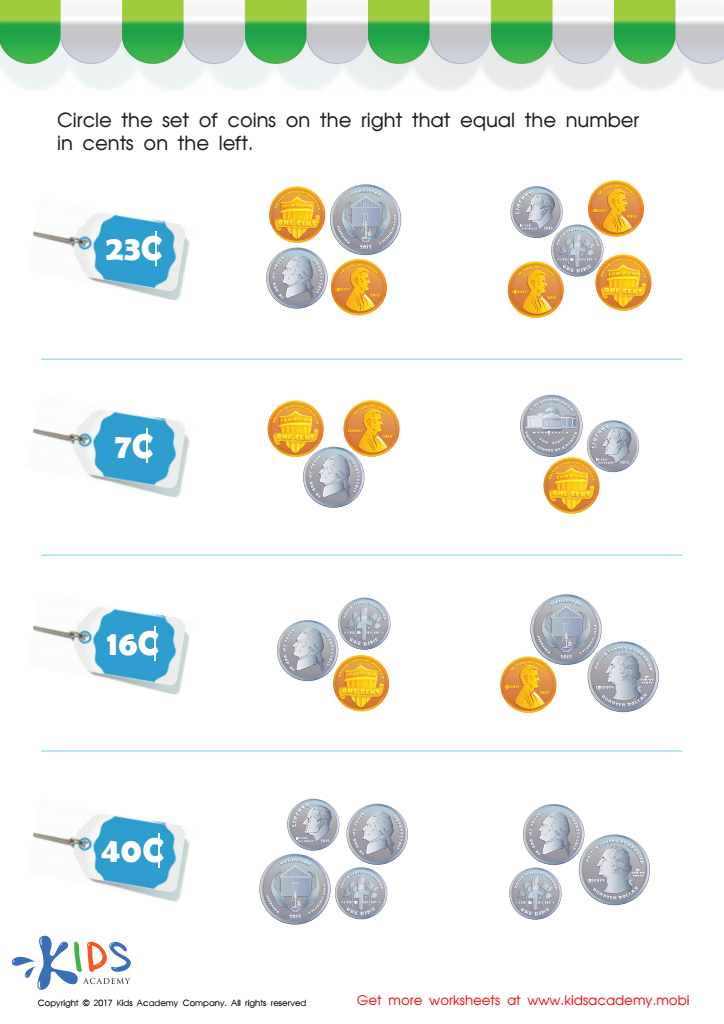
Picking the Coins You Need Money Worksheet
Let's learn to count money with Parents and Kids Academy! Investigate a real shop together: buy a globe, pencils, books, and a school bag using coins. Then, circle the coins you'll need. Visit our website for more free and fun money games for kids!
Picking the Coins You Need Money Worksheet
Worksheet
Join Kids Academy for Free
Who is primarily going to use this learning content?








Parents and teachers should care about financial literacy challenges for young children because early exposure helps build a strong foundation for future financial responsibility. Starting between the ages of 4-8, children begin to understand basic concepts of money, such as earning, saving, and spending, which are essential life skills. Introducing these concepts through playful activities like games, stories, and interactive exercises makes learning engaging and memorable.
Teaching financial literacy at an early age promotes good money habits and decision-making skills. Children who learn to manage a small allowance, understand the value of coins and bills, and identify the difference between needs and wants are more likely to develop responsible financial behaviors. Moreover, integrating these challenges into everyday learning encourages practical application, helping solidify these lessons.
For parents and teachers, fostering financial literacy creates an opportunity to guide children in setting goals, making thoughtful choices, and understanding the consequences of their financial actions. It also prepares them for more complex economic principles and personal finance management as they grow older. Addressing these topics early can bridge gaps created by socio-economic variances, enabling all kids to develop essential skills regardless of their background. Overall, by prioritizing financial literacy, parents and teachers equip children with the knowledge and confidence they need for a secure financial future.








