Math fluency development Extra Challenge Worksheets for Ages 4-8
3 filtered results
-
From - To
Boost your child's math skills with our "Math Fluency Development Extra Challenge Worksheets," designed specifically for ages 4-8. These engaging worksheets provide a variety of challenges that help young learners strengthen their understanding of fundamental math concepts. Tailored to enhance critical thinking and problem-solving abilities, these activities cover essential topics such as addition, subtraction, and number recognition. Each worksheet promotes confidence in math while making learning fun and interactive. Perfect for supplementing classroom learning or home practice, our extra challenge worksheets offer a great way to make math exciting and enjoyable for your little ones. Start their math journey today!
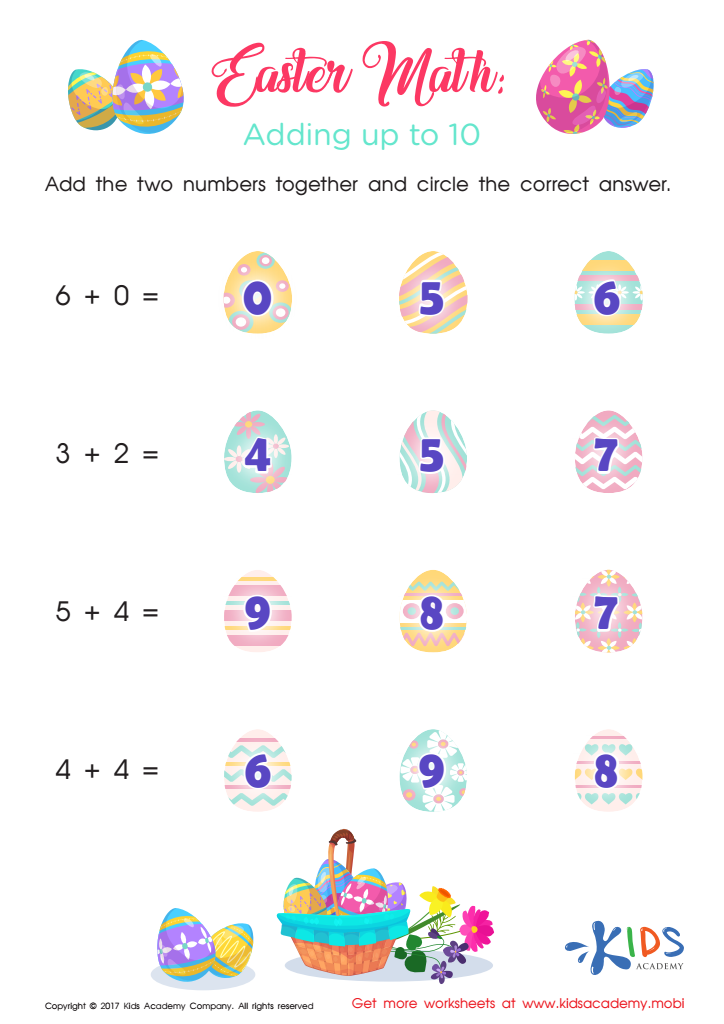
Addition Up To 10 Worksheet
 Assign to My Students
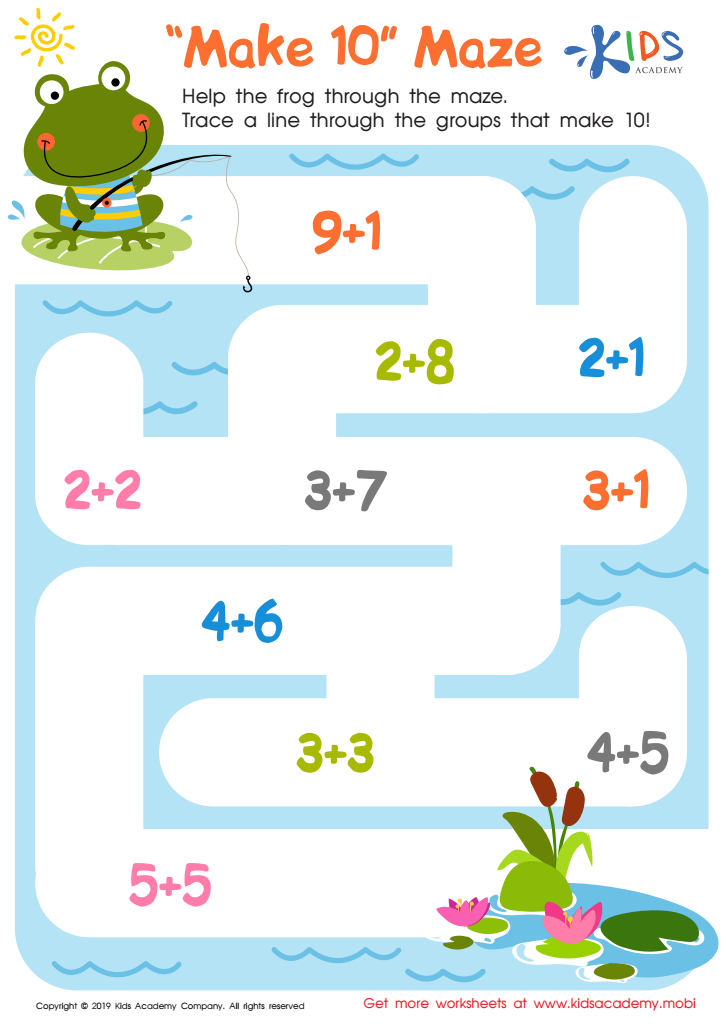
Make 10 Maze Worksheet
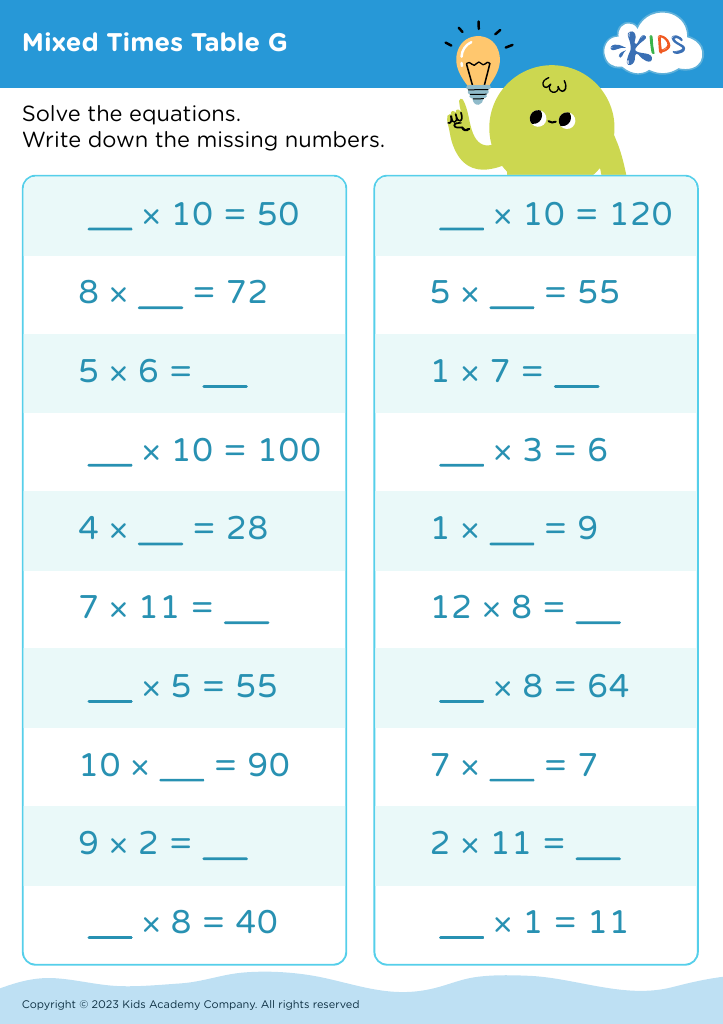






Math fluency development in young children, especially between ages 4-8, is crucial as it lays the foundation for future learning and cognitive skills. For parents and teachers, fostering math fluency goes beyond merely helping children perform calculations; it nurtures critical thinking, problem-solving, and analytical skills essential for lifelong success.
At this age, children are building their numerical sense, understanding shapes, and grasping fundamental concepts like addition and subtraction. Proficiency in these areas allows children to tackle more complex math problems in later grades effectively. When students are fluent in basic math, they feel more confident tackling challenging concepts and are more likely to enjoy math-related tasks.
Moreover, research indicates that math proficiency is closely tied to academic achievement across various subjects. Fluency encourages perseverance, logical reasoning, and an inquisitive mindset—traits that benefit children's overall education.
Incorporating extra challenges and engaging math activities can stimulate interest and maintain a child’s attention, helping them develop a positive attitude toward math. Parents and teachers, therefore, should actively promote math fluency to equip children with the skills they need to succeed academically and to foster a lifelong appreciation for learning.








