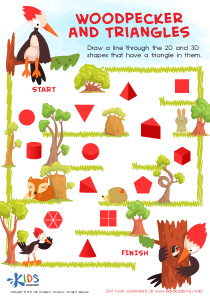
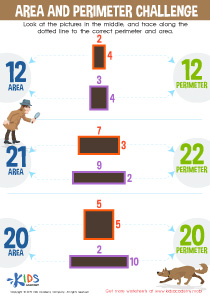
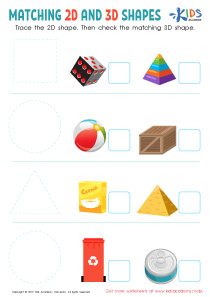
Fraction visualization Extra Challenge Fractions of Shapes Worksheets for Ages 4-8
3 filtered results
Difficulty Level
Grade
Age
-
From - To
Subject
Activity
Standards
Enhance your child’s understanding of fractions with our "Fraction Visualization Extra Challenge: Fractions of Shapes" worksheets, designed for ages 4-8. These engaging activities introduce young learners to fractional concepts by providing visual representations of shapes divided into parts. Children will gain confidence in recognizing, comparing, and working with fractions through a variety of fun tasks and challenges. Perfect for classroom use or at-home practice, these worksheets promote critical thinking and strengthen foundational math skills. Transform learning into an enjoyable experience as your child explores the world of fractions with colorful shapes and creative exercises. Get started today!
Favorites
With answer key
Interactive
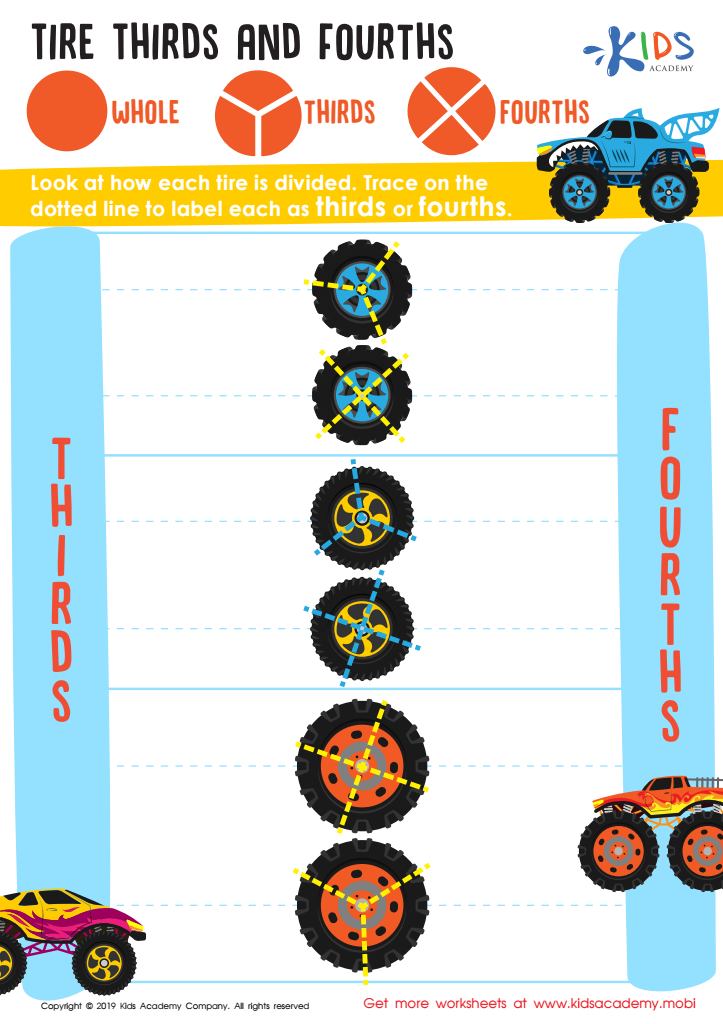
Tire Thirds and Fourths Worksheet
Learning geometry is key in your child's education. Have them identify and name shapes cut into 2, 3 and 4 parts. Test their knowledge with this worksheet - trace the dotted line to label each as third or fourth. Encourage them to keep learning!
 Assign to My Students
Tire Thirds and Fourths Worksheet
Worksheet
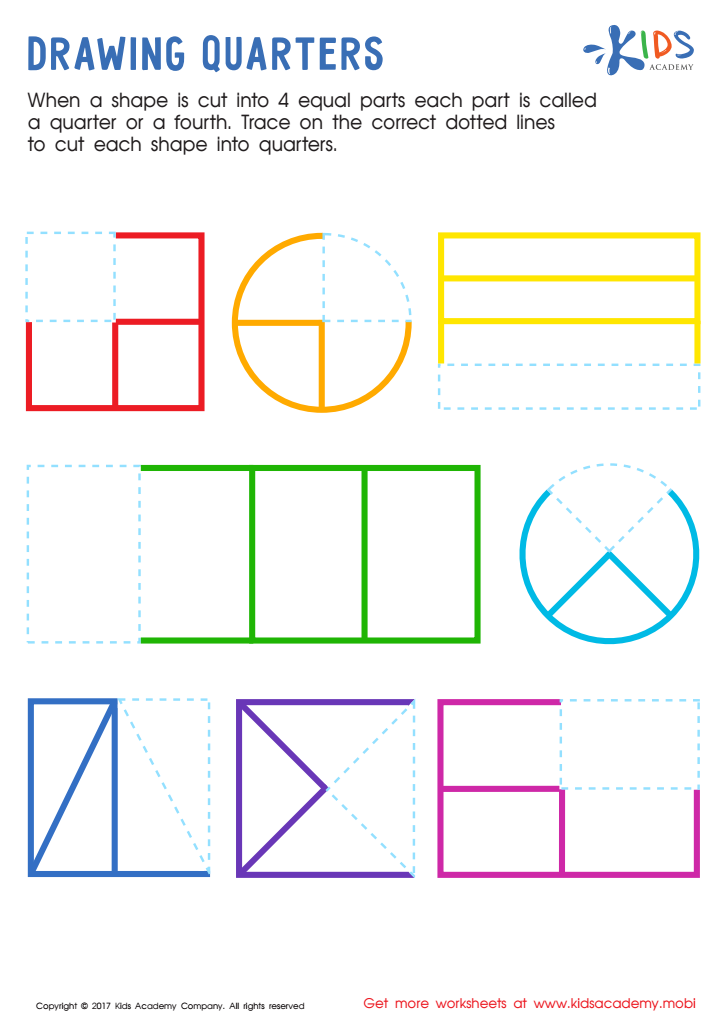
Drawing Quarters Worksheet
Help your kids divide shapes into quarters! Have them trace dotted lines to cut each shape into 4 equal parts. Each of the 4 parts is called a quarter or a fourth. This worksheet will help kids learn more about dividing shapes into four equal parts.
Drawing Quarters Worksheet
Worksheet
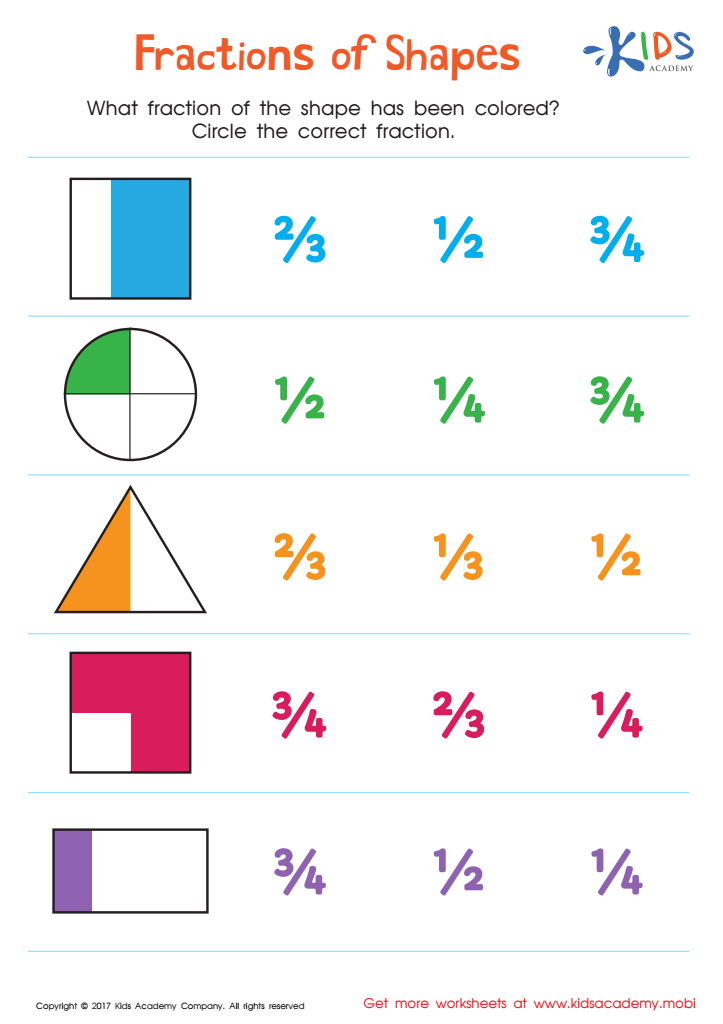
Fractions of Shapes: Math Concept Worksheet
Fractions can be tricky, but with pictures to illustrate them, they become much easier to understand. Our fractions of shapes worksheet is a great way to help children visualize fractions and gain a better understanding of them.
Fractions of Shapes: Math Concept Worksheet
Worksheet
Join Kids Academy for Free
Who is primarily going to use this learning content?








Fraction visualization, especially through the "Fractions of Shapes" challenge for children aged 4-8, plays a crucial role in early mathematical understanding. For both parents and teachers, grasping the importance of this concept ensures that children build a strong foundation in math that will benefit them in higher grades. Visualizing fractions using shapes helps young learners see parts of a whole, making the abstract concept of fractions more concrete and relatable.
For instance, when children learn to divide a circle into halves or quarters, they enhance their spatial reasoning and critical thinking skills. This understanding fosters a sense of proportion and comparison. Engaging with shapes also appeals to learning styles, making it easier for visual learners to master the concept. Moreover, this interactive approach keeps children motivated and encourages collaborative play, which not only boosts their arithmetic abilities but also enhances social skills.
By introducing fun, hands-on challenges like "Fractions of Shapes," parents and teachers provide opportunities for creative expression and exploration. This early engagement also lays the groundwork for future topics in fractions and arithmetic, allowing children to progress confidently in their math education. Ultimately, this early focus on fractional understanding can correlate positively with overall academic success.