Color Identification Extra Challenge Math Worksheets for Ages 4-8
3 filtered results
Difficulty Level
Grade
Age
-
From - To
Subject
Activity
Standards
Color Identification Extra Challenge Math Worksheets for Ages 4-8 blend essential math skills with fun color recognition activities. Designed by educational experts, these worksheets boost counting, addition, and subtraction abilities while reinforcing color identification. Perfect for young learners, each sheet presents engaging challenges that keep kids motivated and eager to learn. Kids can identify and color-code numbers, solve color-specific math problems, and enjoy interactive exercises tailored to their developing minds. Ideal for classroom use, homeschooling, or supplementary practice, these worksheets make learning math an exciting and colorful adventure for children.
Favorites
With answer key
Interactive
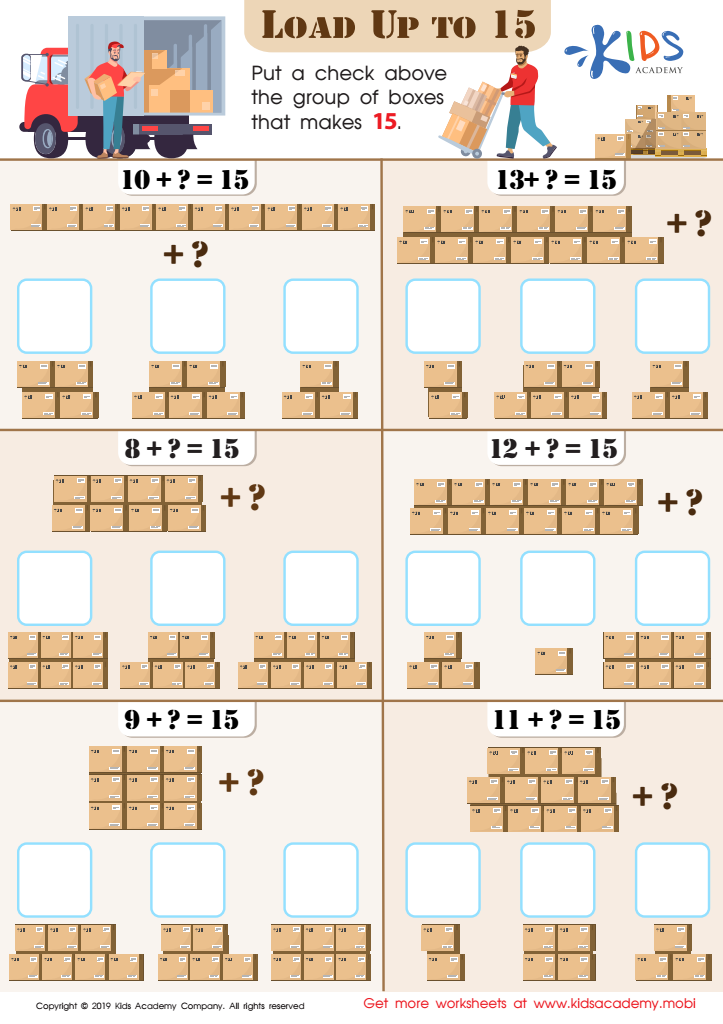
Load up to 15 Worksheet
Your students can practice addition and counting skills with this worksheet. Each equation has 6 boxes to count. Check the group that equals 15 to complete the exercise. Help your kindergartners if they need it.
 Assign to My Students
Load up to 15 Worksheet
Worksheet
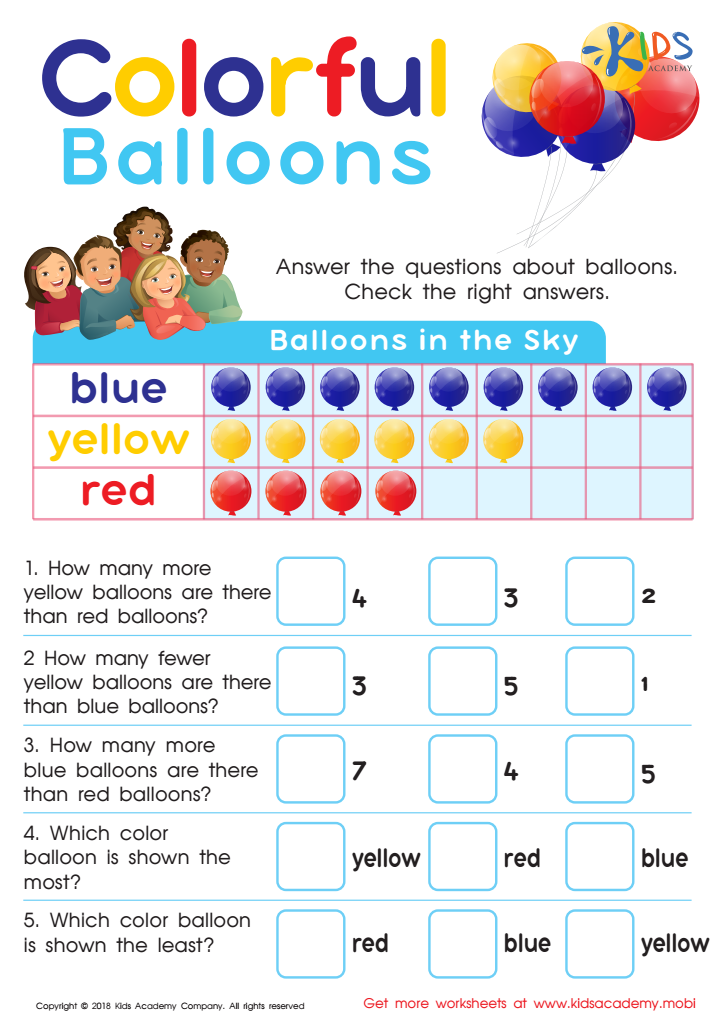
Picture Graphs: Colorful Balloons Worksheet
Kids love balloons at parties! Now you can use them to review graphs and math with this worksheet. View the balloons and count how many of each color, then answer the questions to complete math problems and report important details. Bring joy to your child's studies and make learning fun!
Picture Graphs: Colorful Balloons Worksheet
Worksheet
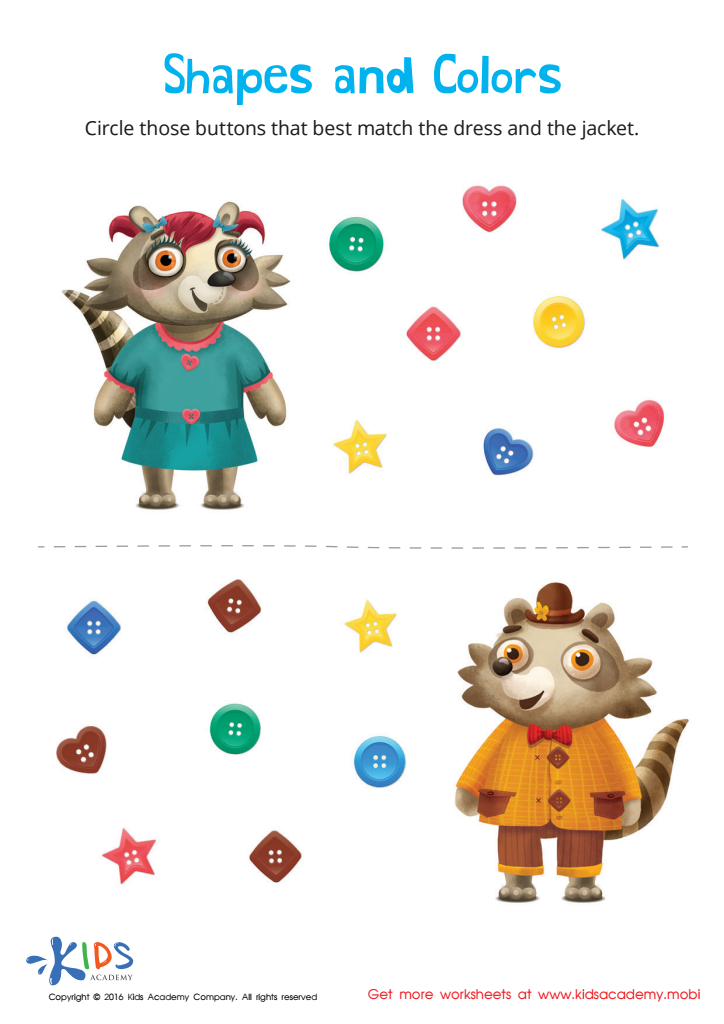
Matching: Shapes and Colors Worksheet
Help Mr. and Mrs. Raccoon find the right buttons to match their shirts! Kids will identify shapes and colors and learn to match them correctly.
Matching: Shapes and Colors Worksheet
Worksheet
Join Kids Academy for Free
Who is primarily going to use this learning content?








Color Identification Extra Challenge Math for ages 4-8 plays a pivotal role in early childhood education by blending fundamental mathematical skills with cognitive development and creativity. For parents and teachers, this type of activity is invaluable not just for teaching math but also for fostering a holistic learning environment.
Firstly, color identification is essential for young children as it aids in the recognition of patterns, contributes to the development of their visual perception, and enhances their memory. Associating colors with numbers or mathematical problems helps in anchoring abstract concepts into something more tangible and understandable, which is crucial for this age group.
Secondly, incorporating challenges based on color identification in math exercises can enhance problem-solving skills and critical thinking. It pushes children to observe closely, differentiate, and categorize information accurately, paving the way for advanced mathematical concepts later on.
Moreover, these activities present learning as an enjoyable and engaging process. Maintaining a child’s interest is fundamental in fostering a positive attitude toward education. This kind of integrative practice not only develops mathematical and cognitive skills but also creativity, making learning multifaceted and comprehensive.
For parents and teachers, adopting these approaches means ensuring the development of a well-rounded skill set in children, priming them for future academic success and everyday problem-solving.