Recognizing shapes Extra Challenge Math Worksheets for Ages 4-8
3 filtered results
-
From - To
Unlock your child’s mathematical potential with our "Recognizing Shapes Extra Challenge Math Worksheets," specially designed for ages 4 to 8. These engaging worksheets offer a fun way for young learners to explore different shapes, enhancing their recognition skills and foundational math knowledge. Packed with challenging activities, including coloring, tracing, and matching, they promote critical thinking and problem-solving abilities. Our worksheets encourage creativity while reinforcing essential concepts in an enjoyable format. Perfect for home or classroom use, these extra challenges will keep your little ones entertained while they build confidence in their shape recognition skills. Start the adventure in learning today!
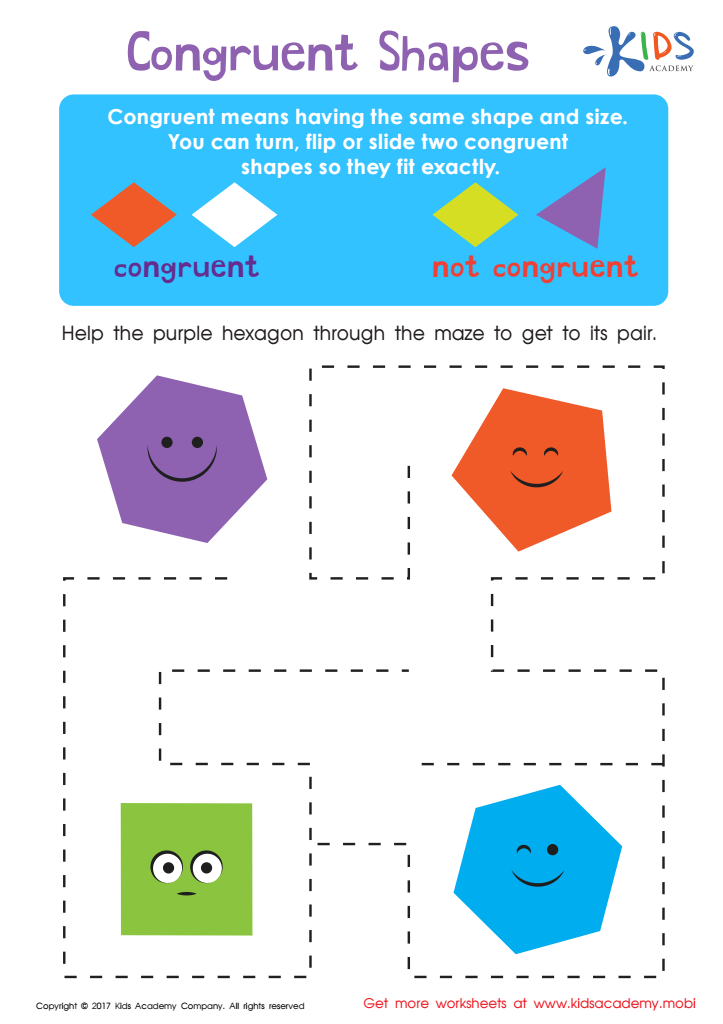
Congruent Shapes Worksheet
 Assign to My Students
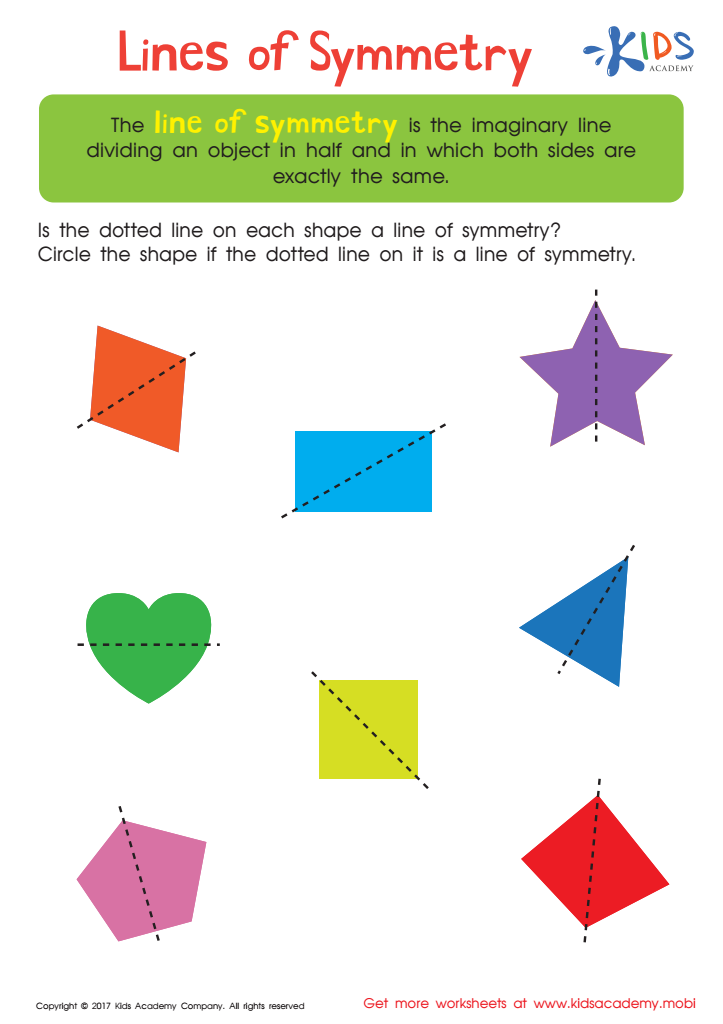
Lines of Symmetry Printable
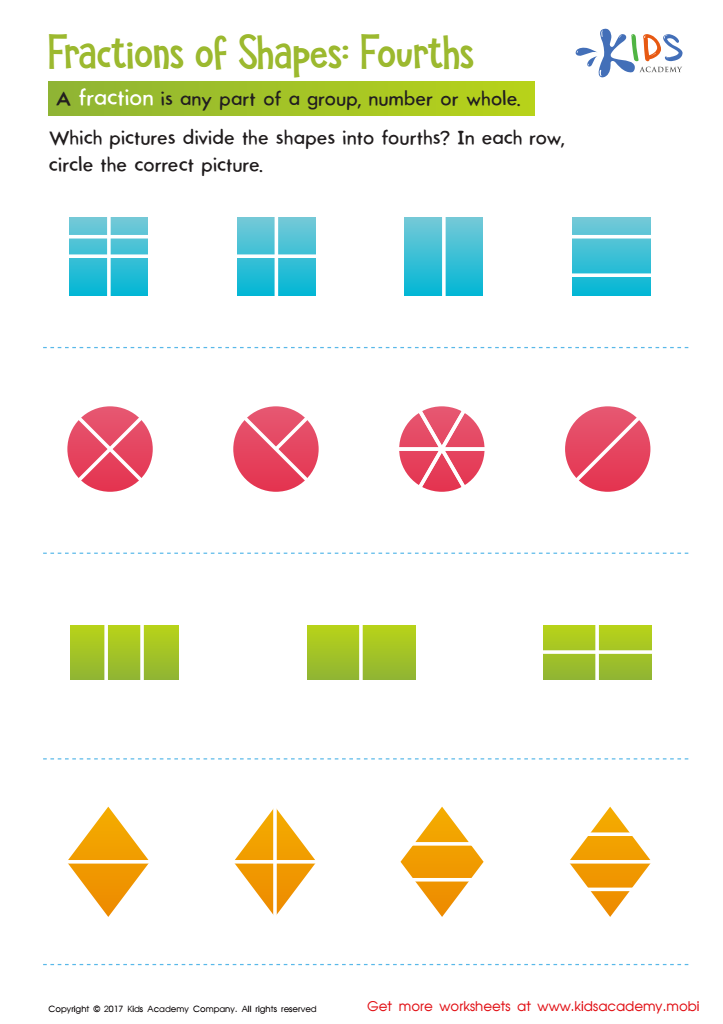
Fractions of Shapes Worksheet








Recognizing shapes is a fundamental skill essential for developing spatial awareness and critical thinking in children aged 4-8. Engaging in activities like "Recognizing Shapes Extra Challenge Math" fosters early math skills by helping children identify, describe, and categorize various shapes. This foundational understanding enriches their overall mathematical experience and prepares them for more complex concepts.
Parents and teachers should care about this because recognizing shapes enhances problem-solving abilities, as it helps children make connections between what they see and how they understand their environment. Additionally, spatial reasoning is linked to higher achievement in other academic areas, including science and engineering.
The "Extra Challenge" component provides an opportunity for advanced learners to explore shapes beyond basic recognition, promoting critical thinking and creativity. Involvement in these activities also improves fine motor skills through hands-on manipulation of shape manipulatives.
Furthermore, by encouraging engagement in shape recognition, parents and teachers can boost confidence in young learners and reinforce a love of mathematics at an early age. Ultimately, nurturing shape recognition supports cognitive development, social interaction through collaborative activities, and lifelong learning skills, making it crucial for children's academic success and personal growth.