Understanding graphs Extra Challenge Math Worksheets for Ages 4-8
3 filtered results
-
From - To
Dive into our "Understanding Graphs Extra Challenge Math Worksheets for Ages 4-8" and unlock your child’s analytical potential! These engaging worksheets introduce young learners to graphs in a fun and interactive way. Through a series of age-appropriate challenges, kids will gain confidence in reading, interpreting, and creating various types of graphs. Perfect for early math enthusiasts, these worksheets are crafted to enhance critical thinking, problem-solving skills, and data comprehension. Whether for homeschooling or extra practice, our worksheets make understanding graphs an exciting adventure. Empower your child with essential math skills today!
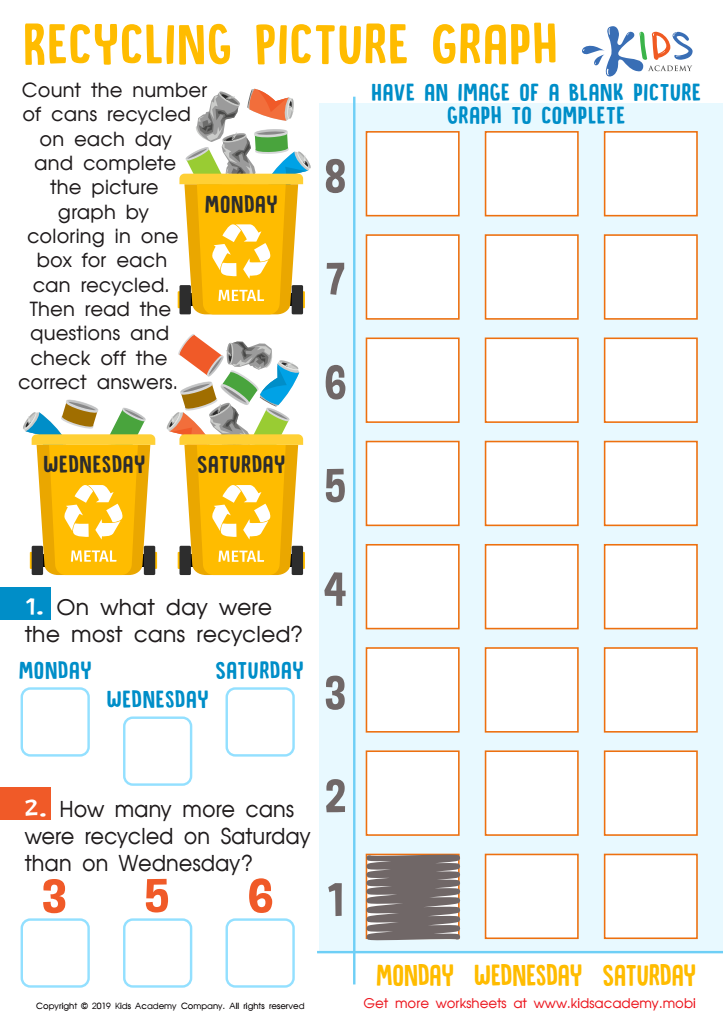
Recycling Picture Graph Worksheet
 Assign to My Students
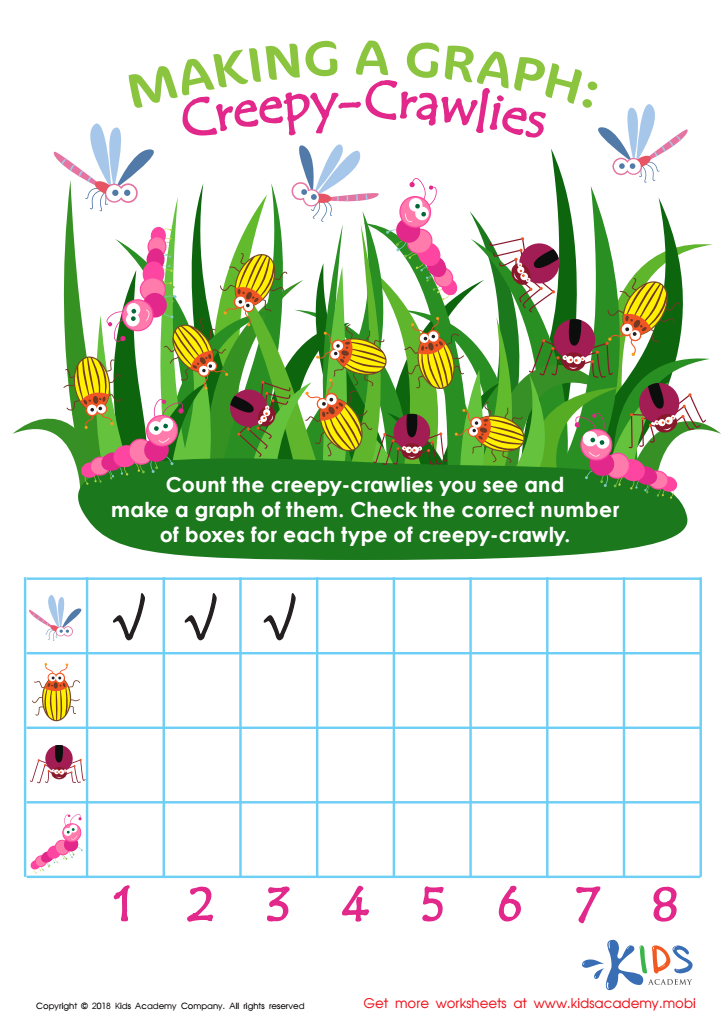
Making a Graph: Creepy Crawlies Worksheet
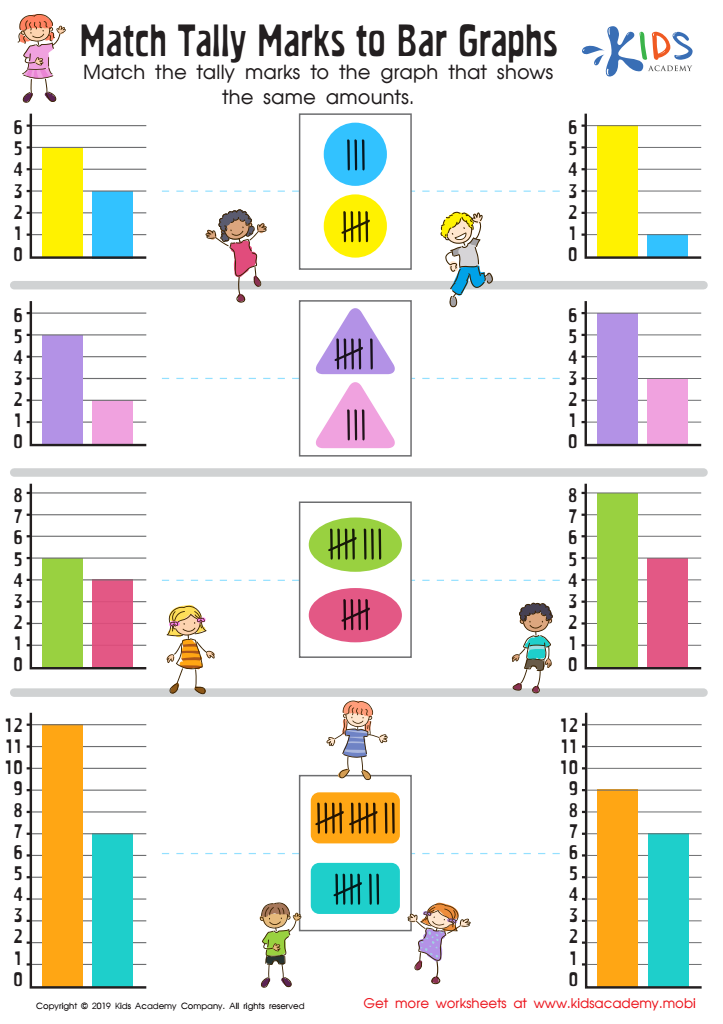
Match Tally Marks to Bar Graphs Worksheet


%20(1).jpg)





Understanding graphs is a vital skill that parents and teachers should nurture in children aged 4-8 because it lays the foundation for critical thinking and data interpretation. At an early age, children are naturally curious and eager to make sense of the world around them. Introducing graphs during these crucial years capitalizes on this innate curiosity, transforming abstract concepts into visual displays that are easier for young minds to grasp.
First and foremost, interpreting graphs enhances mathematical skills by incorporating counting, comparing quantities, and identifying patterns—core elements of early math education. As children engage with graphs, they learn to organize information visually, fostering better comprehension and memory retention. For example, using a simple bar graph to display favorite fruits not only teaches counting but also helps kids understand categories and quantities.
Additionally, graph literacy builds a strong foundation for future educational endeavors. As students progress through their academic journey, they'll encounter increasingly complex data in subjects like science, social studies, and even literature. Early exposure ensures that they won't just be passively looking at data but actively interpreting it.
Moreover, understanding graphs supports everyday decision-making skills. Whether it's reading a weather chart, following sports statistics, or planning personal activities, being able to extract meaningful information from visual displays empowers children to make informed choices.
Investing in graphing skills early on is an investment in a child's academic success and practical ability to navigate a data-centric world.








