Unlock your child’s potential with our Spelling Practice Extra Challenge Writing Worksheets designed for ages 4-8! These engaging worksheets offer an energetic way for young learners to develop their spelling skills and boost their confidence. Featuring fun activities and creative prompts, each worksheet encourages kids to sound out words, enhance their vocabulary, and practice writing. Ideal for both home and classroom use, our extra challenge worksheets cater to various learning styles, making spelling enjoyable and accessible. Perfect for reinforcing key concepts, these resources will help your child thrive academically while fostering a lifelong love for learning and language. Explore the fun today!

Check out this FREE Trial Lesson on Writing for age 4-8!

Proper Nouns

Favorites
With answer key
Interactive
  • 4-8
  • Spelling practice
  • Writing
  • Extra Challenge
Plural Nouns Practice Worksheet

Plural Nouns Practice Worksheet

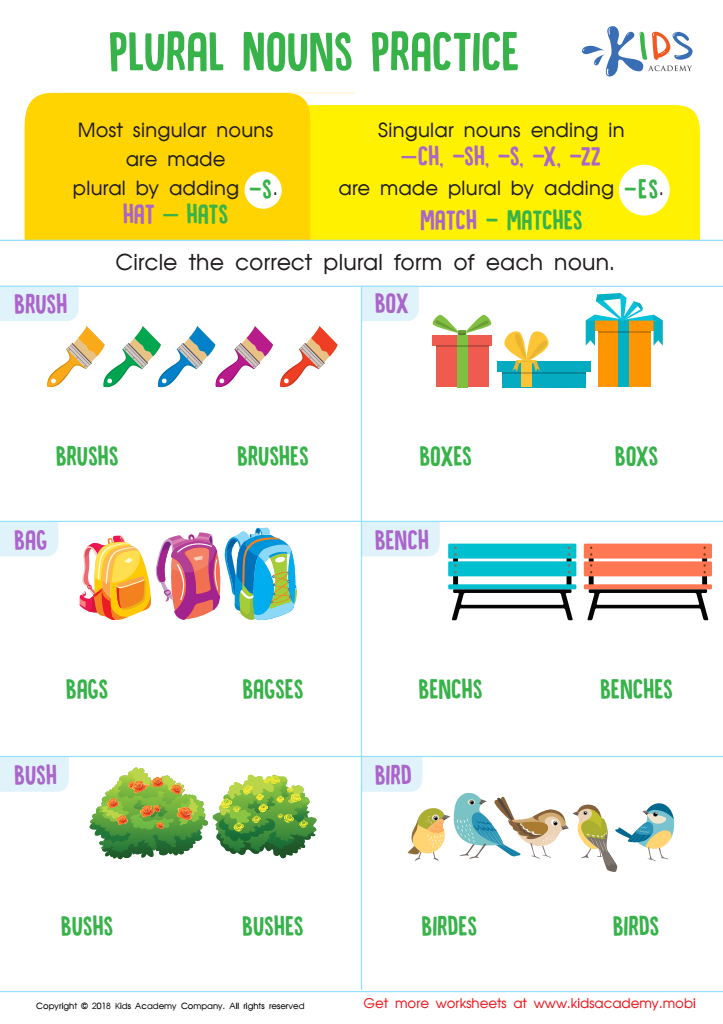
Explain to your child that most singular nouns become plural by adding "-s". E.g. "cat"->"cats". For words ending in "-ch", "-sh", "-s", "-x", or "-zz", add "-es". E.g. "buzz"->"buzzes". Then, get them to circle the right plural form of each noun on the worksheet.
Plural Nouns Practice Worksheet
Worksheet
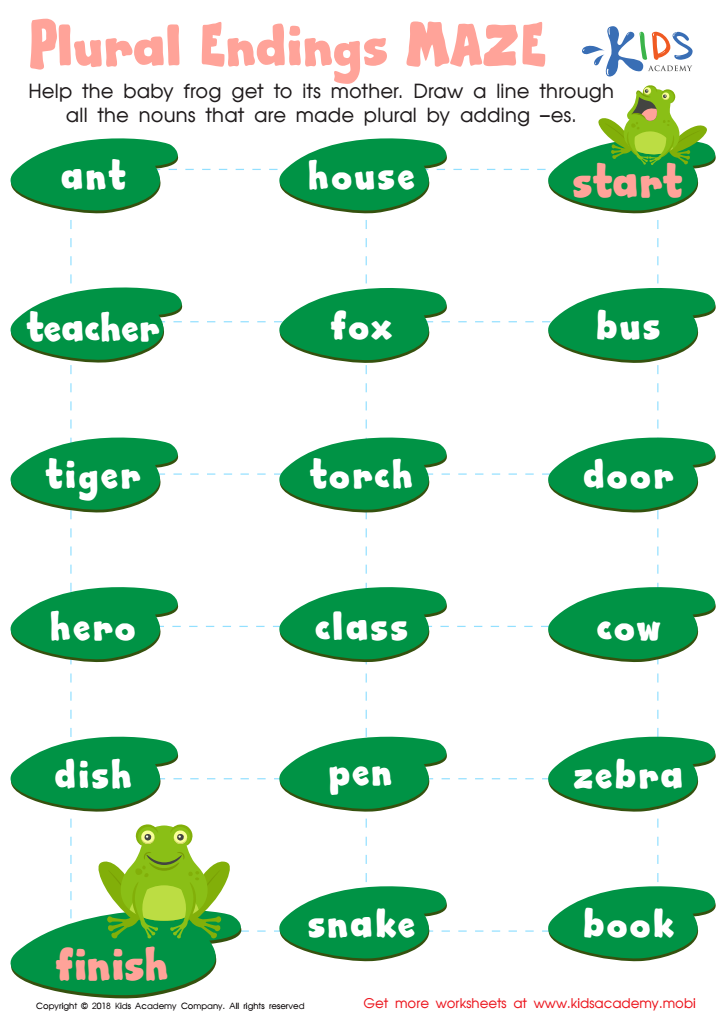
Plural Endings Maze Worksheet

Plural Endings Maze Worksheet

Help your child have fun while learning new things with this worksheet. Does your child know that some nouns require '-es' to make them plural? Use this pdf to teach them the rule and get the little frog to its mother – draw a line through the words with '-es' plural forms.
Plural Endings Maze Worksheet
Worksheet
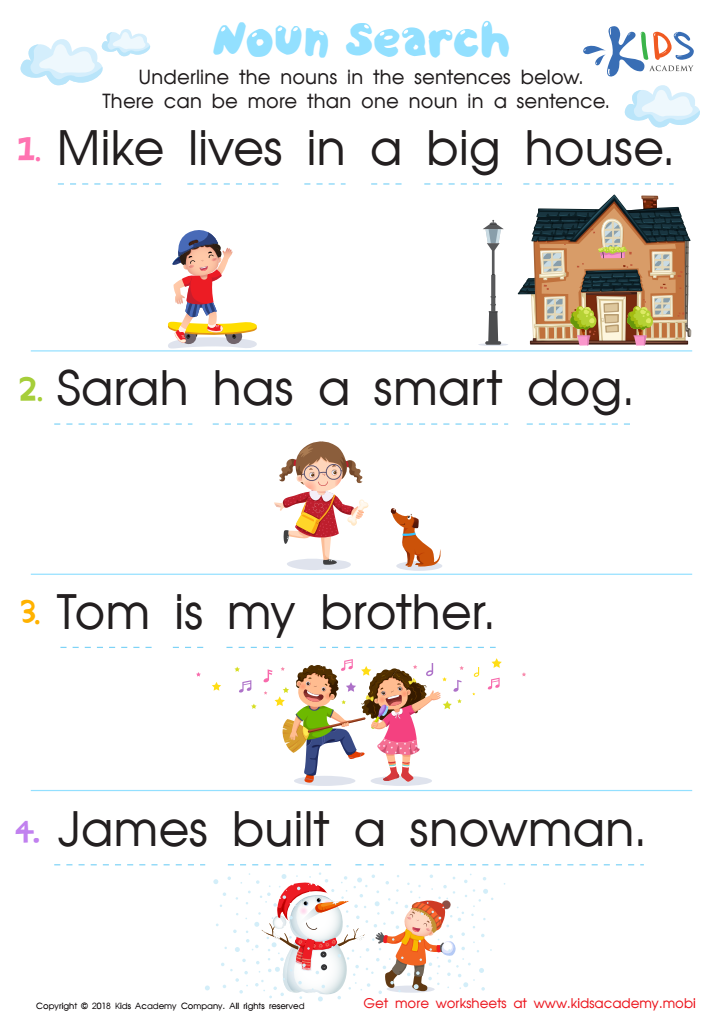
Noun Search Worksheet

Noun Search Worksheet

To help your children learn the basics of grammar, start with nouns, verbs, adverbs and adjectives. This noun search worksheet will help your child understand the most common part of speech - the noun. Ask them to underline the nouns in each sentence. This is a great way to start learning proper grammar.
Noun Search Worksheet
Worksheet
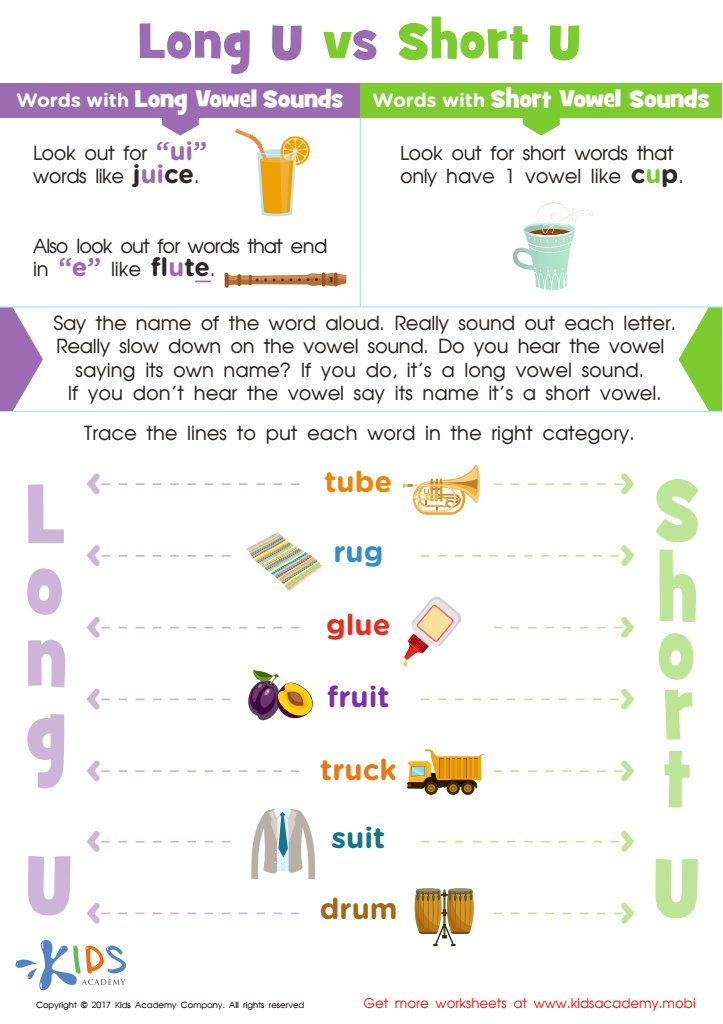
Long and Short Vowel U Worksheet

Long and Short Vowel U Spelling Worksheet
Help your child learn long and short vowel sounds with this fun long and short vowel U worksheet! Kids can become proficient spellers by mastering simple spelling tricks and sounding out letters.
Long and Short Vowel U Spelling Worksheet
Worksheet
Verbs Word Search Worksheet

Verbs Word Search Worksheet

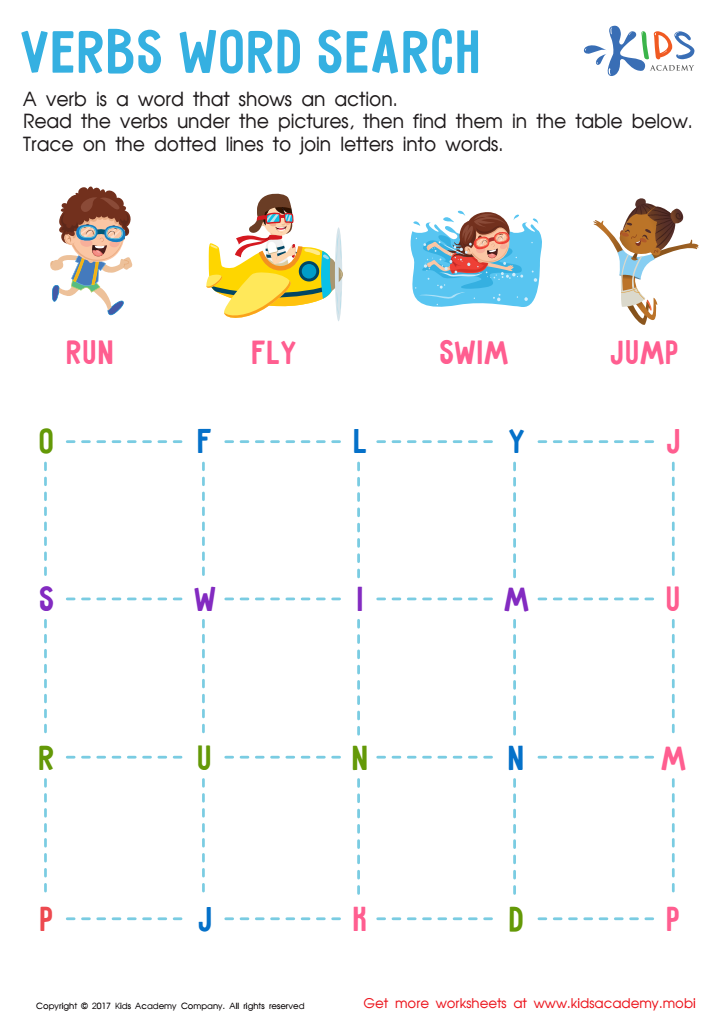
Ask your child if they understand the meaning of the word "verb". If not, explain that it's a word that shows an action. Give examples of familiar verbs. Then look at the pictures in the tracing sheet and read the words. Ask your child to follow the dotted lines to find the hidden words. Perfect tool to teach spot and use verbs!
Verbs Word Search Worksheet
Worksheet
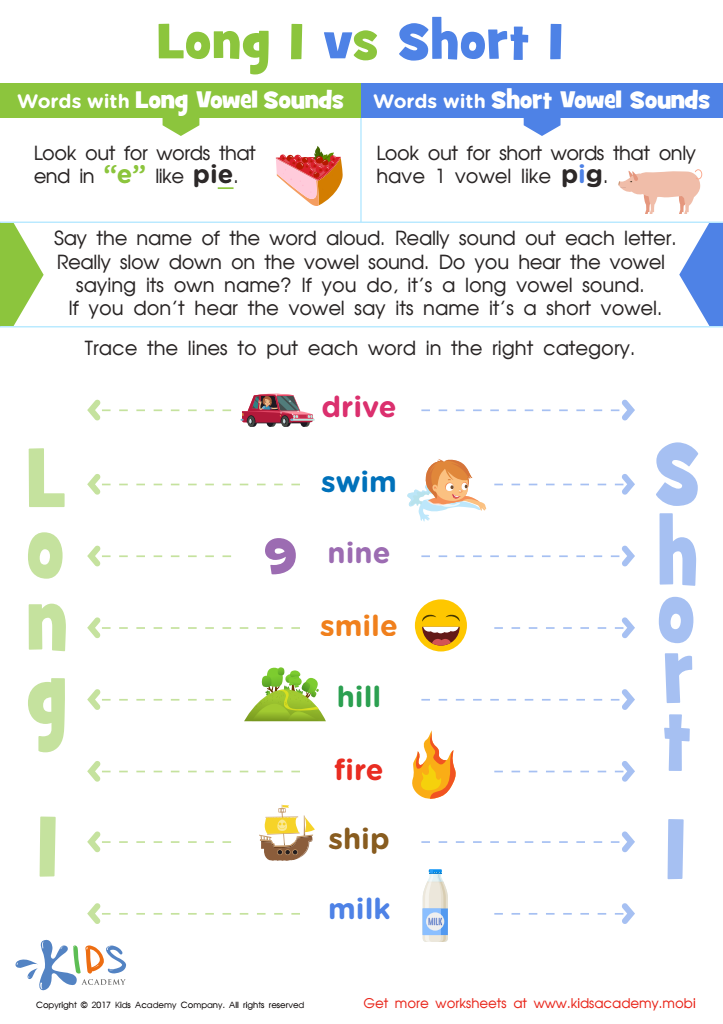
Long and Short Vowel I Worksheet

Long and Short Vowel I Spelling Worksheet
When it comes to long "I" sounds, kids should look out for the letter "E" at the end. With examples and sounding out words, kids will improve spelling skills with this long/short "I" worksheet!
Long and Short Vowel I Spelling Worksheet
Worksheet
Letter or Word? Worksheet


Letter or Word? Worksheet

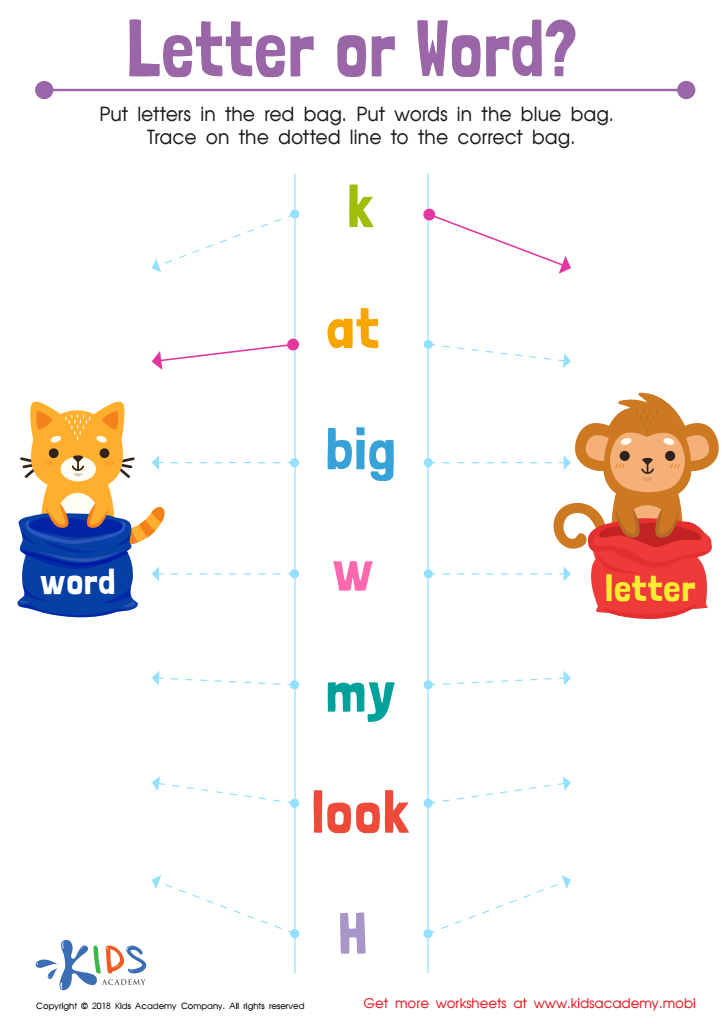
Help your kids differentiate between words and letters. If they can recite their alphabets and identify common words, this tracing sheet will be a breeze. Have them trace on the dotted lines to place the letters in the red bag with the kitten, and the words in the blue bag with the monkey.
Letter or Word? Worksheet
Worksheet


Spelling practice is crucial for children ages 4-8 as it lays the foundation for their literacy skills. At this stage, children are not only learning to recognize letters and sounds but also beginning to connect them to form words. Through Spelling Practice Extra Challenge Writing, children enhance their vocabulary, develop phonemic awareness, and improve their handwriting skills.

Engaging in spelling challenges encourages children to think critically about language and fosters independent writing abilities. It allows them to experiment with word forms and understand the relationship between sounds and their written representations. When parents and teachers provide consistent spelling practice, they help children build confidence in their abilities to express ideas, leading to a more profound love for reading and writing.

Moreover, spelling practice can be differentiated to cater to varying skill levels, allowing every child to feel successful. It provides opportunities for collaborative learning, enabling peers to support and encourage each other. By integrating fun spelling games and creative writing exercises, parents and teachers can cultivate a positive learning environment that makes spelling less intimidating and more enjoyable. Ultimately, a strong emphasis on spelling practice sets children on a path to becoming proficient communicators, empowering them in their academic journey.