Alphabet Recognition Extra Challenge ABC Order Worksheets for Ages 4-9
3 filtered results
-
From - To
Enhance your child's literacy skills with our Alphabet Recognition Extra Challenge worksheets, designed for ages 4-9! These engaging resources focus on helping young learners master the order of the alphabet while improving their recognition abilities. Each worksheet presents fun and interactive activities that encourage students to identify letters and practice sequencing from A to Z. Perfect for independent learning or classroom use, our printable sheets cater to varied skill levels, ensuring everyone from beginners to advanced learners can excel. Foster a love for learning and build foundational reading skills with our ABC Order worksheets today!
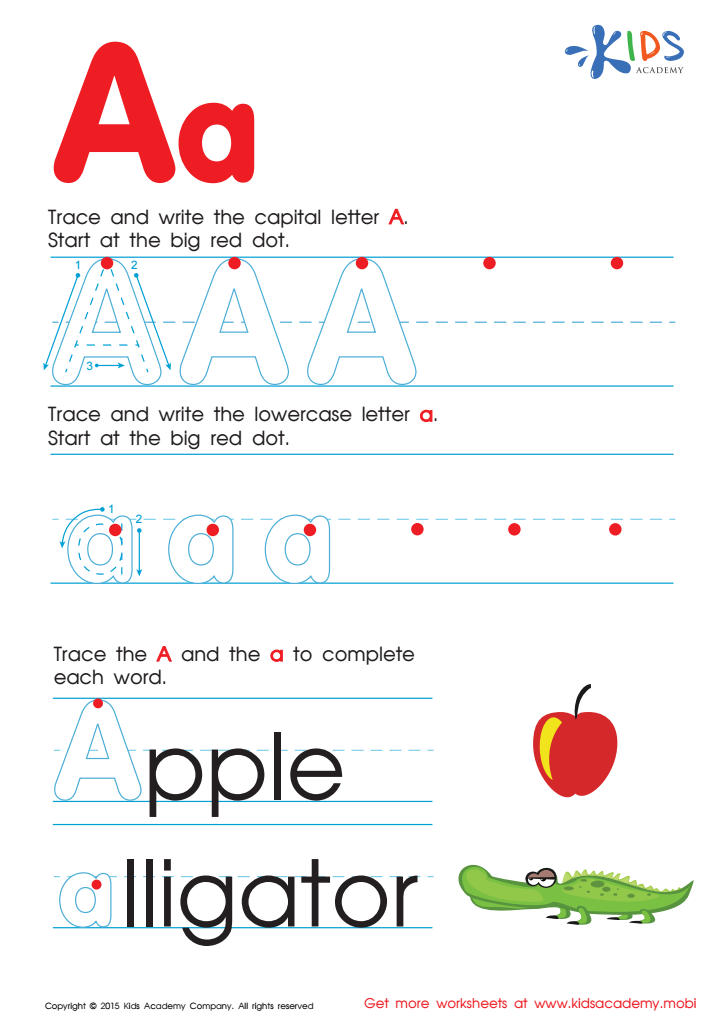
Letter A Tracing Page
 Assign to My Students





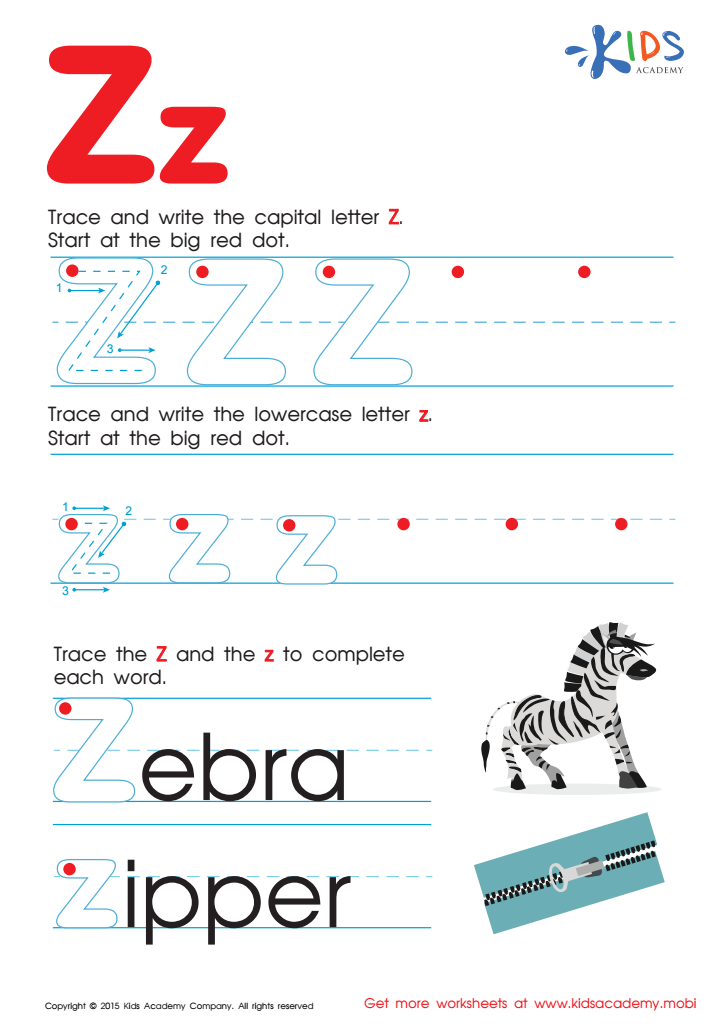
Letter Z Tracing Page
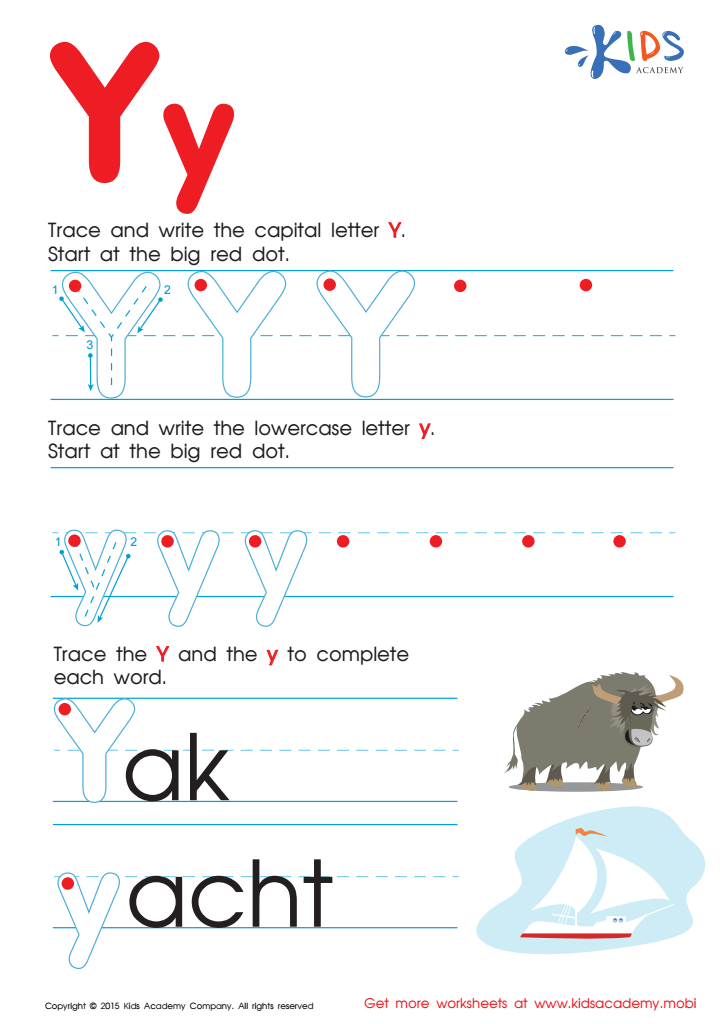
Letter Y Tracing Page







Alphabet recognition is a foundational skill critical for early literacy development in children aged 4-9. Parents and teachers should care about Alphabet Recognition Extra Challenge ABC Order because it significantly enhances children's ability to identify, understand, and manipulate letters. Recognizing letters is essential for reading and writing, as it allows children to decode words and build vocabulary.
By engaging in alphabet recognition activities organized in ABC order, children not only learn the sequence of the alphabet but also strengthen their cognitive skills, such as memory and critical thinking. This structured method of learning helps them to categorize information, making it easier to retrieve letters and words later.
Furthermore, children who master alphabet order are often more confident in their reading skills, leading to increased enthusiasm for learning. This early intervention can lead to lasting effects on academic success, as literacy skill gaps usually manifest early on.
Lastly, integrating fun and challenge into the learning process makes it a more engaging experience, fostering a love for reading and learning. Thus, both parents and teachers play a vital role in supporting these activities, promoting a crucial stepping stone in a child's educational journey.








