Vocabulary expansion Extra Challenge Short Vowels Worksheets for Ages 4-9
3 filtered results
Difficulty Level
Grade
Age
-
From - To
Subject
Activity
Standards
Boost your child’s vocabulary skills with our "Extra Challenge Short Vowels Worksheets" designed for ages 4-9! These engaging worksheets focus on short vowel sounds, helping young learners decode words with confidence. Featuring captivating activities that blend learning and fun, children will explore new vocabulary through interactive exercises that challenge their understanding. Each worksheet is crafted to promote phonetic awareness and reinforce language skills while sparking creativity in what they learn. Perfect for classroom or at-home learning, these extra challenge worksheets make vocabulary expansion enjoyable and effective. Watch your child blossom into a confident communicator with our unique educational resources!
Favorites
With answer key
Interactive
Short Vowel Sound U Worksheet
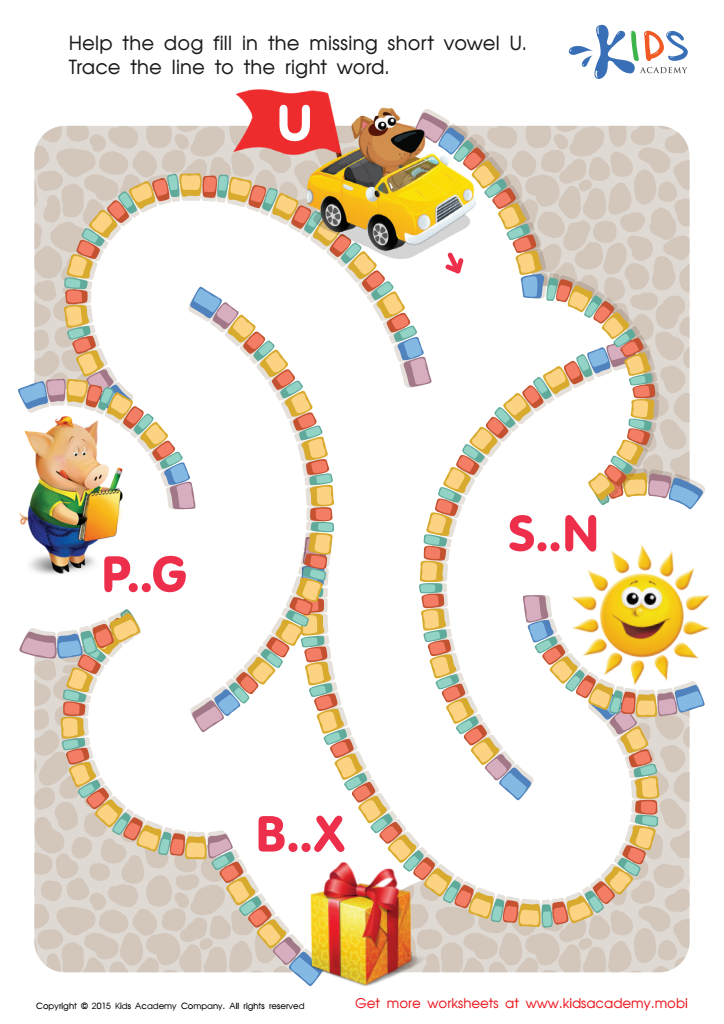
Practice abc phonics to help young learners link sounds to letters. This free printable phonics worksheet helps your kid learn the short vowel sound U. Guide them through the maze to help the dog complete the word "sun". Make sure they say the word out loud to emphasize the short U sound. Check out more phonics worksheets with mazes here.
 Assign to My Students
Short Vowel Sound U Worksheet
Worksheet
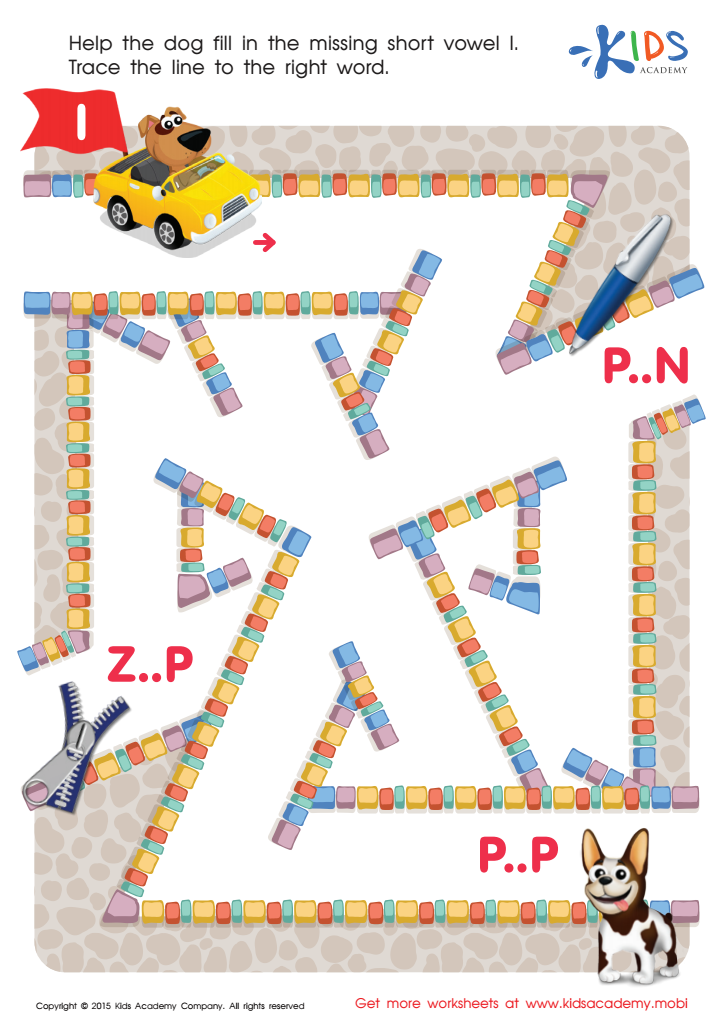
Short Vowel Sound I Worksheet
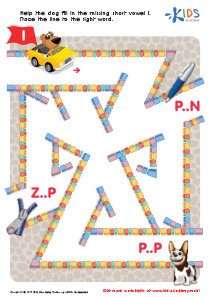
This free printable phonics worksheet will get your kid prepped for reading! It's a maze to help the dog complete the word “zip” with the missing letter I. Have your kid say the word aloud to learn the I sound. It's a great way to practice reading, writing and spelling skills. Check out here for more phonics worksheets!
Short Vowel Sound I Worksheet
Worksheet
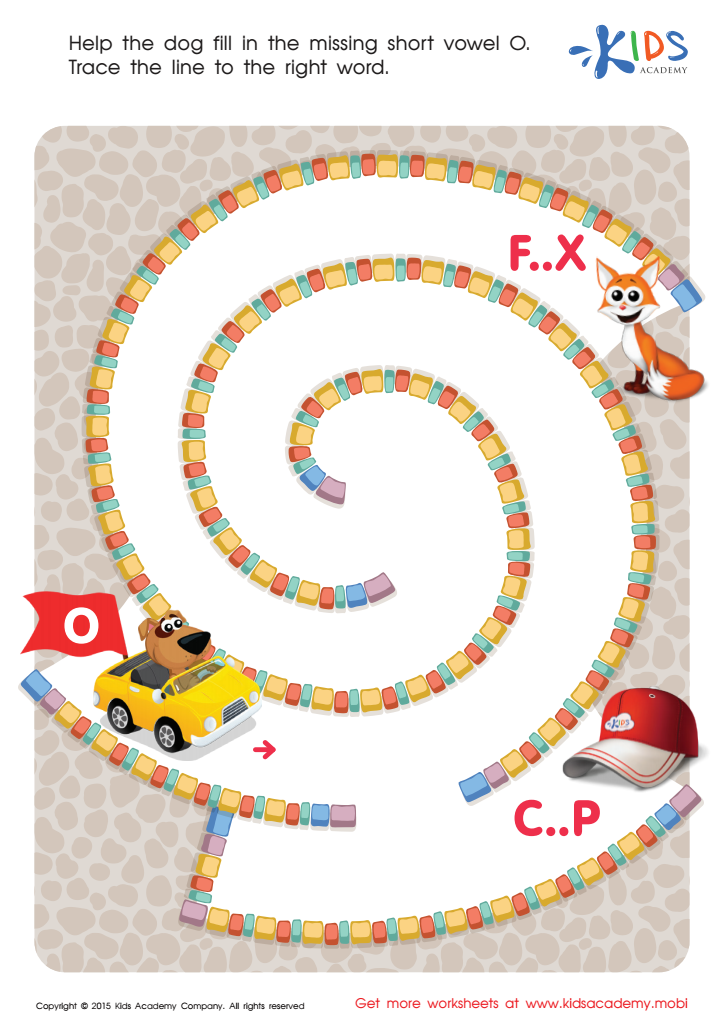
Short Vowel Sound O Worksheet
Help your child learn the short vowel sound O with this fun and free printable phonics worksheet! They'll need to complete the maze to help the dog finish the word "fox" with the missing letter O. Engage their fine motor muscles while they color or trace the maze with crayon or pencil. This educational activity is sure to bring a smile to your little learner's face! For more phonics worksheets, check here.
Short Vowel Sound O Worksheet
Worksheet
Join Kids Academy for Free
Who is primarily going to use this learning content?



Vocabulary expansion during early childhood is crucial for cognitive development, literacy skills, and overall communication competence. For children ages 4-9, short vowel sounds serve as the foundation for phonemic awareness, which underpins reading and writing abilities. Understanding short vowels aids children in decoding words, enhancing their reading fluency and comprehension.
Parents and teachers should prioritize vocabulary expansion through engaging activities, particularly those that focus on short vowel sounds. Children develop language skills primarily through interaction and exposure to new words. Incorporating vocabulary challenges can make learning enjoyable and promote a lifelong love for words. When children learn to distinguish short vowels, they gain essential decoding skills that help them progress to more complex literacy tasks, such as spelling and writing.
Furthermore, a robust vocabulary is linked to improved academic performance across subjects. Vocabulary-rich environments encourage critical thinking and problem-solving skills, as children become more adept at articulating their thoughts and understanding others. Parents and teachers can create a supportive atmosphere by incorporating games, reading diverse books, and discussing new words, ensuring children build a solid linguistic foundation for their future educational journeys. Ultimately, investing time in vocabulary development benefits overall communication skills and academic success.