Basic counting skills Extra Challenge Worksheets for Ages 4-9
4 filtered results
-
From - To
Enhance your child's counting abilities with our Basic Counting Skills Extra Challenge Worksheets, designed for ages 4-9. These engaging worksheets offer a fun way to practice essential counting concepts, from recognizing and writing numbers to simple addition and subtraction exercises. Tailored for varying skill levels, our activities promote confidence and mastery in counting through interactive exercises and colorful designs. Parents and educators can easily incorporate these resources into daily learning routines, ensuring a solid mathematical foundation. Explore our collection today and watch your young learners flourish in their counting skills, preparing them for future mathematical challenges!
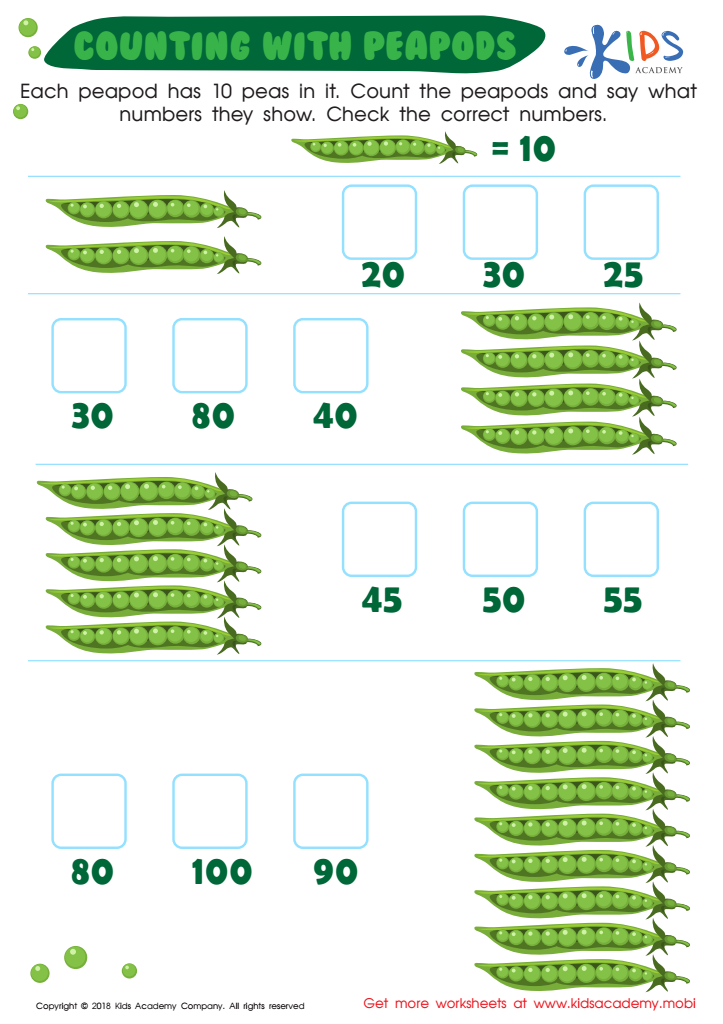
Number Worksheet: Counting With Peapods
 Assign to My Students
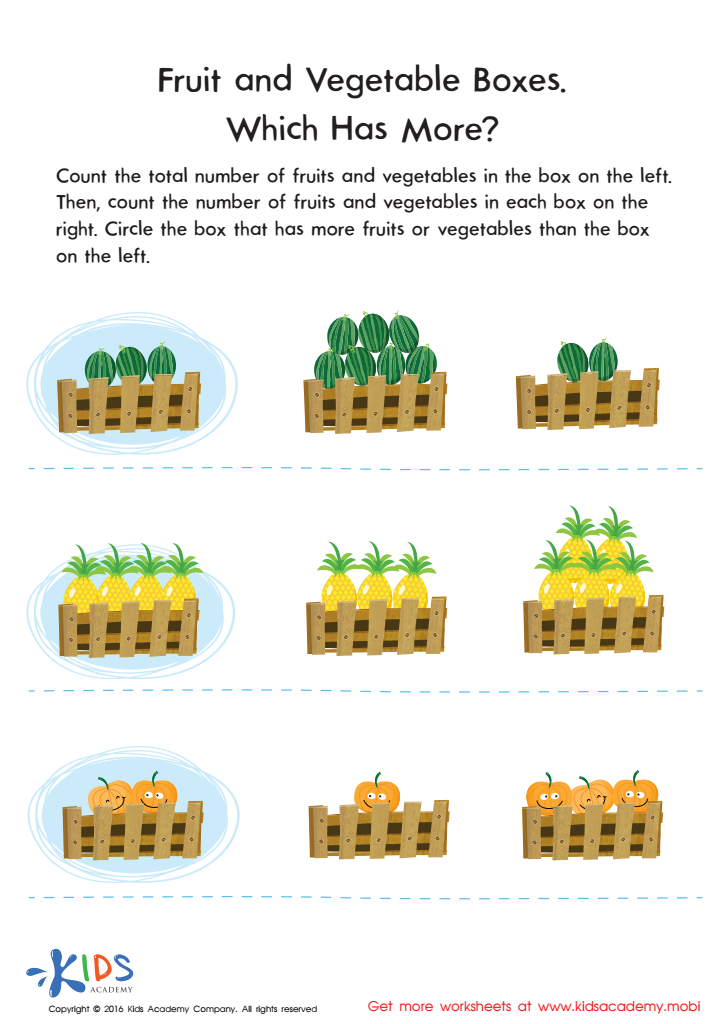
Which Has More? Size Worksheet
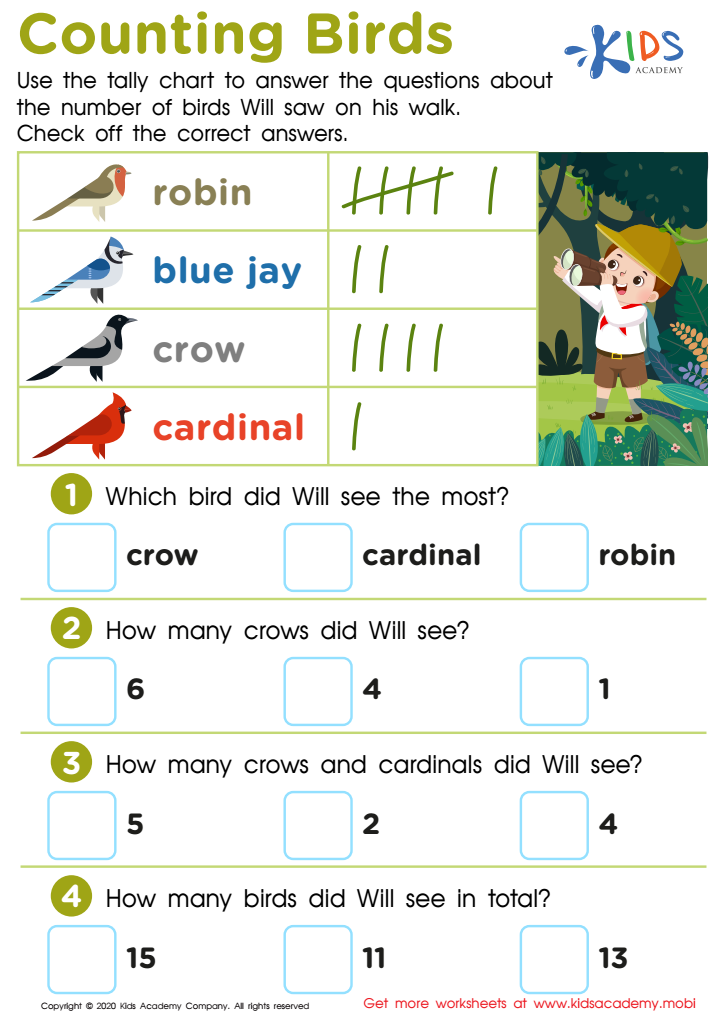
Counting Birds Worksheet
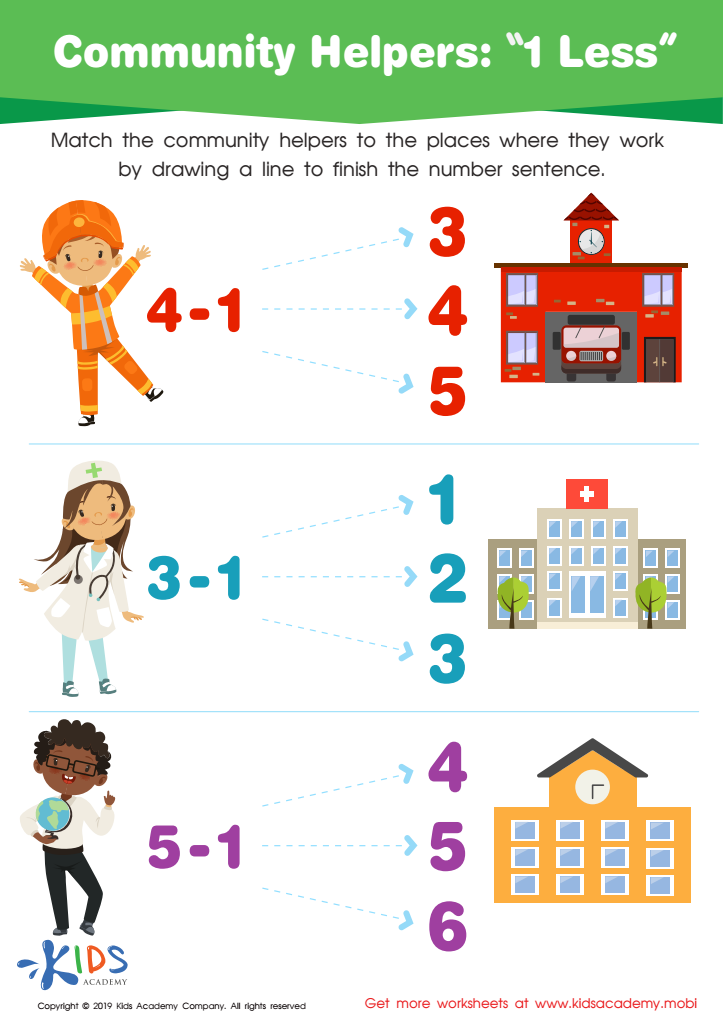
Community Helpers: 1 less Worksheet






.jpg)
Basic counting skills are foundational for children's cognitive development and lay the groundwork for future mathematical understanding. Parents and teachers should care about fostering these skills because they cultivate essential problem-solving abilities, logical thinking, and pattern recognition. For children aged 4-9, mastering counting means more than just numbers; it promotes confidence in tackling more complex concepts later on.
Counting introduces children to numeric relationships and helps them understand the concept of quantity, which is critical for tasks such as grouping, classifying, and basic arithmetic. Engaging in activities that promote counting, such as counting objects, recognizing numbers, and basic addition or subtraction games, helps sharpen these skills dynamically.
Moreover, early mastery of counting promotes a positive attitude towards mathematics, reducing anxiety and enhancing willingness to learn more. Involving parents through interactive games or real-life applications can reinforce counting skills at home, blending fun with learning. Teachers can also integrate counting games in the classroom to create an engaging environment where children feel motivated to learn collaboratively.
In summary, prioritizing basic counting skills is vital, as it not only supports mathematical proficiency but also contributes to overall cognitive development, paving the way for academic success.








