Categorization skills Extra Challenge Worksheets for Ages 4-9
5 filtered results
-
From - To
Enhance your child's learning experience with our Categorization Skills Extra Challenge Worksheets for ages 4-9! These worksheets provide engaging and interactive activities designed to nurture critical thinking and categorization abilities. Each worksheet presents fun challenges that encourage children to group items based on attributes like color, shape, and size, building their cognitive skills while enjoying the learning process. Perfect for varying skill levels, these resources make learning enjoyable at home or in the classroom. Foster creativity and organization in your child's mind from an early age. Explore our collection today and watch your young learners thrive!
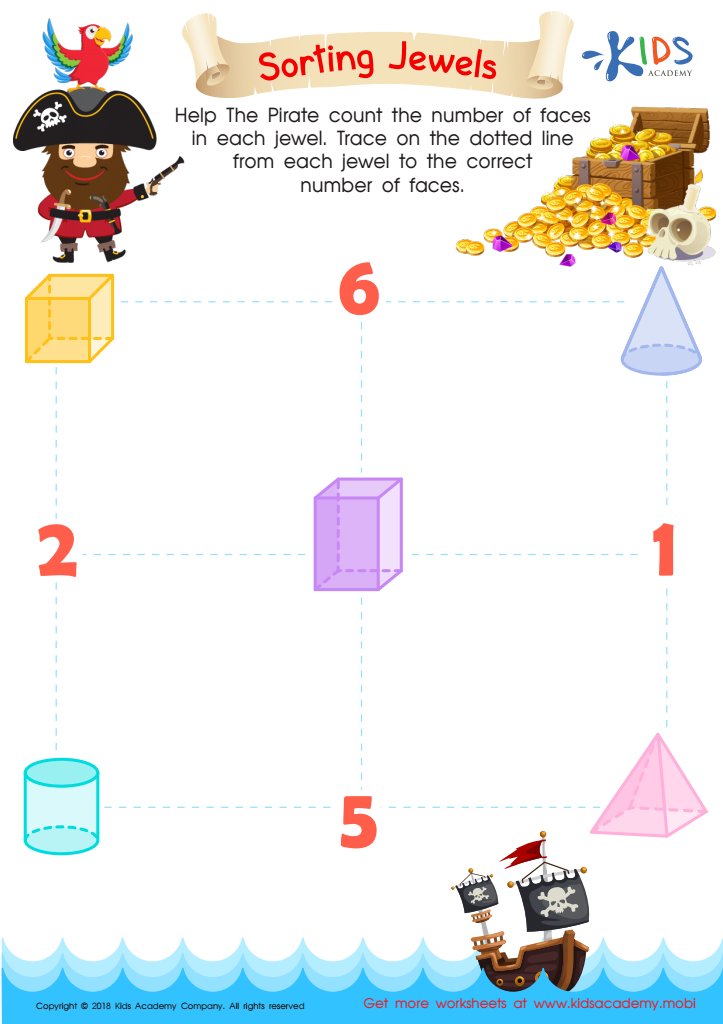
Sorting Jewels Worksheet
 Assign to My Students
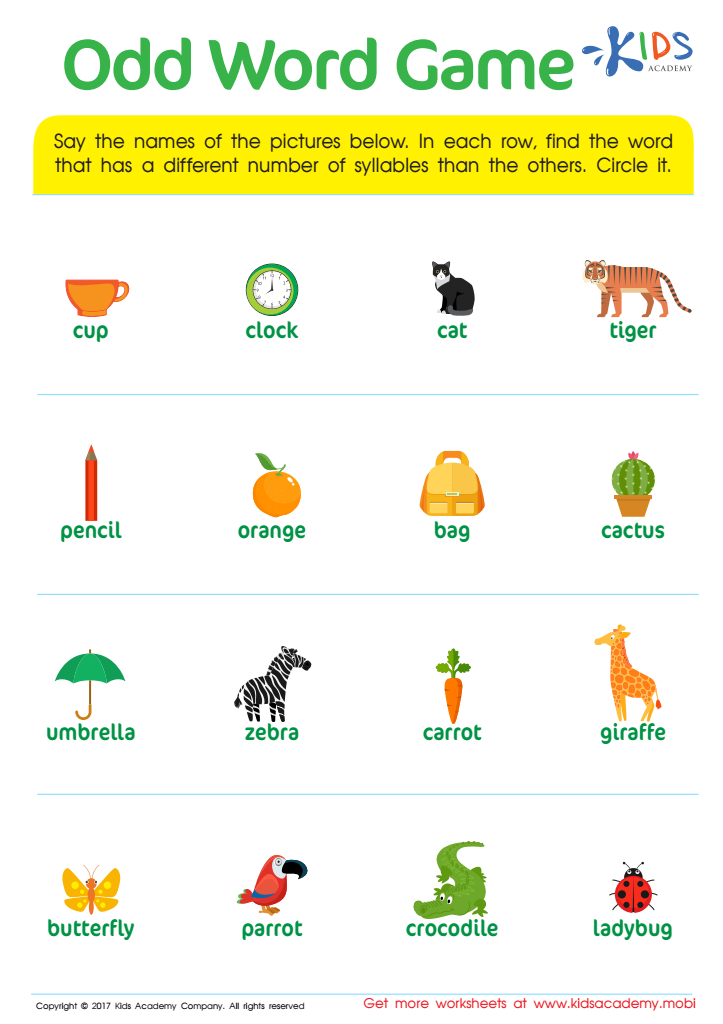
Count Syllables: Odd Word Game Worksheet
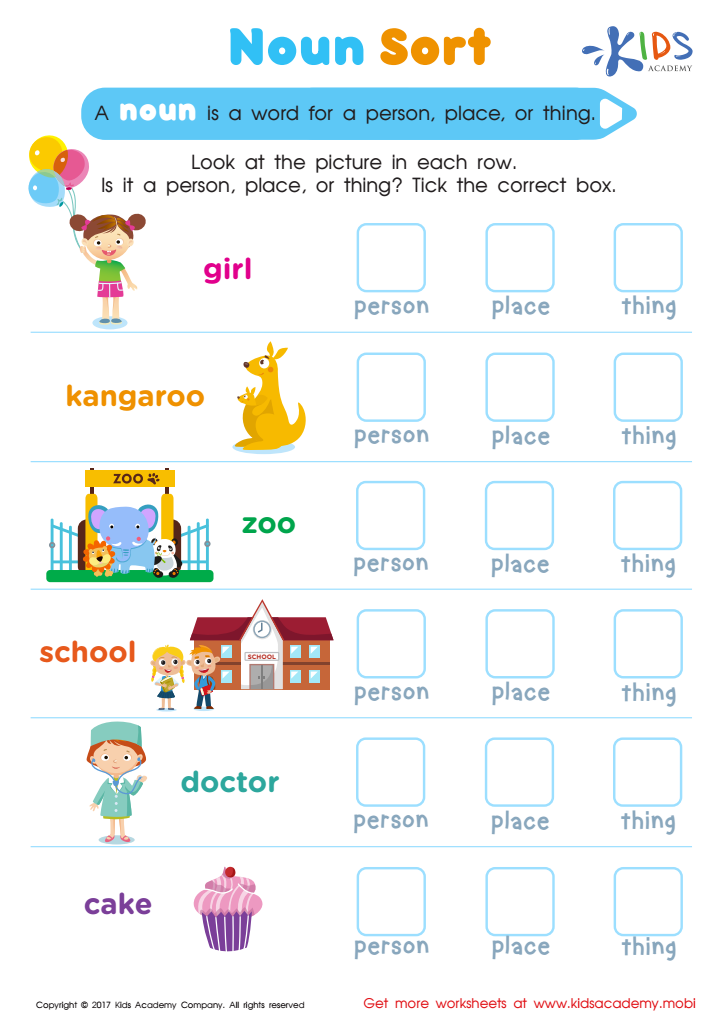
Noun Sort Printable
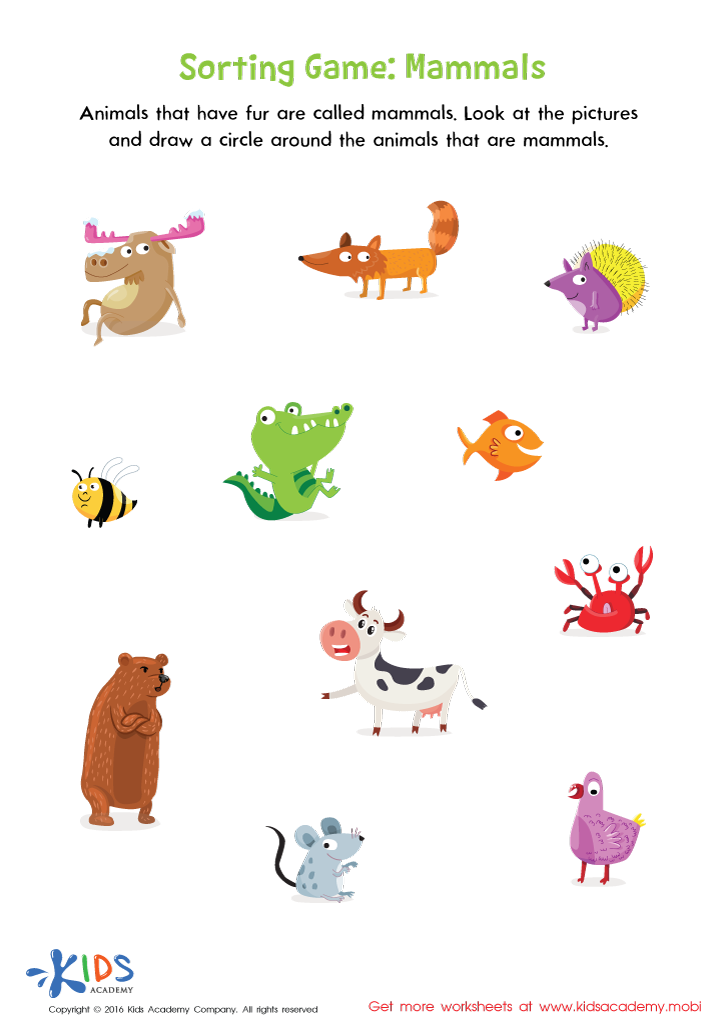
Mammals Sorting Worksheet
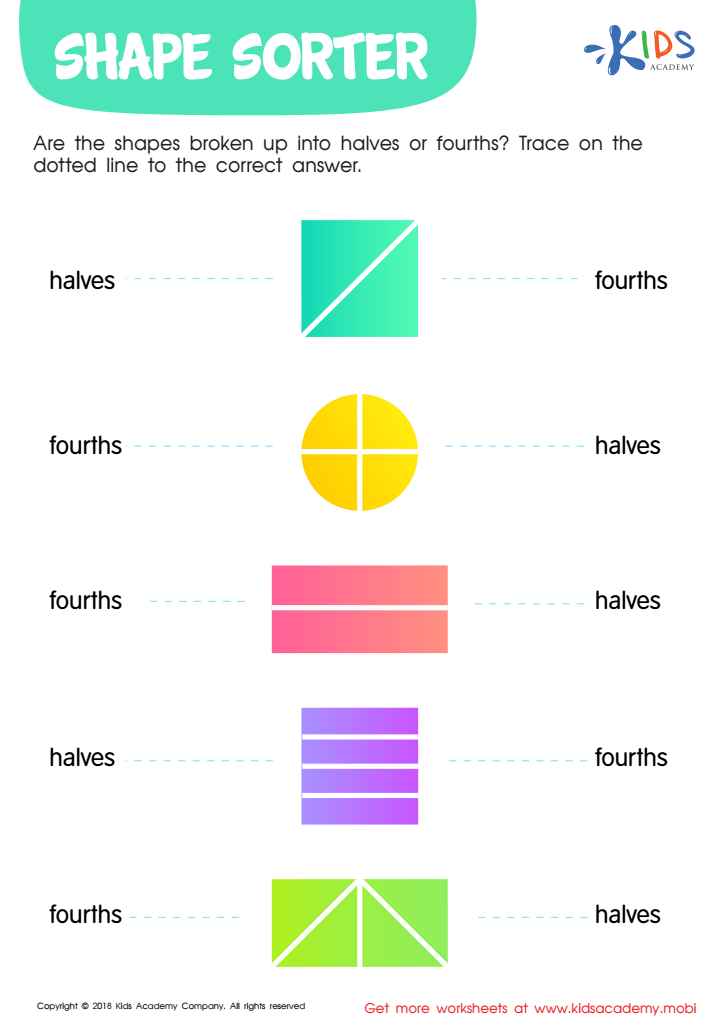
Shape Sorter Worksheet






Categorization skills are crucial for children's cognitive development, particularly for ages 4-9, as they form the foundation for critical thinking and problem-solving. Parents and teachers should care about these skills because they help children understand the world around them. For instance, categorization assists in organizing information, making connections between different concepts, and enhancing vocabulary. When children categorize objects or ideas—as in grouping animals, toys, or emotions—they learn to identify common traits and differences, fostering an analytical mindset.
Moreover, these activities stimulate brain development and improve memory retention. As children learn to classify, they engage in higher-order thinking, which prepares them for future academic challenges across subjects like math, science, and language arts. Socially, categorization encourages collaboration during group activities, helping children develop teamwork and communication skills.
Extra challenges in categorization activities can also boost motivation and enthusiasm for learning. By introducing advanced sorting tasks, teachers and parents ignite curiosity and foster a love for exploration. Ultimately, nurturing categorization skills positions children for greater academic success, social confidence, and adaptability in an ever-changing world. Thus, focusing on these skills is beneficial and vital for holistic childhood development.








