Number Recognition Extra Challenge Worksheets for Ages 4-9 - Page 4
74 filtered results
-
From - To
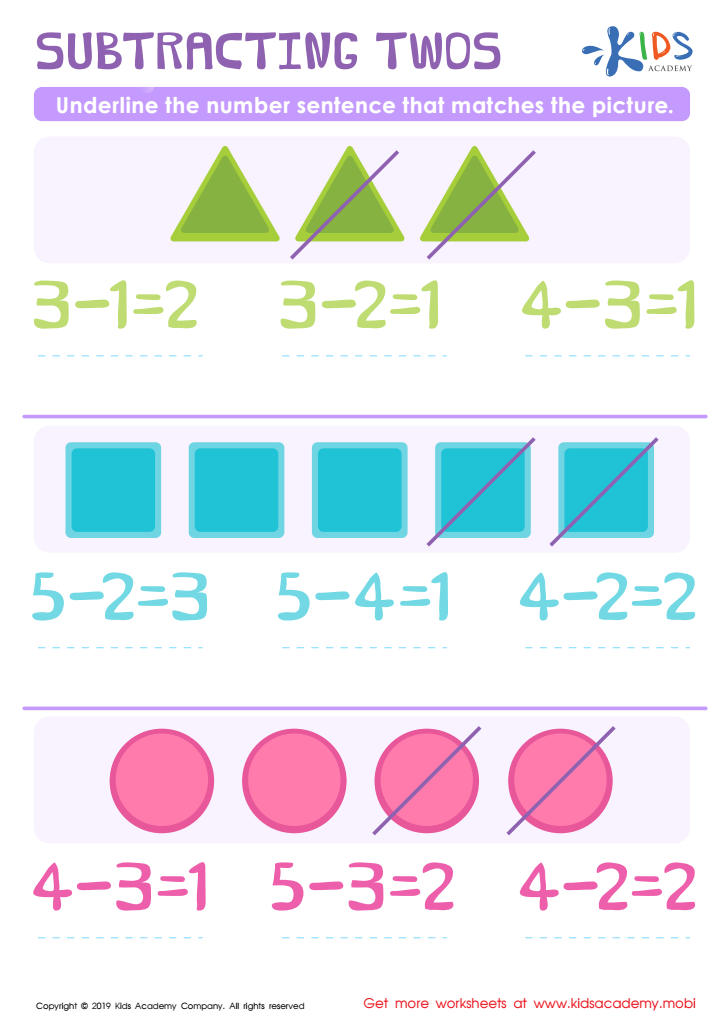
Subtracting Twos Worksheet
 Assign to My Students
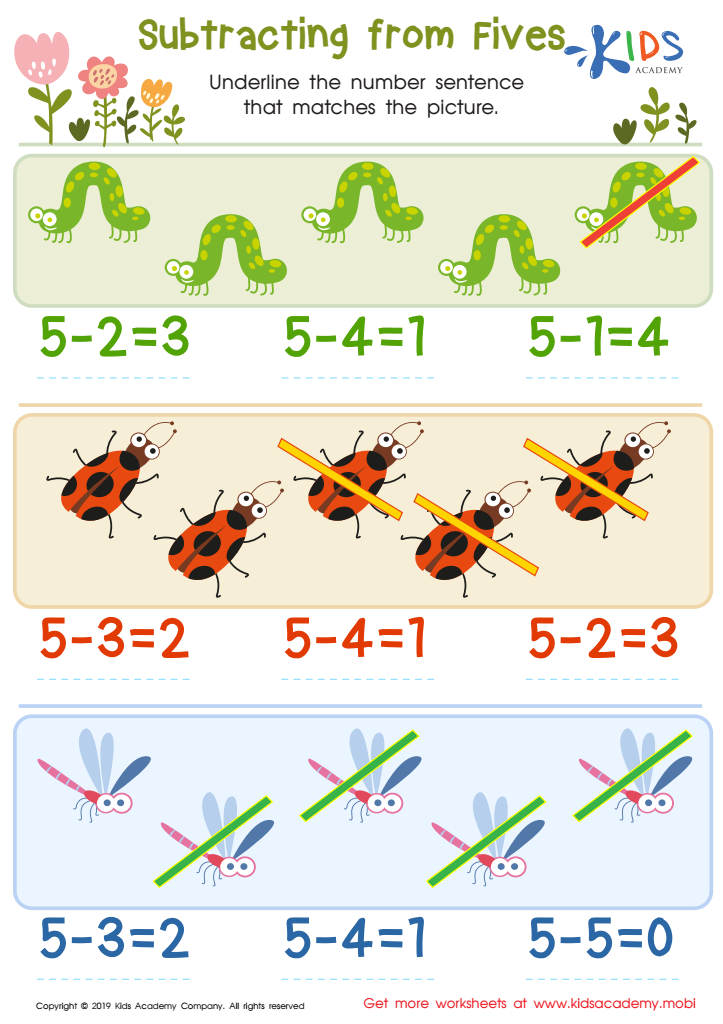
Subtracting From Fives Worksheet








Number Recognition Extra Challenge for Ages 4-9 is an integral part of early childhood education, laying the groundwork for vital math skills. This period is crucial for cognitive development, as children's brains are exceptionally receptive to learning new concepts. Engaging in number recognition activities strengthens their ability to identify and understand numbers, which is fundamental for advancing to more complex mathematical operations like addition, subtraction, multiplication, and division.
For parents and teachers, emphasizing number recognition ensures that children gain confidence in their numeracy skills early on. It helps them grasp the concept of quantity, learn how to compare numbers, and start recognizing patterns, which are essential skills across academic disciplines. Moreover, these activities promote critical thinking and problem-solving abilities, contributing to overall intellectual growth.
Participating in these challenges also supports social and emotional development. By working with peers or siblings, children enhance their communication skills and learn to celebrate small victories, fuelling a positive attitude towards learning and cooperation. When these activities involve fun and interactive elements, such as games or hands-on exercises, children remain engaged and motivated, making learning an enjoyable and fulfilling experience for everyone involved.








