
Financial literacy Extra Challenge Math Worksheets for Ages 4-9
3 filtered results
Difficulty Level
Grade
Age
-
From - To
Subject
Activity
Standards
Discover our "Financial Literacy Extra Challenge Math Worksheets for Ages 4-9" designed to enhance your child's understanding of money management through engaging and challenging activities. These printable worksheets focus on vital financial skills, including counting coins, identifying currency, and basic budgeting. Perfect for nurturing early-grade learners, these exercises seamlessly blend math proficiency with real-world applications. Empower your child to develop a strong financial foundation while reinforcing their math skills. Ideal for parents and educators aiming to make learning both fun and impactful, our worksheets make financial literacy accessible and enjoyable for young minds!
Favorites
With answer key
Interactive
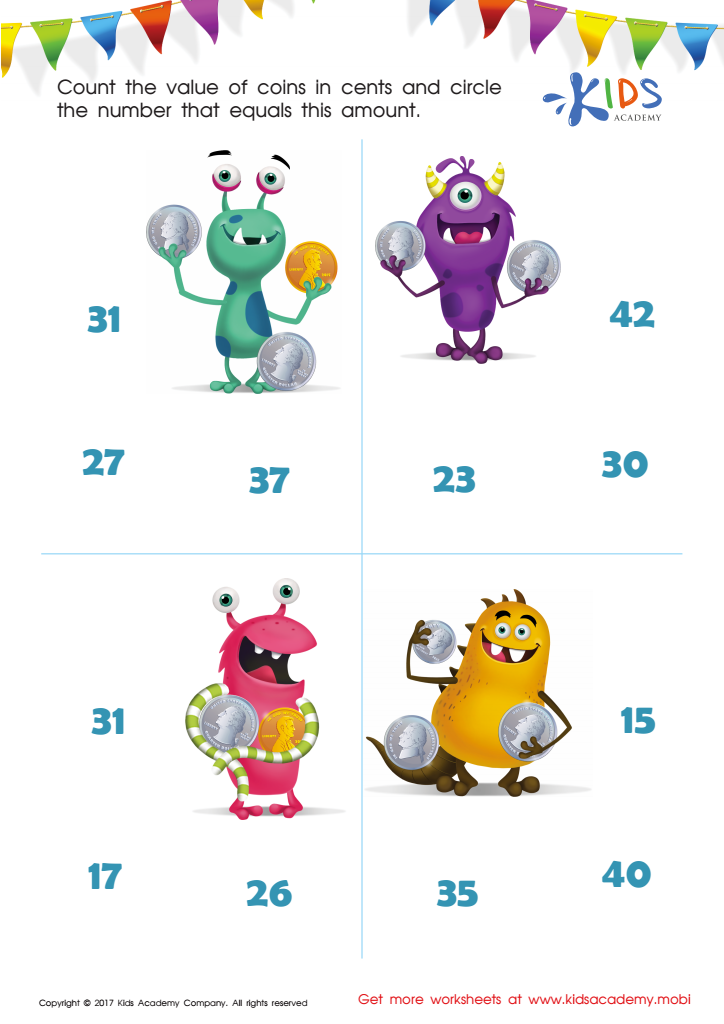
How Many Coins Money Worksheet
Have fun while counting coins: look at the monsters and count the coins in their hands. Challenge your little learners to count and write down the number of coins each one has. Enjoy the time together!
 Assign to My Students
How Many Coins Money Worksheet
Worksheet
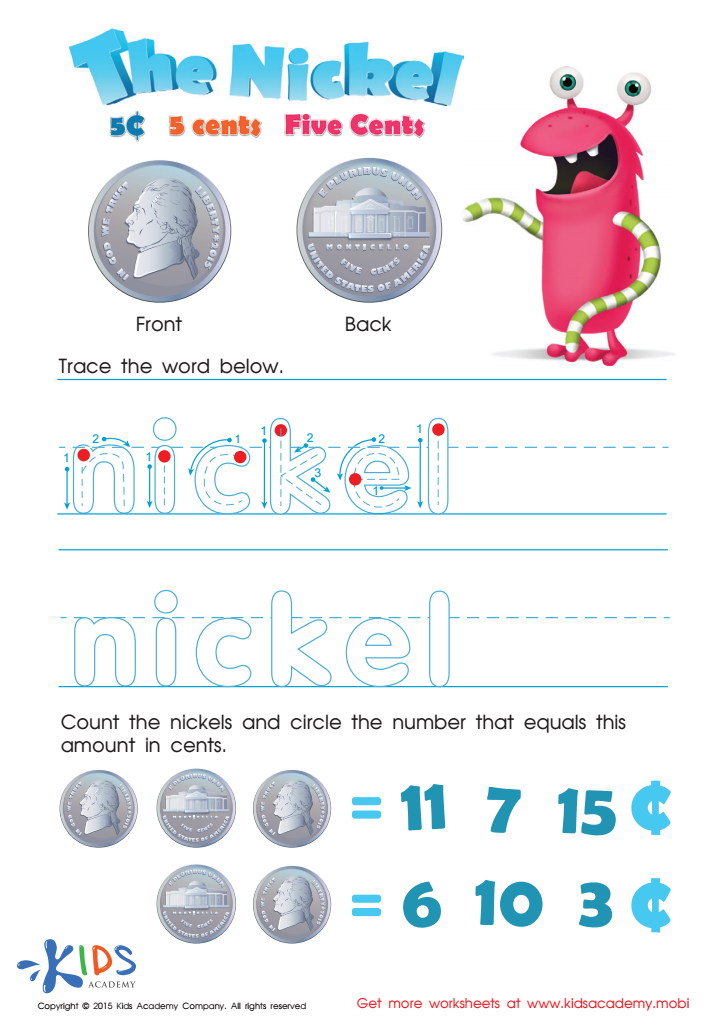
Five Cents or the Nickel Money Worksheet
Counting money games help kids make learning money fun and easy. Next up: the 5 cent coin, or nickel. Look at both sides and remember them. Then, trace the word "nickel" to help you remember. Finally, count the nickels and work out amounts in cents. Let's do this! Kids Academy helps make money learning easy and fun!
Five Cents or the Nickel Money Worksheet
Worksheet
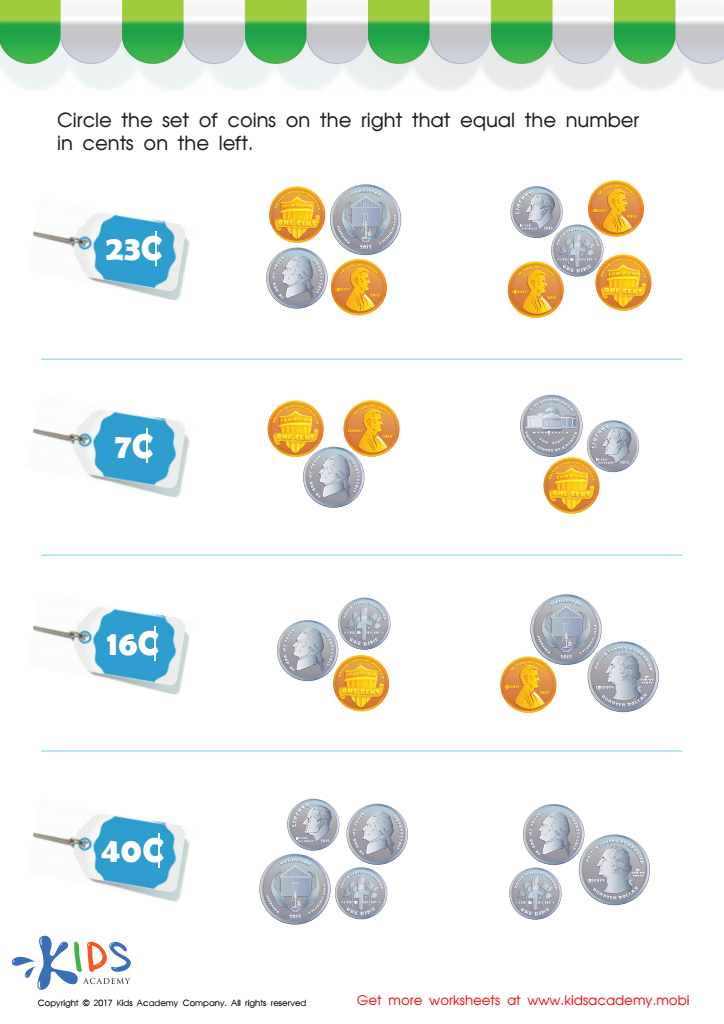
Picking the Coins You Need Money Worksheet
Let's learn to count money with Parents and Kids Academy! Investigate a real shop together: buy a globe, pencils, books, and a school bag using coins. Then, circle the coins you'll need. Visit our website for more free and fun money games for kids!
Picking the Coins You Need Money Worksheet
Worksheet
Join Kids Academy for Free
Who is primarily going to use this learning content?








Financial literacy is a critical skill that shapes children's future success and well-being. Introducing it through engaging methods like Extra Challenge Math for ages 4-9 sets a strong foundation for lifelong financial competence. At this young age, children are exceptionally receptive and eager to learn, absorbing new concepts more readily.
Parents and teachers should prioritize financial literacy programs because they instill basic yet essential money skills—such as understanding coins and bills, recognizing the concepts of saving and spending, and learning simple budgeting. Embedding these lessons in math challenges not only bolsters numerical proficiency but also contextualizes math in real-life situations. This dual approach deepens comprehension and retention, showing kids why math matters beyond the classroom.
Moreover, these skills promote healthy financial habits early on. Children learn the value of money, the importance of saving for goals, and the impact of their spending choices. Such knowledge helps curb impulsive purchases and cultivates responsible attitudes toward saving and spending.
Finally, investing in financial education at a young age positively affects children's confidence and independence. They acquire the tools to navigate their financial futures, reducing the likelihood of debt and enhancing their potential for financial stability. This groundwork can lead to empowered, informed individuals who contribute positively to the economy.
Hence, Financial literacy programs for young children prioritize both immediate educational benefits and long-term societal impact, making them indispensable in early education.








