
Number Recognition Extra Challenge Math Worksheets for Ages 4-9
72 filtered results
Difficulty Level
Grade
Age
-
From - To
Subject
Activity
Standards
Enhance your child's number recognition skills with our "Number Recognition Extra Challenge Math Worksheets for Ages 4-9." Designed to boost early math proficiency, these engaging activities are perfect for young learners seeking a challenge. Each worksheet encourages children to identify, differentiate, and count numbers through fun and visually stimulating exercises. Tailored to support ages 4-9, these printables will help solidify foundational math skills while keeping kids excited about learning. Ideal for both classroom and at-home practice, our challenging worksheets ensure kids develop confidence and accuracy in number recognition. Start your child's mathematical journey with these exceptional resources!
Favorites
With answer key
Interactive
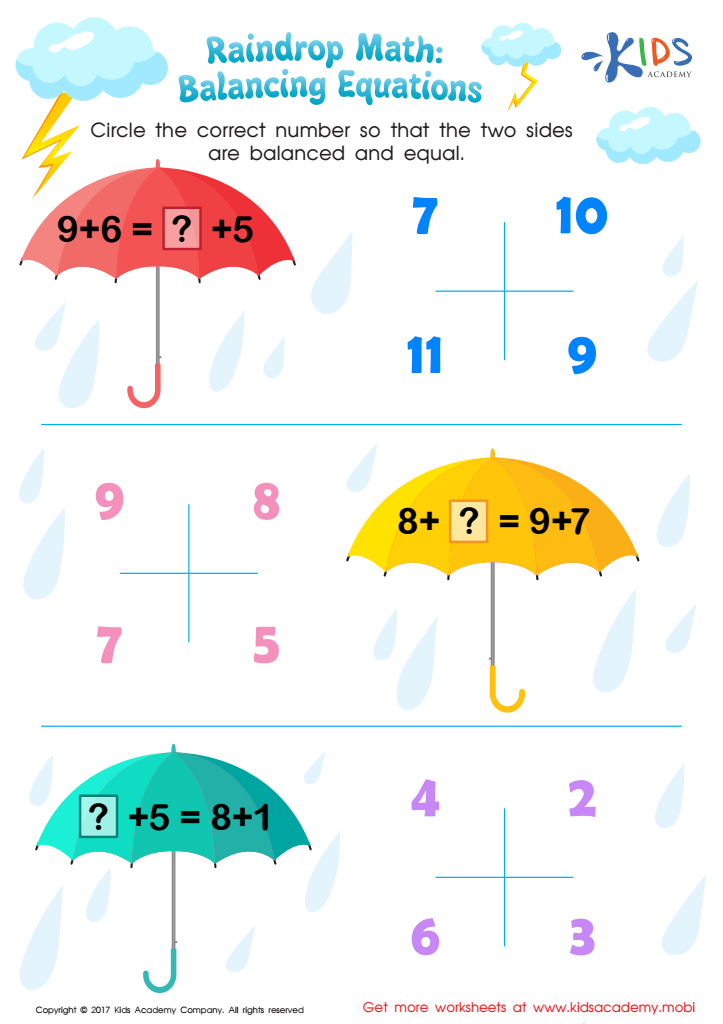
Raindrop Math Printable
It will help them think deeper about equations, form a foundation for early algebraic thinking, and gain a better sense of numeracy. Plus, they get to practice simple addition skills.
 Assign to My Students
Raindrop Math Printable
Worksheet
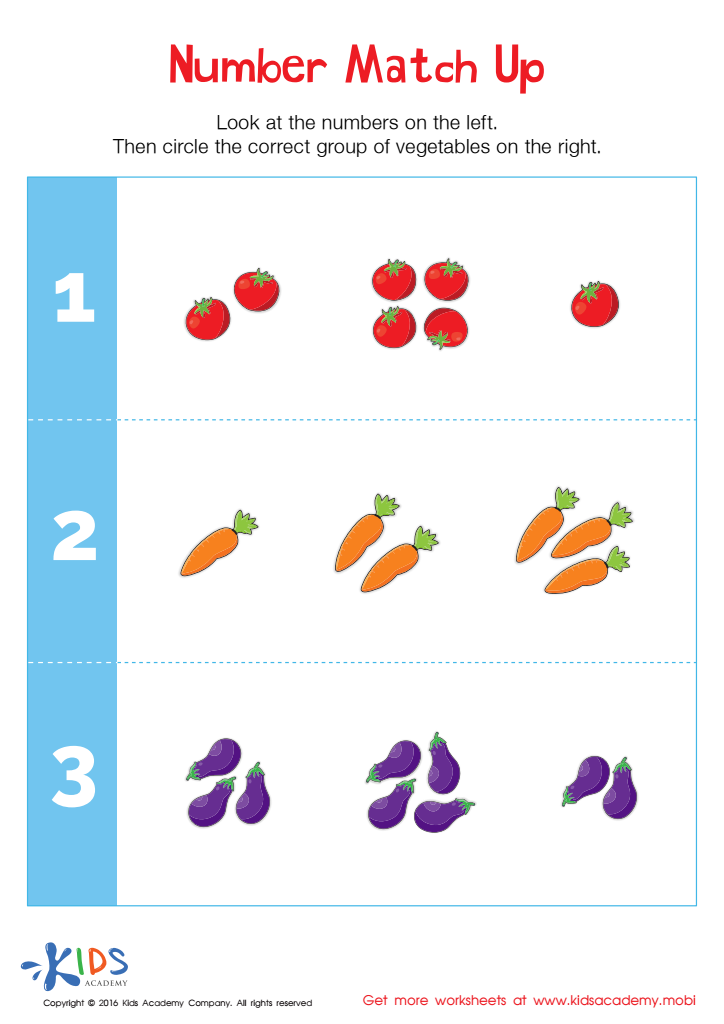
Number Match Up Worksheet
Help your child learn early math skills with this cute number match-up worksheet! Through this exercise, your preschooler can practice following directions, recognizing numbers, counting and understanding the difference between left and right. Bright and catchy pictures such as veggies make the worksheet fun and engaging. Print it out and let your child enjoy counting and matching the veggies!
Number Match Up Worksheet
Worksheet
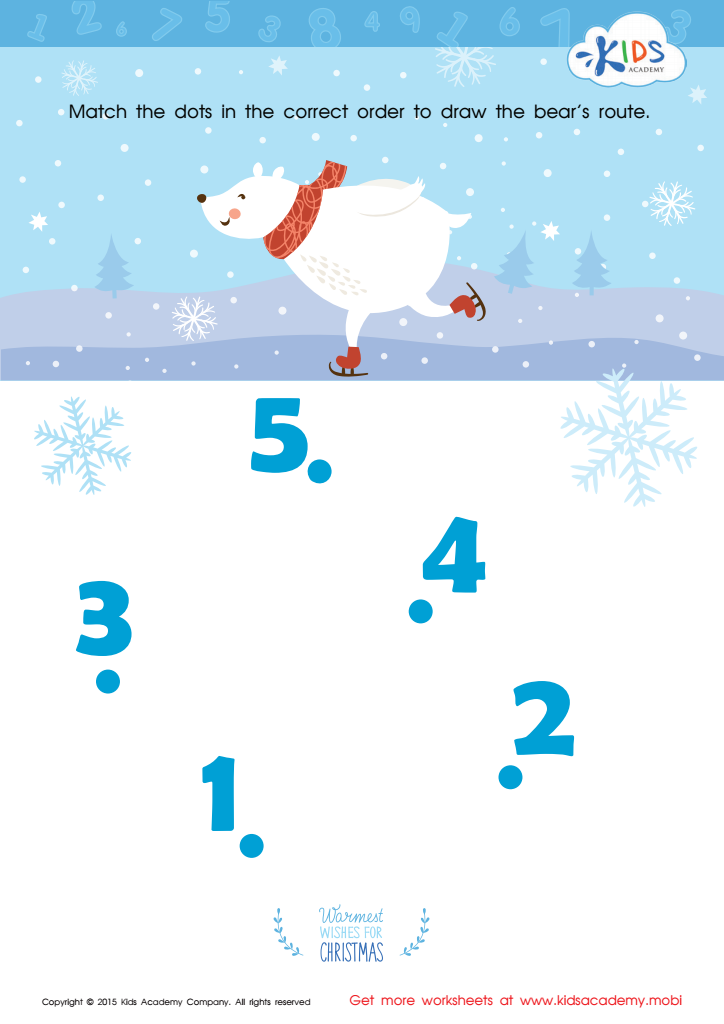
Drawing the Bear's Route by Number Worksheet
This winter-themed math worksheet is perfect for counting practice. Have fun learning and celebrating the season with your kindergartener as they trace and recognize numbers. It also helps develop fine motor muscles. For more fun, check out the math worksheets on Kids Academy.
Drawing the Bear's Route by Number Worksheet
Worksheet
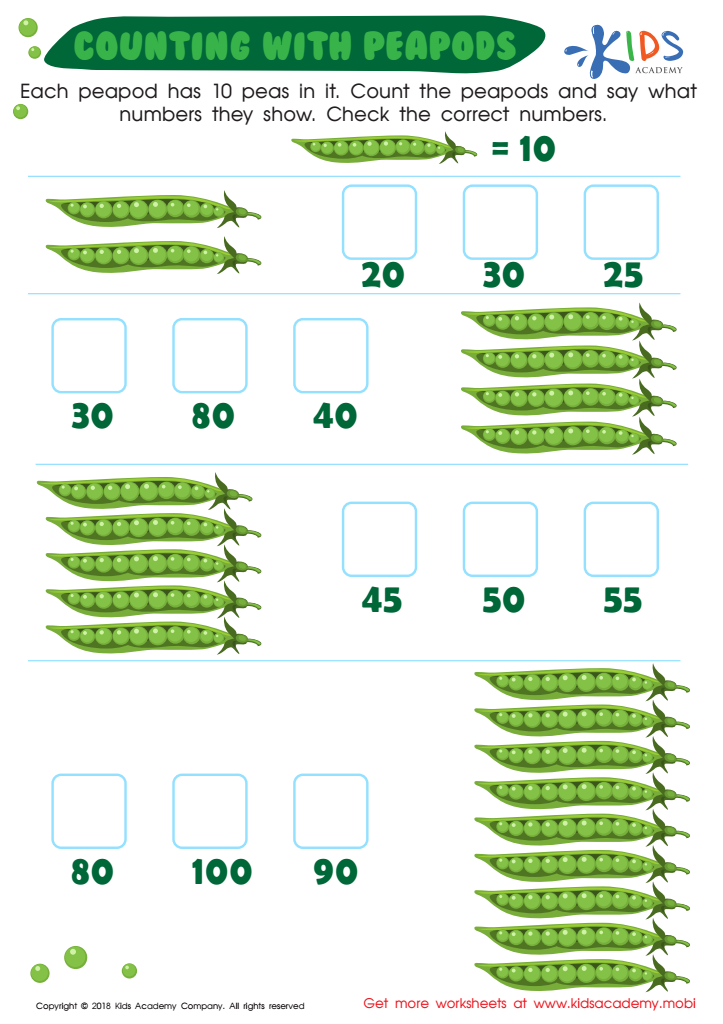
Number Worksheet: Counting With Peapods
Help your child learn multiplication and develop their place value skills in a fun way with this number worksheet: Counting with Peapods! Each pod has 10 peas, and kids can simply count each one and add a zero to the ones place to get the answer. It's a great, colorful way to learn!
Number Worksheet: Counting With Peapods
Worksheet
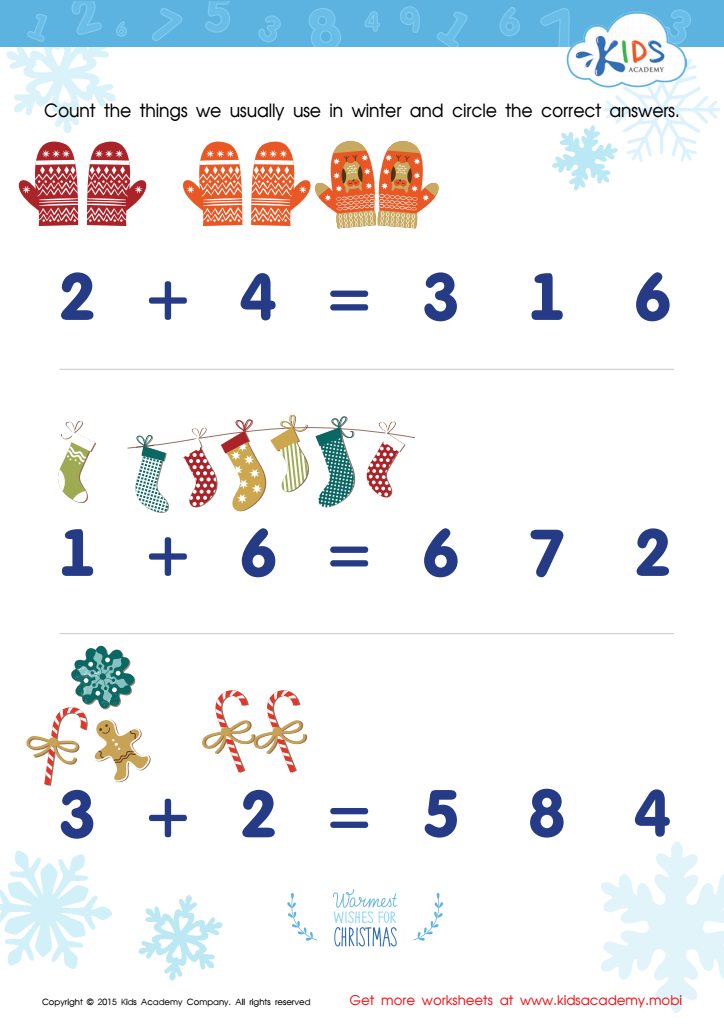
Count Winter Things Worksheet
This chilly winter afternoon, help your kid warm up with Kids Academy's free math worksheet - full of bright pictures and addition practice. Let them count the things and write in the numbers for a great brain training and math head start. Get more free math worksheets here. (80 words)
Count Winter Things Worksheet
Worksheet
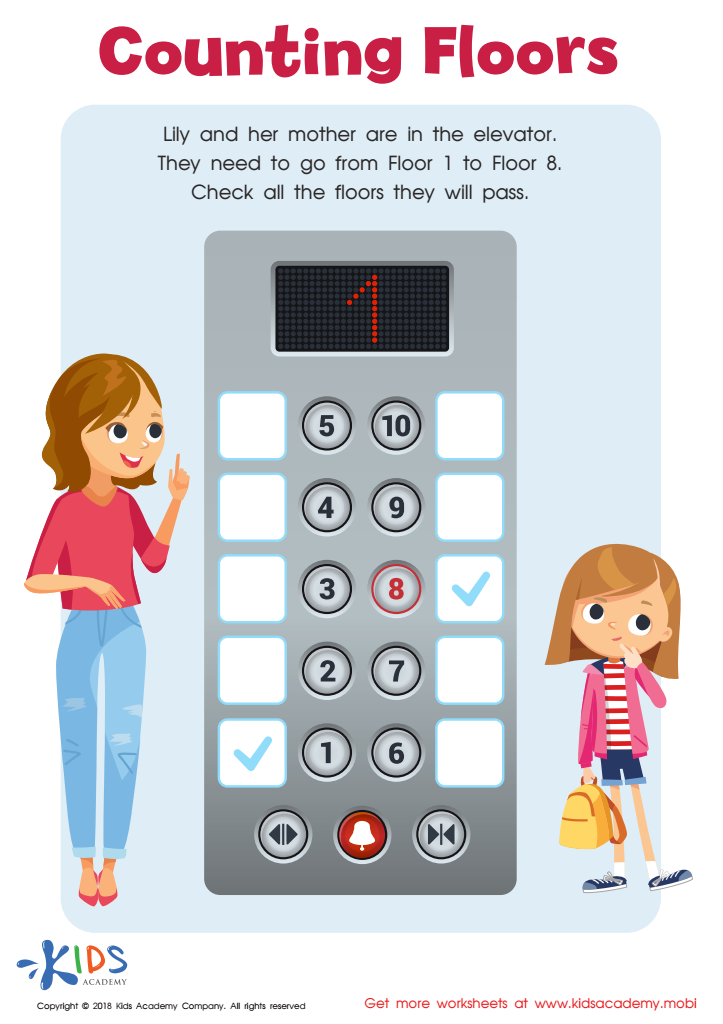
Counting Floors Worksheet
Take your kids on an elevator ride and have them help you. With this worksheet, little ones meet Lily and her mom. They're taking an elevator from Floor 1 to Floor 8. Ask them to check the floors they pass and help the two reach their destination.
Counting Floors Worksheet
Worksheet
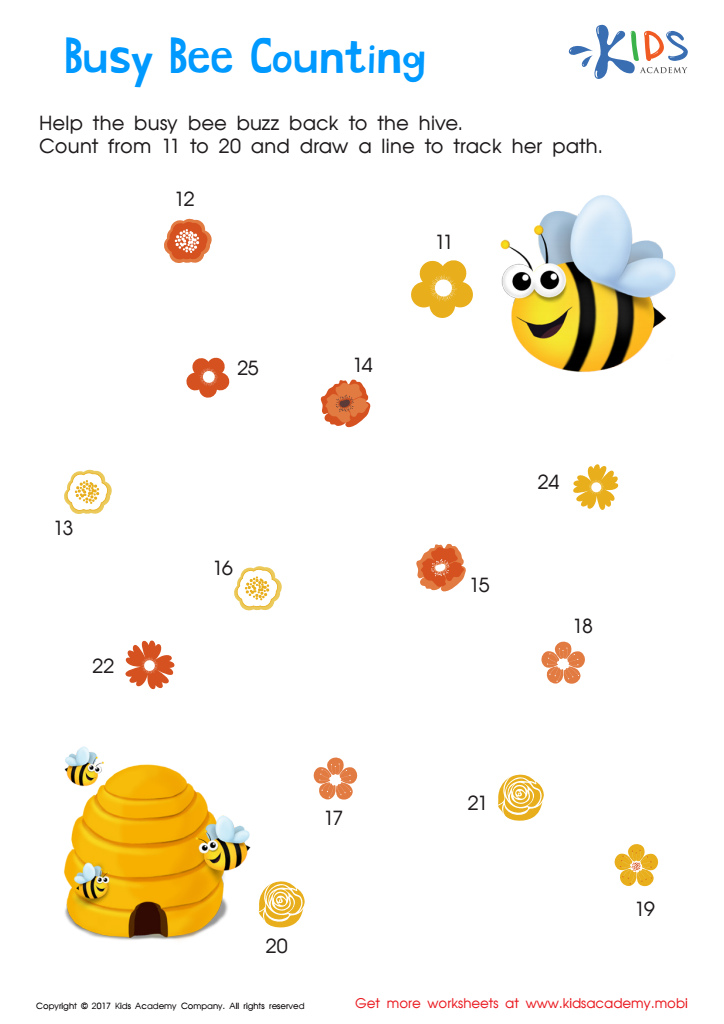
Ordering 11–20: Busy Bee Counting Worksheet
Help your child master counting from 11 to 20 with our connect the dot counting worksheet. Kids will have fun counting, drawing and problem-solving with this vibrant worksheet. With clear directions, adorable pictures and a sense of purpose, your child will develop crucial numeracy skills without even knowing it!
Ordering 11–20: Busy Bee Counting Worksheet
Worksheet
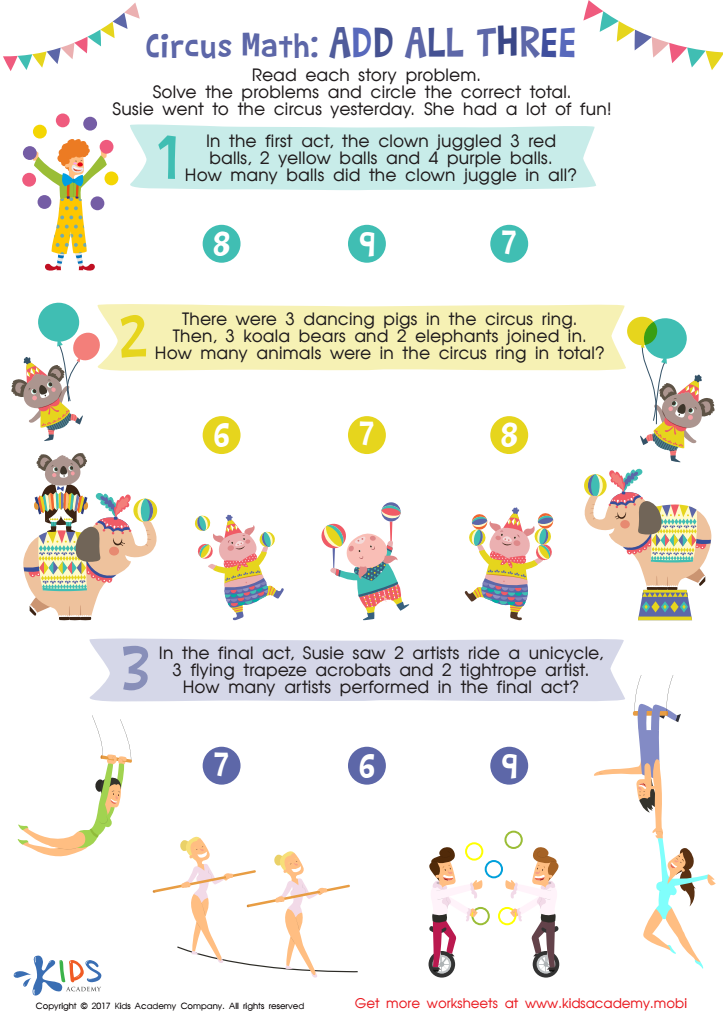
Circus Math Printable
Let's take the kids to the circus and combine literacy and numeracy skills! Our circus math printable worksheet will encourage creativity and higher-order thinking by connecting addition to real-life examples. Kids will learn to love math while they explore the fun, real-life applications of math. Ignite their passion today!
Circus Math Printable
Worksheet
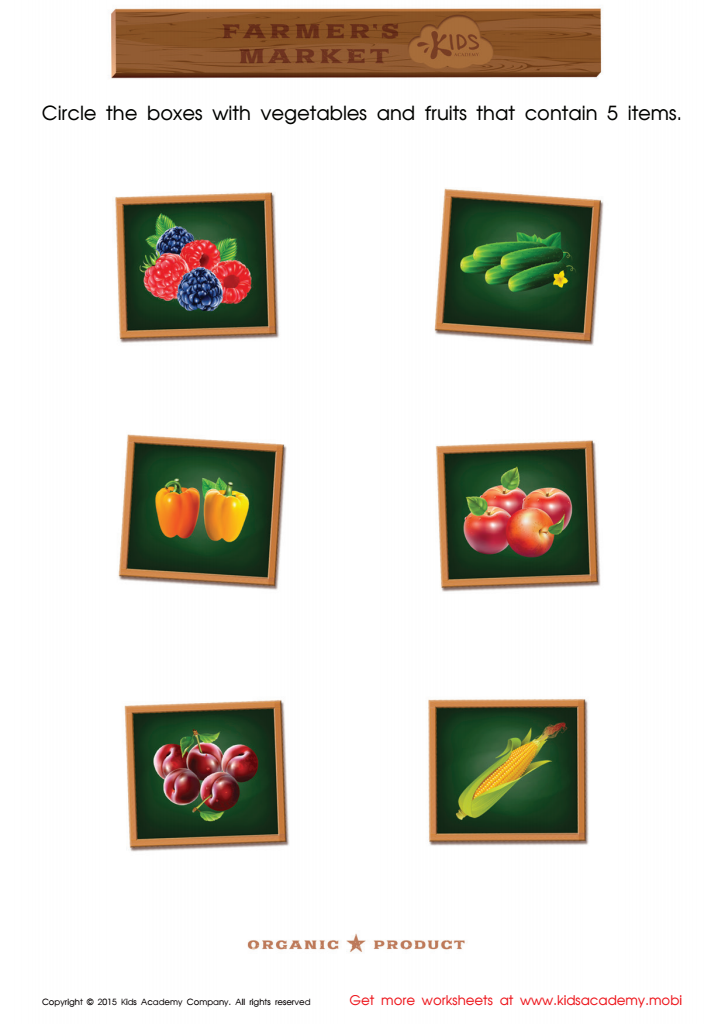
Count and Match Vegetables 1 – 7 Math Worksheet
Print this bright math worksheet from Kids Academy and give your child a fun way to enhance their counting skills. Based on Singapore Math, the colourful pictures make it easy for children to comprehend math. Get additional free worksheets here!
Count and Match Vegetables 1 – 7 Math Worksheet
Worksheet
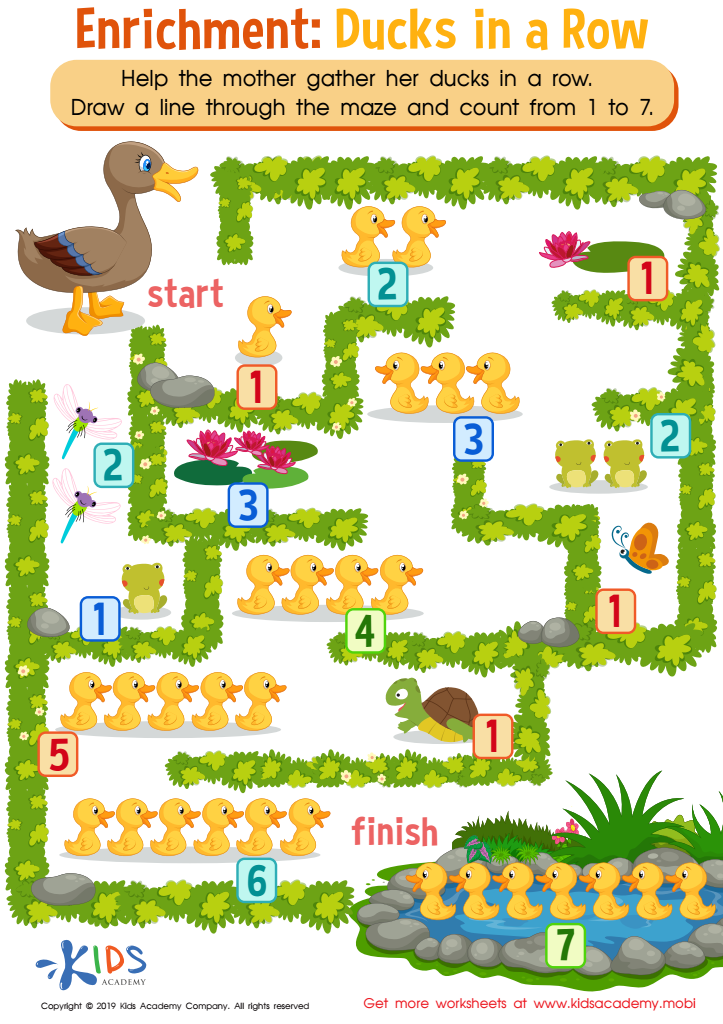
Ducks in a Row Worksheet
Are you looking for a fun and free math enrichment activity for your young one? Get Sweet Mama Duck and her ducks to the pond by helping your child navigate through this colorful maze! They'll use their fine motor skills and hone their number sense as they count ducks, turtles and frogs. Plus, they'll learn one-to-one representation. A great educational way to have fun!
Ducks in a Row Worksheet
Worksheet
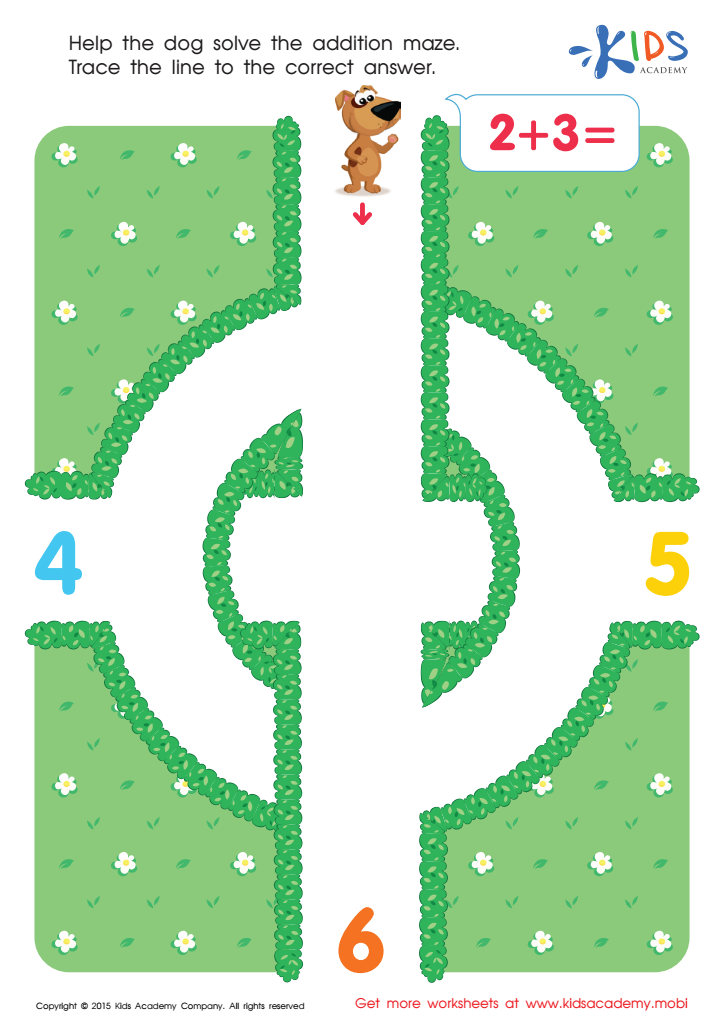
Two And Three Addition Worksheet
Give your children the task and let them find the path to the right answer while they make their way through the maze, and don't forget to let them trace the path.
Two And Three Addition Worksheet
Worksheet
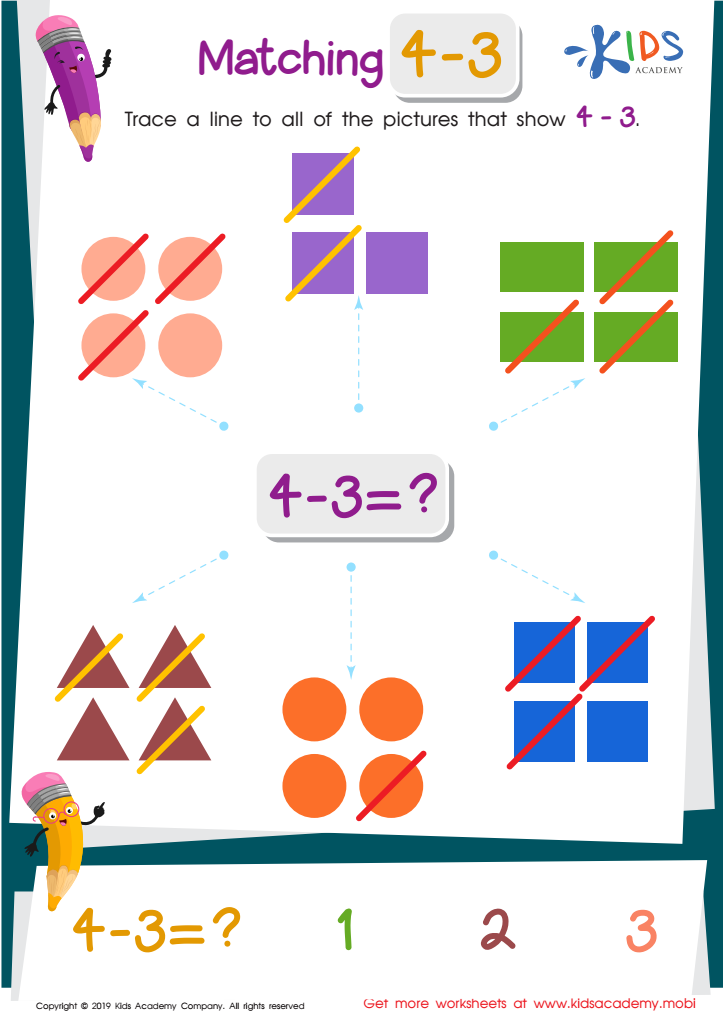
Matching 4 – 3 Worksheet
Help your kids master basic math concepts like addition and subtraction with fun exercises. Test their understanding with simple problems. For example, in this worksheet, ask them to count the objects in each picture and draw a line to the pictures that show 4 - 3 = 1. This will help them get better at solving equations.
Matching 4 – 3 Worksheet
Worksheet
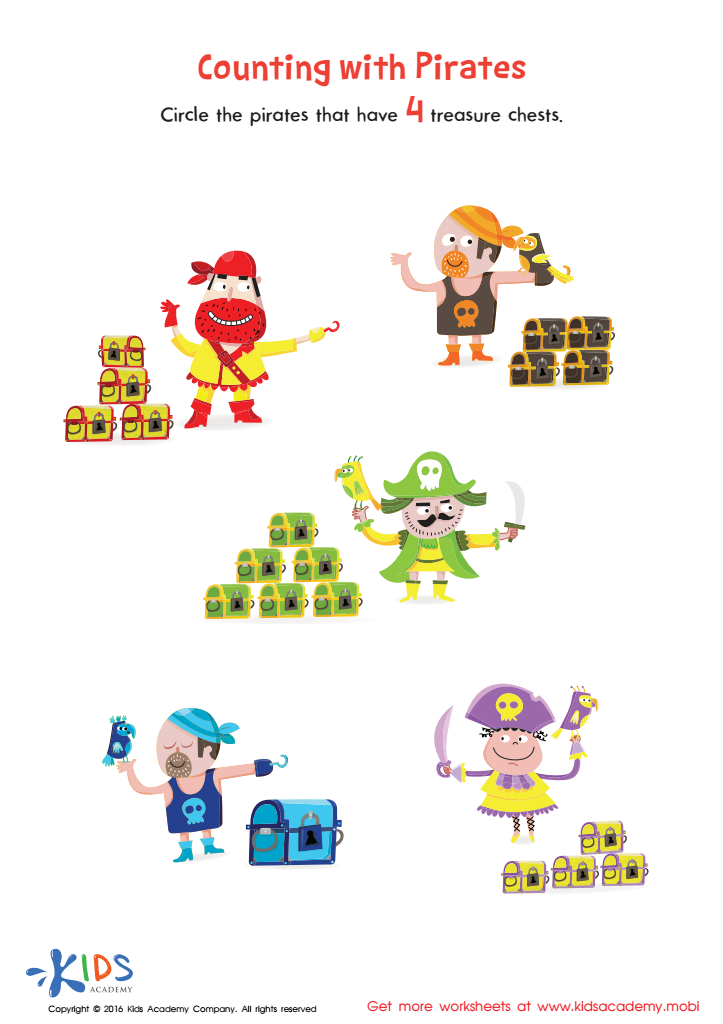
Counting With Pirates Worksheet
Ahoy, mateys! Join us on the hunt for the pirate with four treasure chests! They’re hidden in this counting worksheet, full of swashbuckling fun! Your little one will be excited to search for gold and at the same time develop key counting skills - a great start to early math!
Counting With Pirates Worksheet
Worksheet
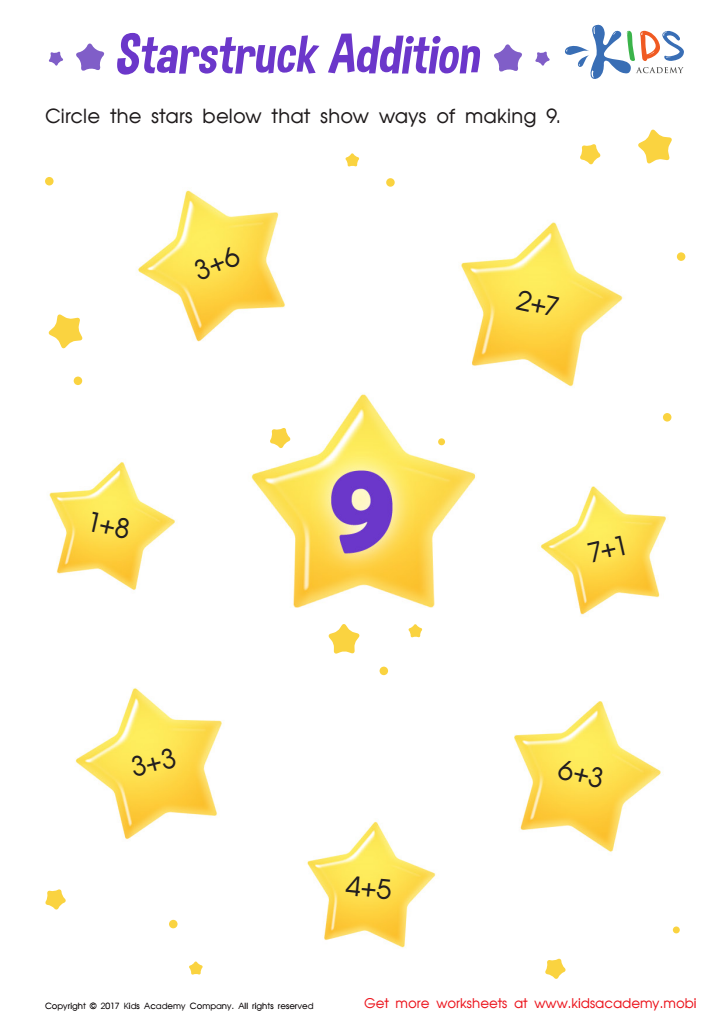
Starstruck Addition Printable
This interactive addition worksheet motivates your preschooler to practice addition and analyze number combinations. Their cognitive and analysis skills will be sharpened as they find the magic number in each problem.
Starstruck Addition Printable
Worksheet
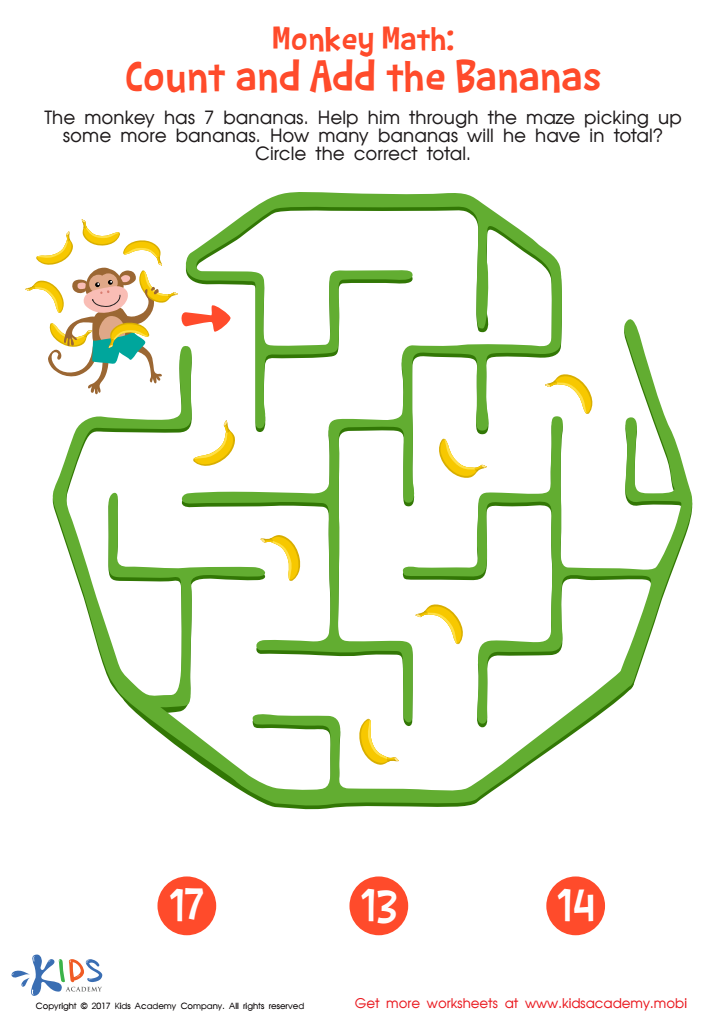
Monkey Math Worksheet
Worksheet
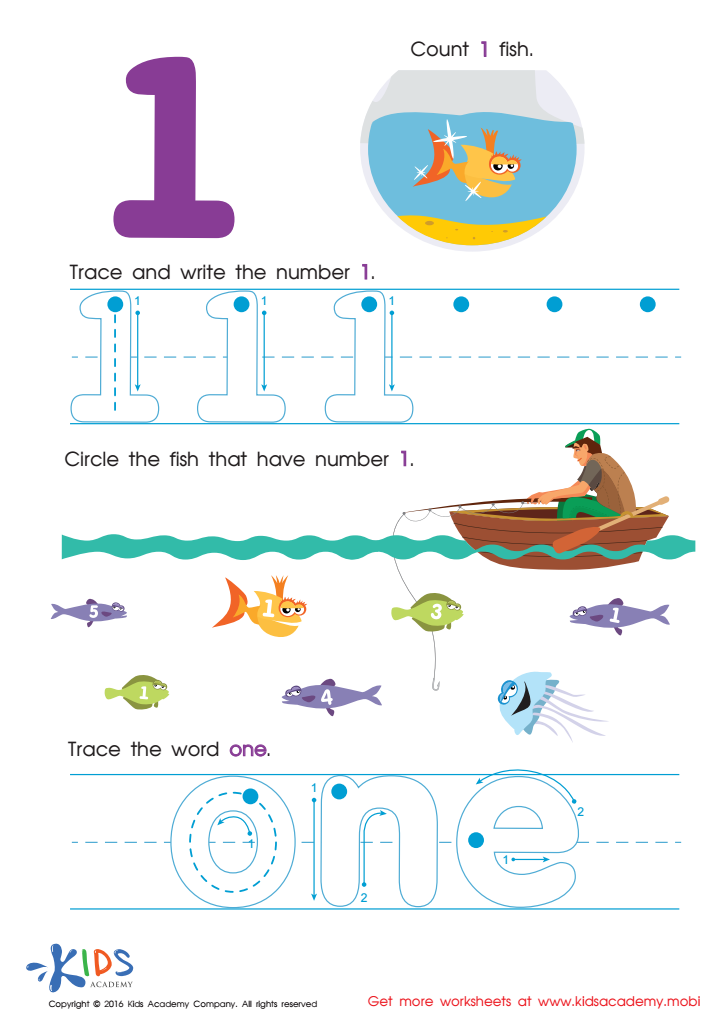
Learning to Write 1 Worksheet
Learning to write numbers can be easy and fun! Get this new number worksheet to help your child excel. Practice counting, tracing and writing the number “one”, then circle the fish with “1” on them. Revise spelling and have fun! Get more tracing numbers worksheets at Kids Academy and enjoy the learning process.
Learning to Write 1 Worksheet
Worksheet
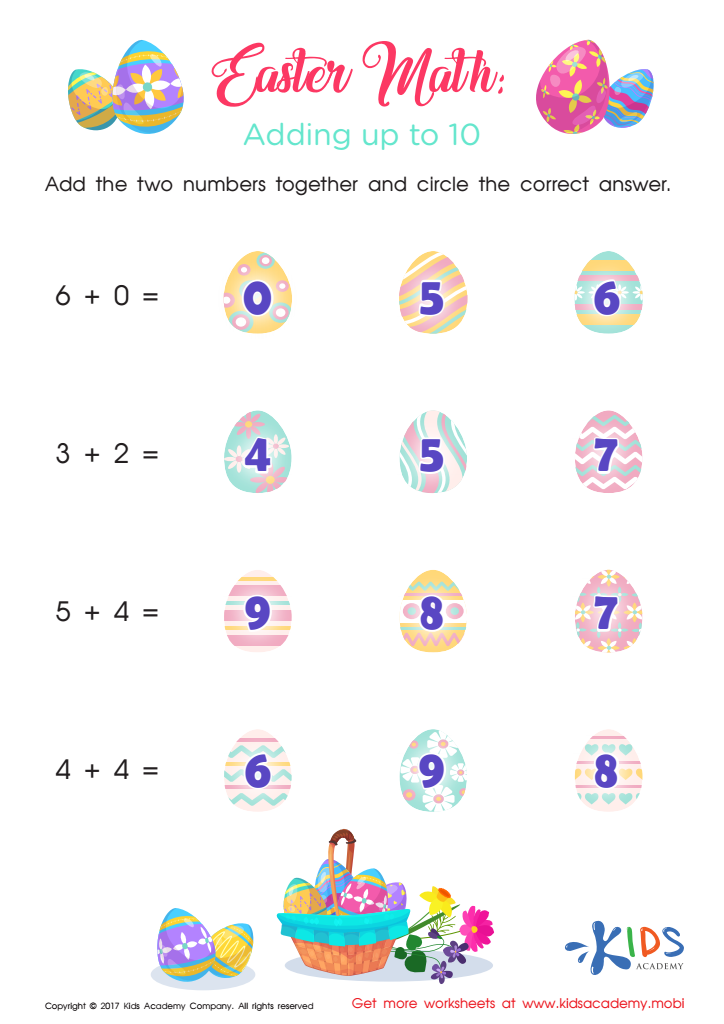
Addition Up To 10 Worksheet
This spring-themed worksheet helps your child master addition up to 10. Its bright colors and fun activities make it an enjoyable way to improve math skills.
Addition Up To 10 Worksheet
Worksheet
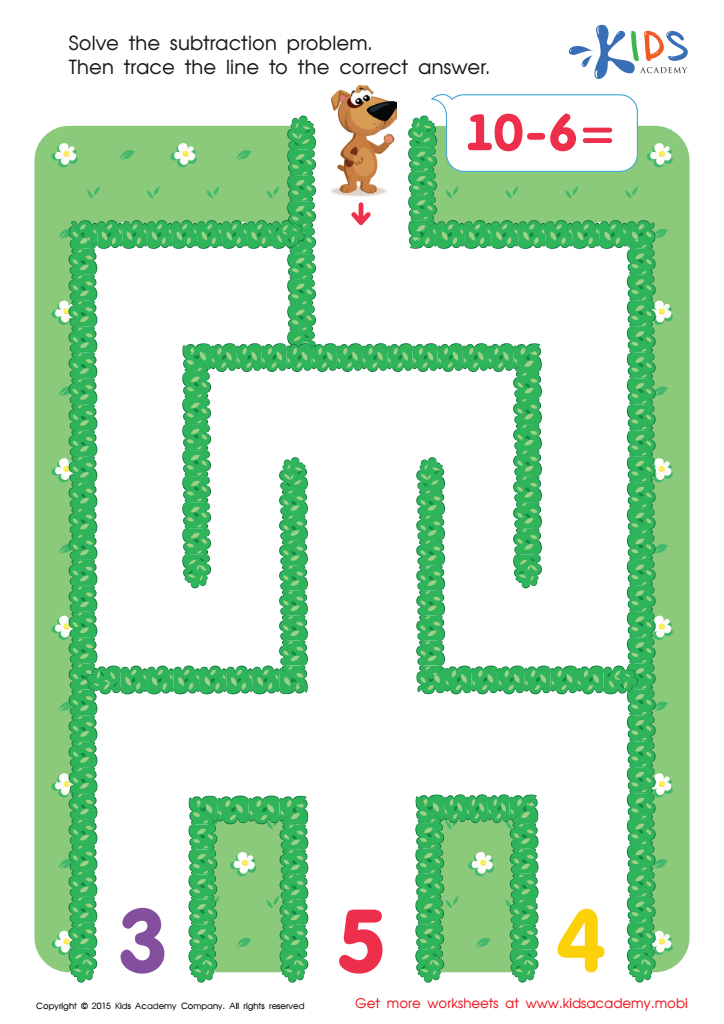
Subtraction Ten And Six Worksheet
Worksheet
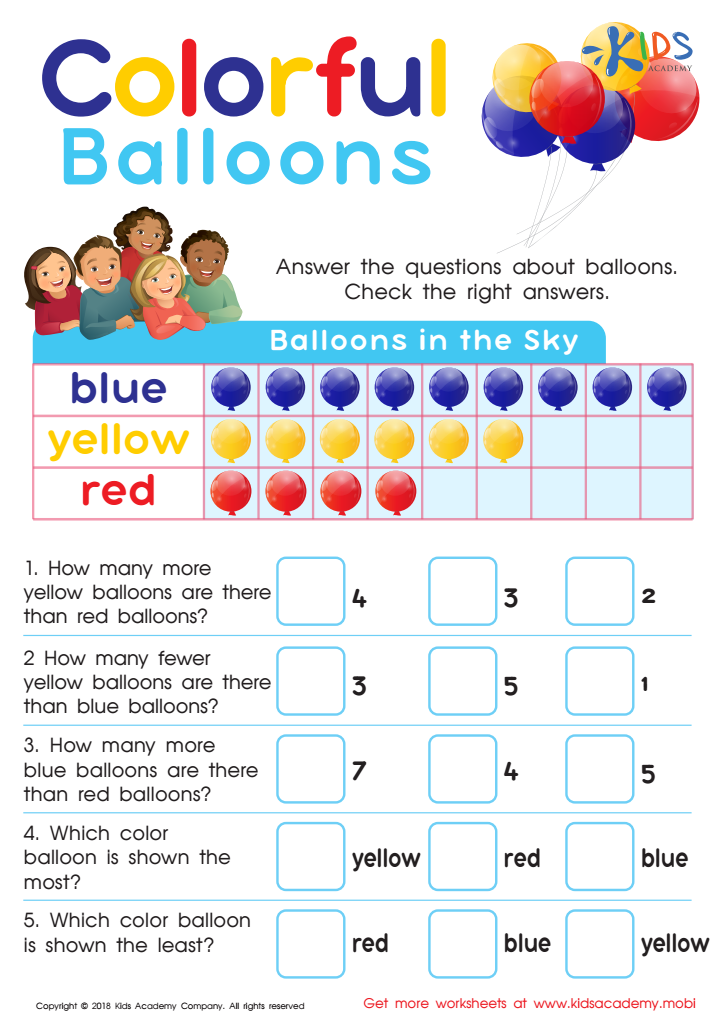
Picture Graphs: Colorful Balloons Worksheet
Kids love balloons at parties! Now you can use them to review graphs and math with this worksheet. View the balloons and count how many of each color, then answer the questions to complete math problems and report important details. Bring joy to your child's studies and make learning fun!
Picture Graphs: Colorful Balloons Worksheet
Worksheet
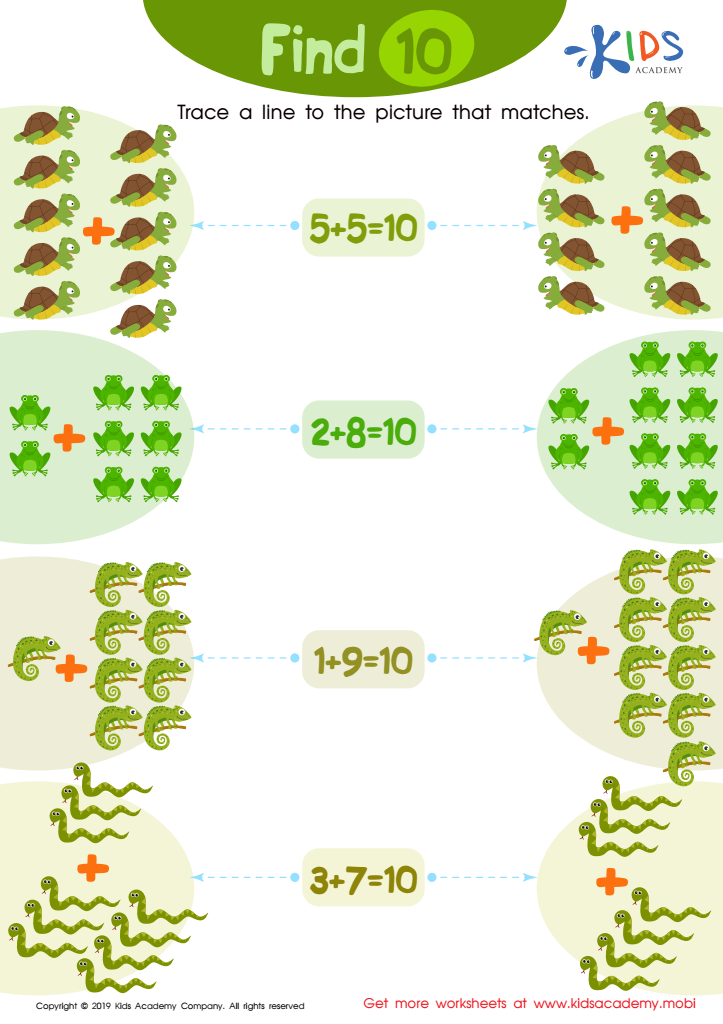
Find 10 Worksheet
Counting can be tricky, but your kids can master it with regular practice. Here's a fun activity to help: count the animals, then trace a line to the pictures that matches. With these tips, math will be an easy walk in the park.
Find 10 Worksheet
Worksheet
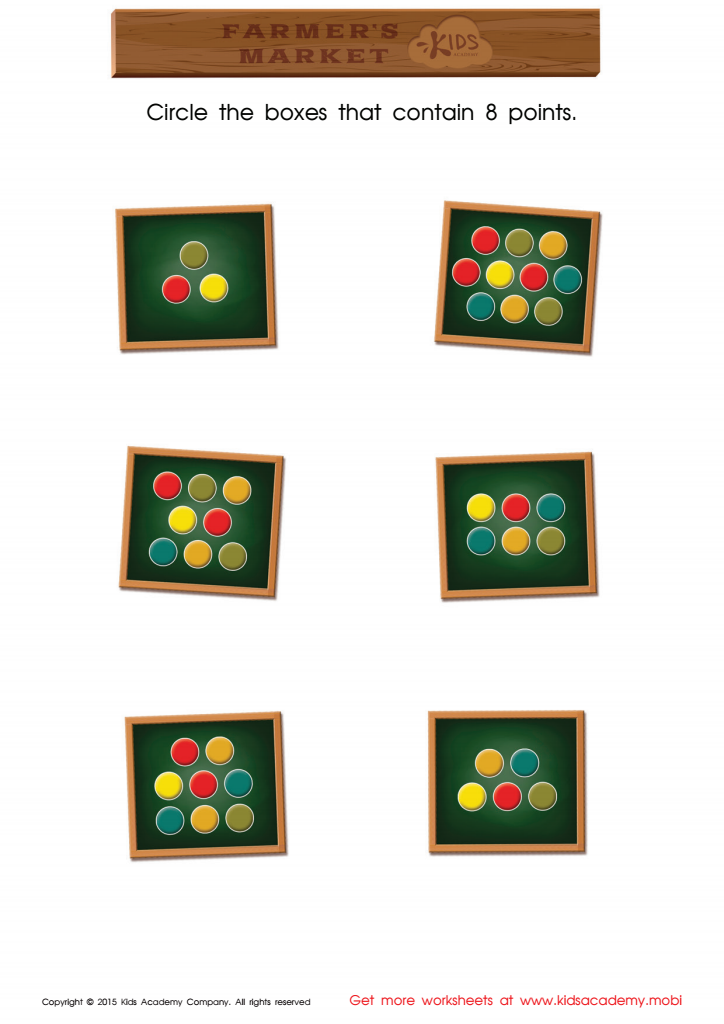
Count and Match Points 8 Math Worksheet
This free PDF helps children develop their number skills by counting the points in the boxes. Each box contains a total of 9 points, making it a fun and colorful activity. Parents can encourage their young ones by guiding them if they need help counting. By the end of the worksheet, children should have a better understanding of numbers.
Count and Match Points 8 Math Worksheet
Worksheet
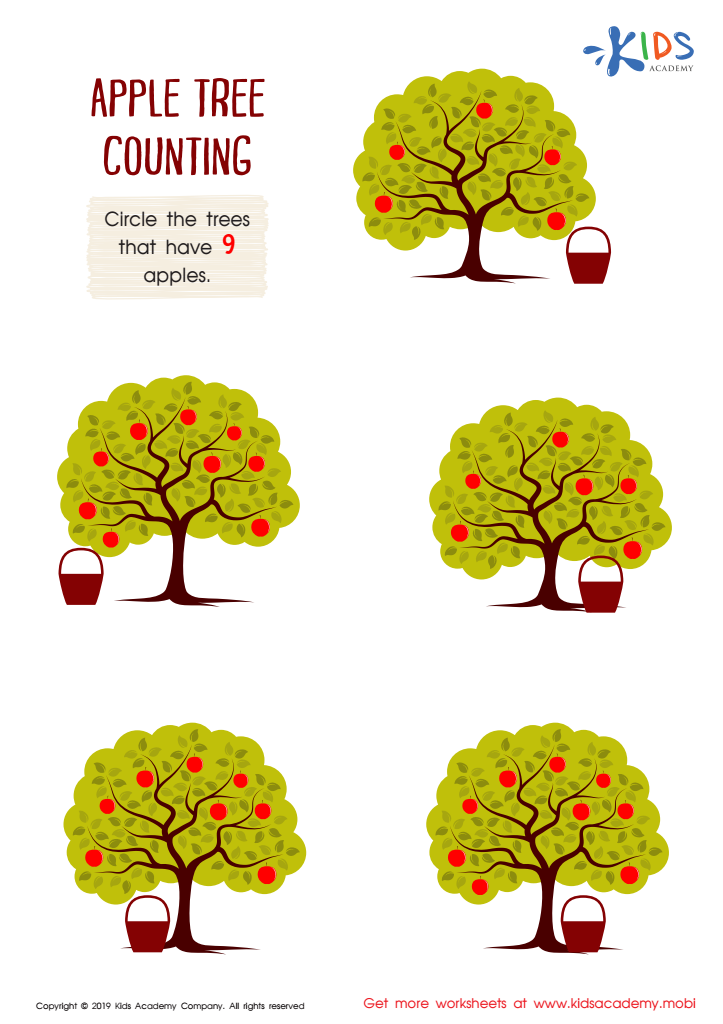
Apple Tree Counting Worksheet
Help your kids perfect their counting skills with this fun exercise. Get them to count the apples on the 5 trees and circle the ones with 9. It's great that they are learning to count at school and you can keep the excitement going at home. This colorful worksheet will help your children practice and perfect their counting.
Apple Tree Counting Worksheet
Worksheet
Join Kids Academy for Free
Who is primarily going to use this learning content?







Parents and teachers should prioritize Number Recognition Extra Challenge Math for children ages 4-9 because it lays a crucial foundation for their future mathematical understanding and general cognitive development. During these formative years, children are highly receptive to learning new concepts, and building strong number recognition skills during this period enhances their ability to grasp more complex mathematical operations later.
First, number recognition is integral to everyday tasks and academic achievement. Knowing and identifying numbers enable children to manage time, organize their daily activities, and understand monetary value. Education specialists agree that early numerical skills are predictors of later academic success. For instance, mastering number recognition directly influences the ability to perform basic arithmetic, thus easing the transition to concepts such as addition, subtraction, and more advanced mathematics.
Additionally, engaging with challenging number recognition activities fosters critical thinking, pattern recognition, and problem-solving abilities. These skills are invaluable, transcending beyond mathematics to enhance overall intellectual growth.
Interactive and extra challenging number activities also sustain children's interest and motivate continuous learning, often through games and hands-on activities. This positive learning experience can instill a lifelong enthusiasm for mathematics, offsetting potential math anxiety and improving self-confidence in their intellectual capacities.








