Comparing sizes Extra Challenge Measurement Worksheets for Ages 4-9
5 filtered results
-
From - To
Discover our engaging "Comparing Sizes Extra Challenge Measurement Worksheets" designed for children ages 4-9! These worksheets not only enhance measurement skills but also promote critical thinking as students explore size comparisons. Featuring a variety of activities, kids will delight in sorting, ordering, and identifying varying object sizes through fun and interactive exercises. Perfect for classroom use or at-home learning, these worksheets encourage independent exploration and help reinforce essential math concepts. Nurture your child’s growth and confidence in measurement with our thoughtfully crafted materials, designed to challenge young learners and support their academic journey in an enjoyable way!
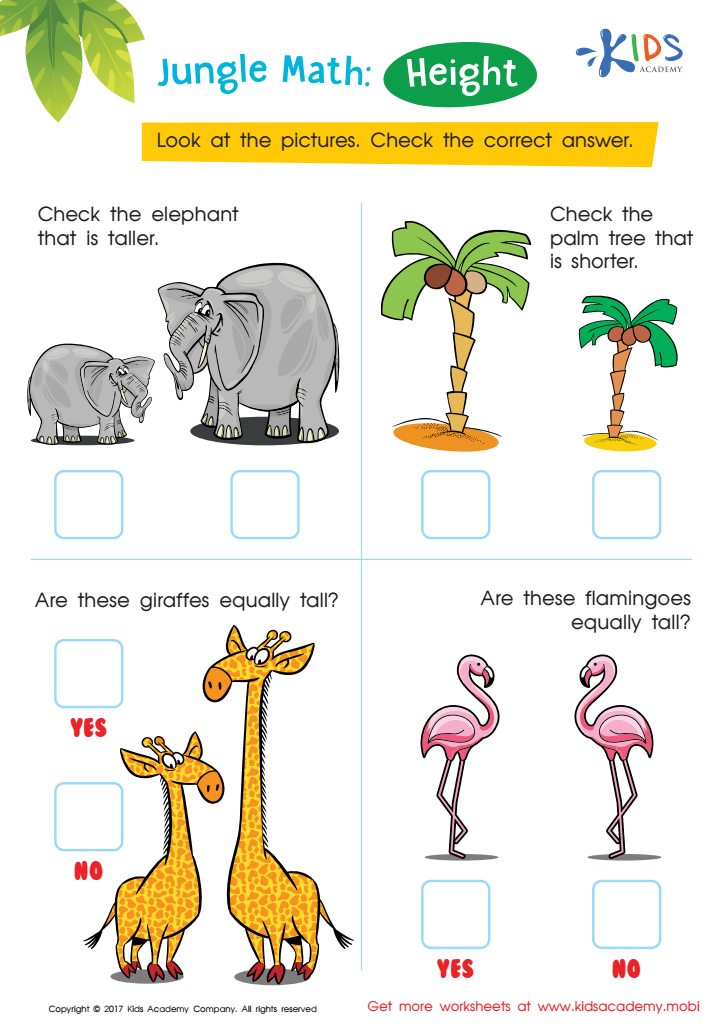
Which Is Taller Worksheet
 Assign to My Students
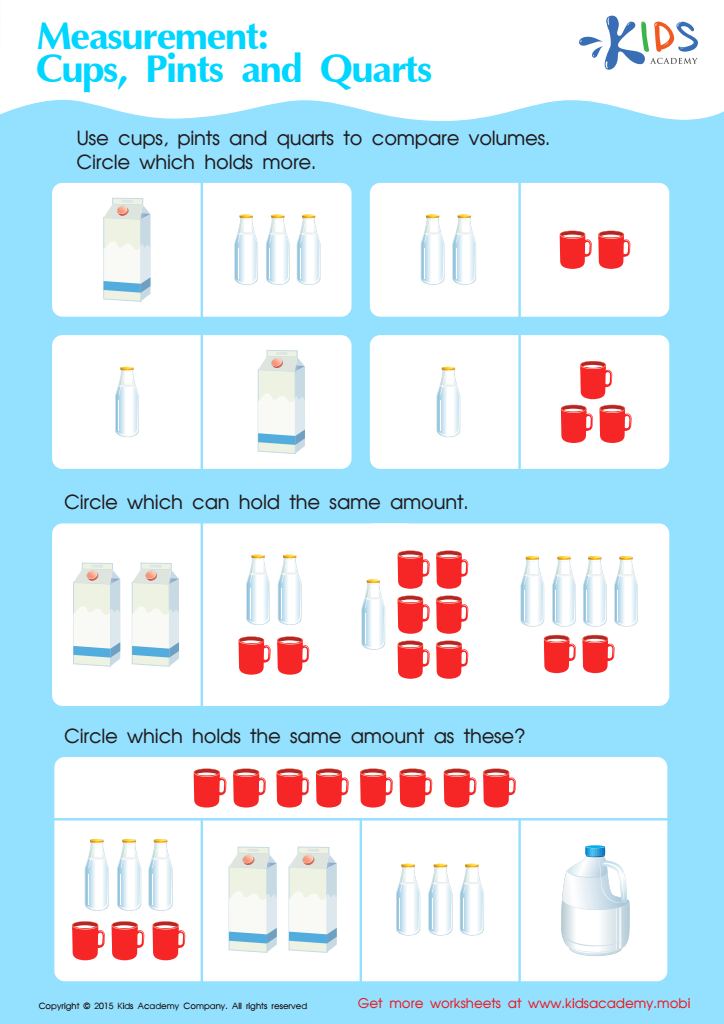
Measurement: Compare Volumes Worksheet
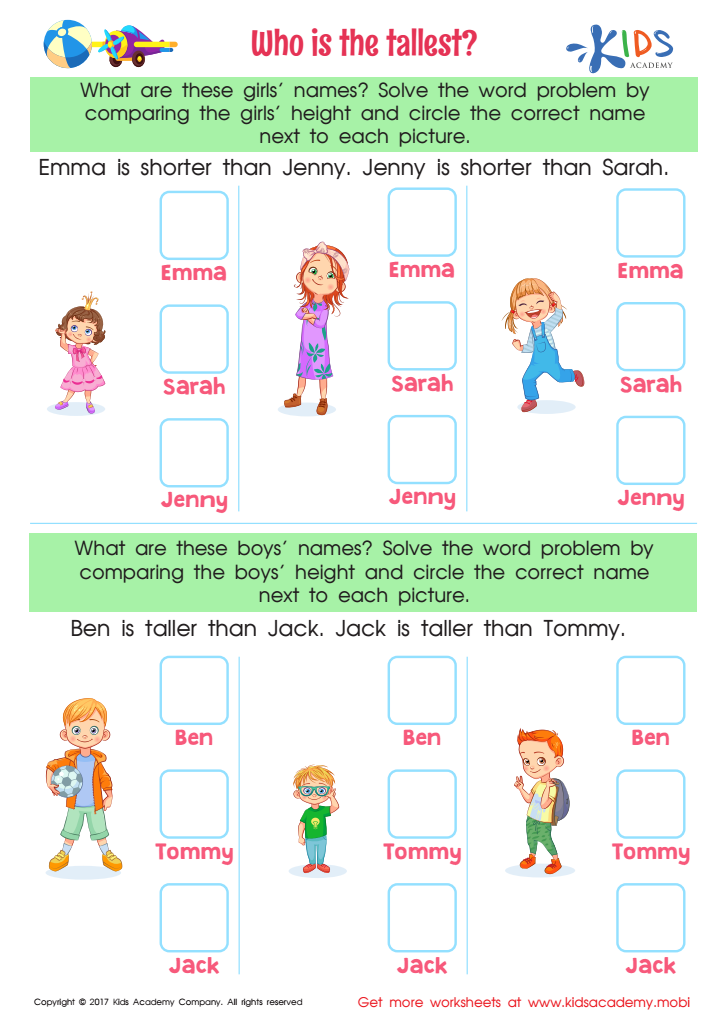
Who Tallest Printable
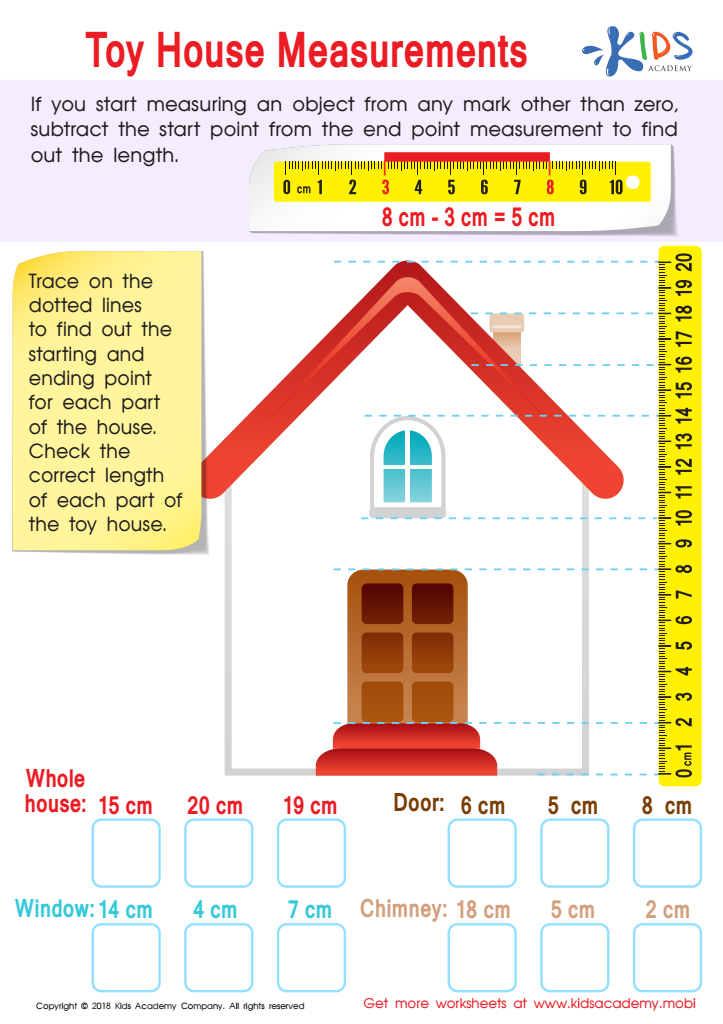
Toy House Measurements Worksheet
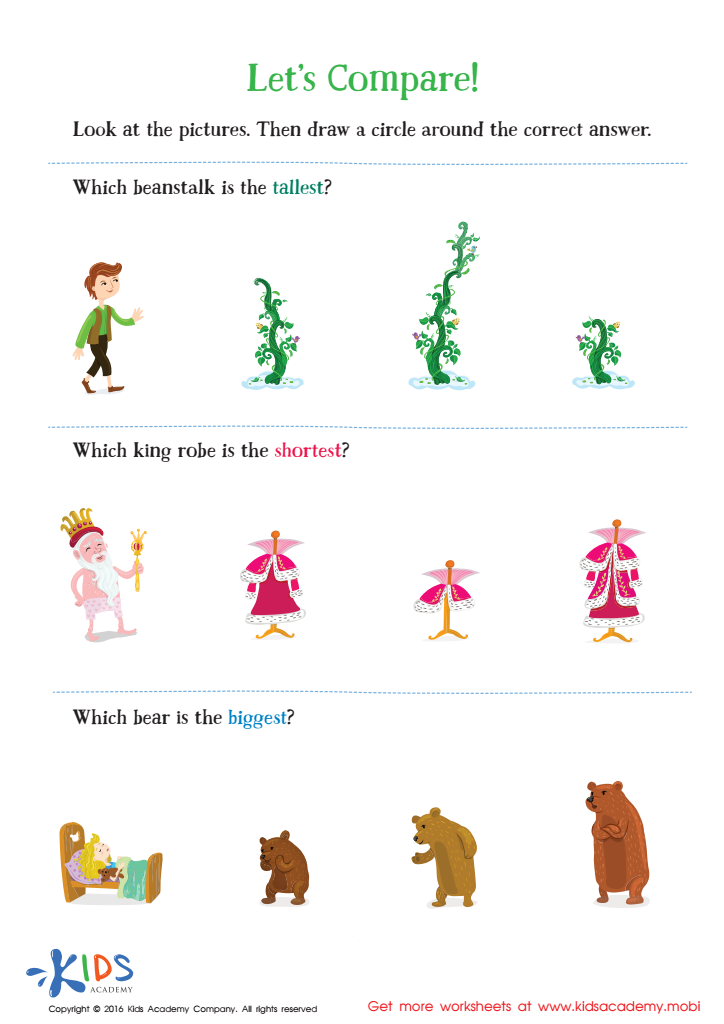
Fairy Tale Worksheet: Let's Compare




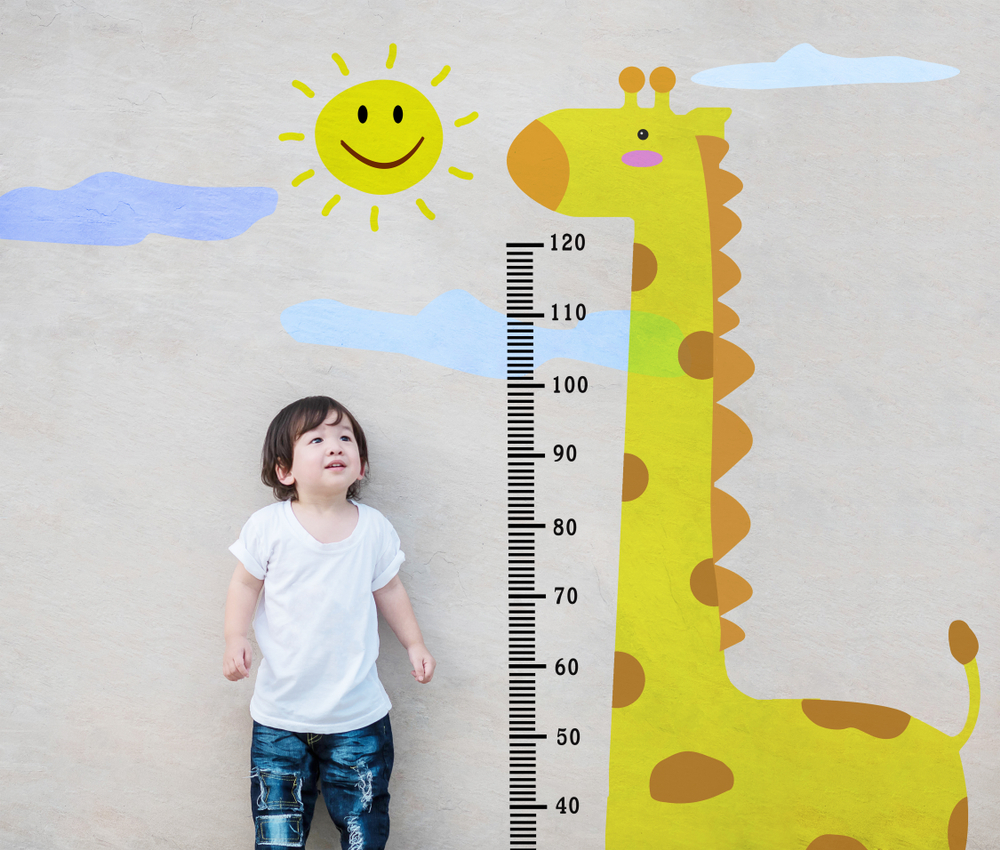



Understanding measurement and comparing sizes is essential for children aged 4-9, as these concepts lay the groundwork for future math skills and critical thinking. Parents and teachers should care about the "Comparing Sizes Extra Challenge Measurement" because it engages students in hands-on, interactive learning, which is crucial at this developmental stage.
Children during these years are naturally curious about their world, and activities involving comparing sizes foster this curiosity while making learning enjoyable. These activities not only teach foundational math skills such as measurement, comparison, and enumeration but also develop vocabulary related to size and dimension, enhancing language skills.
Moreover, comparing sizes encourages problem-solving and reasoning skills. For instance, deciding which object is bigger or smaller requires children to observe, hypothesize, and conclude, processes that are fundamental in their cognitive development.
Furthermore, focusing on measurement ties directly to real-world applications. Whether it’s understanding how to measure ingredients while cooking or comparing heights of plants, these skills are practical and relevant, helping children make connections with everyday life. By prioritizing such learning activities, parents and teachers can significantly enhance a child’s cognitive and mathematical foundation, preparing them for more complex concepts in the future.