Extra Challenge Numbers 11–20 Worksheets for Ages 4-9
3 filtered results
Difficulty Level
Grade
Age
-
From - To
Subject
Activity
Standards
Looking for an enriching and engaging way to help your child master numbers 11–20? Our Extra Challenge Numbers 11–20 Worksheets are designed for ages 4-9 to offer the perfect blend of fun and education. These worksheets are filled with interactive exercises that make learning numbers enjoyable while reinforcing counting and early math skills. Each page is thoughtfully crafted to challenge young minds with increasingly complex activities, ensuring they build confidence and competence in number recognition and sequencing. Ideal for classroom use or at-home practice, these worksheets are a must-have resource for fostering numerical fluency in young learners.
Favorites
With answer key
Interactive
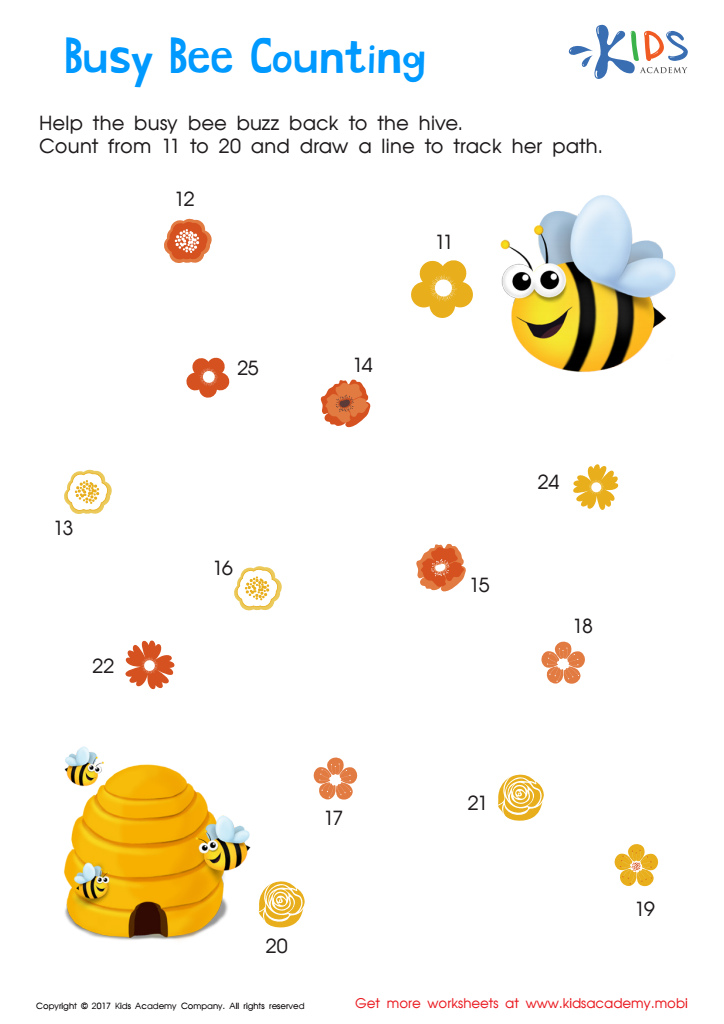
Ordering 11–20: Busy Bee Counting Worksheet
Help your child master counting from 11 to 20 with our connect the dot counting worksheet. Kids will have fun counting, drawing and problem-solving with this vibrant worksheet. With clear directions, adorable pictures and a sense of purpose, your child will develop crucial numeracy skills without even knowing it!
 Assign to My Students
Ordering 11–20: Busy Bee Counting Worksheet
Worksheet
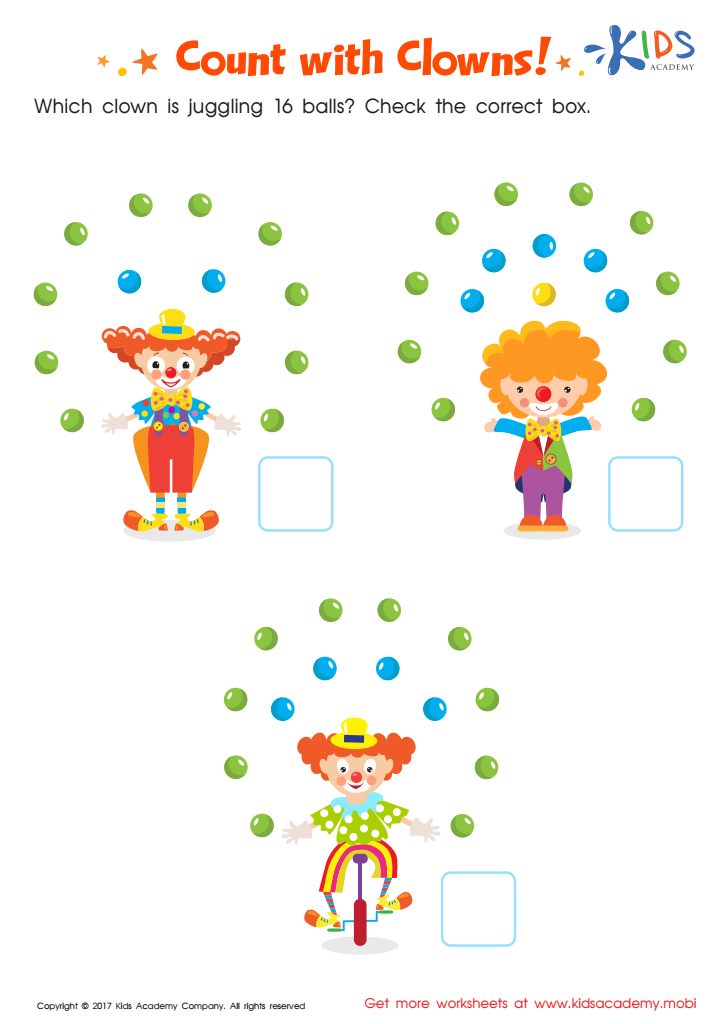
Count with Clowns Worksheet
Math may not be a laughing matter, but this worksheet sure is! Download the PDF and get ready to count balls with the clowns! Your child will have a blast and learn how to count at the same time. It's an easy, fun way to practice math!
Count with Clowns Worksheet
Worksheet
Join Kids Academy for Free
Who is primarily going to use this learning content?



Extra Challenge Numbers for ages 4-9 focus on the numbers 11-20, crucial for several reasons. These numbers are not just a step beyond the basics but represent an essential milestone in a child’s numerical and cognitive development.
First, understanding numbers 11-20 helps solidify the foundation laid by numbers 1-10. It transitions children from simplistic counting to more complex patterns, such as tens and units, setting the stage for advanced arithmetic skills. For instance, recognizing that '15' is one ten and five units extends their grasp of numerical relationships and place value.
Second, mastering this range boosts a child's confidence and competency in tackling higher numbers. Proficiently handling numbers 11-20 encourages children to approach math joyfully rather than fearfully, which can positively impact their overall attitude towards learning.
Third, these numbers form the cornerstone for essential everyday math tasks, from counting objects and telling time to basic addition and subtraction. Activities involving these numbers enhance logical thinking and problem-solving abilities.
Finally, engaging with these numeric challenges strengthens memory and attention to detail, cognitive skills imperative for success in multiple academic disciplines. In sum, parents and teachers should prioritize this crucial developmental step to foster a robust mathematical foundation, setting children on a path toward lifelong analytical and numerical literacy.