Letter recognition Extra Challenge Reading Worksheets for Ages 4-9
3 filtered results
-
From - To
Enhance your child’s literacy journey with our "Letter Recognition Extra Challenge Reading Worksheets" designed for ages 4-9. These engaging, print-and-go worksheets provide an excellent resource for mastering letters through fun activities that promote recognition, pronunciation, and visual memory. Tailored to challenge and inspire young learners, these worksheets include interactive games, tracing exercises, and vibrant illustrations that captivate attention. Perfect for home practice or classroom settings, they allow children to build confidence in their reading skills while stimulating a love for learning. Elevate your child’s reading adventure today and watch them thrive with each worksheet!
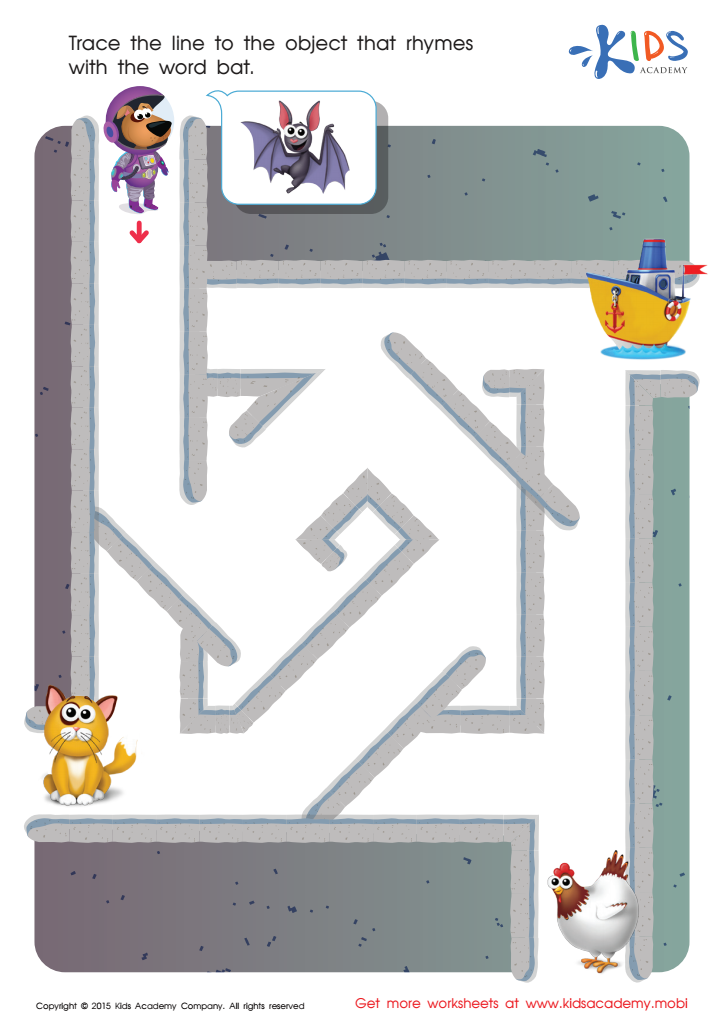
Bat Rhyming Words Worksheet
 Assign to My Students
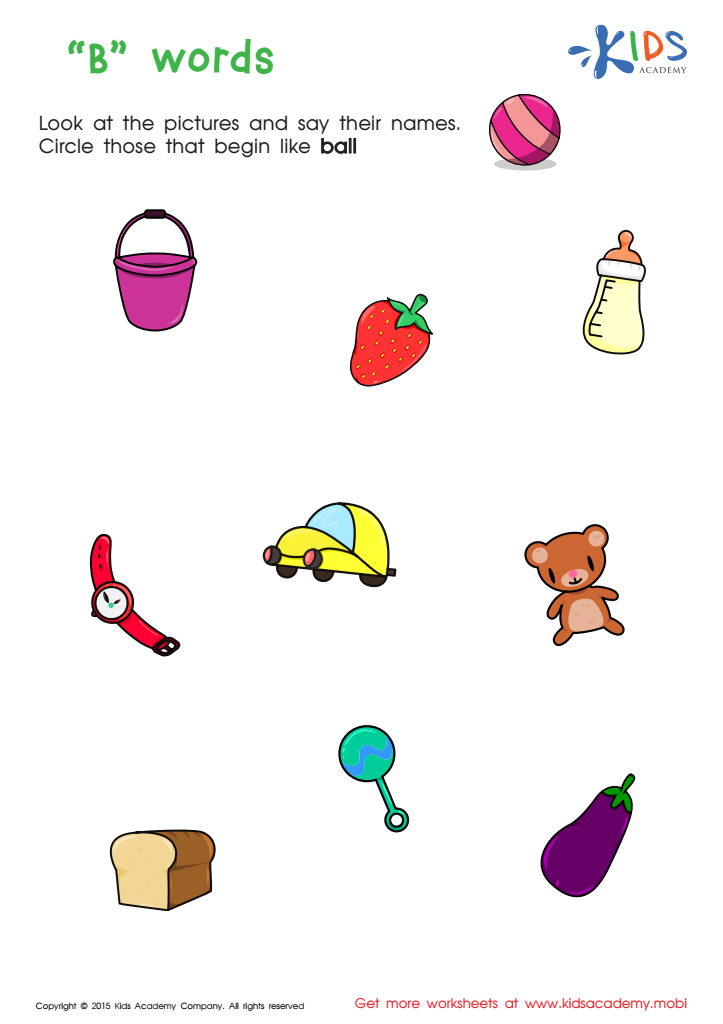
First Words Worksheet
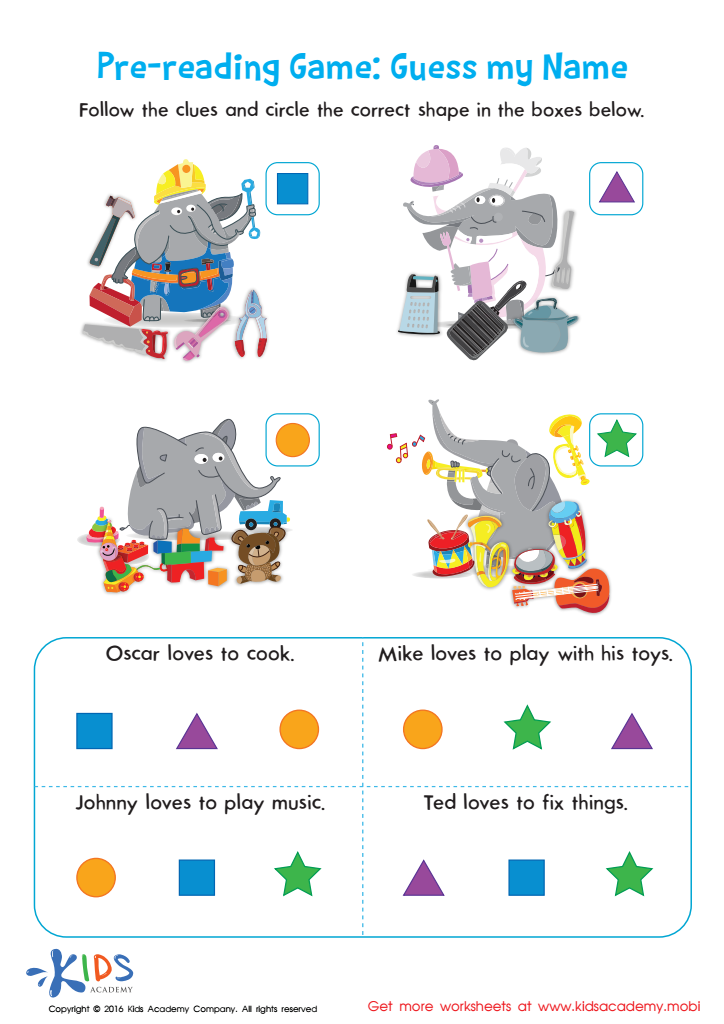
Pre Reading Worksheet Guess My Name








Letter recognition is a crucial foundational skill for children aged 4-9, forming the bedrock for their reading and writing development. Parents and teachers should care about this skill because it significantly impacts literacy and academic success. Early mastery of letter recognition helps children understand that letters represent sounds, a principle pivotal to phonics and reading fluency.
Engaging with letter recognition through Extra Challenge Reading activities not only strengthens recognition but also enhances vocabulary and language comprehension. This personalized approach can cater to diverse learning styles, ensuring that all children, regardless of their starting point, make progress.
Moreover, consistent reinforcement of letter recognition fosters a love for reading. By incorporating fun, engaging activities that challenge children without overwhelming them, educators and parents can create positive associations with learning. This not only boosts confidence but also encourages children to explore reading more independently.
Finally, early letter recognition helps identify potential learning difficulties. Early intervention, if noticed, can significantly alter a child's educational trajectory. By emphasizing the importance of letter recognition, parents and teachers empower children to become proficient readers, laying the groundwork for lifelong learning and academic achievement.