
Story sequencing Extra Challenge Reading Fiction Worksheets for Ages 4-9
3 filtered results
Difficulty Level
Grade
Age
-
From - To
Subject
Activity
Standards
Discover our engaging Story Sequencing Extra Challenge Reading Fiction Worksheets, designed for children ages 4-9! These worksheets enhance critical reading skills as young learners arrange story elements in the correct order. Encouraging comprehension and logical thinking, these exercises transform learning into a fun, interactive experience. With captivating illustrations and diverse storylines, your child will develop crucial skills while enjoying the whimsical world of fiction. Ideal for classrooms or at-home learning, our worksheets are perfect for reinforcing literacy foundations, promoting imaginative thinking, and boosting confidence in young readers. Explore the joys of storytelling with our curriculum-aligned resources today!
Favorites
With answer key
Interactive
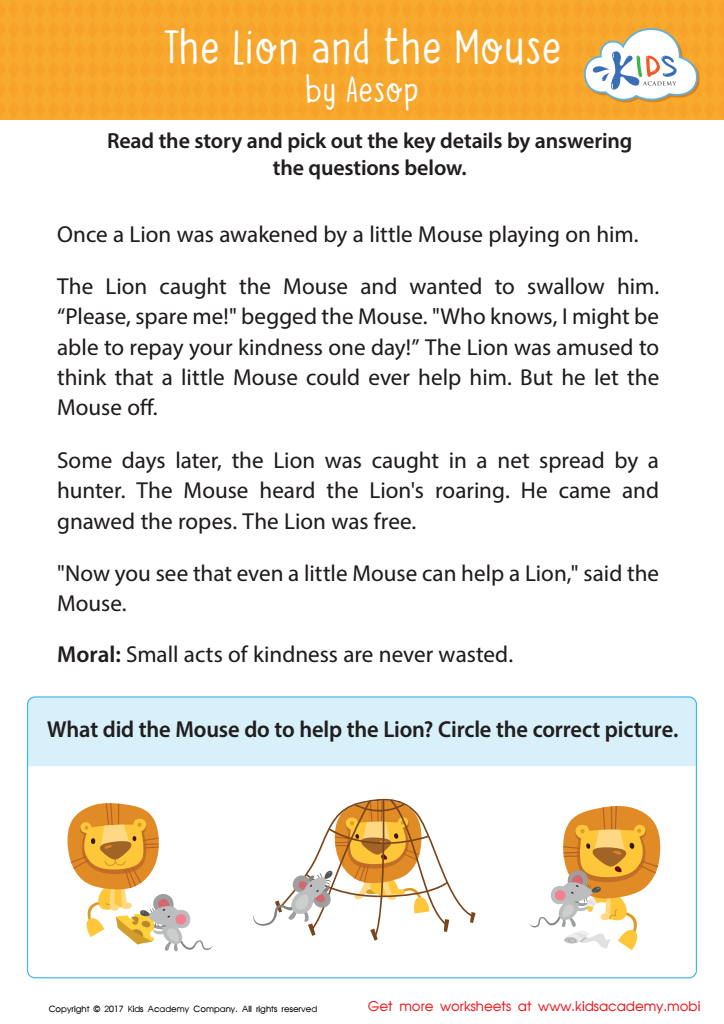
The Lion and The Mouse Sequencing Worksheet
Read the fable "The Lion and the Mouse" and test your child's comprehension skills! Answer the question by selecting the image that best matches the answer. It's a great way to practice reading comprehension.
 Assign to My Students
The Lion and The Mouse Sequencing Worksheet
Worksheet
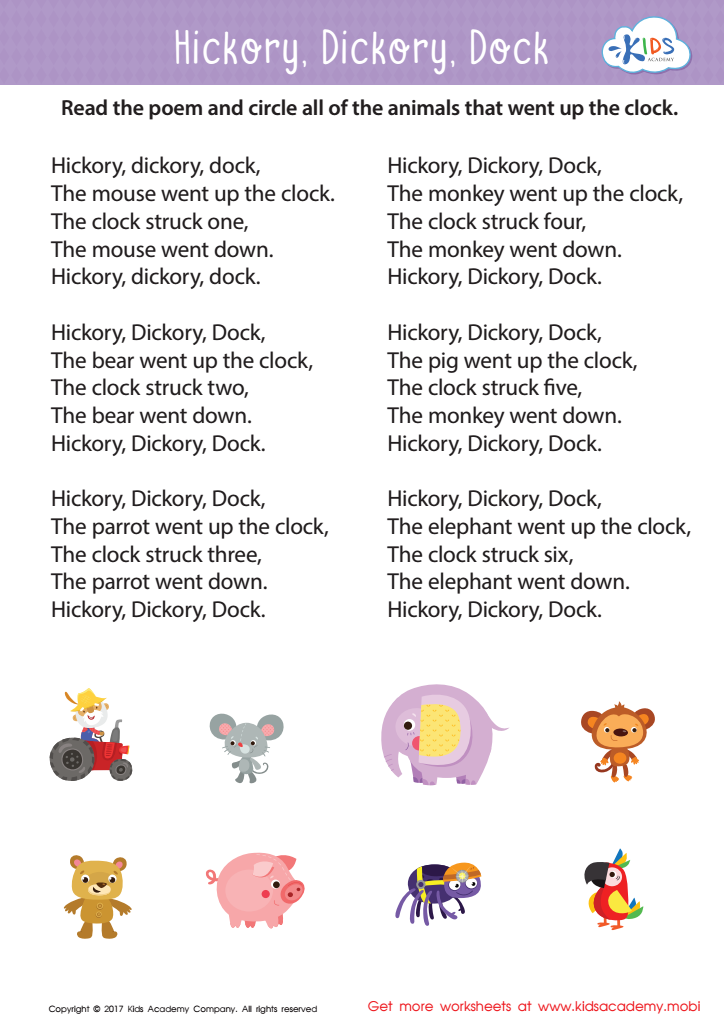
Hickory Dickory Dock Sequencing Worksheet
Help your child boost their reading skills with this fun Hickory Dickory Dock sequencing worksheet! They'll read and identify the animals in the right order, strengthening their story sequencing and comprehension skills.
Hickory Dickory Dock Sequencing Worksheet
Worksheet
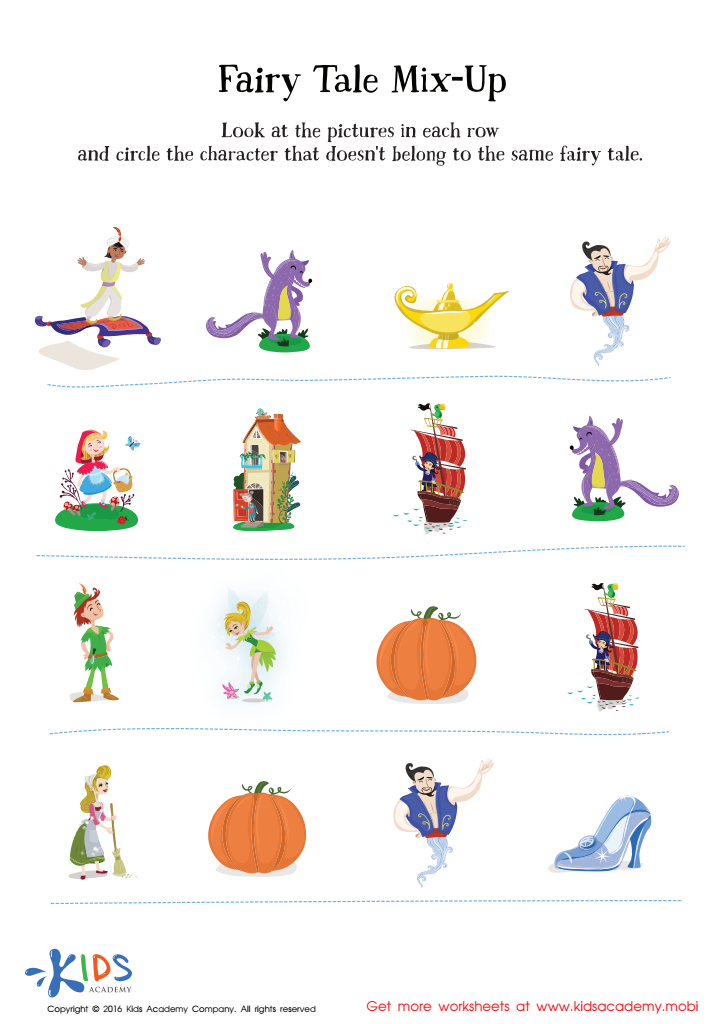
Fairy Tale Worksheet: Story Mix Up
Kids love fairy tales! Encourage your child to engage with their favorite stories using our vibrant worksheet. It'll help sharpen cognitive and comprehension skills, build problem-solving skills, and strengthen classification skills. Beforehand, read or watch the fairy tales and talk about each one's characters and elements. Your child will love the story and time spent together! Print the worksheet and get ready for a magical experience.
Fairy Tale Worksheet: Story Mix Up
Worksheet
Join Kids Academy for Free
Who is primarily going to use this learning content?







Story sequencing is a crucial skill for young readers aged 4-9, and both parents and teachers should prioritize its development. Understanding story sequences helps children grasp the key elements of a narrative, including the beginning, middle, and end, and enhances their comprehension skills. This understanding builds a stronger foundation for critical thinking, as children learn to identify cause-and-effect relationships and make predictions about future events based on story progression.
Additionally, mastering sequencing fosters creativity, as children can better articulate their thoughts and ideas when recounting or creating their own stories. It encourages them to think about plot structure and character development, which are essential skills in both reading and writing.
Moreover, engaging in story sequencing activities—such as puzzles, retelling stories in order, or using sequenced visuals—can make reading interactive and enjoyable. These activities not only capture a child's interest but also promote collaborative learning and communication skills. By involving parents and teachers in story sequencing exercises, children benefit from support, guidance, and encouragement, which ultimately nurtures a lifelong love for reading and storytelling! Thus, caring about story sequencing directly contributes to a child's academic success and cognitive development.







