
Spatial awareness Extra Challenge Worksheets for 4-Year-Olds
5 filtered results
Difficulty Level
Grade
Age
-
From - To
Subject
Activity
Standards
Discover our "Spatial Awareness Extra Challenge Worksheets for 4-Year-Olds," meticulously crafted to boost your child's spatial reasoning skills. With engaging, age-appropriate exercises, these worksheets challenge children to think about space, distance, and positioning. Perfect for preschoolers ready to advance, each activity fosters critical thinking and problem-solving abilities while providing hours of educational fun. Ideal for parents and educators aiming to give children a head start in essential early learning skills, these worksheets will make spatial learning an enjoyable adventure. Set your little learner on a path to success with these expertly designed printable resources.
Favorites
With answer key
Interactive
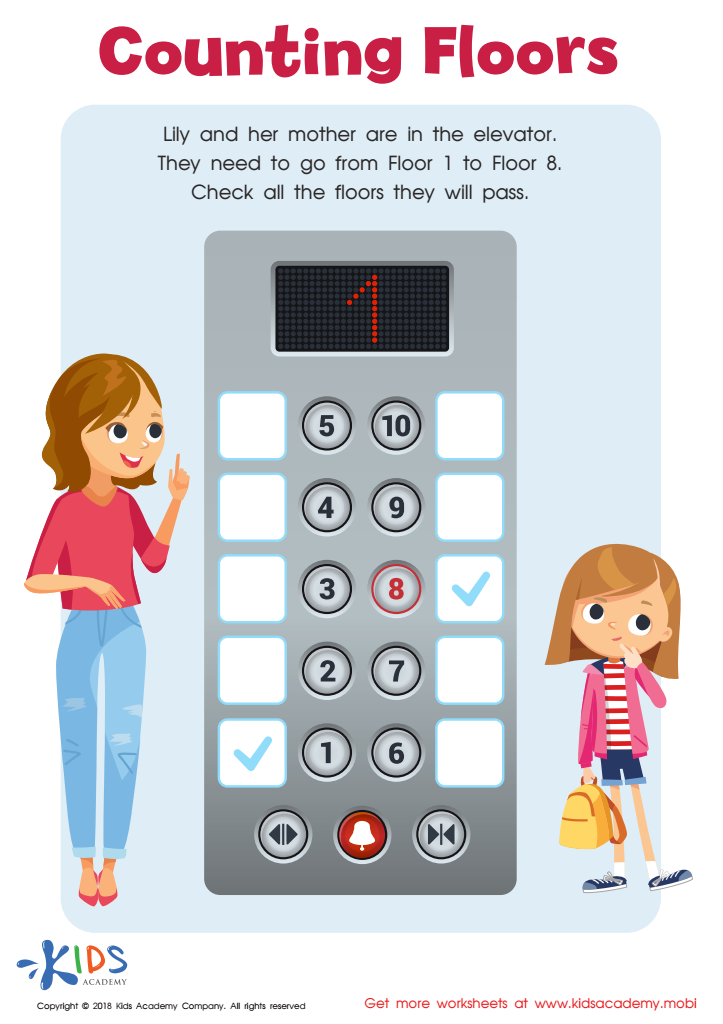
Counting Floors Worksheet
Take your kids on an elevator ride and have them help you. With this worksheet, little ones meet Lily and her mom. They're taking an elevator from Floor 1 to Floor 8. Ask them to check the floors they pass and help the two reach their destination.
 Assign to My Students
Counting Floors Worksheet
Worksheet
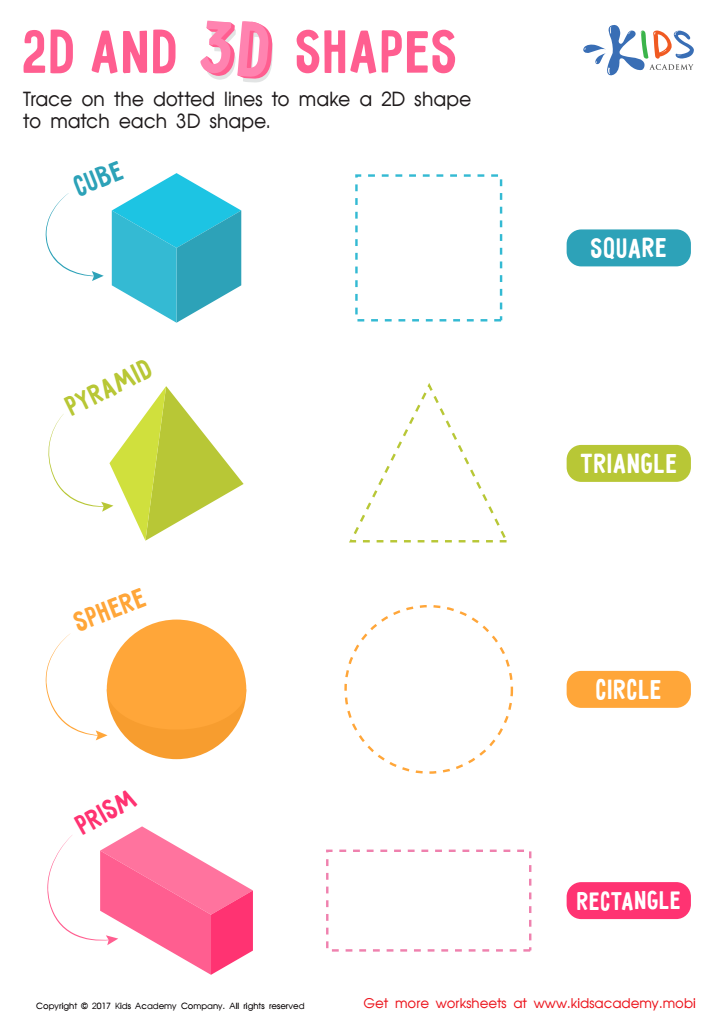
2D and 3D Shapes Worksheet
Introduce your child to 3D and 2D with this traceable worksheet. With dotted lines, help them trace and make a 2D shape for each 3D shape: square, triangle, rectangle, and circle. Show them there's more than one way to draw! You may have taken them to a 3D movie, or they've seen some fantastic 3D art. Now they can wonder no more.
2D and 3D Shapes Worksheet
Worksheet
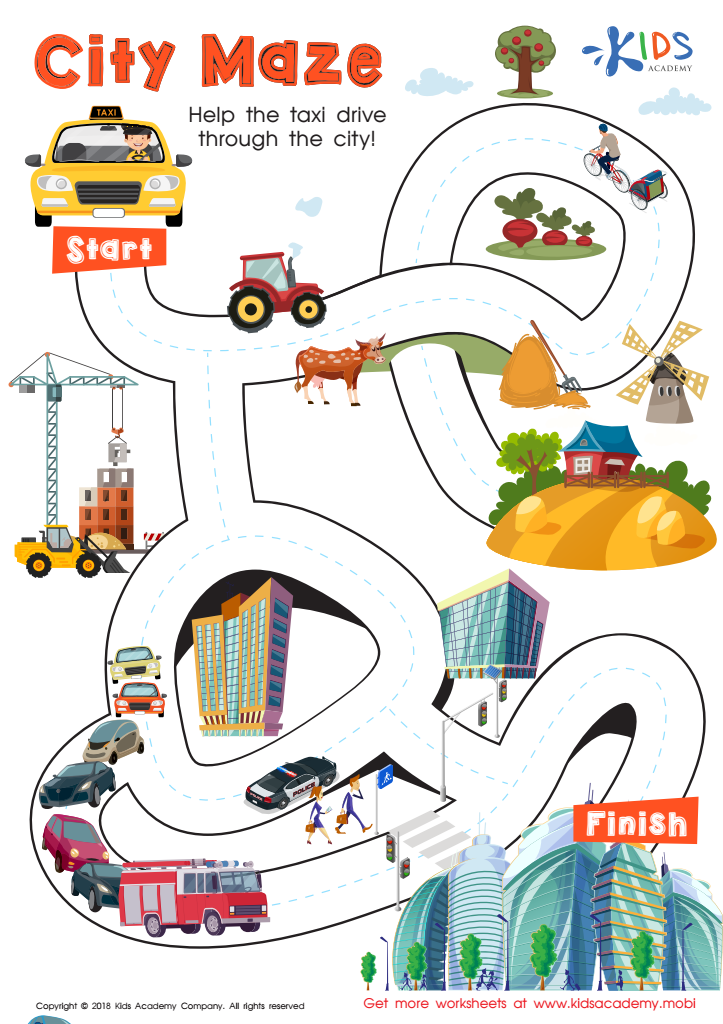
City Maze Worksheet
Kids love mazes! This free PDF city maze worksheet is sure to be a hit. Help your friend the taxi driver get through the maze, following traceable lines through different communities to the big city. It's a fun and challenging way to practice fine motor skills and succeed!
City Maze Worksheet
Worksheet
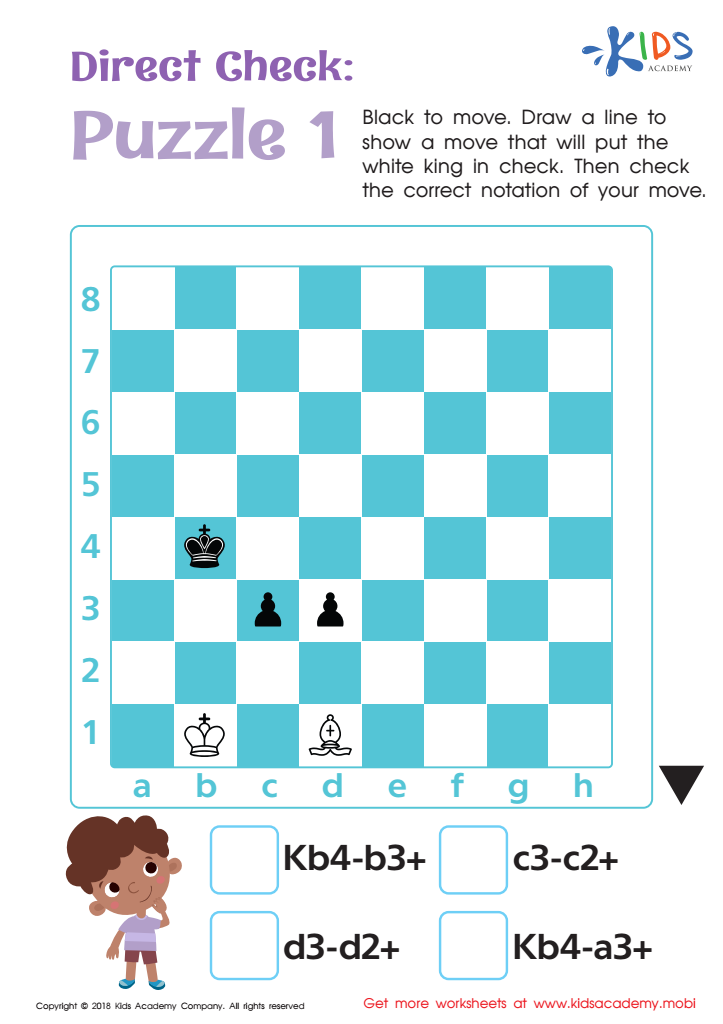
Direct Check: Puzzle 1 Worksheet
Your child can test their chess knowledge with this worksheet. If they've been taking lessons or playing regularly, they'll enjoy connecting the dots to put the white king in checkmate, then checking the correct notation. Challenge their chess skills!
Direct Check: Puzzle 1 Worksheet
Worksheet
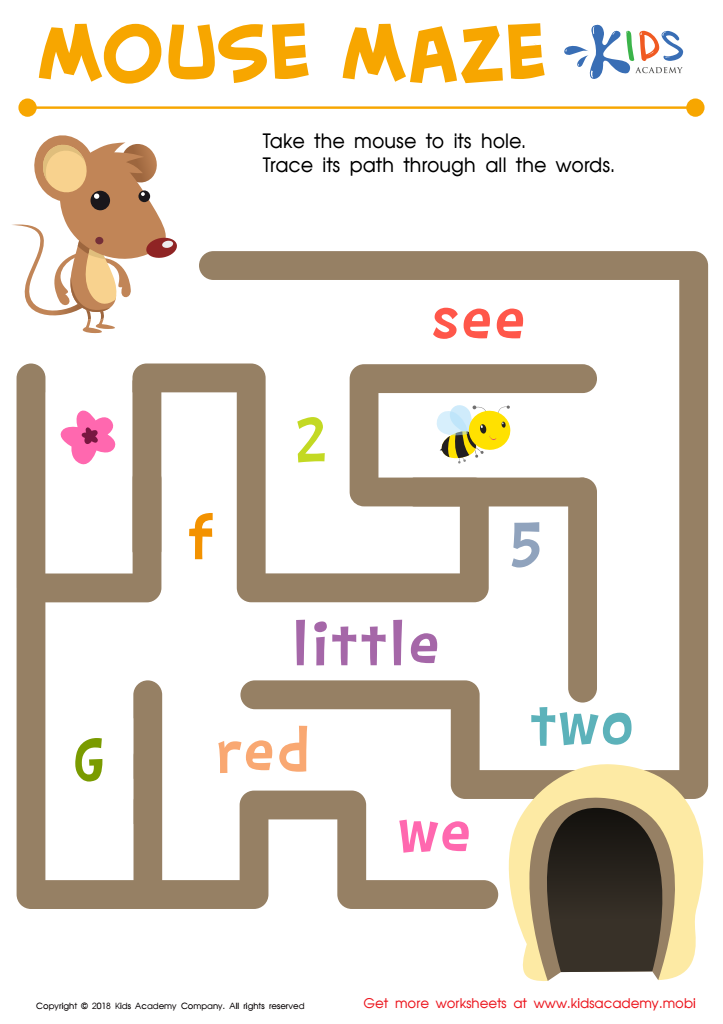
Find Words Mouse Maze Worksheet
Help your child identify words and guide the mouse home! Ask them to point out the colorful animal on the worksheet, then take their hand and show them how to trace the path, going through all the words in the maze to get the mouse back to its hole.
Find Words Mouse Maze Worksheet
Worksheet
Join Kids Academy for Free
Who is primarily going to use this learning content?








Spatial awareness is a crucial skill for young children, enabling them to understand and interact effectively with their surroundings. At the age of four, children are at a pivotal point in their development, where honing spatial skills can significantly influence their cognitive and motor abilities. Parents and teachers should prioritize spatial awareness exercises as they pave the way for essential academic and life skills.
Firstly, strong spatial awareness aids in problem-solving and critical thinking. When young children learn to navigate spaces and visualize objects in different positions, they develop a foundation for understanding more complex concepts in subjects like math and science later on. For instance, recognizing patterns, shapes, and sequencing are all rooted in spatial understanding.
Moreover, spatial skills impact physical well-being by enhancing coordination and motor skills. By engaging in activities that challenge their spatial awareness, children refine their hand-eye coordination, balance, and fine motor skills—critical for performing everyday tasks efficiently and safely.
Equally important is the positive effect on social development. Children who can navigate spaces and objects confidently are better equipped to participate in group play and team activities, fostering social interaction and cooperation.
Overall, focusing on spatial awareness will yield long-term benefits across various domains, setting a strong foundation for a child's future learning and overall development.








