Understanding currency Extra Challenge Worksheets for 4-Year-Olds
3 filtered results
-
From - To
Discover our "Understanding Currency Extra Challenge Worksheets for 4-Year-Olds", designed to introduce your preschooler to money basics. These engaging worksheets from Kids Academy take learning to the next level, featuring fun and educational activities that help children grasp the concept of currency. Perfectly tailored for little learners, these printables foster recognition of coins and bills while boosting counting skills. Each worksheet is designed to challenge and excite young minds, nurturing early math proficiency and real-world knowledge. Give your child a head start in financial literacy with these interactive, age-appropriate resources!
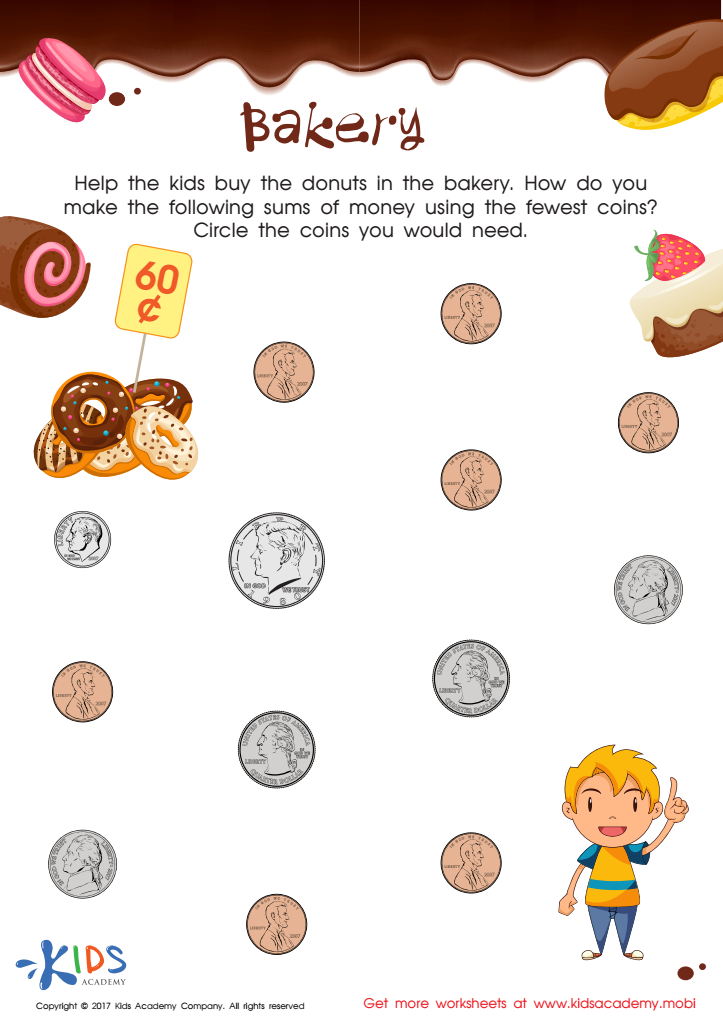
Counting Coins Worksheet
 Assign to My Students
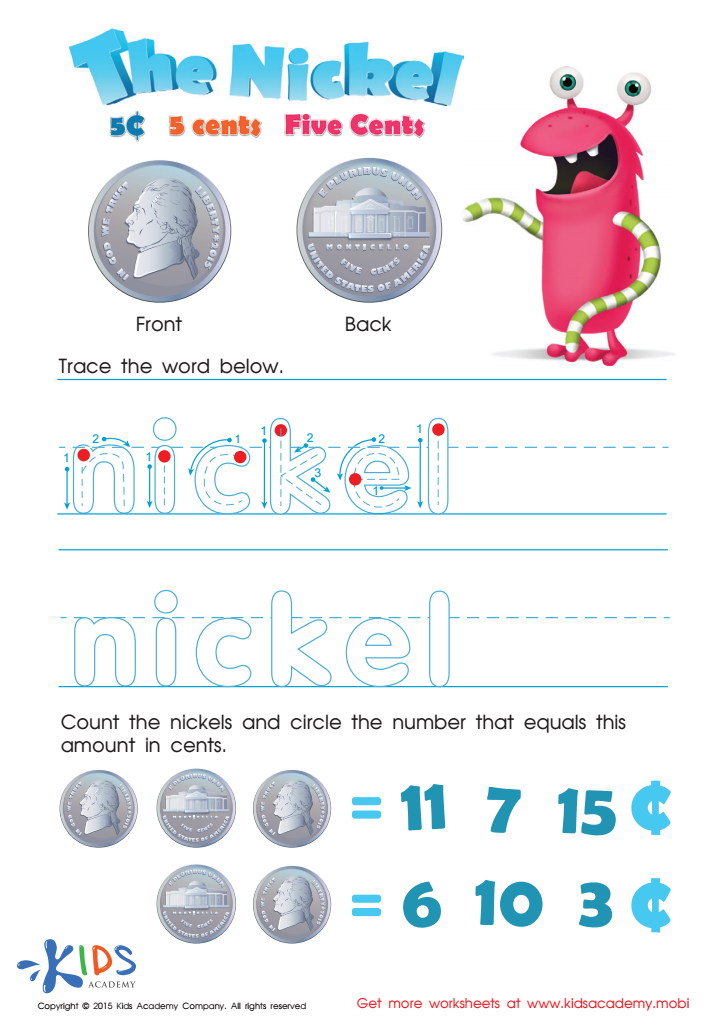
Five Cents or the Nickel Money Worksheet
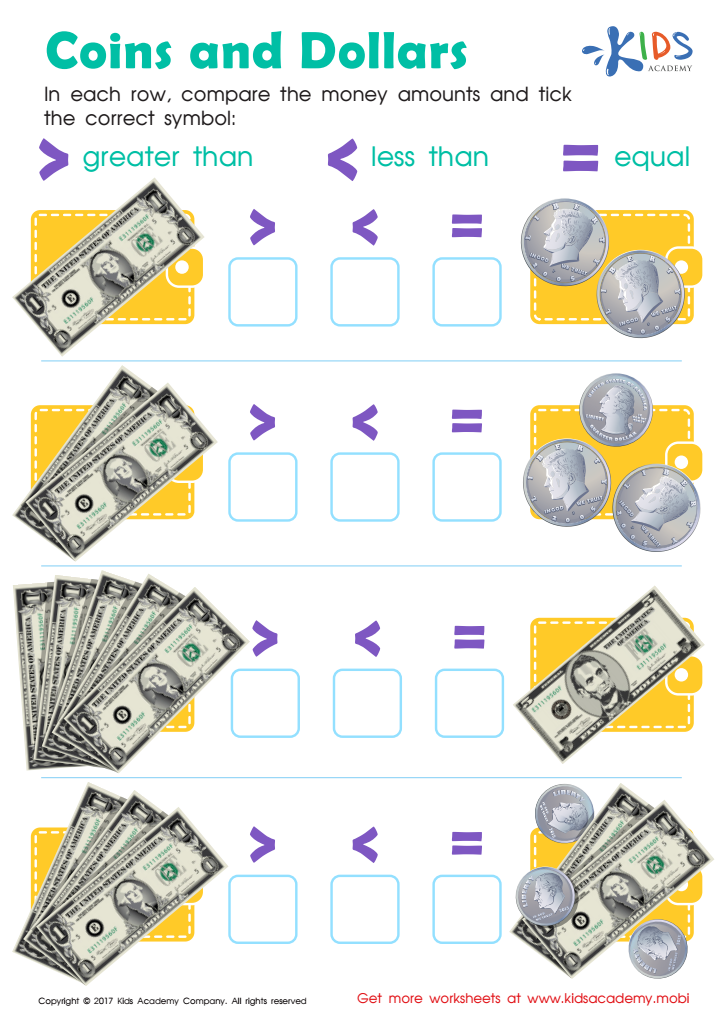
Money: Coins Dollars Printable





.jpg)
Understanding currency at a young age equips children with essential life skills and lays the foundation for future financial literacy. For 4-year-olds, integrating currency lessons as an 'extra challenge' can have numerous benefits. Firstly, it fosters early cognitive development. When children count coins and recognize bills, they practice basic math skills, such as counting and addition, in a practical setting. This early exposure can make them more comfortable with numbers and calculations later on.
Secondly, it teaches them the value of money and encourages responsible behaviors. Even simple activities, like identifying coins or playing make-believe store, help young children understand that items have value and that money is a tool for transactions. This can instill an early sense of financial awareness and the concept of saving and spending wisely.
Additionally, early learned concepts about money help in building social skills. Interactive exercises involving pretend play with currency can teach children to communicate, negotiate, and understand the importance of fairness.
Parents and teachers should view early currency-related activities not just as an academic exercise but as a crucial life skill. By starting these lessons early, we empower children to grow into mindful, informed, and financially literate individuals, prepared for future money-related decisions.








