
Fine Motor Skills Extra Challenge Addition & Subtraction Worksheets for 4-Year-Olds
4 filtered results
Difficulty Level
Grade
Age
-
From - To
Subject
Activity
Standards
Welcome to our Fine Motor Skills Extra Challenge Addition & Subtraction Worksheets for 4-Year-Olds! Designed to engage young learners, these worksheets seamlessly combine early math concepts with fine motor skill development. Your child will enjoy practicing addition and subtraction through interactive and colorful activities that promote hand-eye coordination, dexterity, and focus. Each worksheet features fun themes that captivate curiosity while reinforcing essential math skills. Perfect for home or classroom use, these resources provide an exciting challenge, ensuring your little one develops confidence in math AND fine motor abilities. Start your child’s learning journey today and watch them thrive!
Favorites
With answer key
Interactive
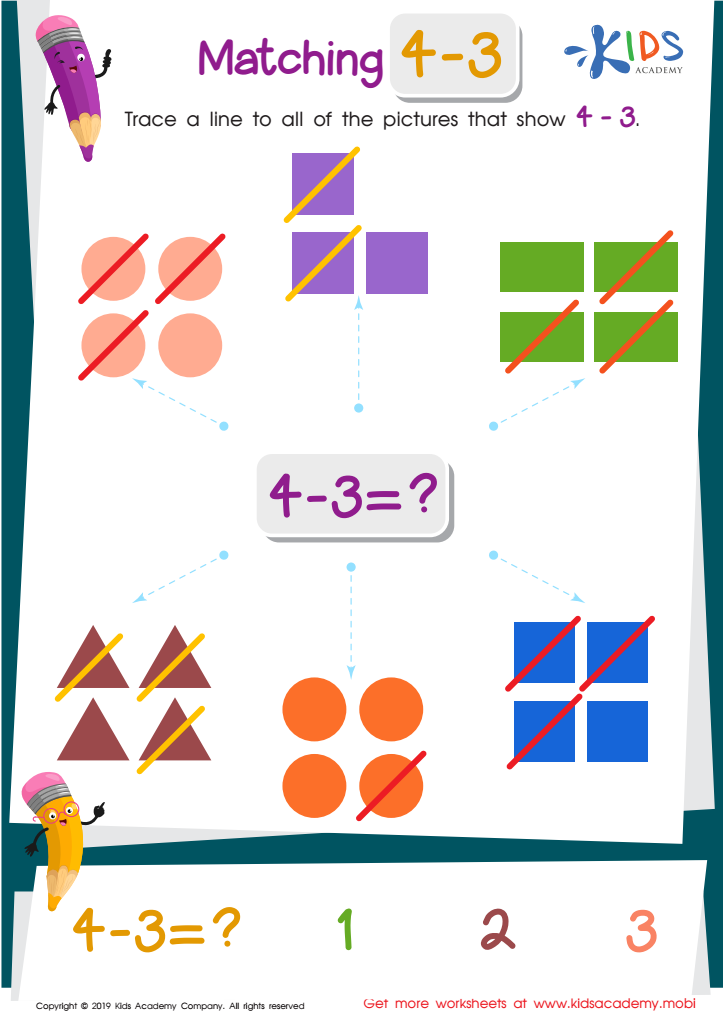
Matching 4 – 3 Worksheet
Help your kids master basic math concepts like addition and subtraction with fun exercises. Test their understanding with simple problems. For example, in this worksheet, ask them to count the objects in each picture and draw a line to the pictures that show 4 - 3 = 1. This will help them get better at solving equations.
 Assign to My Students
Matching 4 – 3 Worksheet
Worksheet
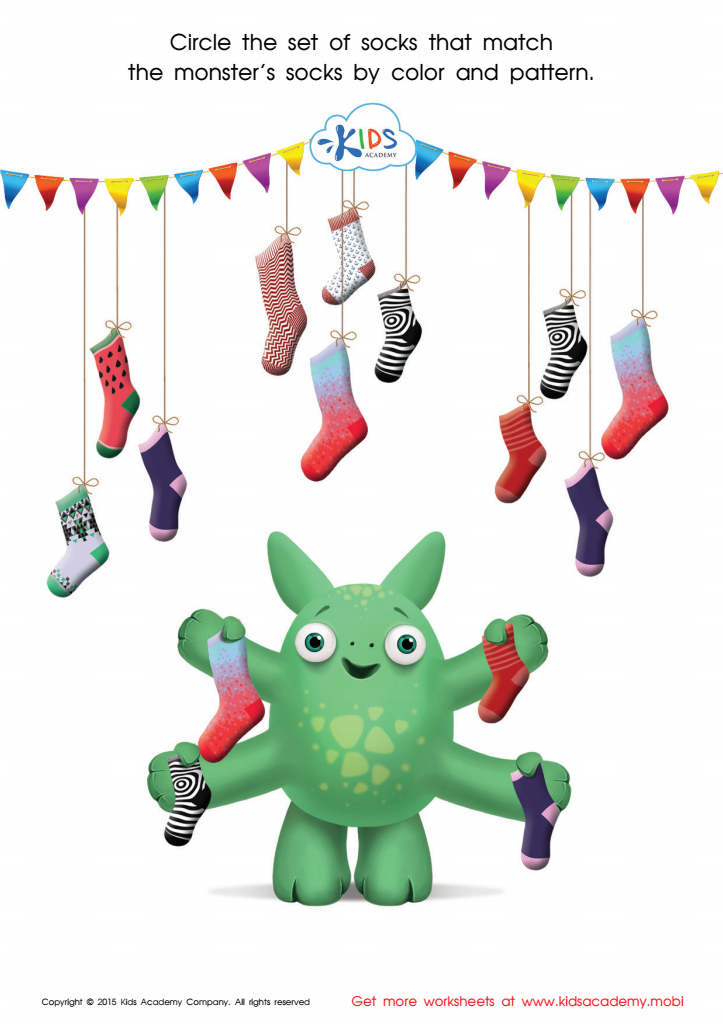
Sort the Monster's Socks Worksheet
Let your little one challenge herself and practice with matching Monster socks. She must be very attentive to match the same socks and draw a line connecting them!
Sort the Monster's Socks Worksheet
Worksheet
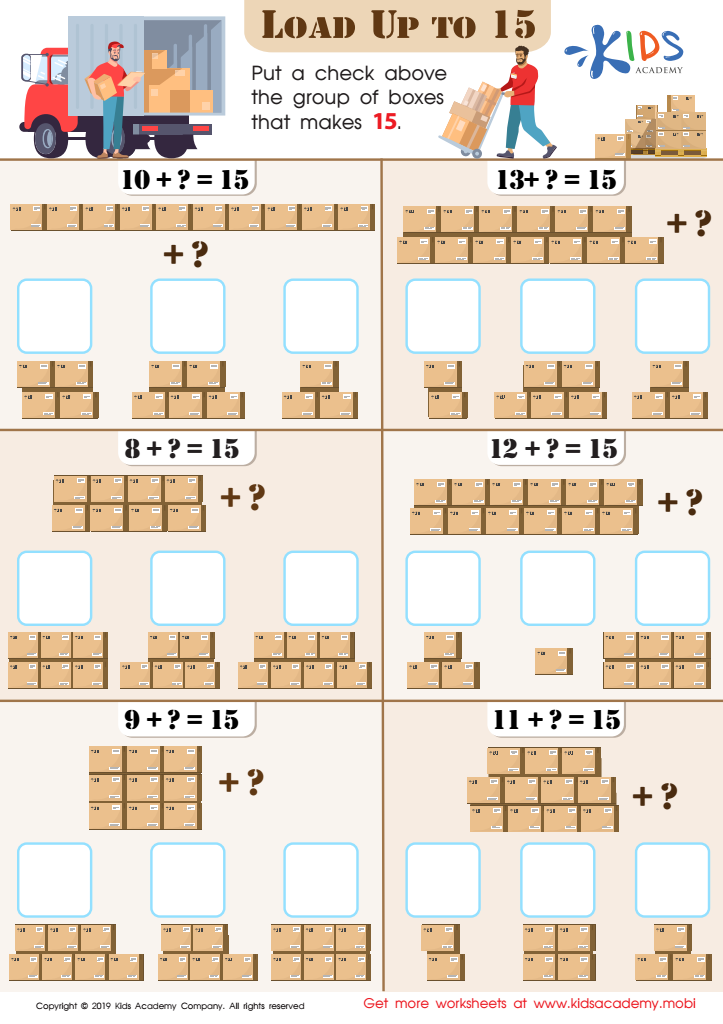
Load up to 15 Worksheet
Your students can practice addition and counting skills with this worksheet. Each equation has 6 boxes to count. Check the group that equals 15 to complete the exercise. Help your kindergartners if they need it.
Load up to 15 Worksheet
Worksheet
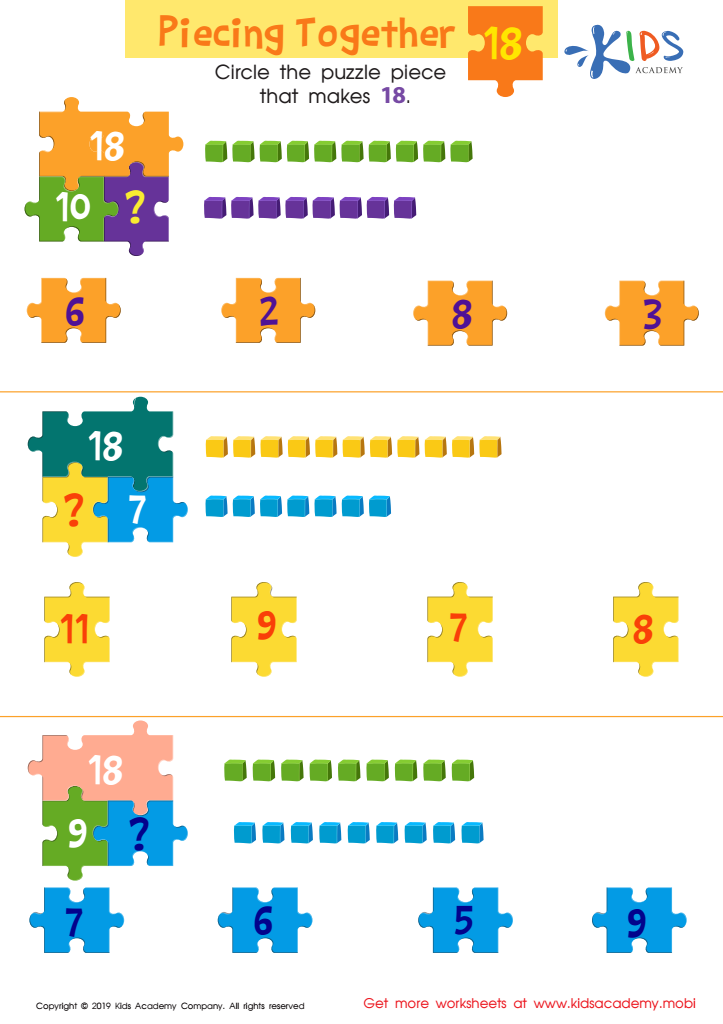
Piecing Together 18 Worksheet
Let your preschoolers learn and have fun with this colorful worksheet. Look at the picture with them and ask what they see. Help them solve the equations missing on each puzzle piece and then circle the one that will make the bottom puzzle piece numbers equal 16. Puzzles and bright colors make learning easy and enjoyable!
Piecing Together 18 Worksheet
Worksheet
Join Kids Academy for Free
Who is primarily going to use this learning content?








Fine motor skills are essential for young children's overall development and learning, particularly in areas like mathematics. Focusing on fine motor skills through activities such as Extra Challenge Addition and Subtraction for 4-year-olds encourages hand-eye coordination and dexterity, important for future skills like writing and scissor use.
Incorporating math challenges into fine motor exercises fosters cognitive development, as children learn to manipulate objects while simultaneously practicing counting and number recognition. This dual-focus approach not only makes learning more engaging, but it also builds confidence in children as they gain mastery over tasks requiring both physical and mental effort.
Furthermore, nurturing these skills early lays a strong foundation for problem-solving, critical thinking, and spatial awareness. When parents and teachers prioritize activities that combine fine motor skills with math challenges, they are promoting essential developmental pathways that can enhance academic achievement and prepare children for future learning environments.
Overall, encouraging Fine Motor Skills Extra Challenge Addition and Subtraction allows for a holistic approach to early education, fostering both cognitive growth and physical development in young learners. Thus, investing time in playful and challenging activities can yield significant long-term benefits for children’s educational journeys.








