Extra Challenge Chess Worksheets for Ages 5-6 - Page 2
37 filtered results
-
From - To
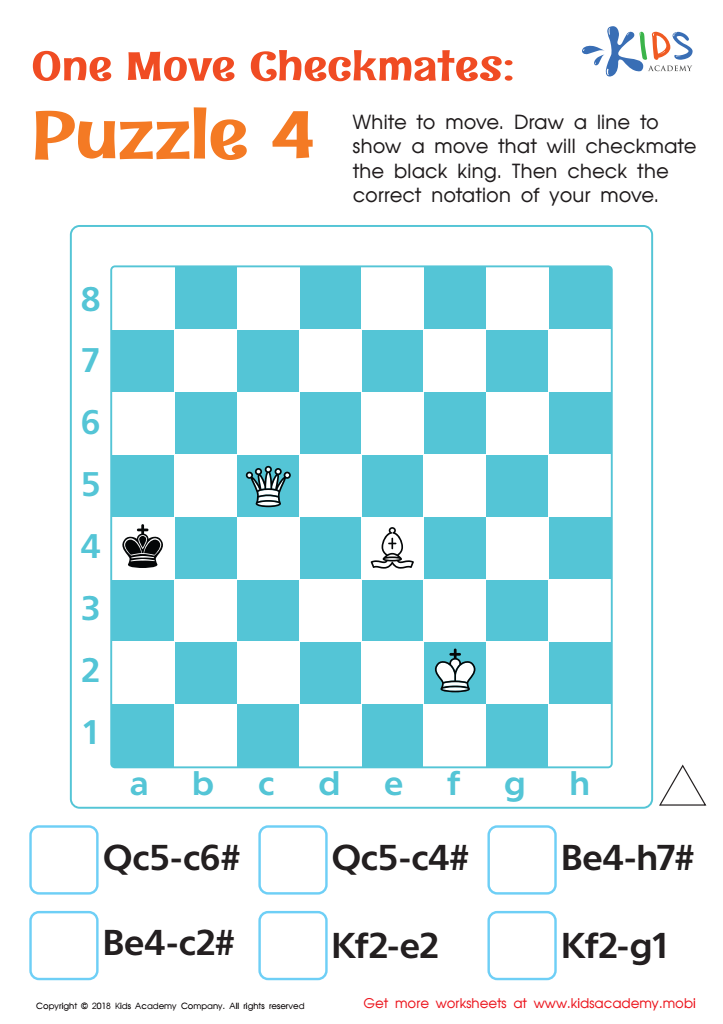
One Move Checkmates: Puzzle 4 Worksheet
 Assign to My Students
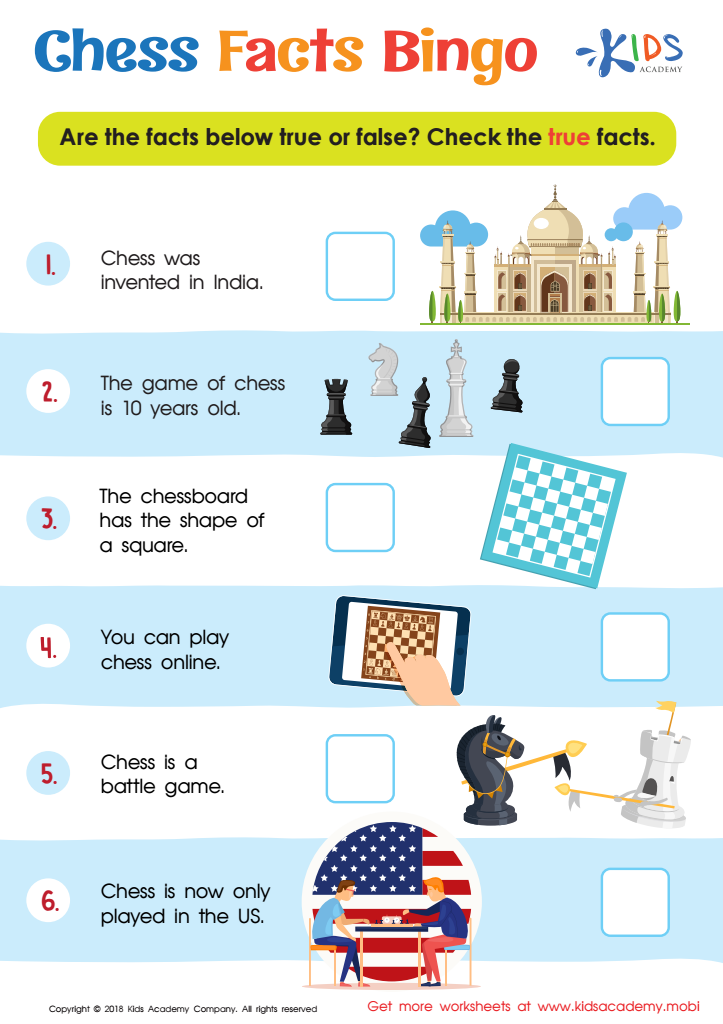
Chess Facts Bingo Worksheet
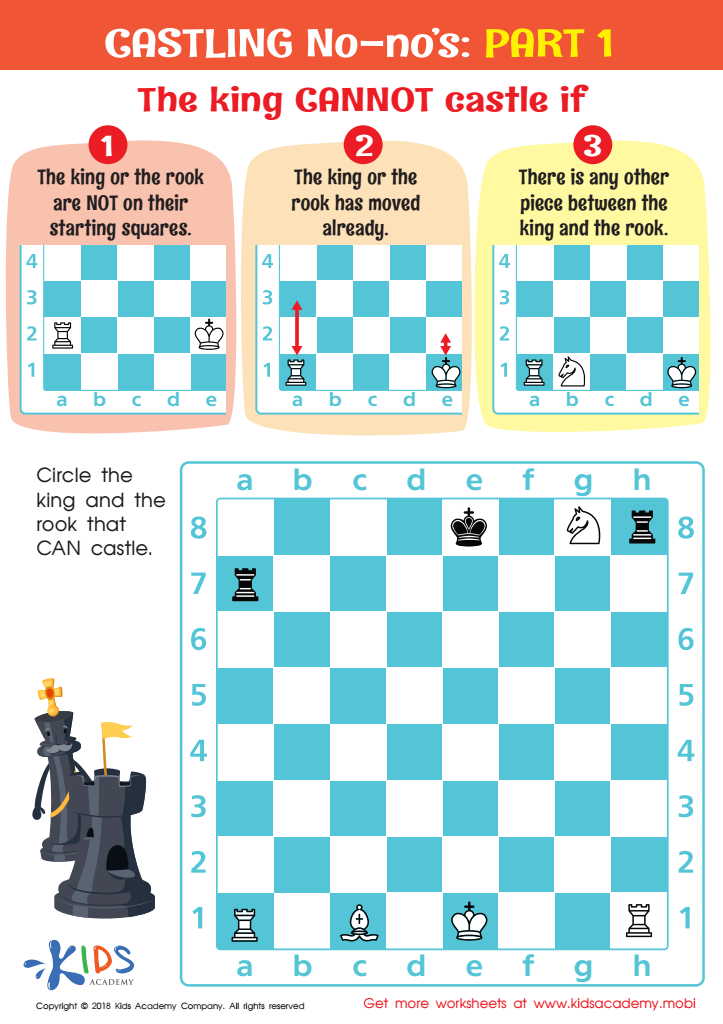
Castling No–no's: Part 1 Worksheet
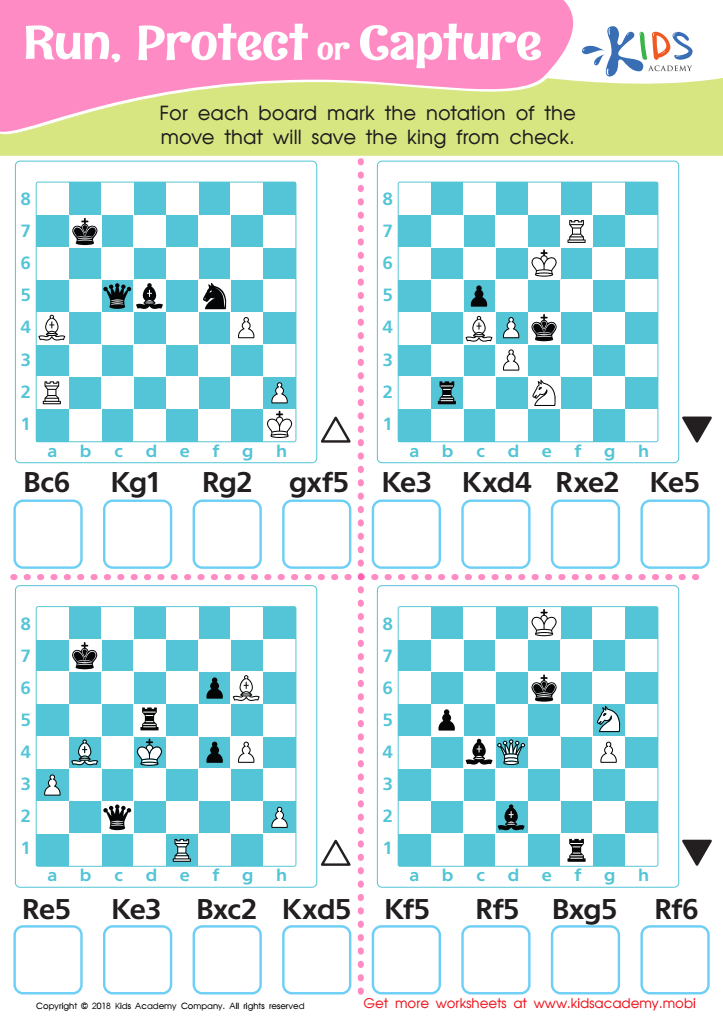
Run, Protect or Capture Worksheet
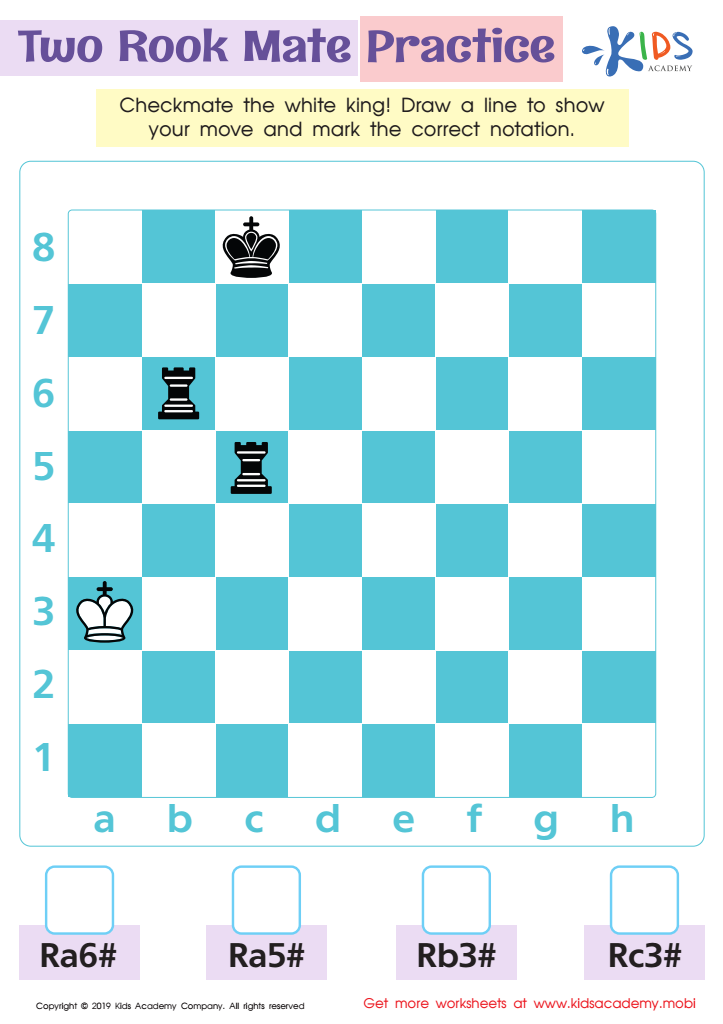
Two Rook Mate Practice Worksheet
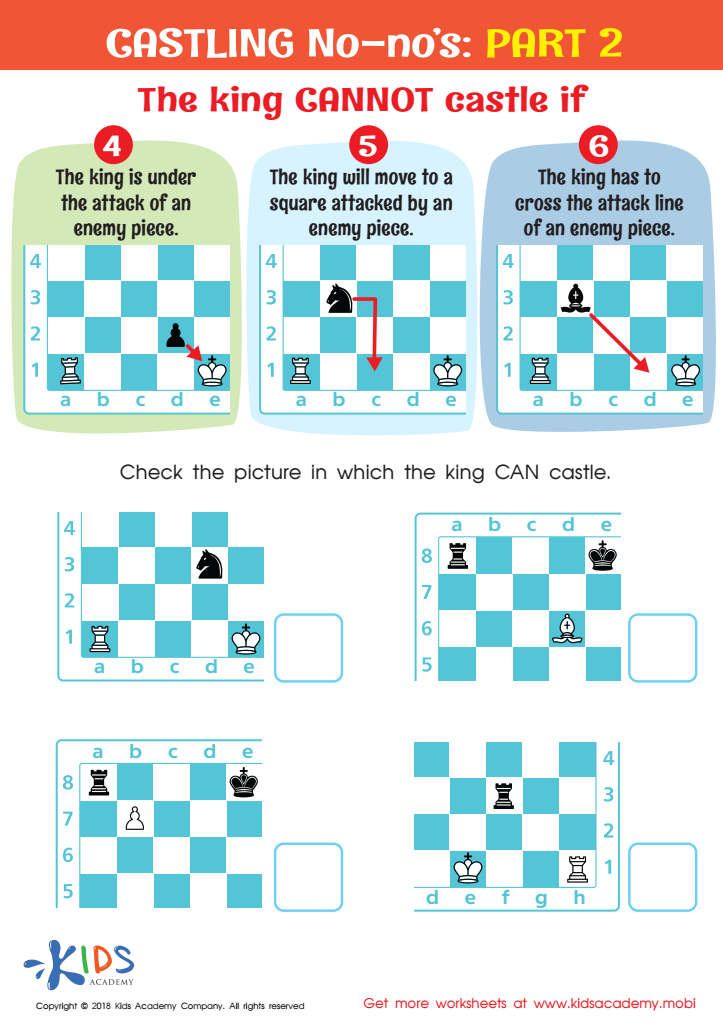
Castling No - no's: Part 2 Worksheet
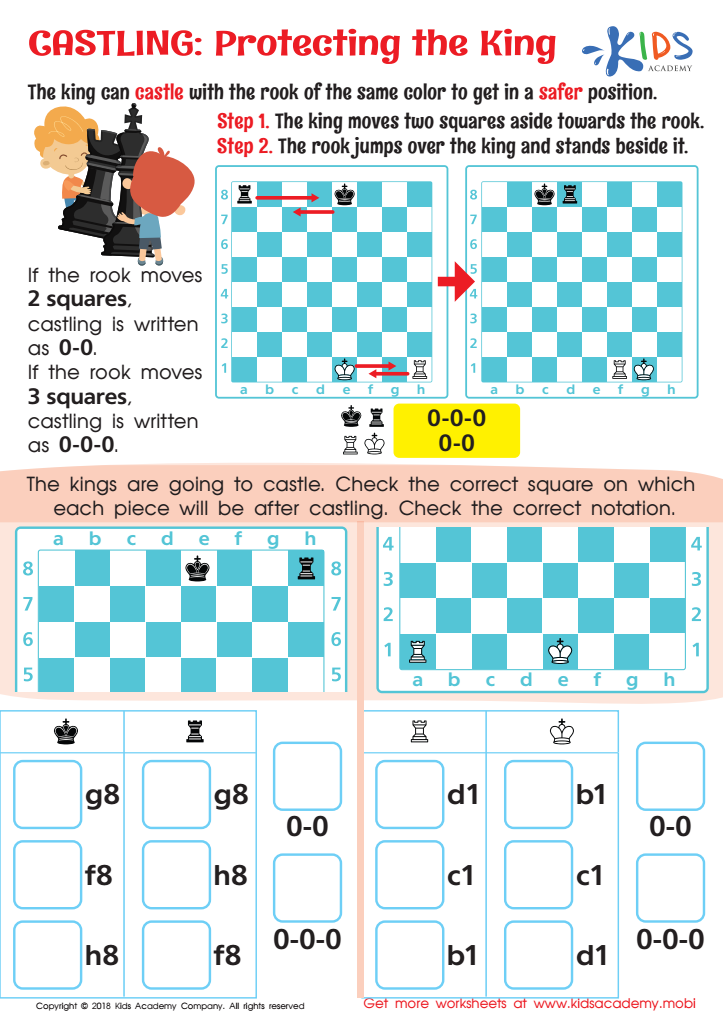
Castling: Protecting the King Worksheet
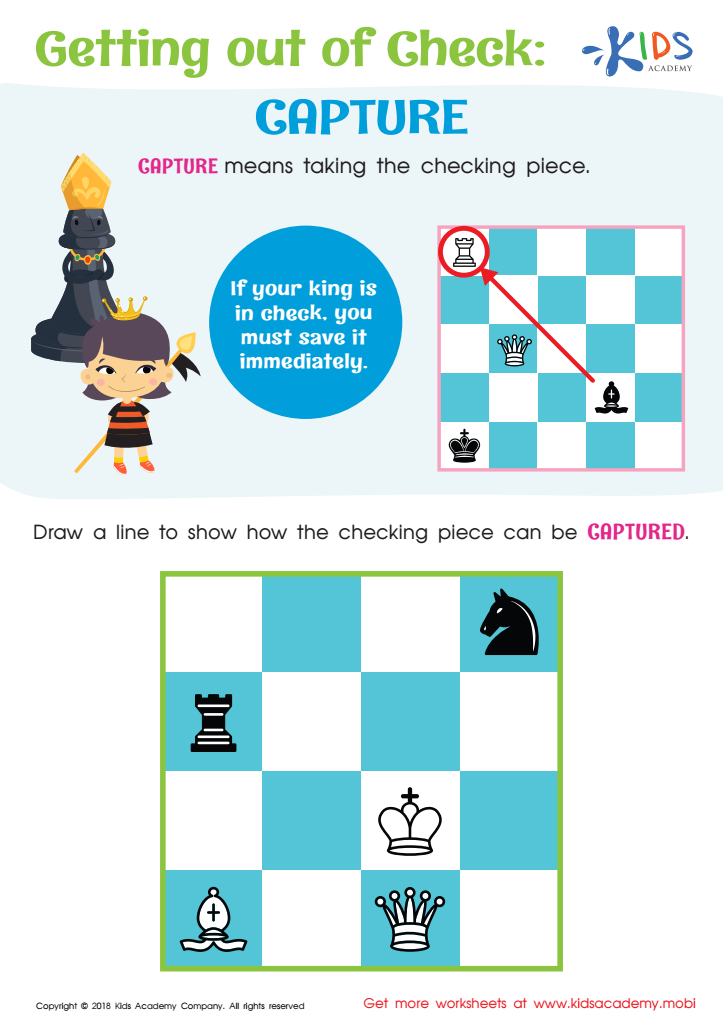
Getting out of Check: Capture
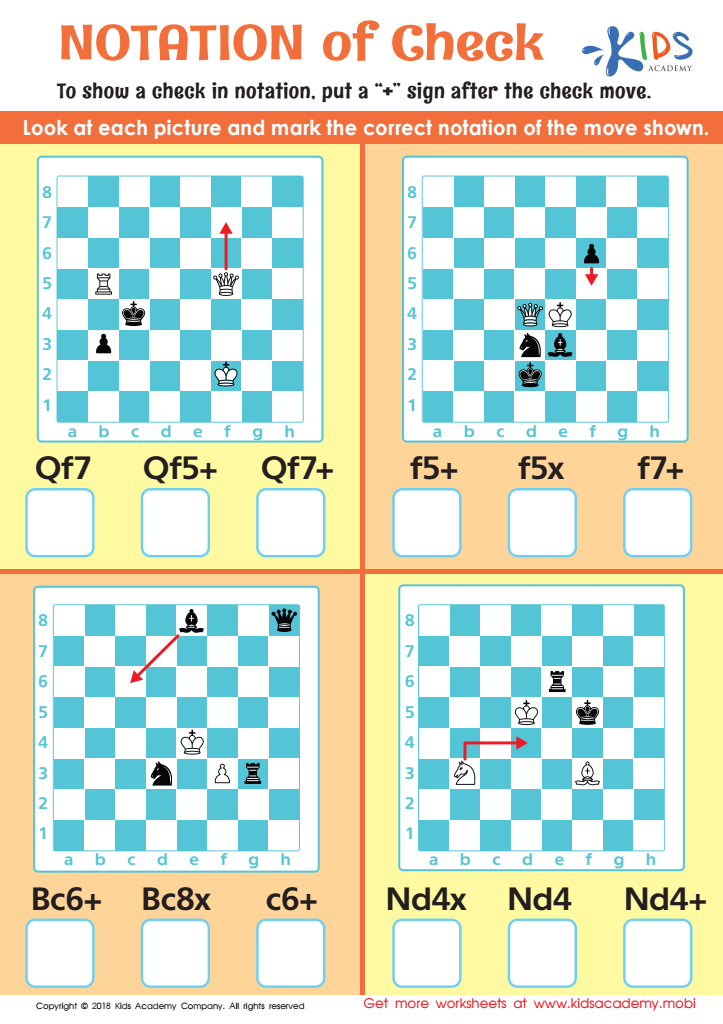
Notation of Check Worksheet
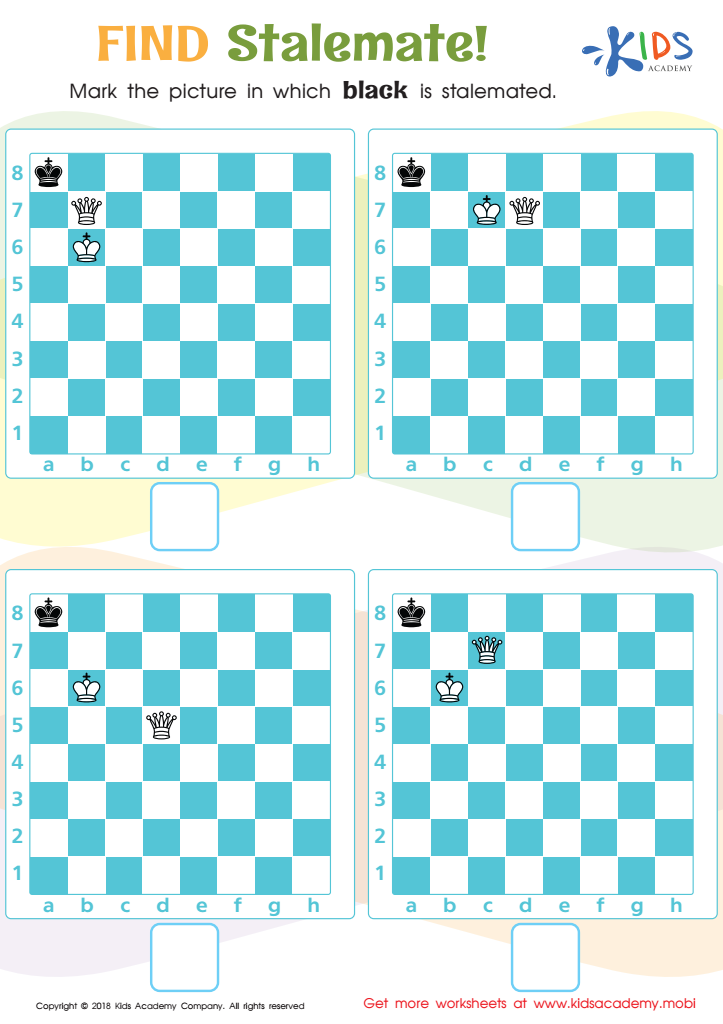
Find Stalemate! Worksheet
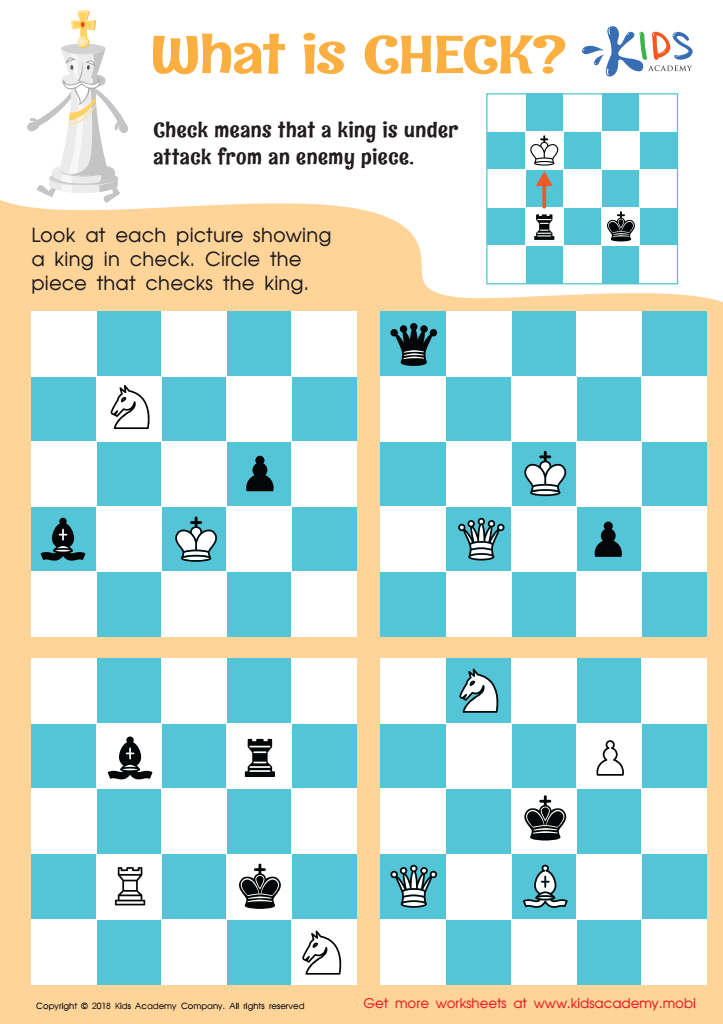
What is Check? Worksheet
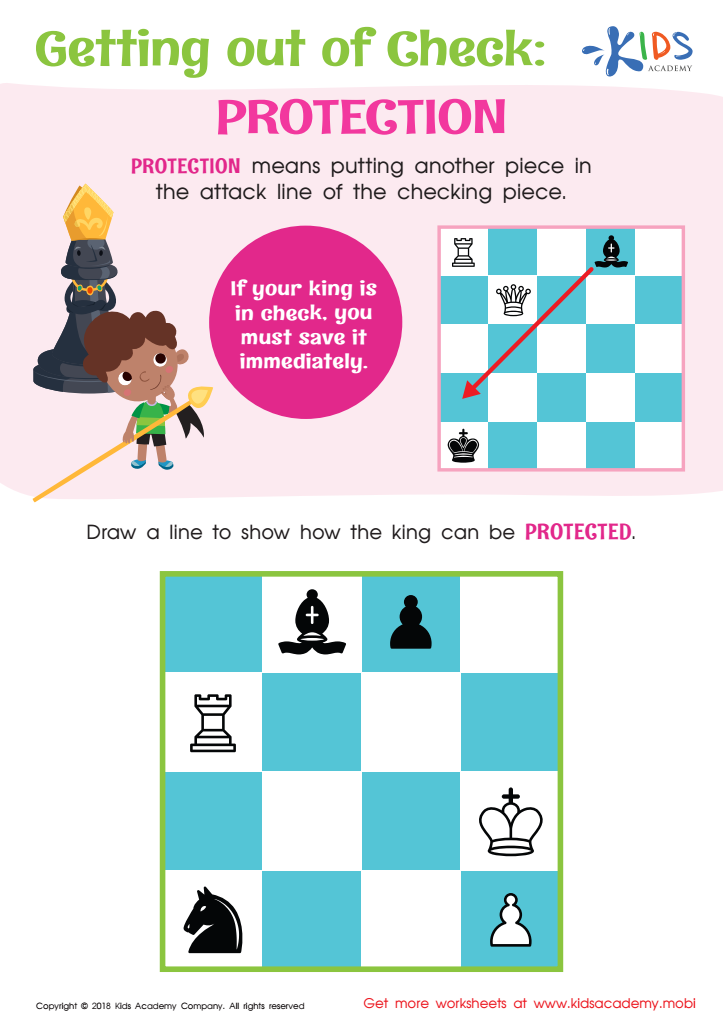
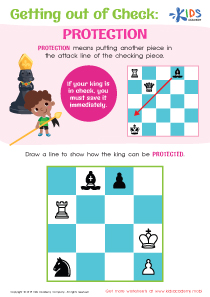
Getting out of Check: Protection
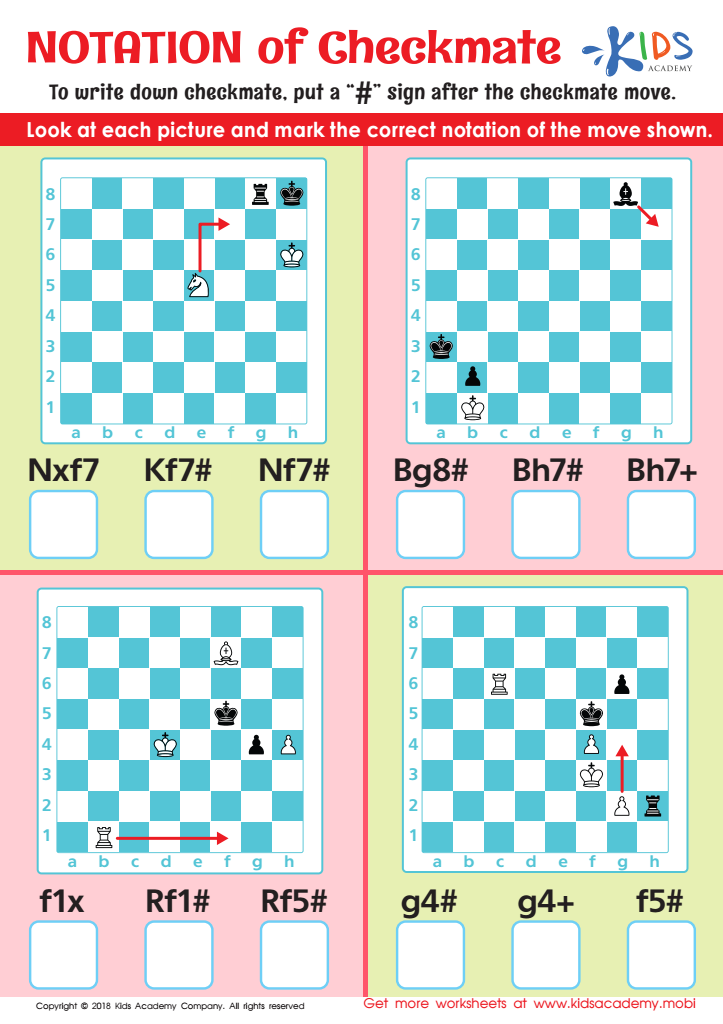
Notation of Checkmate Worksheet








Extra Challenge Chess for ages 5-6 is essential for fostering cognitive and social development in young children. Engaging in chess at a formative age helps enhance critical thinking skills, as children learn to evaluate positions, anticipate opponents’ moves, and plan ahead. This strategic game encourages problem-solving abilities and promotes patience and focus, essential qualities that benefit academic performance across all subjects.
Moreover, chess teaches important social skills. Children learn to respect their opponents, demonstrate sportsmanship, and understand the value of taking turns. As they navigate the game's complexities, they also build resilience, as facing losses provides opportunities for growth and learning.
In addition to cognitive and social benefits, chess can also instill a sense of achievement. Children experience joy and confidence from understanding game rules, developing tactics, and winning matches. These accomplishments, no matter how small, can significantly boost self-esteem.
Lastly, chess can serve as a fun and engaging break from standard learning approaches, making education more holistic. Teachers and parents invested in the development of lifelong learners should prioritize activities like Extra Challenge Chess, as they cultivate essential life skills, intellectual growth, and emotional resilience in young minds.