
Animal recognition Extra Challenge Worksheets for Ages 5-6
7 filtered results
Difficulty Level
Grade
Age
-
From - To
Subject
Activity
Standards
Discover the Animal Recognition Extra Challenge Worksheets for Ages 5-6, designed to enhance your child's learning experience! These engaging worksheets help young learners identify and recognize various animals through fun exercises and activities. Ideal for early grade school teachers and homeschooling parents, our worksheets offer vibrant illustrations and interactive challenges that stimulate curiosity. Children will develop essential observation skills while enjoying exciting tasks, making animal recognition a delightful endeavor. Our carefully crafted materials encourage creativity and critical thinking, paving the way for essential cognitive development. Explore our collection today and watch your child's confidence soar as they embark on this exciting animal adventure!
Favorites
With answer key
Interactive
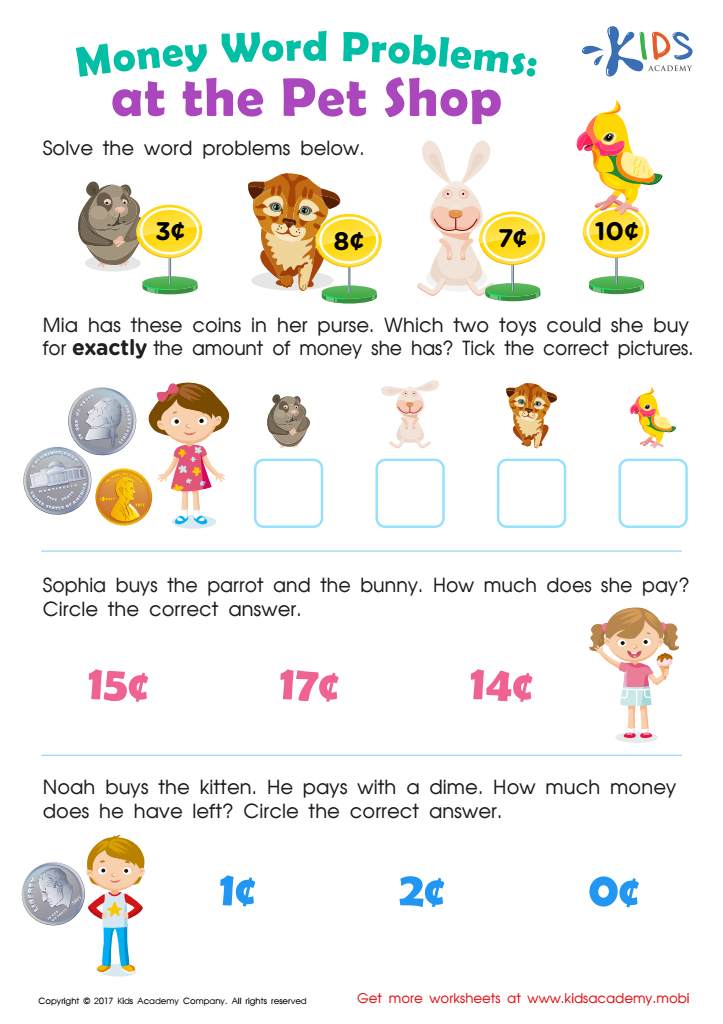
Pet Shop Worksheet
Teach your child a key life skill: counting and managing money. With this worksheet, they'll learn to count coins and calculate purchases at the pet shop. Give them colorful, fun math practice!
 Assign to My Students
Pet Shop Worksheet
Worksheet
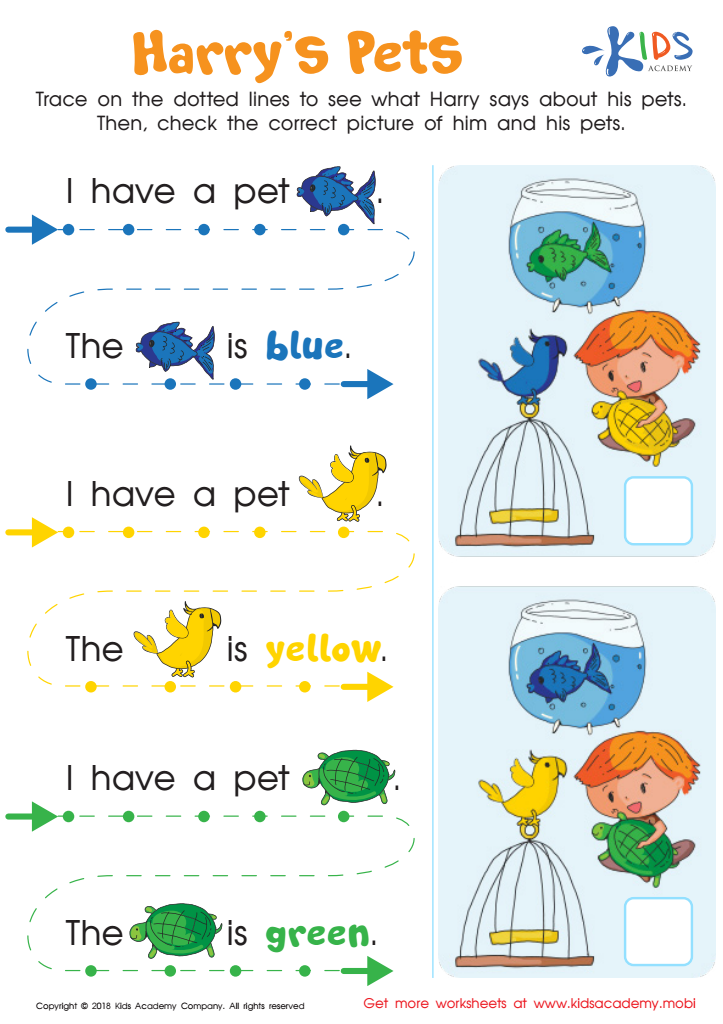
Read from Left to Right: Harry's Pets Worksheet
Help your child read the sentences on this tracing sheet about Harry and his pets. Point to the dotted lines and follow the sentences to the correct picture. Ask your child to identify which animal corresponds to which color. Check the picture to ensure accuracy. 80 words.
Read from Left to Right: Harry's Pets Worksheet
Worksheet
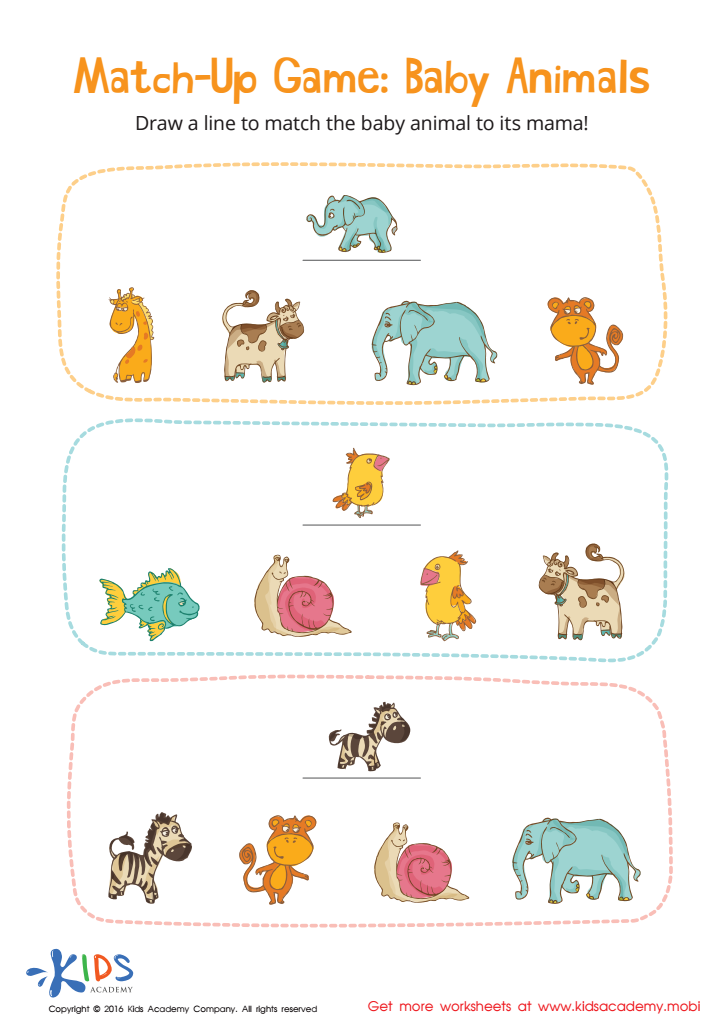
Baby Animals Match-Up Worksheet
Help baby animals find their mummies by using this fun matching worksheet. Kids can practice logical reasoning skills while recognizing similar pictures and learning about animals. Extend their knowledge by having them identify each cute animal!
Baby Animals Match-Up Worksheet
Worksheet
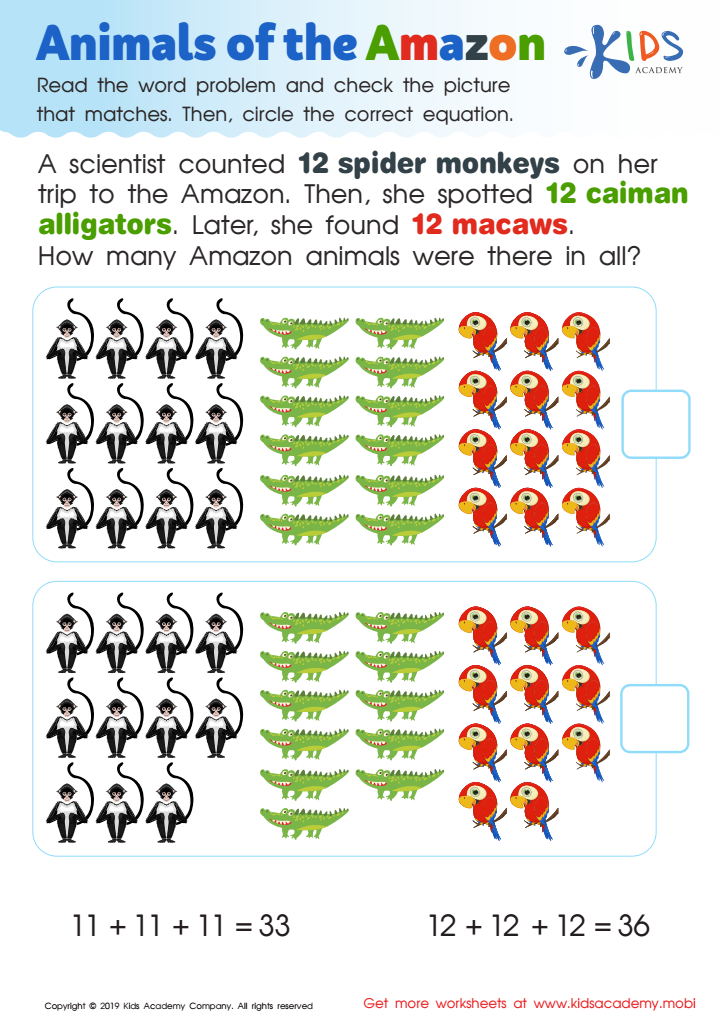
Animals of Amazon Worksheet
Kids will love exploring the Amazon while solving addition problems on this colorful PDF worksheet. They need to pay attention to the bolded info in each word problem to figure out the equation picture that matches. It's an exciting way to learn about the Amazon and practice adding multiple numbers!
Animals of Amazon Worksheet
Worksheet
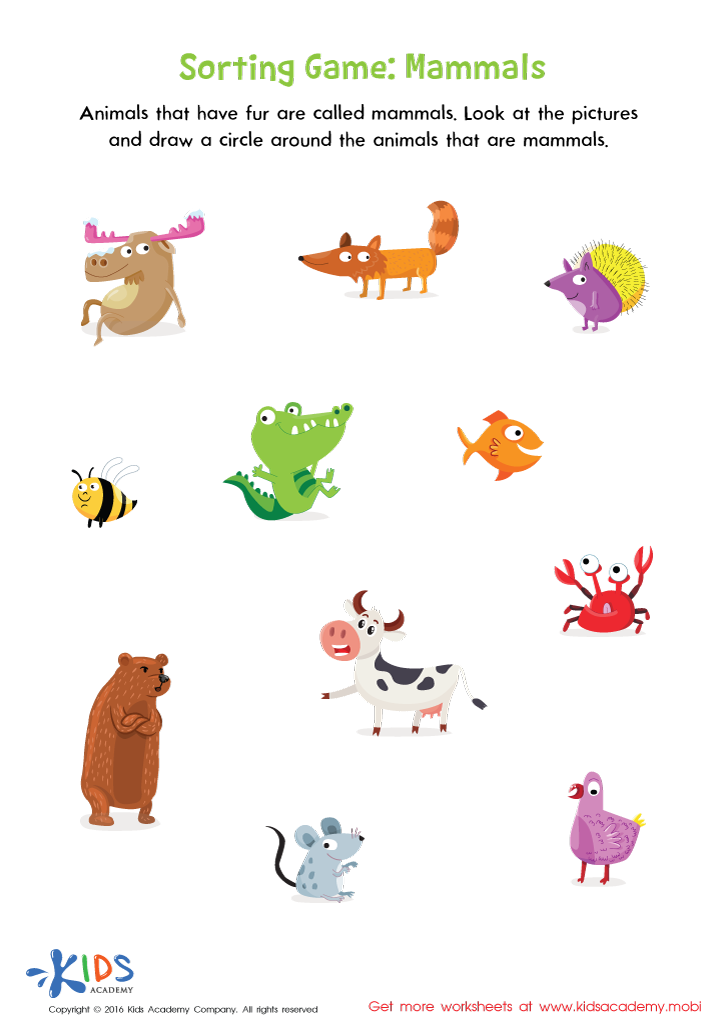
Mammals Sorting Worksheet
They'll practice sorting animals and learn their features with this fun worksheet.
Kids can test their scientific knowledge with this fun worksheet! They'll view pictures of animals, identify mammals based on their fur, and practice sorting them. This colorful worksheet is a great way for kids to learn about the differences between mammals and other animals.
Mammals Sorting Worksheet
Worksheet
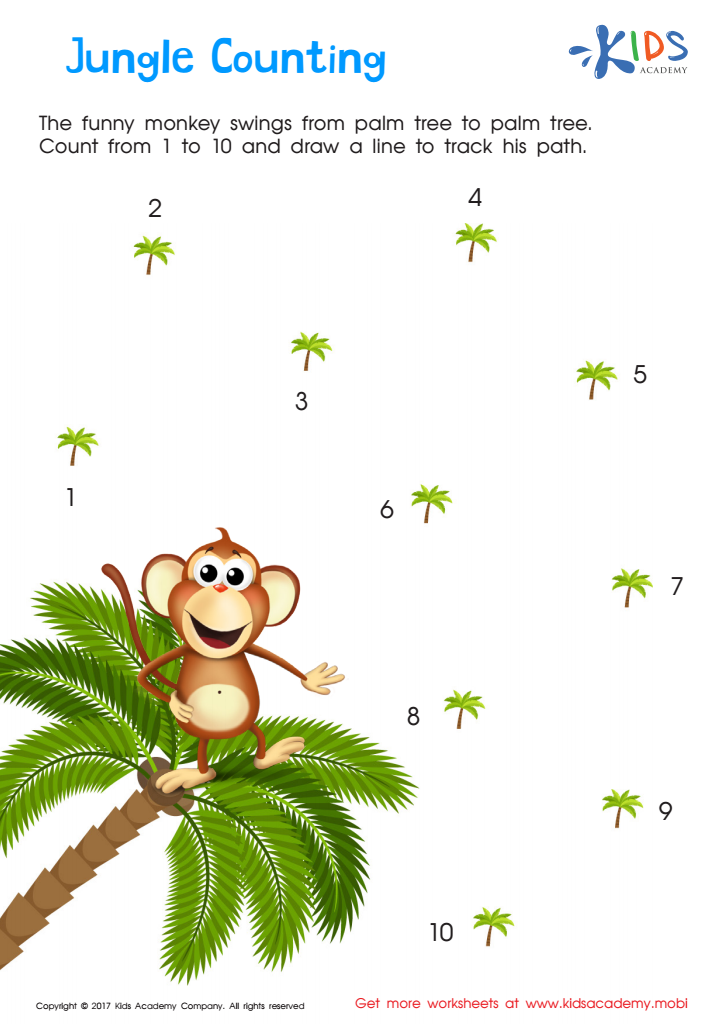
Jungle Counting Connect Dots Worksheet
Help your child count from 1-10 and practice problem solving skills with this dot to dot worksheet. Your child will enjoy helping the cute monkey swing from tree to tree while honing their math skills. Let them have a jungle-themed counting adventure!
Jungle Counting Connect Dots Worksheet
Worksheet
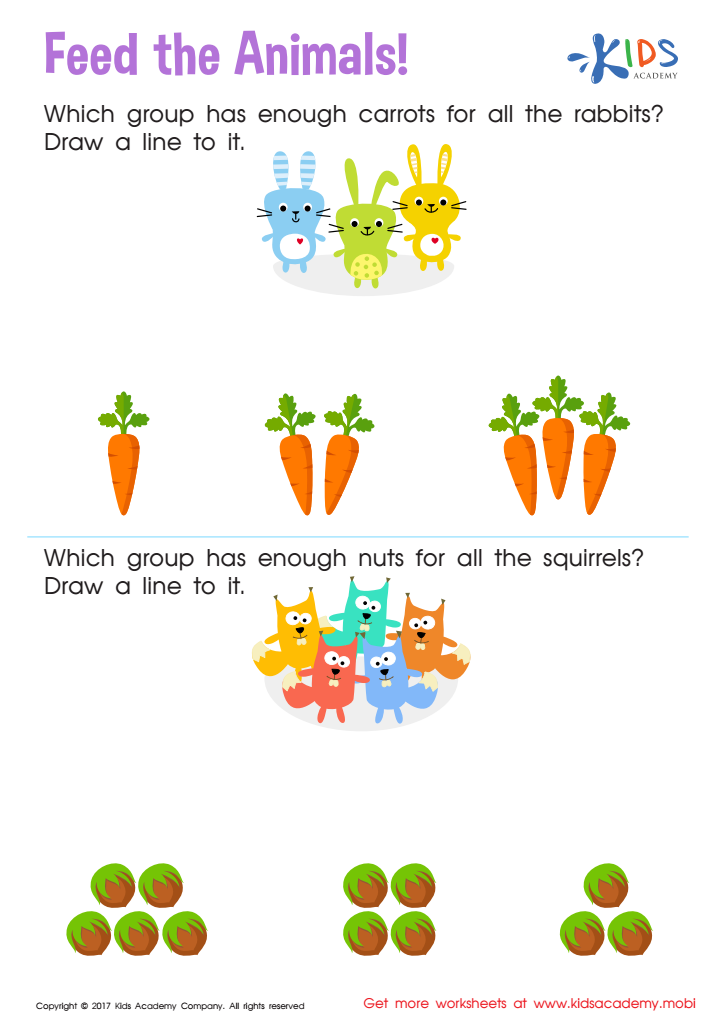
Count and Match: Feed the Animals Worksheet
Learning and growing involves more than just numbers, phonics and comparison. This Feed the Animals worksheet helps kids to exercise their reasoning skills. They must work out how many rabbits and carrots there are, and then repeat the process for the squirrels. This encourages problem solving and counting skills.
Count and Match: Feed the Animals Worksheet
Worksheet
Join Kids Academy for Free
Who is primarily going to use this learning content?







Animal recognition is a critical component of early childhood education, and parents or teachers should care about its importance for children ages 5-6. During these formative years, children are developing fundamental cognitive skills and learning to make sense of the world around them. Recognizing animals not only enhances their knowledge of biodiversity but also boosts observation skills and critical thinking.
Additionally, understanding animals encourages empathy and respect for living things. Children begin to appreciate the roles different species play in our ecosystems, fostering a sense of responsibility in engaging with nature. This can enrich classroom activities and discussions, promoting social interaction as children share their experiences and knowledge.
Moreover, animal recognition supports language development. By learning the names and characteristics of various animals, kids expand their vocabulary and improve their communication skills. This aligns with literacy goals, making learning more engaging through stories, songs, and games centered around animals.
Incorporating animal recognition in educational activities stimulates curiosity, creativity, and wonder about the natural world. Overall, emphasizing these educational approaches benefits children’s cognitive, social, and emotional development, laying a strong foundation for lifelong learning and appreciation of nature.








