Comparing objects Extra Challenge Worksheets for Ages 5-6
3 filtered results
-
From - To
Enhance your child's understanding of comparing objects with our "Comparing Objects Extra Challenge Worksheets for Ages 5-6." These engaging worksheets are specifically designed to support young learners in developing critical thinking and analytical skills. Through a variety of activities, kids will identify similarities and differences among objects, refining their observation skills in a fun and interactive way. Perfect for both classroom use and at-home learning, our worksheets encourage independent exploration while reinforcing essential concepts. With colors, sizes, and shapes at their fingertips, children will love tackling these extra challenges that bring learning to life! Suitable for ages 5-6.
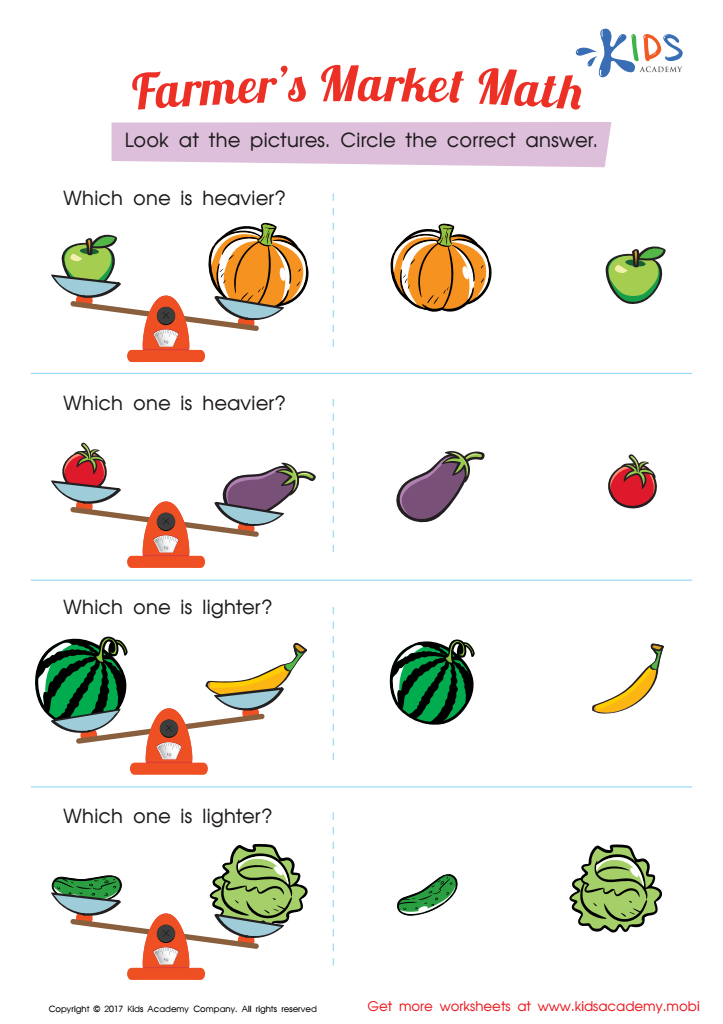
Which One Is Heavier Worksheet
 Assign to My Students
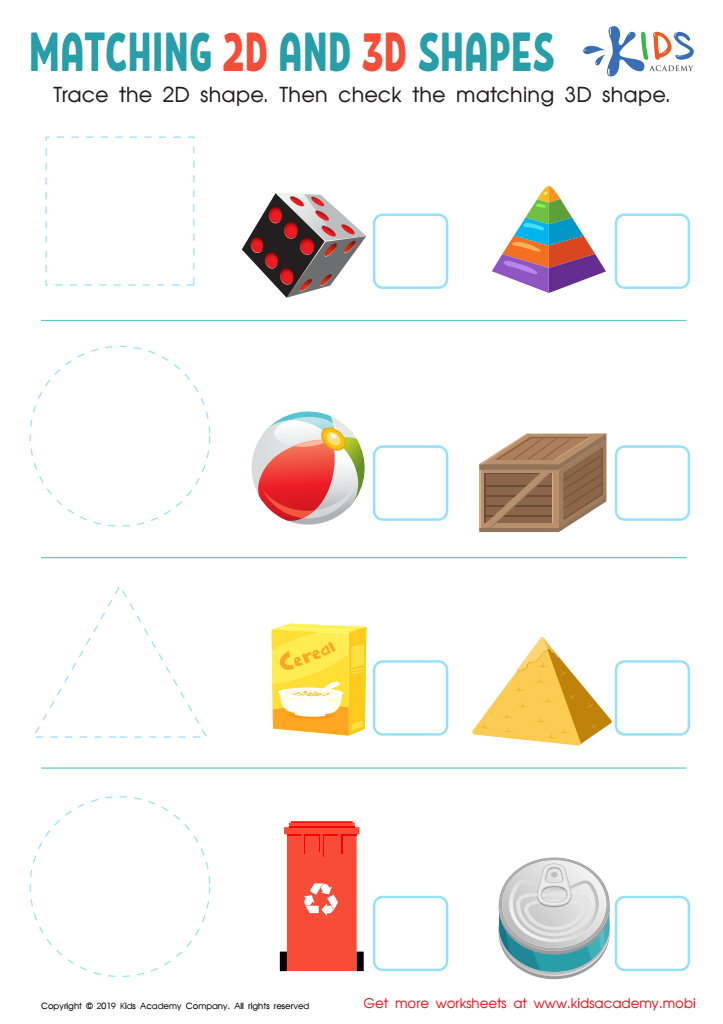
Matching 2D and 3D Shapes Worksheet
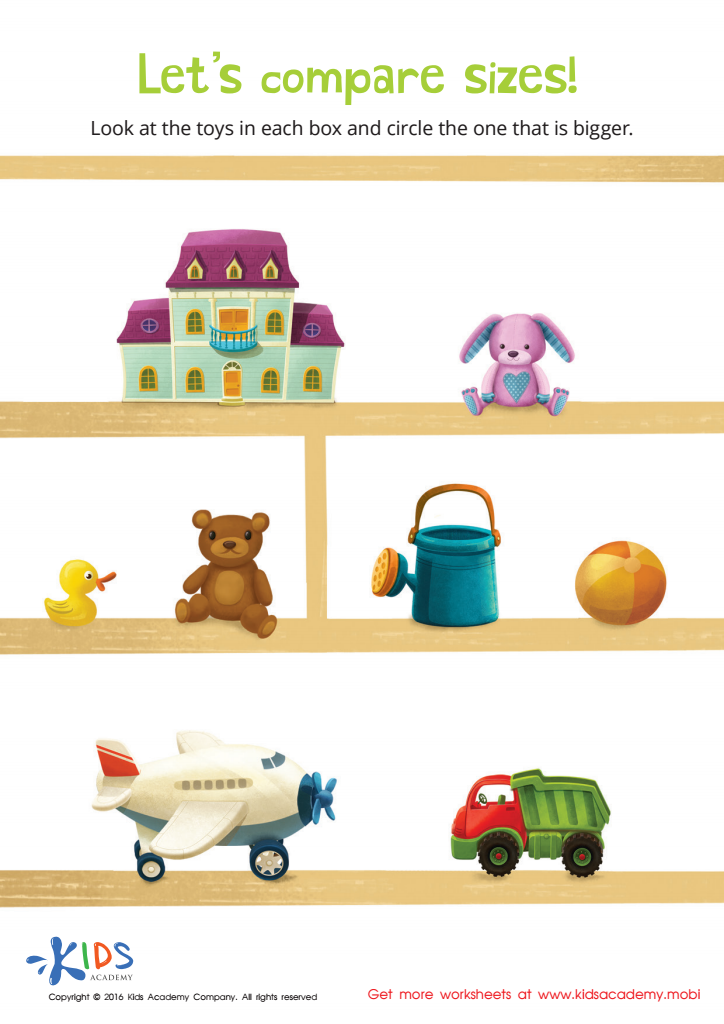
Classifying by Size Sorting Worksheet


.jpg)



Comparing objects is an essential skill for children aged 5-6, as it lays a foundational understanding of math, science, and critical thinking. Parents and teachers should care about this because it encourages young learners to observe and analyze their surroundings. By engaging in activities that involve comparing size, shape, weight, and quantity, children develop important cognitive skills and language abilities.
The act of comparing helps children notice differences and similarities, which fosters their ability to categorize objects—a crucial part of early mathematics. It introduces concepts such as more/less, bigger/smaller, and equal/unequal, which are fundamental in understanding basic arithmetic operations later on. Additionally, comparing objects aids in the development of problem-solving skills; children learn to hypothesize, predict outcomes, and arrive at conclusions based on their observations.
Moreover, interactive comparing games can enhance social skills by promoting collaboration, as children often work in pairs or small groups. This interaction not only builds communication skills but also boosts confidence as they share results and defend their reasoning. By nurturing the skill of comparison, parents and teachers empower children to become thoughtful, analytical individuals ready for the challenges of further learning.








