Shape identification Extra Challenge Worksheets for Ages 5-6
3 filtered results
-
From - To
Discover our "Shape Identification Extra Challenge Worksheets" designed specifically for children ages 5-6! These engaging and interactive worksheets help young learners enhance their shape recognition skills while providing a fun and stimulating challenge. Perfect for educators and parents, these activities encourage cognitive development and critical thinking as kids explore various shapes and their attributes. Each worksheet is crafted to motivate young minds through colorful illustrations and creative exercises. Promote independent learning and boost confidence as children tackle these extra challenges. With our shape identification worksheets, they will gain a strong foundation in geometry, setting the stage for future math success. Explore the fun today!
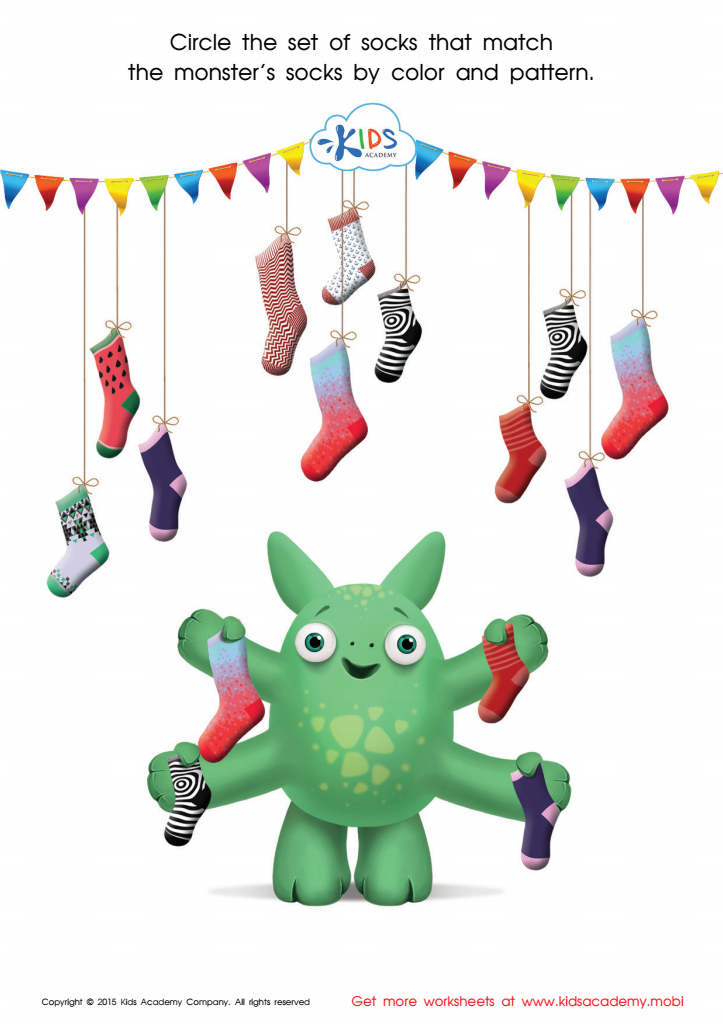
Sort the Monster's Socks Worksheet
 Assign to My Students
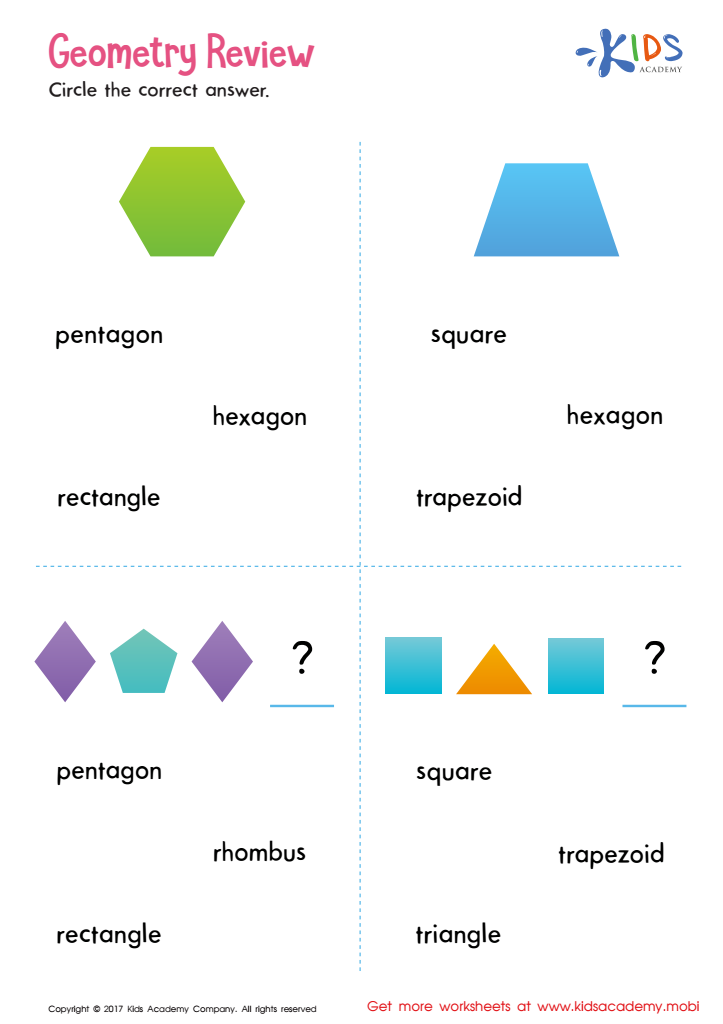
Geometry Review Printable
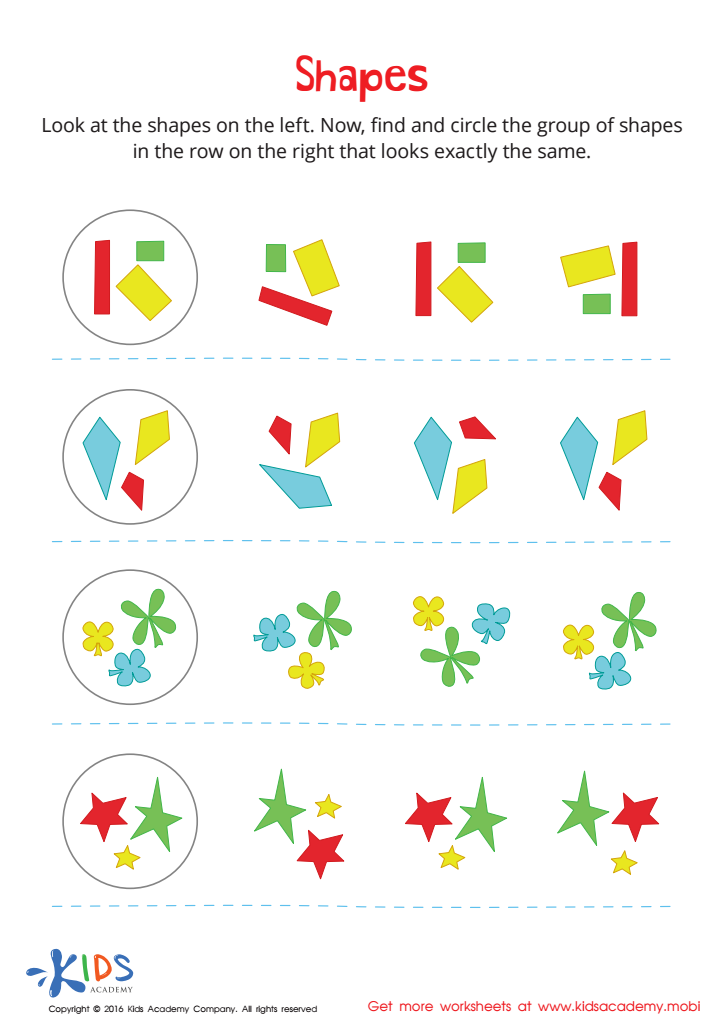
Shapes Worksheet







Shape identification is a foundational skill in early childhood education that plays a crucial role in a child's cognitive development. For parents and teachers of children aged 5-6, fostering shape identification is important for several reasons.
Firstly, it enhances critical thinking and problem-solving skills. Recognizing shapes enables children to categorize and make connections with their environment, which is essential in developing their reasoning abilities.
Secondly, shape identification is closely linked to mathematics readiness. Understanding shapes lays the groundwork for more complex concepts such as geometry, measurement, and spatial awareness. This early knowledge boosts confidence as children approach later math tasks.
Thirdly, this skill supports language development. As children identify and describe shapes, they expand their vocabulary and improve their ability to communicate ideas. This auditory and verbal practice can strengthen their overall literacy.
Moreover, incorporating extra challenges in shape identification encourages curiosity and creativity, fostering a love for learning. Engaging activities not only solidify understanding but also make learning fun and interactive.
In conclusion, shape identification aids cognitive, linguistic, and mathematical skills, making it a crucial area for parents and teachers to prioritize in early education for holistic child development.








