Strategic thinking development Extra Challenge Worksheets for Ages 5-6
3 filtered results
-
From - To
Enhance your child's problem-solving abilities and cognitive skills with our "Strategic Thinking Development Extra Challenge Worksheets" tailored for ages 5-6. These engaging worksheets are designed to stimulate young minds and foster critical thinking through fun activities that encourage creativity and logical reasoning. With a variety of interactive tasks, children will learn to strategize, make decisions, and overcome challenges in a playful format. Perfect for home or classroom use, these worksheets help build a strong educational foundation while keeping kids entertained. Empower your child to think strategically and tackle puzzles with confidence—explore our collection today!
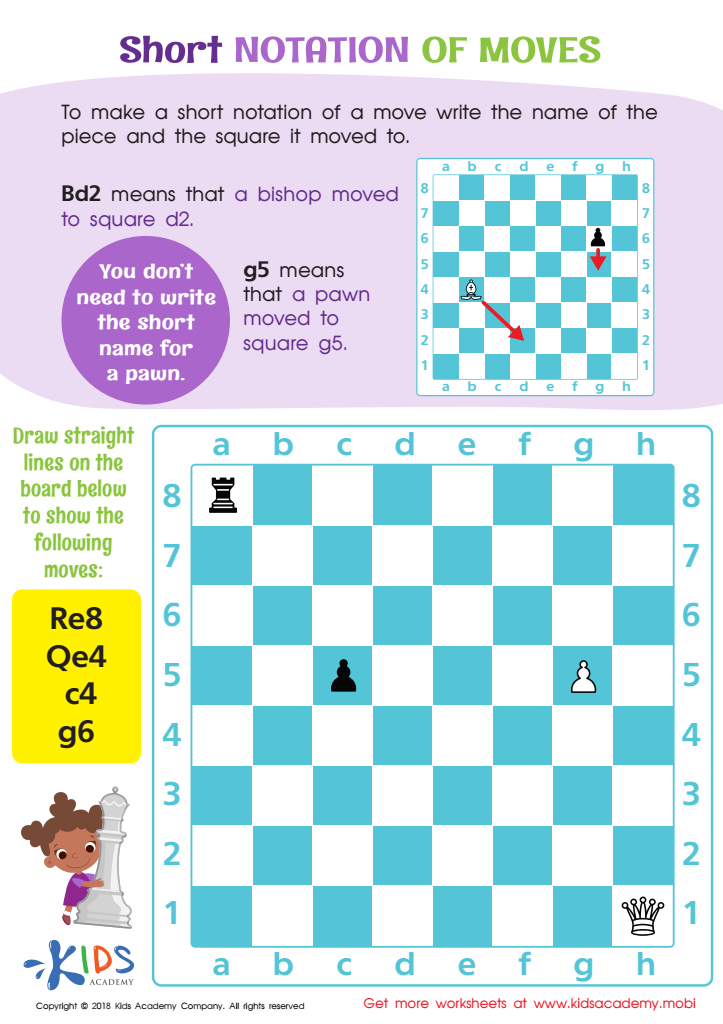
Short Notation of Moves Worksheet
 Assign to My Students
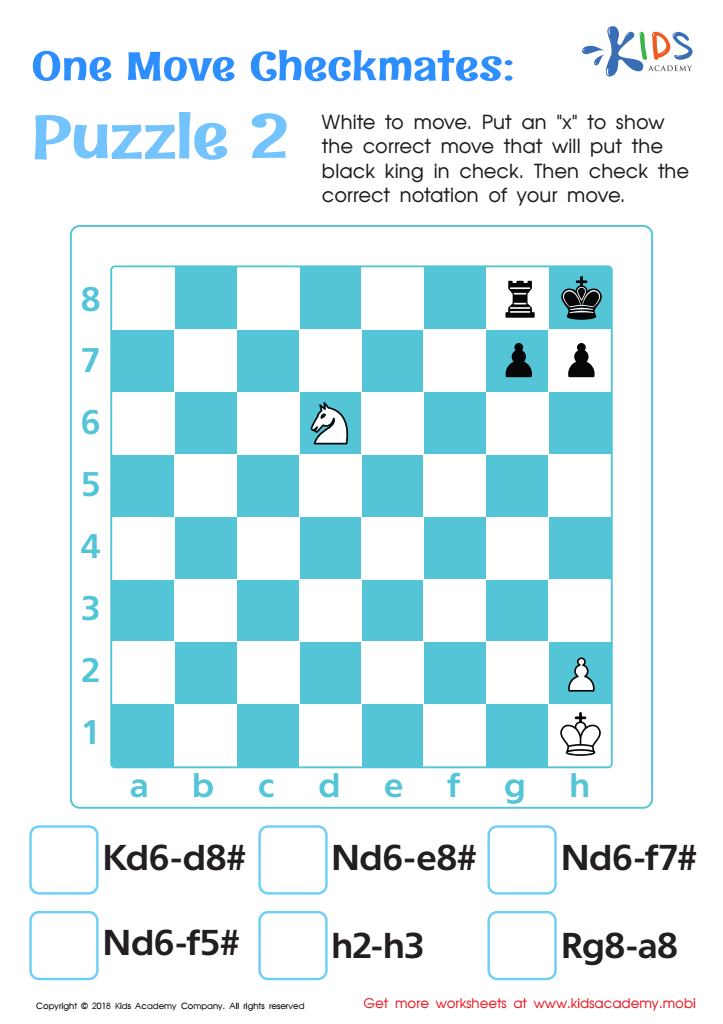
One Move Checkmates: Puzzle 2 Worksheet
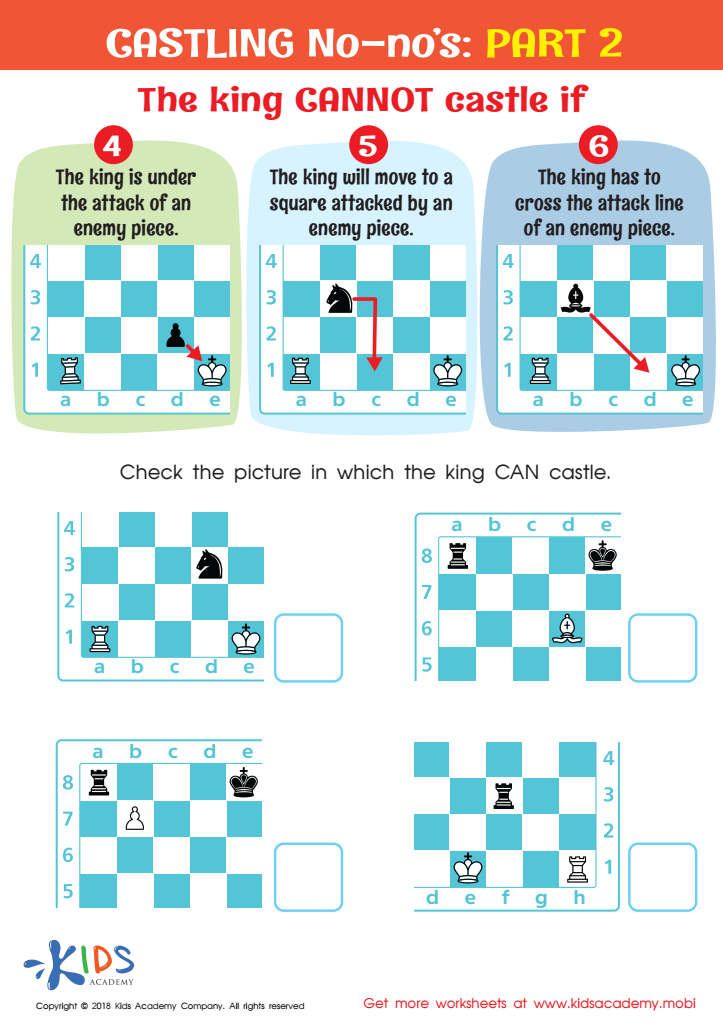
Castling No - no's: Part 2 Worksheet






Strategic thinking is a crucial skill that lays the foundation for problem-solving and decision-making in children. For parents and teachers of 5 to 6-year-olds, fostering this skill is particularly important, as it enhances cognitive development and promotes academic success. At this age, children begin to understand patterns, relationships, and consequences, which are essential components of strategic thinking.
Engaging children in activities that promote strategic thinking helps them learn to set goals, analyze situations, and plan steps to achieve desired outcomes. For example, simple games involving resources, obstacles, or challenges encourage kids to think ahead and consider multiple scenarios. These experiences not only boost cognitive abilities but also nurture creativity, as children explore various solutions.
Moreover, developing strategic thinking at this young age positively impacts social skills, as it requires children to negotiate, collaborate, and reflect on their choices. Building these skills now prepares them to face future challenges academically and personally, contributing to their overall confidence and resilience.
Ultimately, parents and teachers play a pivotal role in guiding 5 to 6-year-olds through engaging activities and principles of strategic thinking, fostering a mindset that encourages lifelong learning and adaptability.








