
Understanding measurements Extra Challenge Worksheets for Ages 5-6
4 filtered results
Difficulty Level
Grade
Age
-
From - To
Subject
Activity
Standards
Unlock the world of measurements with our Extra Challenge Worksheets designed specifically for ages 5-6! These engaging activities encourage young learners to explore concepts like length, weight, and volume through fun and interactive challenges. Each worksheet builds foundational math skills while fostering critical thinking. With vibrant visuals and age-appropriate tasks, children will enjoy measuring everyday objects, comparing sizes, and learning how to read measuring tools. Perfect for enhancing classroom instruction or homeschooling, these worksheets will captivate young minds and help them grasp essential measurement concepts confidently. Dive in and support your child’s mathematical journey with our imaginative and challenging measurement activities!
Favorites
With answer key
Interactive
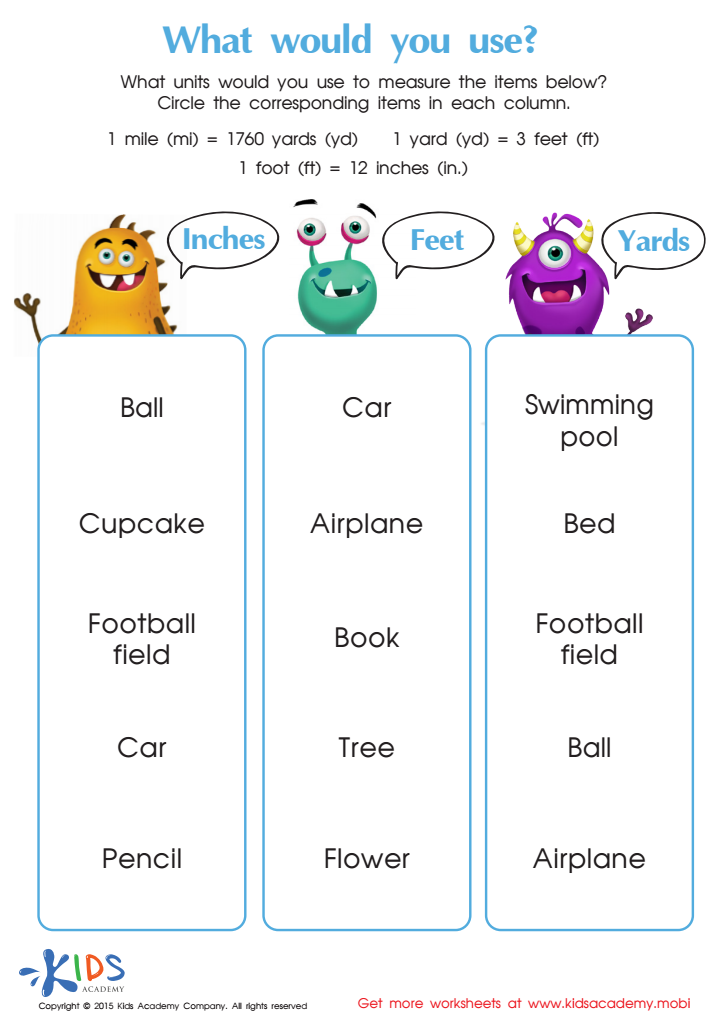
Learning about measuring objects in inches, feet and yards Worksheet
Download, cut and let your preschoolers learn and have fun estimating objects like pencils, airplanes and swimming pools in inches, feet and yards!
 Assign to My Students
Learning about measuring objects in inches, feet and yards Worksheet
Worksheet
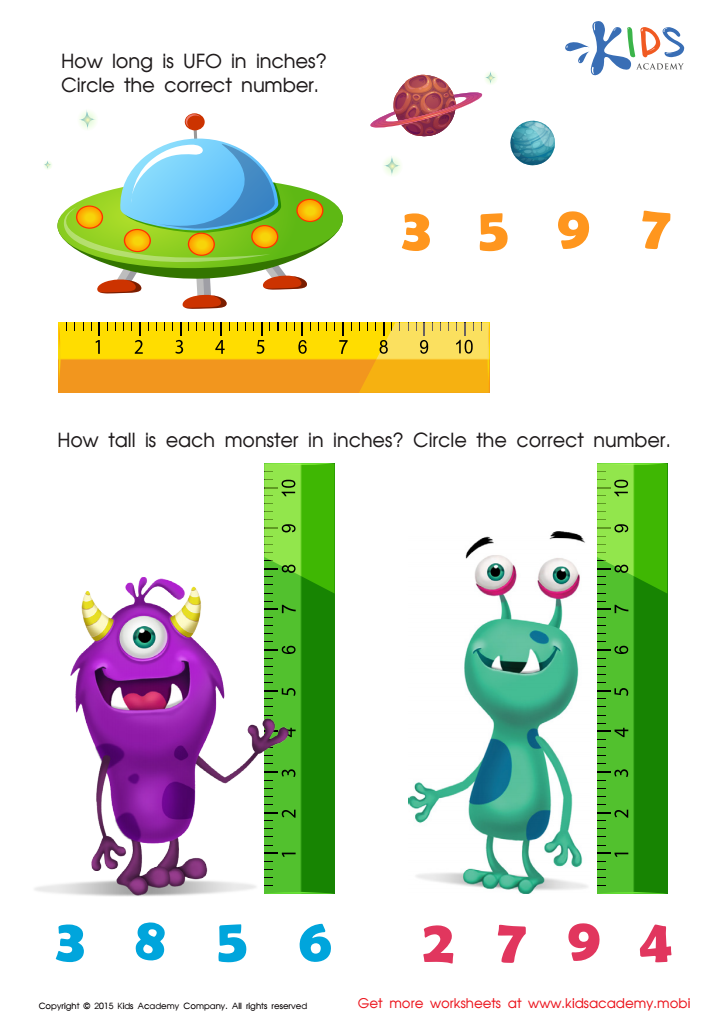
Measuring in Inches Worksheet
Look at the picture, can you measure the UFO & monsters? Write down how long each is. Which is tallest? Circle it. Get more free printable math worksheets for kindergarten at our website.
Measuring in Inches Worksheet
Worksheet
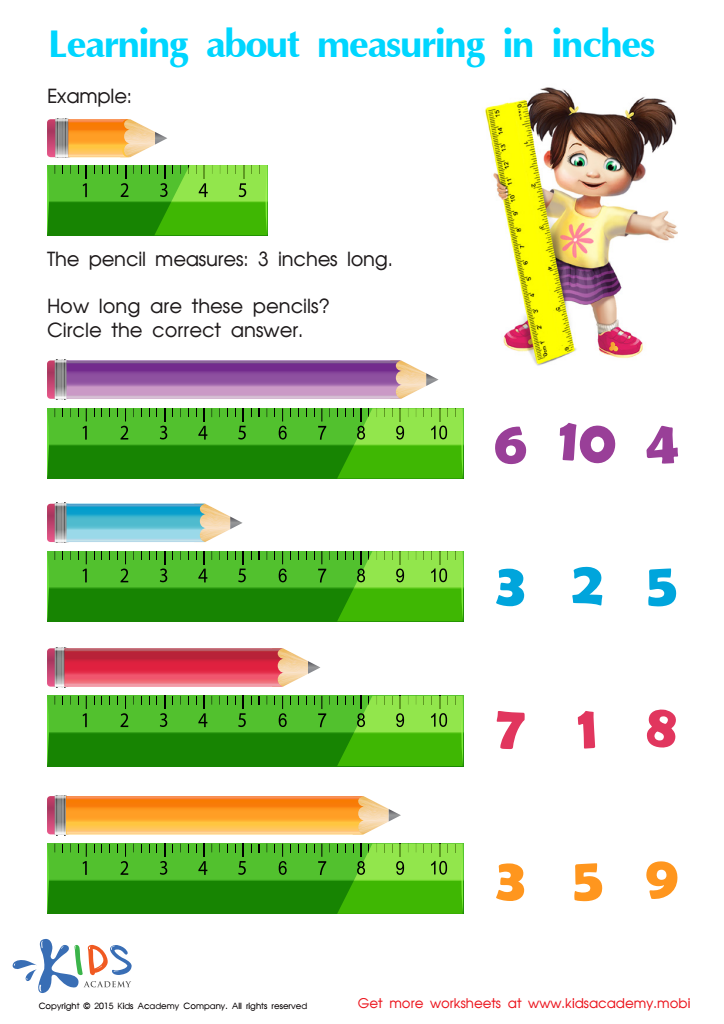
Learning About Measuring In Inches Printable
Print this free worksheet and measure pencils together with kids. See who finds the longest and the shortest! Enjoy learning math with your kids.
Learning About Measuring In Inches Printable
Worksheet
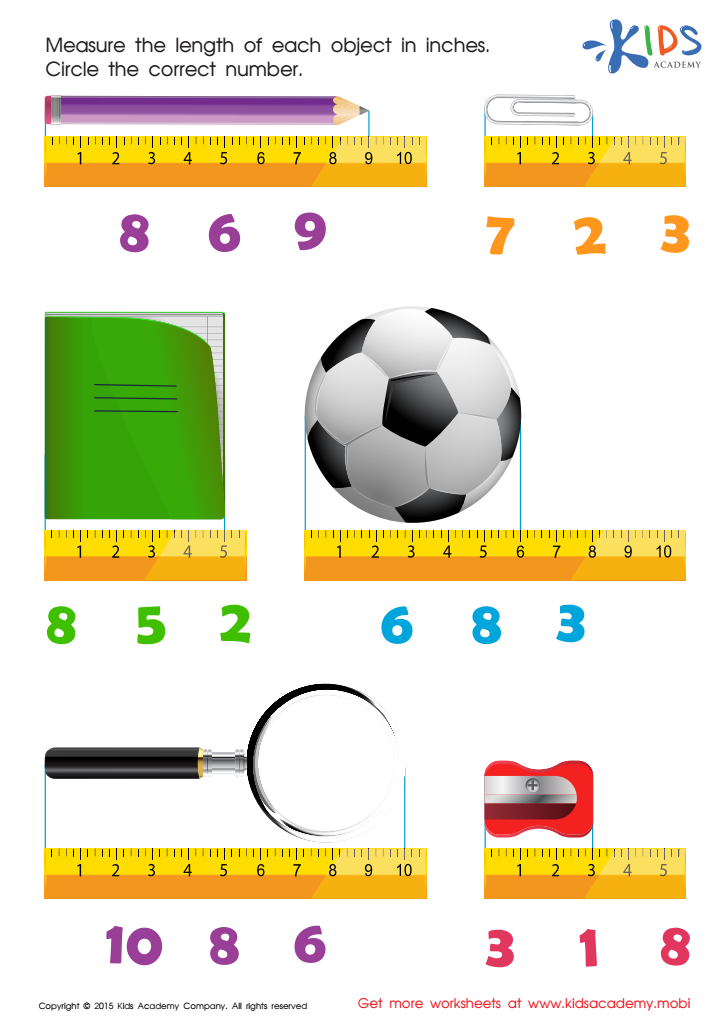
Learning measuring objects in inches Worksheet
Help your little learners gain confidence in using a ruler! Print out our free worksheet, cut out the inch ruler, and let them measure and record objects' width and length. Kids Academy has a variety of math worksheets to make learning math fun! Check out our website for more free printables!
Learning measuring objects in inches Worksheet
Worksheet
Join Kids Academy for Free
Who is primarily going to use this learning content?





Understanding measurements is a crucial skill for young learners, especially for ages 5-6, as it lays the foundation for various academic and practical life skills. Parents and teachers should care about this concept for several reasons.
Firstly, measurement activities enhance critical thinking and problem-solving abilities. When children engage in measuring, whether it’s the length of a table or the volume of water in a cup, they develop quantification skills and learn how to compare and analyze different attributes.
Secondly, measurement is intertwined with everyday experiences. Learning to measure helps children navigate day-to-day activities, such as baking, crafting, and even playing games. This aspect makes math tangible and relatable, fostering a positive attitude towards it.
Thirdly, it introduces important mathematical vocabulary, such as 'longer,' 'shorter,' 'heavier,' and 'lighter,' which enriches their language and communication skills. Understanding these concepts can significantly boost a child's confidence and interest in math and science as they progress through their education.
Lastly, engaging in measurement-based challenges promotes cooperation and social skills among peers. Thus, prioritizing understanding measurements in early education enriches overall cognitive development and prepares children for future academic success.








