
Basic geometry understanding Extra Challenge Geometry Worksheets for Ages 5-6
3 filtered results
Difficulty Level
Grade
Age
-
From - To
Subject
Activity
Standards
Discover our "Basic Geometry Understanding Extra Challenge Worksheets" tailored for children aged 5-6! Designed to enhance foundational geometry skills, these engaging worksheets introduce young learners to essential concepts such as shapes, patterns, and spatial relationships. Through fun activities, children will explore various geometric figures and their characteristics, promoting critical thinking and problem-solving abilities. Ideal for reinforcing classroom learning or home practice, our worksheets provide a variety of challenges that inspire curiosity and creativity. Equip your little ones with the confidence and skills necessary for a solid math foundation. Start their geometry journey today and watch them excel!
Favorites
With answer key
Interactive
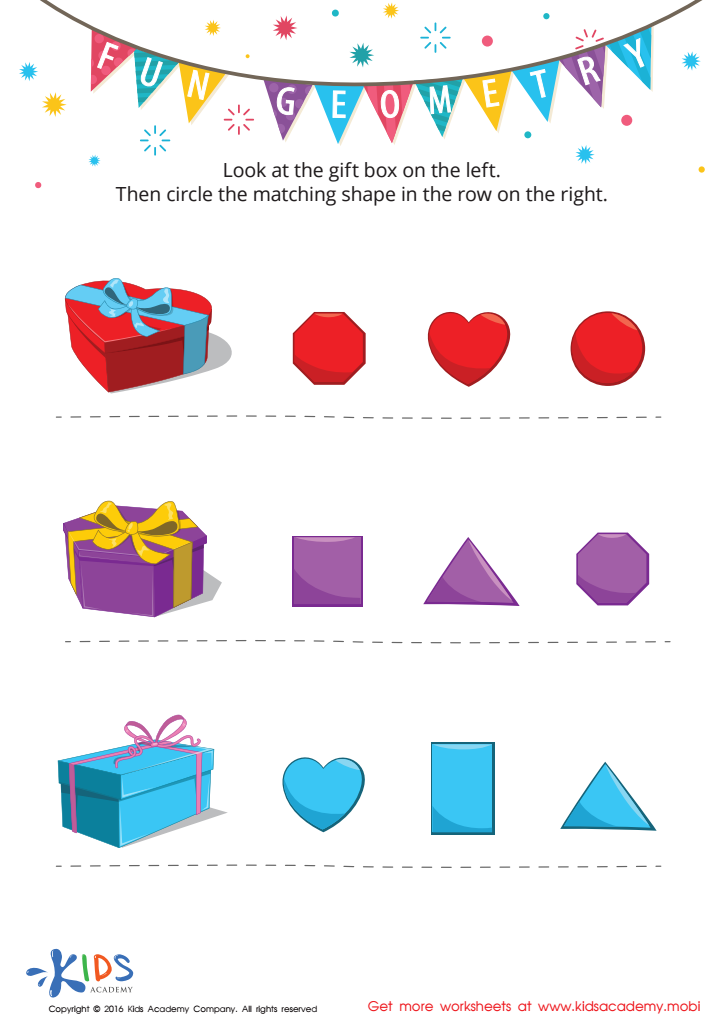
Fun Geometry Worksheet
Give your child the gift of learning with this fun and educational geometry matching worksheet! It'll help them develop essential matching and problem-solving skills while having fun. Vibrant pictures will excite them to complete it and get a better grasp of the world around them.
 Assign to My Students
Fun Geometry Worksheet
Worksheet











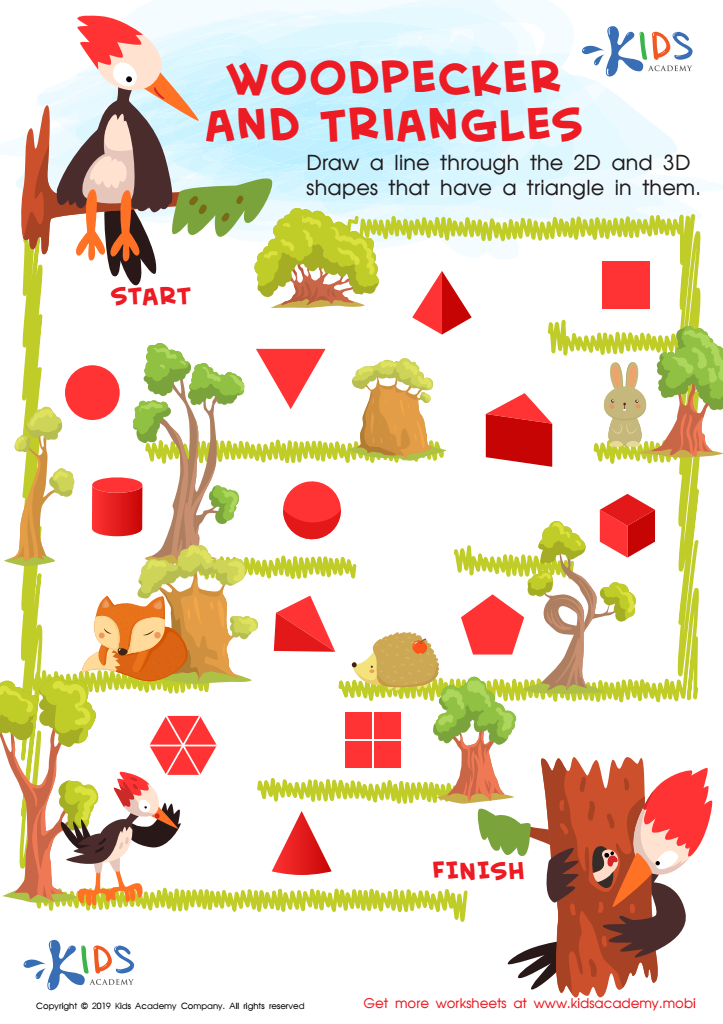
Woodpecker and Triangles Worksheet
Woodpeckers peck wood, and this printout helps kids learn about triangles. Ask your kindergartners to draw a triangle, then draw a line through the shapes that have a triangle in them to help the woodpecker get out of the maze.
Woodpecker and Triangles Worksheet
Worksheet
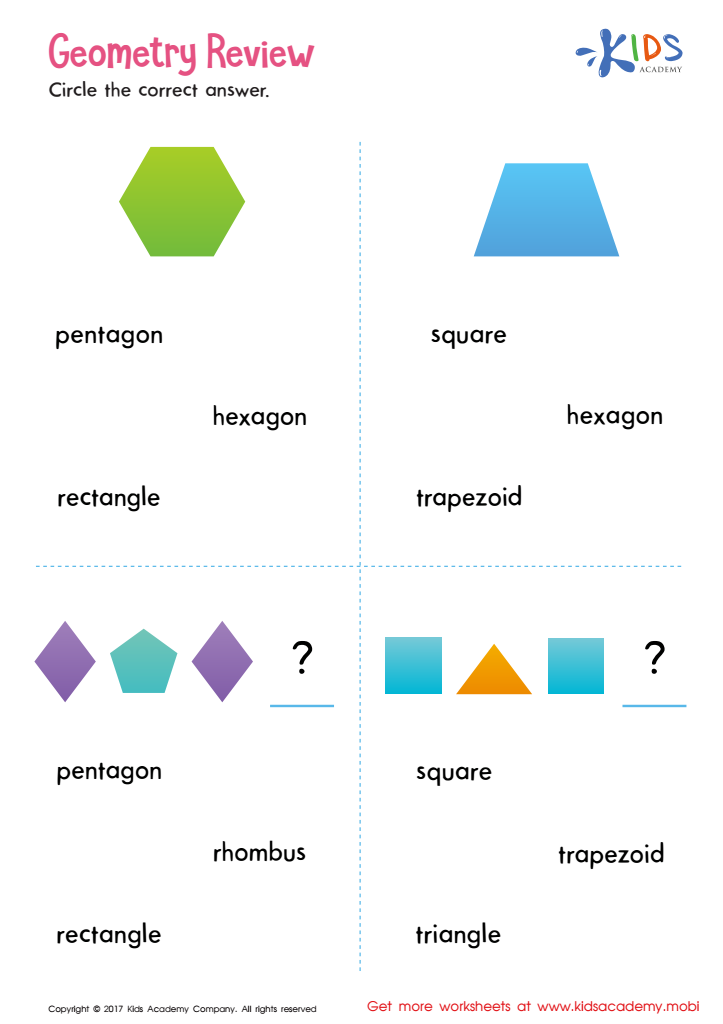
Geometry Review Printable
Repetition is key to success; give your child the practice they need with this geometry worksheet.
Geometry Review Printable
Worksheet
Join Kids Academy for Free
Who is primarily going to use this learning content?








Understanding basic geometry is vital for children aged 5-6 as it lays the foundation for critical thinking and problem-solving skills. During these formative years, children develop cognitive abilities that facilitate their understanding of shapes, spatial relationships, and measurements. Engaging with geometry helps enhance their mathematical fluency and logical reasoning.
Parents and teachers should prioritize geometry in early education because it supports children’s abilities to categorize and organize their environment. Recognizing shapes and understanding how they fit into the world around them enables kids to build a strong spatial awareness. This knowledge not only fosters creativity when engaged in play but also strengthens their future learning in subjects like mathematics and science.
Implementing programs like Extra Challenge Geometry makes learning interactive and fun, encouraging hands-on experiences that transform abstract concepts into tangible understanding. Such curricula often promote teamwork and communication among peers, essential skills for later academic and social success. Moreover, mastering basic geometry's foundational aspects empowers children to tackle more complex math concepts in later grades, creating well-rounded and confident learners. Therefore, prioritizing geometry education at this age is crucial for developing lifelong skills in logical reasoning, critical thinking, and creativity.








