Matching skills Extra Challenge Math Worksheets for Ages 5-6
4 filtered results
-
From - To
Elevate your child's math proficiency with our "Matching Skills Extra Challenge Math Worksheets for Ages 5-6". Perfectly crafted for young learners, these printable worksheets boost critical thinking and matching abilities. Designed to make learning fun, they feature engaging exercises that connect objects, numbers, and patterns, enhancing foundational math skills. Each worksheet presents a stimulating challenge that encourages problem-solving and logical reasoning. Tailored for early grade students, our worksheets ensure that practice meets excitement, making math an enjoyable adventure. Empower your child with the confidence and skills needed for academic success. Discover our collection and start the learning journey today!
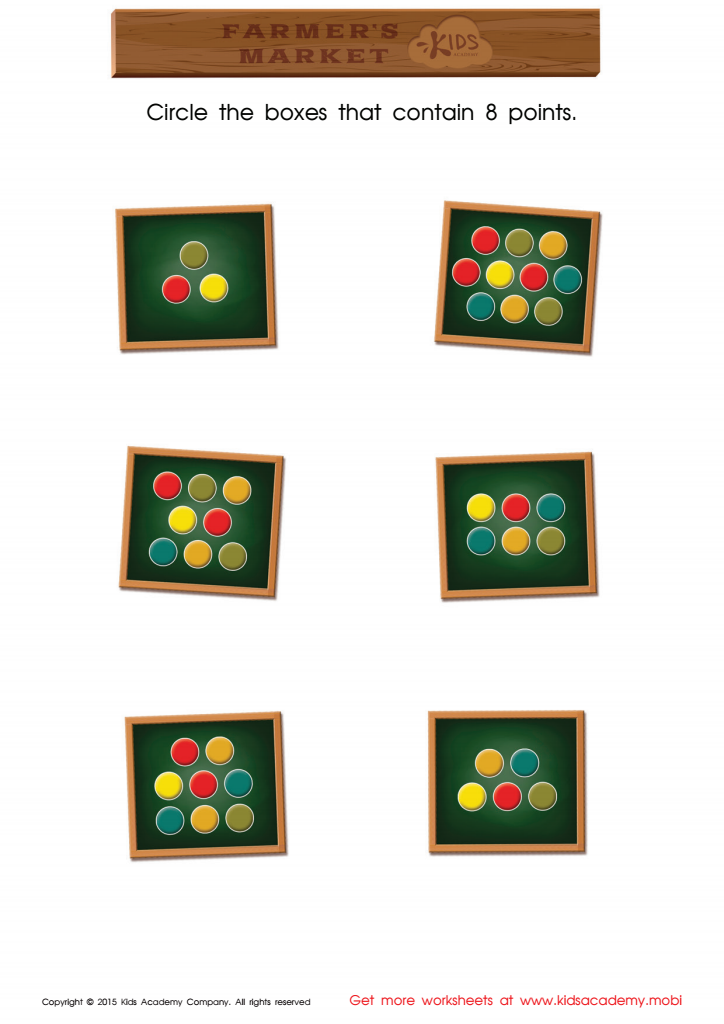
Count and Match Points 8 Math Worksheet
 Assign to My Students
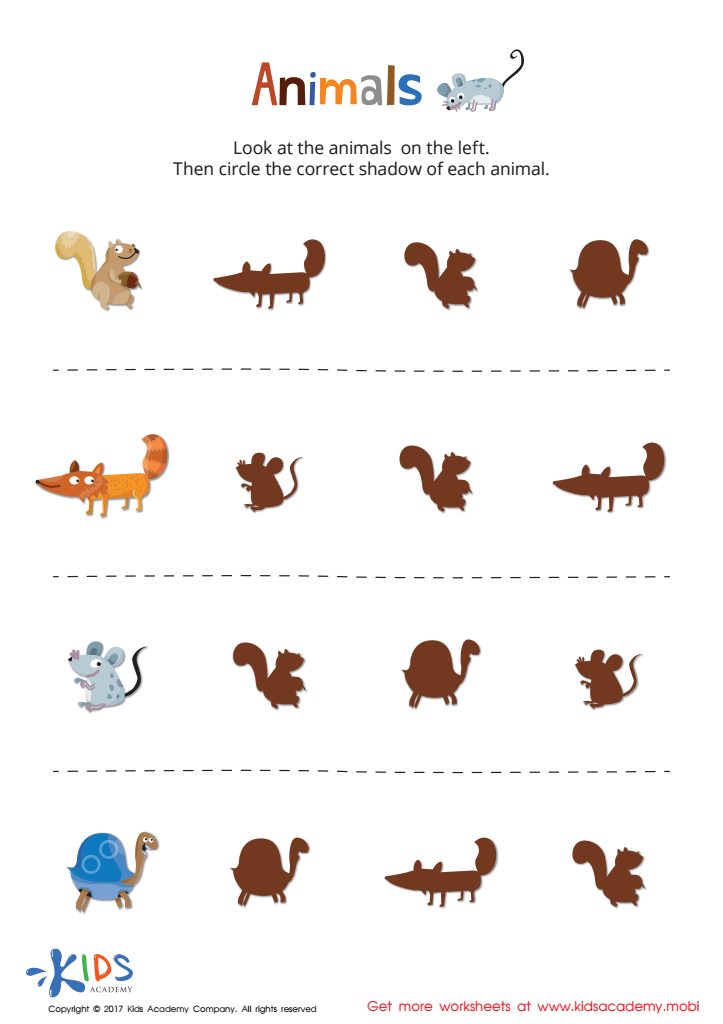
Animal Shadows Sorting Worksheet
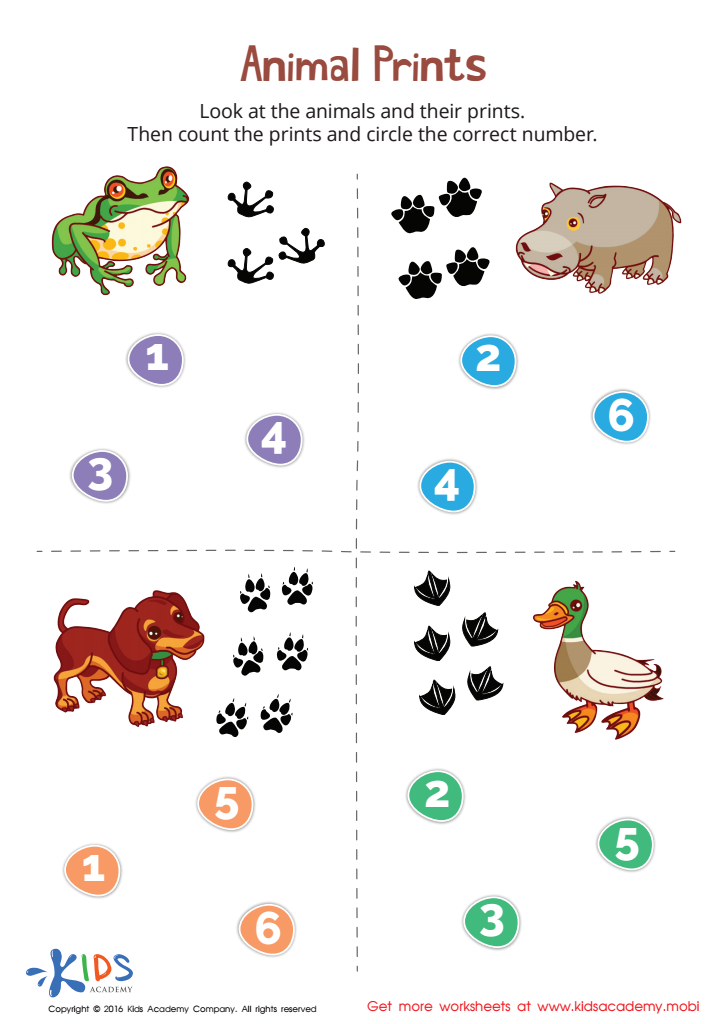
Animal Prints Match-Up Worksheet

Shapes Worksheet








Parents and teachers should value Matching Skills Extra Challenge Math for children aged 5-6 because it lays a crucial foundation for early cognitive development. This educational practice goes beyond basic number recognition to engage young minds in pattern recognition, critical thinking, and problem-solving, fostering a deeper understanding of mathematical concepts from an early age.
Introducing these skills helps children build important neural pathways. As they work on matching exercises, they develop the ability to compare and contrast, recognize relationships and sequences, and understand similarities and differences, which are vital for more complex math later on. Additionally, these activities help improve attention to detail, concentration, and fine motor skills through hands-on interaction, further preparing them for more structured learning environments.
Engaging children in such challenges within a supportive setting also boosts their confidence and curiosity in learning, creating a positive attitude towards math. Moreover, early success in these tasks often translates into higher academic achievement down the line, making future learning experiences less daunting.
In conclusion, Matching Skills Extra Challenge Math bridges playful learning with essential cognitive development, preparing young children for future academic success and fostering a lifelong love for learning. By supporting these activities, parents and teachers can significantly influence a child’s educational trajectory.








