Counting skills Extra Challenge Matching Worksheets for Ages 5-6
5 filtered results
Difficulty Level
Grade
Age
-
From - To
Subject
Activity
Standards
Boost your child's counting skills with our Extra Challenge Matching Worksheets designed specifically for ages 5-6! These engaging worksheets make counting fun and interactive through exciting matching activities. Each page encourages children to connect numbers with corresponding objects, enhancing their numerical recognition and problem-solving abilities. Ideal for classroom use or at-home practice, our extra challenges motivate young learners to develop confidence in their mathematical skills while reinforcing important early learning concepts. With vibrant illustrations and age-appropriate content, these worksheets provide a perfect blend of education and entertainment. Help your child excel in counting—download our worksheets today!
Favorites
With answer key
Interactive
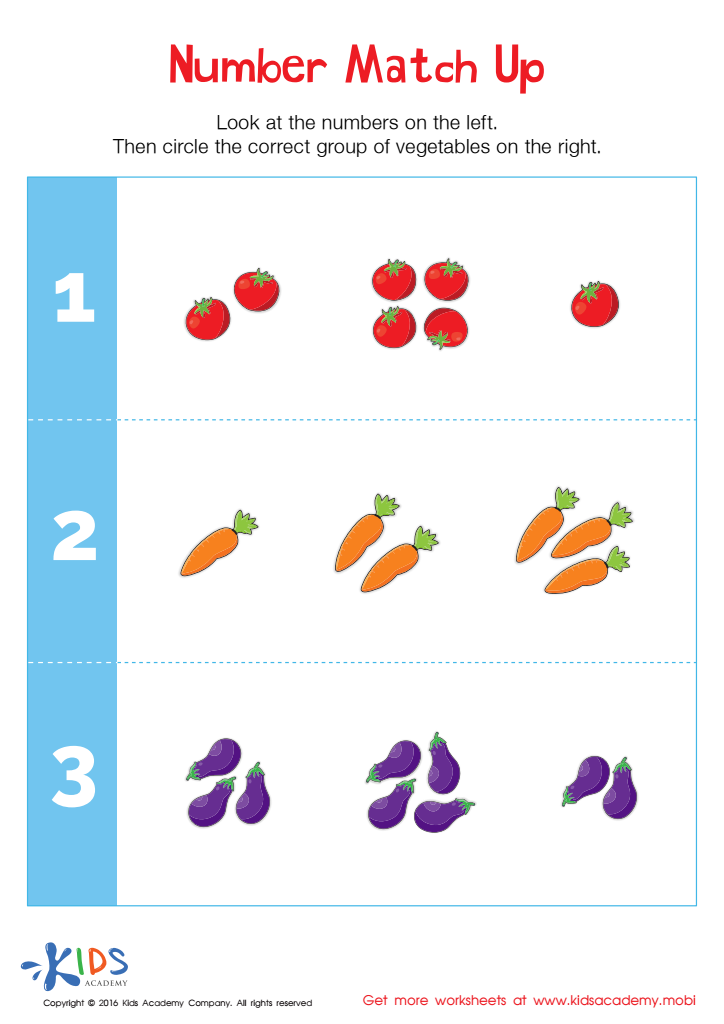
Number Match Up Worksheet
Help your child learn early math skills with this cute number match-up worksheet! Through this exercise, your preschooler can practice following directions, recognizing numbers, counting and understanding the difference between left and right. Bright and catchy pictures such as veggies make the worksheet fun and engaging. Print it out and let your child enjoy counting and matching the veggies!
 Assign to My Students
Number Match Up Worksheet
Worksheet
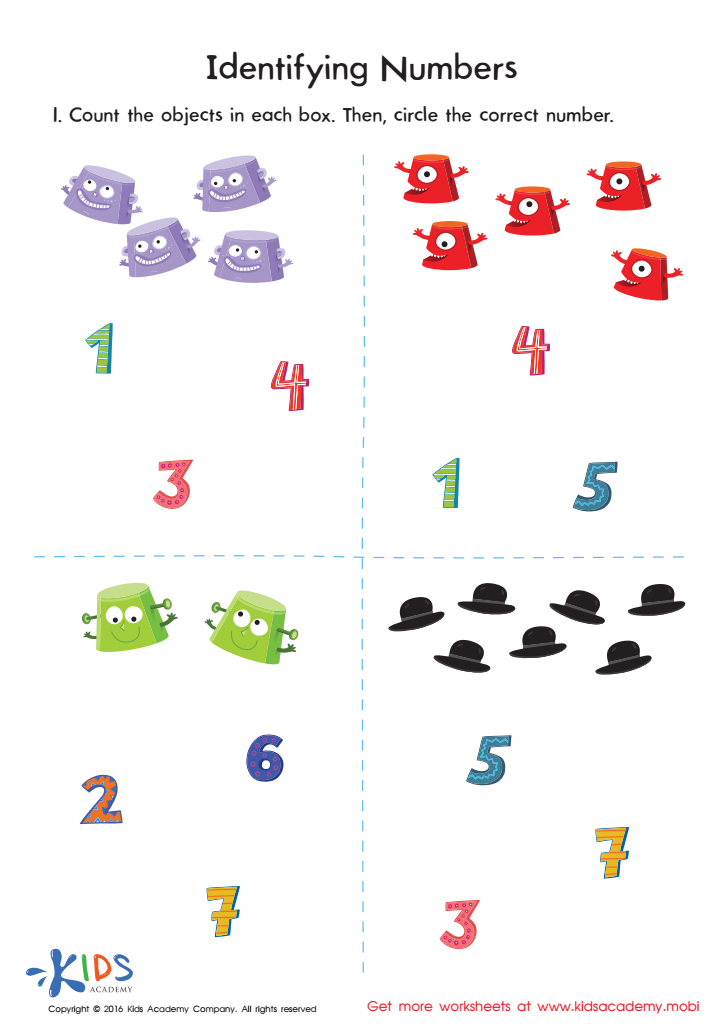
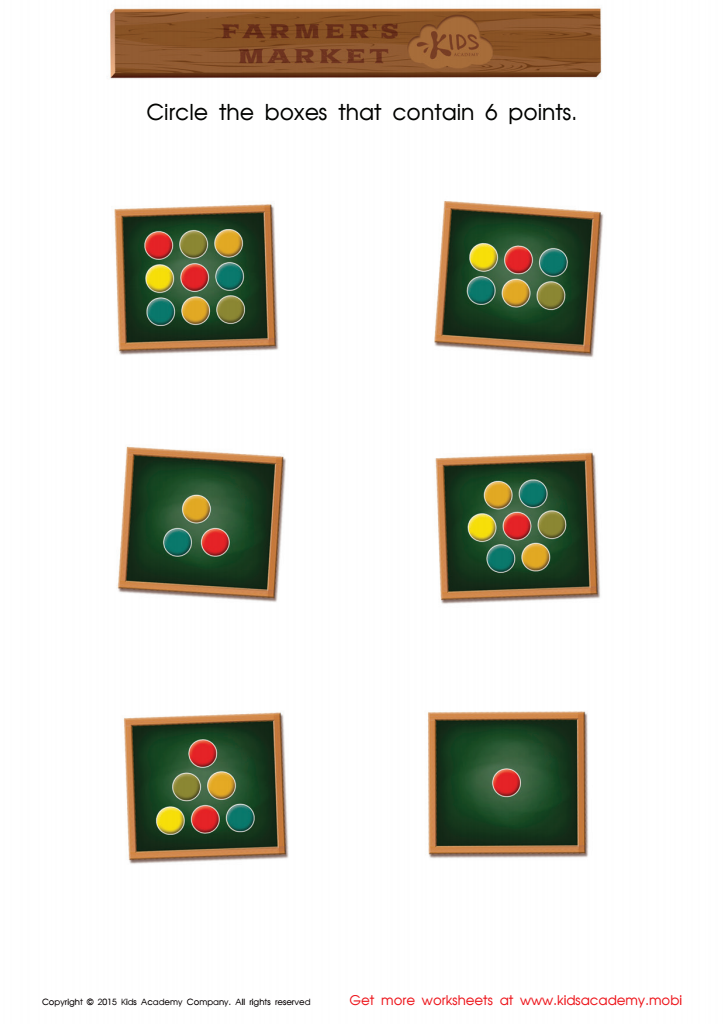
Count and Match Points 6 Math Worksheet
Help your child with mathematics by guiding them with this fun printable worksheet. They will practice counting numbers by looking at all the boxes and circling the ones containing 6 dots. Together you will gain a better understanding of mathematics.
Count and Match Points 6 Math Worksheet
Worksheet
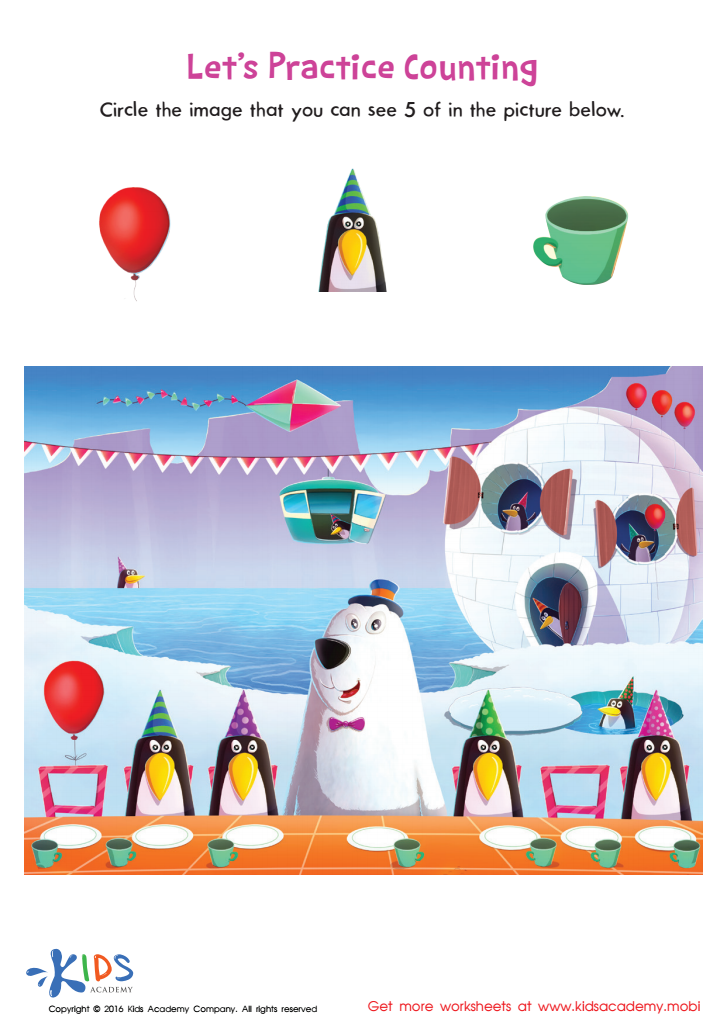
Counting Worksheet: Let's Practice Counting
Celebrate with the Arctic animals! This fun counting worksheet will help your child hone counting, problem-solving and attention skills. Let them explore important concepts through a process of elimination as they help the animals count guests and supplies. A great way to learn and have fun!
Counting Worksheet: Let's Practice Counting
Worksheet
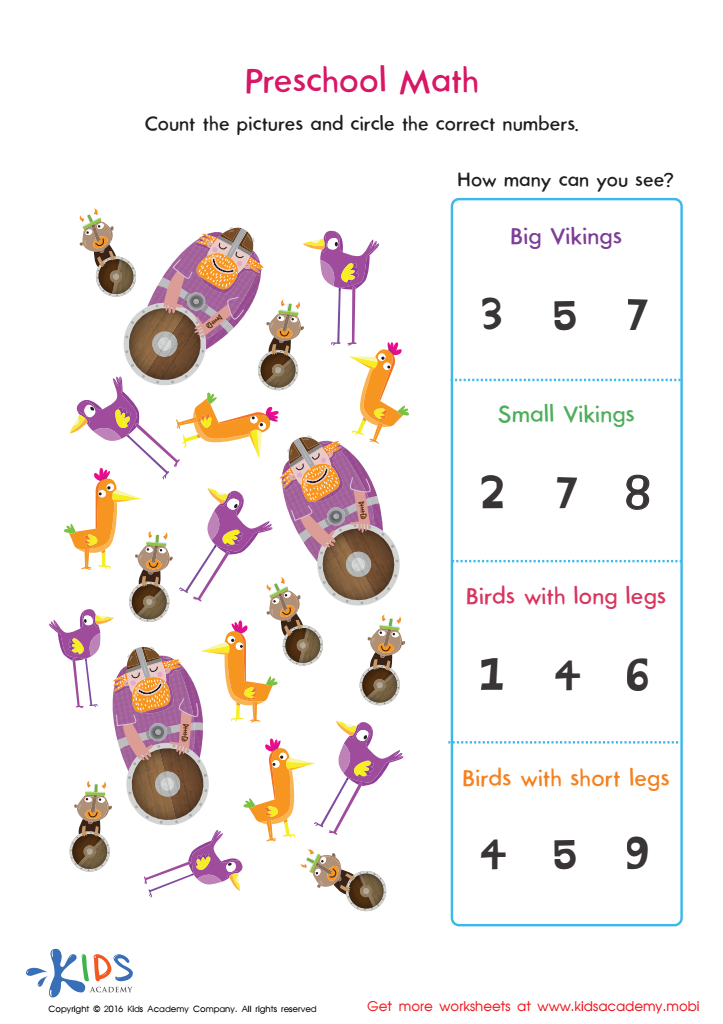
Counting Worksheet: Preschool Math
Worksheet
Join Kids Academy for Free
Who is primarily going to use this learning content?








Counting skills are foundational in early mathematics education, making them essential for children aged 5-6. Parents and teachers should care about activities like Counting Skills Extra Challenge Matching because they provide engaging ways for young learners to deepen their understanding of numbers and improve their numerical fluency. Developing these skills not only aids in the ability to count accurately but also fosters critical thinking, problem-solving, and cognitive development.
These matching challenges allow children to connect numbers with corresponding quantities, enhancing their number sense and comprehension. When children engage in these activities, they can practice identification, pairing, and recognizing patterns, which are crucial learning outcomes in early childhood education.
Moreover, these activities are typically interactive and can be enjoyed in both home and classroom settings, promoting collaborative learning. Additionally, they can increase motivation and enthusiasm for learning. Understanding counting serves as a gateway to more advanced mathematical concepts in later grades, laying a solid foundation for academic success. Therefore, investing time and resources in Count Skills Extra Challenge Matching activities is vital for nurturing young children's mathematical growth, which will benefit them academically and in everyday life.