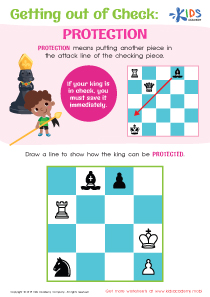
Chess strategy learning Extra Challenge Chess Worksheets for Ages 5-7
7 filtered results
Difficulty Level
Grade
Age
-
From - To
Subject
Activity
Standards
Enhance your child's chess expertise with our "Chess Strategy Learning Extra Challenge Chess Worksheets for Ages 5-7"! Designed for young learners, these worksheets provide an engaging way to develop essential strategies and skills in chess. Each worksheet features fun exercises that foster problem-solving, critical thinking, and decision-making abilities while introducing important concepts such as tactics, piece movement, and basic strategies. Perfect for classroom activities or at-home practice, these worksheets make learning chess enjoyable and educational! Unlock your child's cognitive potential and pave the way for lifelong learning in the game of chess with our exciting and interactive challenges!
Favorites
With answer key
Interactive
King and Queen Mate Strategy: Part 1 Worksheet
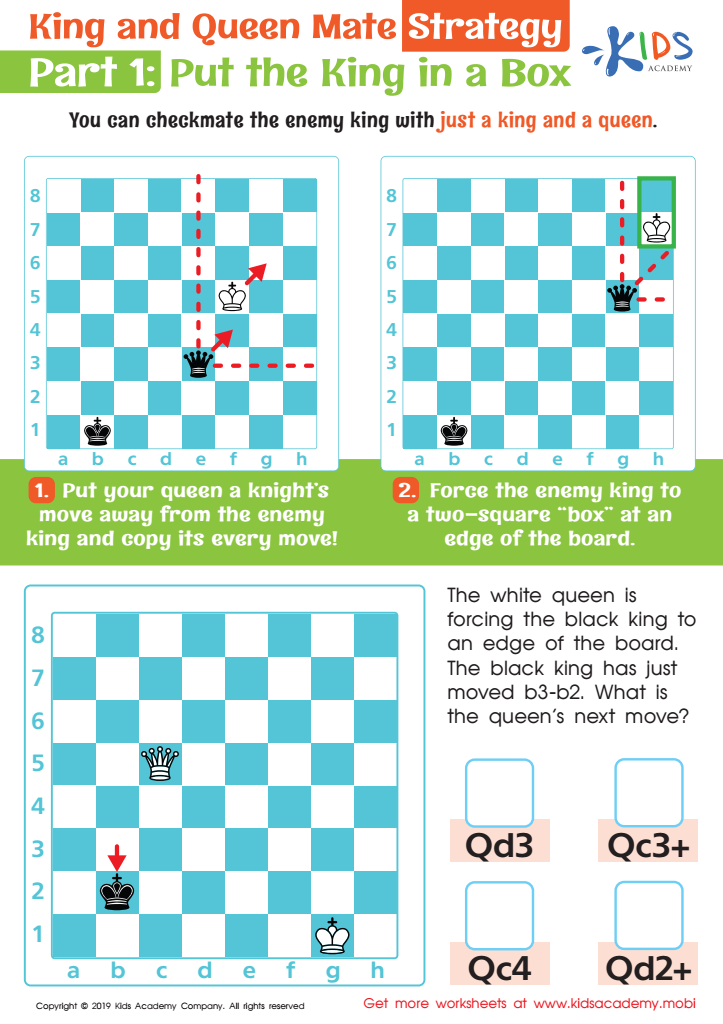
This worksheet will help your young chess player strategize. They’ll learn how to checkmate the opponent’s king using just a king and a queen. Descriptive sample boards will show them the strategy and then a practice board will test their knowledge. Allowing them to plan the queen’s next move to checkmate the opposing king.
 Assign to My Students
King and Queen Mate Strategy: Part 1 Worksheet
Worksheet
En Passant: Tricky Pawn Capture Worksheet
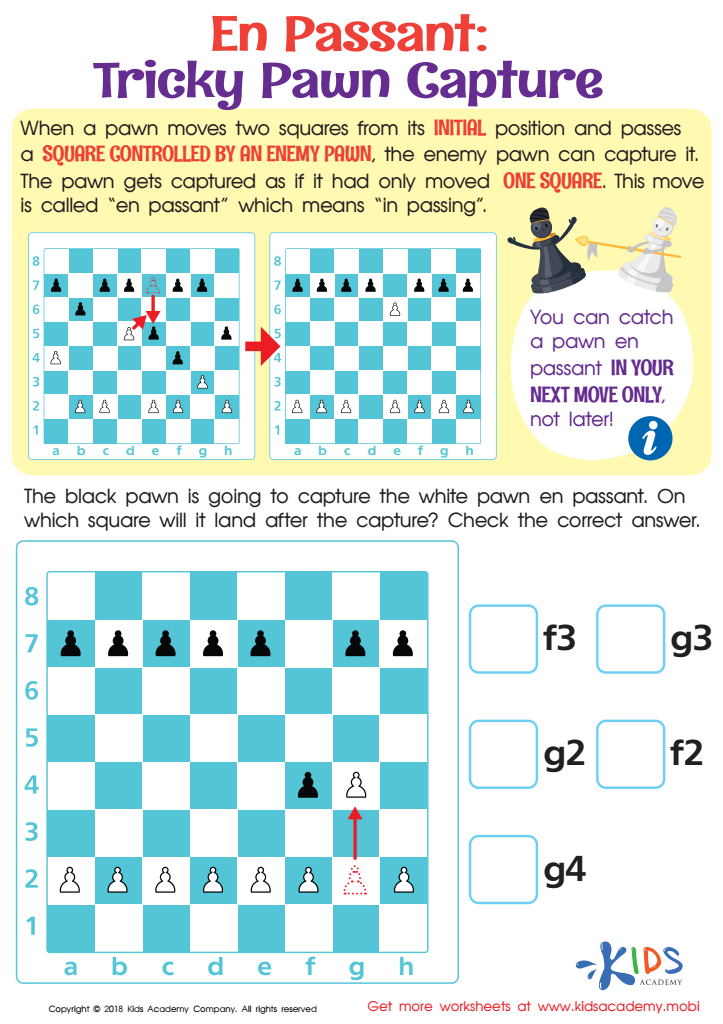
When a pawn moves two squares from its initial position and enters a square controlled by an enemy, the enemy can capture it as if it had moved one square. This move is called "en passant" (in passing). Ask your child which square the black pawn will land on after capturing the white pawn en passant using the provided chessboard.
En Passant: Tricky Pawn Capture Worksheet
Worksheet
Two Rook Mate Strategy Worksheet
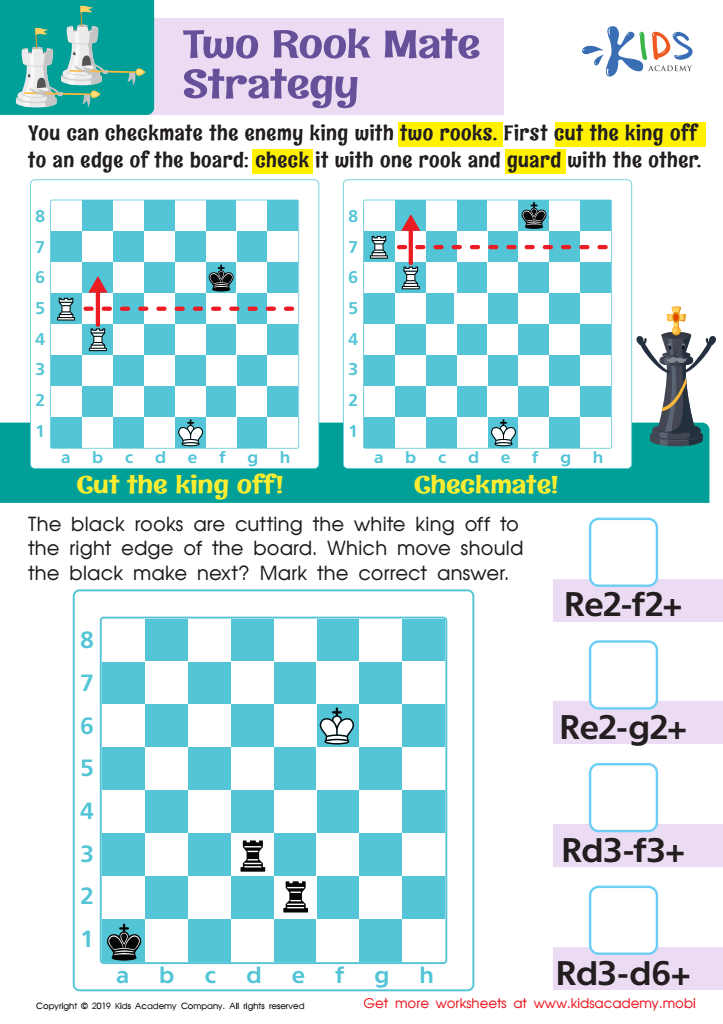
Kids who can play stress gain better reasoning, logic and critical thinking skills. This worksheet can teach kids the Two Rook Mate strategy to checkmate their opposite king. They'll discover how to close in the enemy king and protect with another rook, all the while enjoying a screen-free activity!
Two Rook Mate Strategy Worksheet
Worksheet
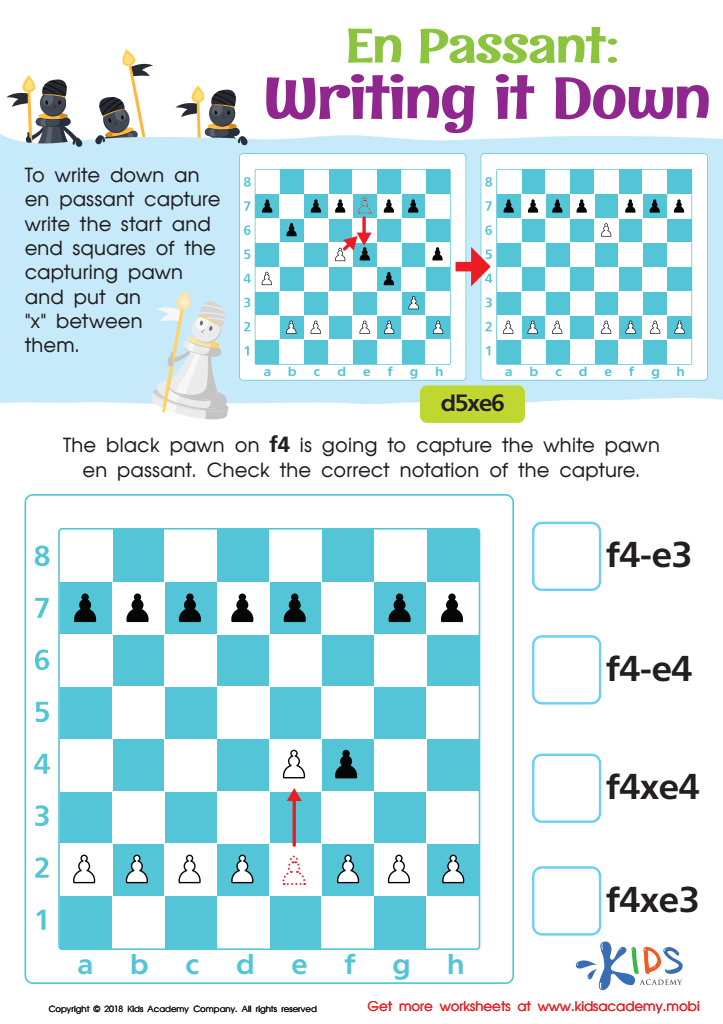
En Passant: Writing it Down Worksheet
Properly documenting moves in chess is often overlooked. En passant captures require your child to note the starting and ending squares (e.g. d5xe6) with an "X" in between them. Ask your children to review the worksheet and ensure they've notated the captures correctly. (80 words)
En Passant: Writing it Down Worksheet
Worksheet
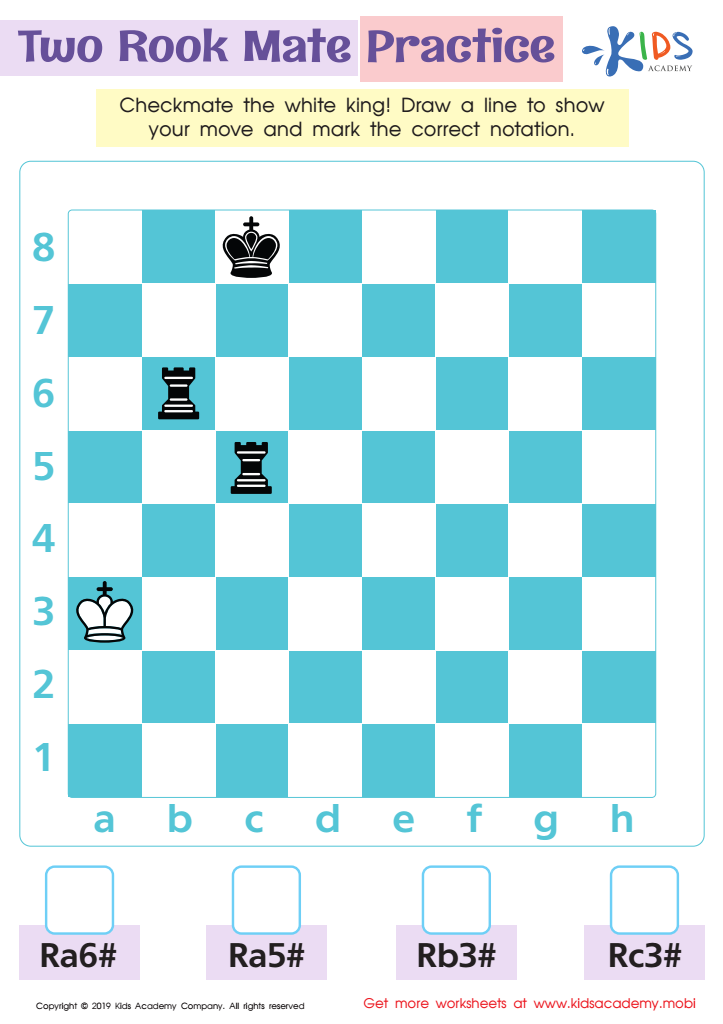
Two Rook Mate Practice Worksheet
Chess is all about checkmating your opponent. This free Two Rook Mate practice worksheet is a fun way for your mini strategist to do just that. They can draw a line showing their move then pick the correct notation for the mate! A great way for them to practice fine motor skills, too.
Two Rook Mate Practice Worksheet
Worksheet
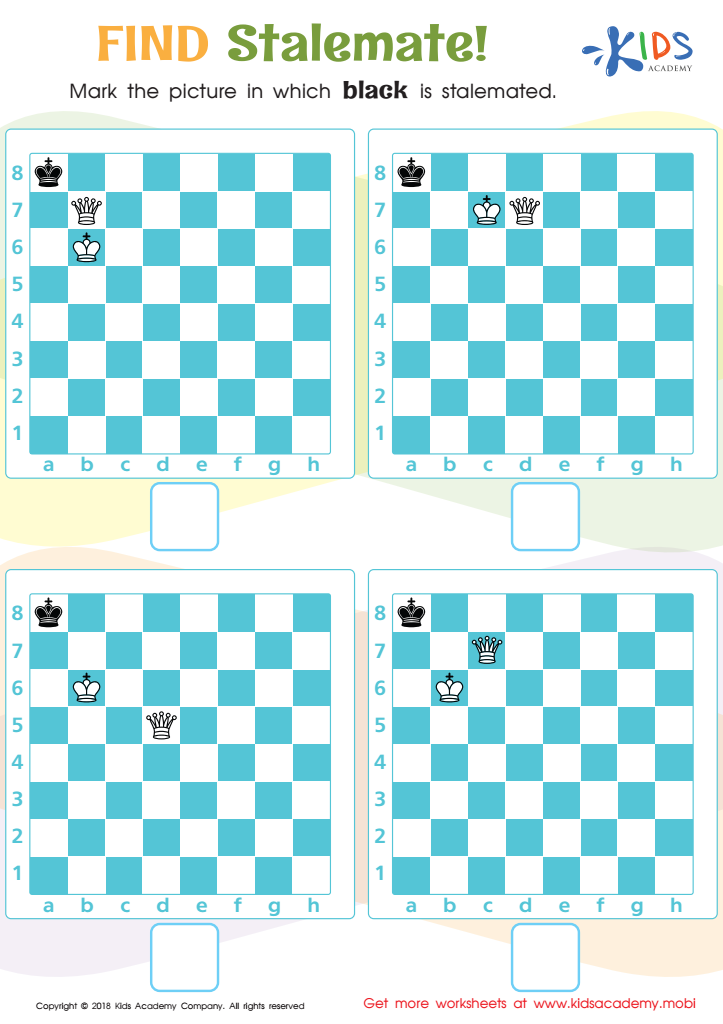
Find Stalemate! Worksheet
Teach your kids Chess and give them more than a hobby - equip them with critical thinking, rationale and problem-solving skills! This free worksheet helps them understand stalemates by examining various sample boards. By providing visual discernment and the joy of the game, your child's logical skills will soar!
Find Stalemate! Worksheet
Worksheet
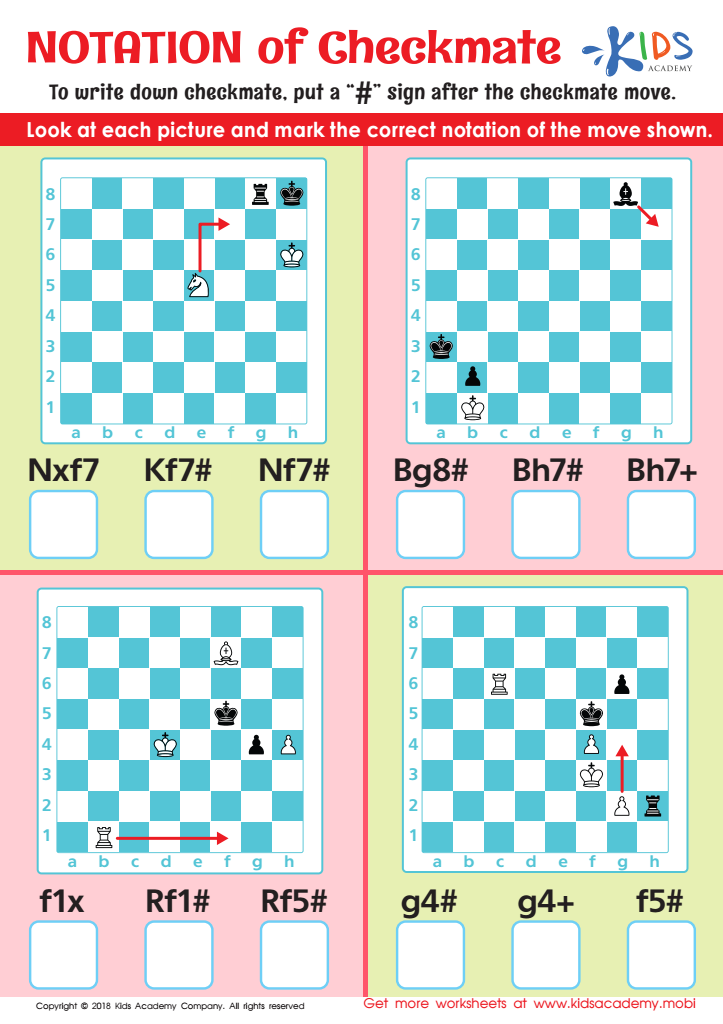
Notation of Checkmate Worksheet
Checkmate is the thrilling, ultimate move in chess! Teach your child to make it and notate it properly with this free worksheet. They'll love being able to capture the king and it's great for brain-building too! Have them look at the sample boards and place a # sign after the checkmate move for notation.
Notation of Checkmate Worksheet
Worksheet
Join Kids Academy for Free
Who is primarily going to use this learning content?



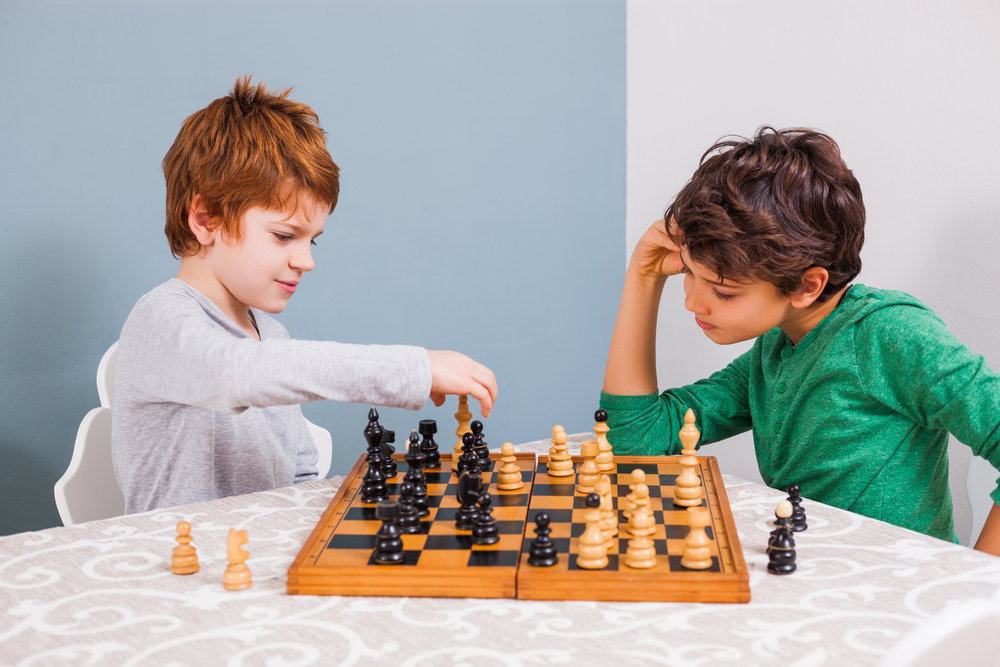



Parents and teachers should consider incorporating Extra Challenge Chess for ages 5-7 into their learning environment because it offers a multitude of educational benefits. At this young age, children are naturally curious and highly receptive to new concepts. Chess serves as an exceptional tool for enhancing cognitive skills, including critical thinking, problem-solving, and strategic planning.
Learning chess helps children develop patience and perseverance as they navigate complex positions and develop strategies over time. It also encourages social skills like sportsmanship and collaboration when played in groups, fostering a sense of community. The game improves memory and concentration—key skills that translate into better performance in classroom settings.
Moreover, teaching chess can instill a love for mathematics and logic as children recognize patterns, calculate moves, and understand probabilities. The structured nature of chess introduces kids to the concept of planning and foresight, essential attributes for future academic and life challenges.
By providing children with the opportunity to engage in chess at a young age, parents and teachers can help nurture a solid foundation for lifelong learning, promoting intellectual growth and emotional resilience. The fun and engaging nature of Extra Challenge Chess makes it a worthy addition to any educational curriculum.