Basic counting skills Extra Challenge Worksheets for Ages 5-7
4 filtered results
-
From - To
Boost your child's mathematical abilities with our engaging "Basic Counting Skills Extra Challenge Worksheets" tailored for ages 5-7! These worksheets are designed to provide young learners with additional practice in counting and number recognition, enhancing their foundational math skills. Each activity features colorful illustrations and interactive tasks that not only make learning fun but also promote critical thinking. Suitable for both in-school and at-home learning, these worksheets reinforce key counting concepts through enjoyable challenges. Equip your child with the confidence they need to succeed in math while fostering a love for learning. Discover a world of fun-filled counting today!
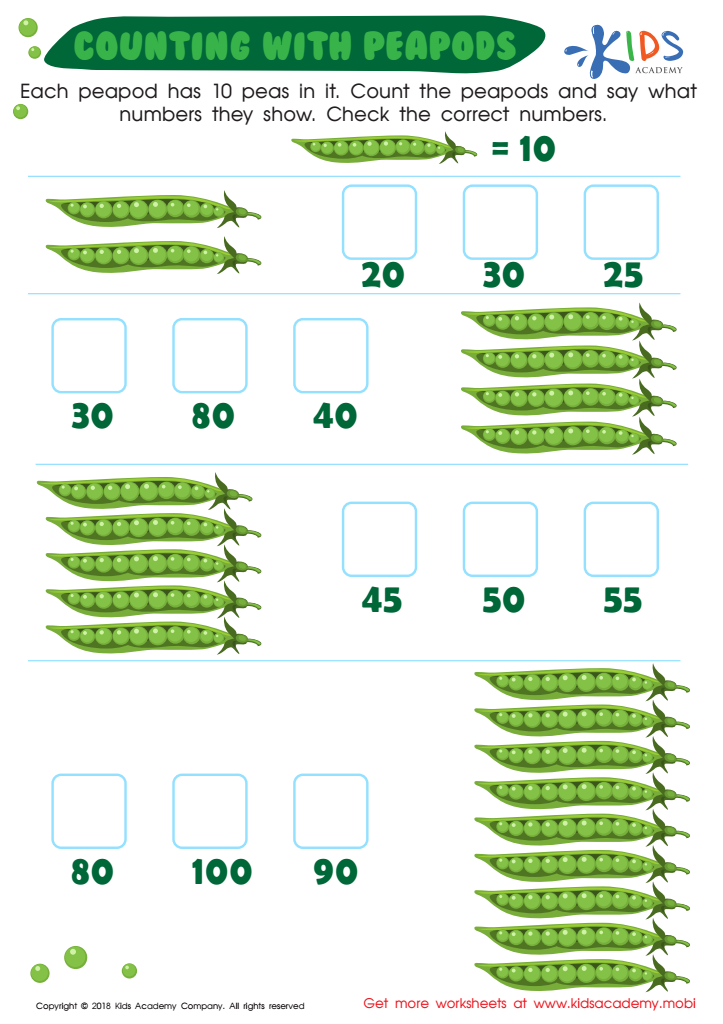
Number Worksheet: Counting With Peapods
 Assign to My Students
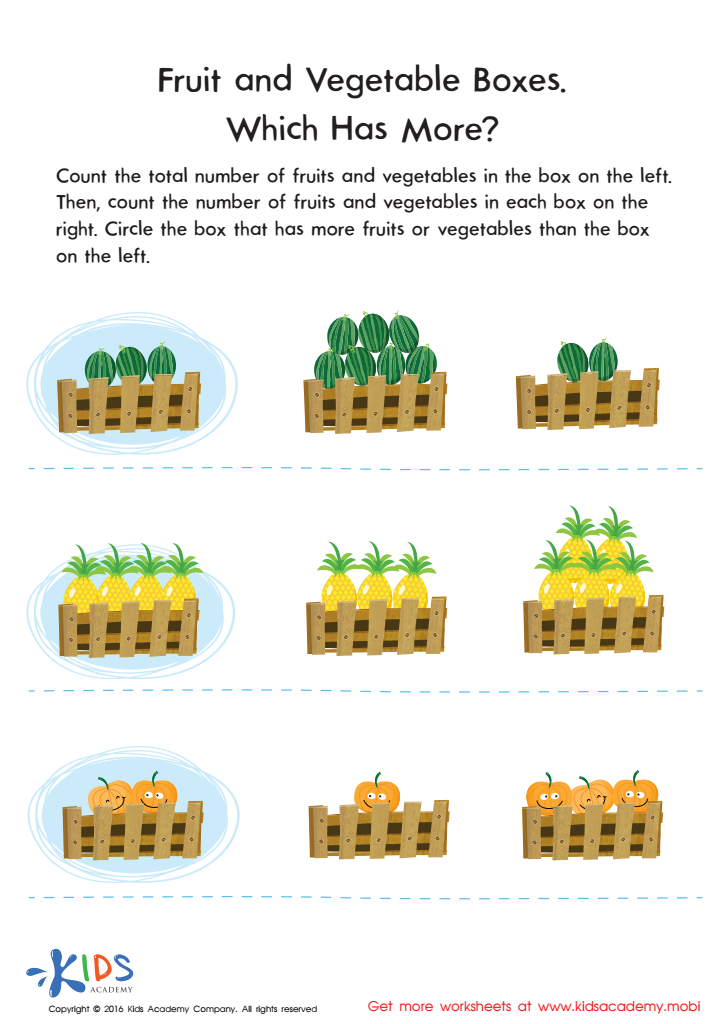
Which Has More? Size Worksheet
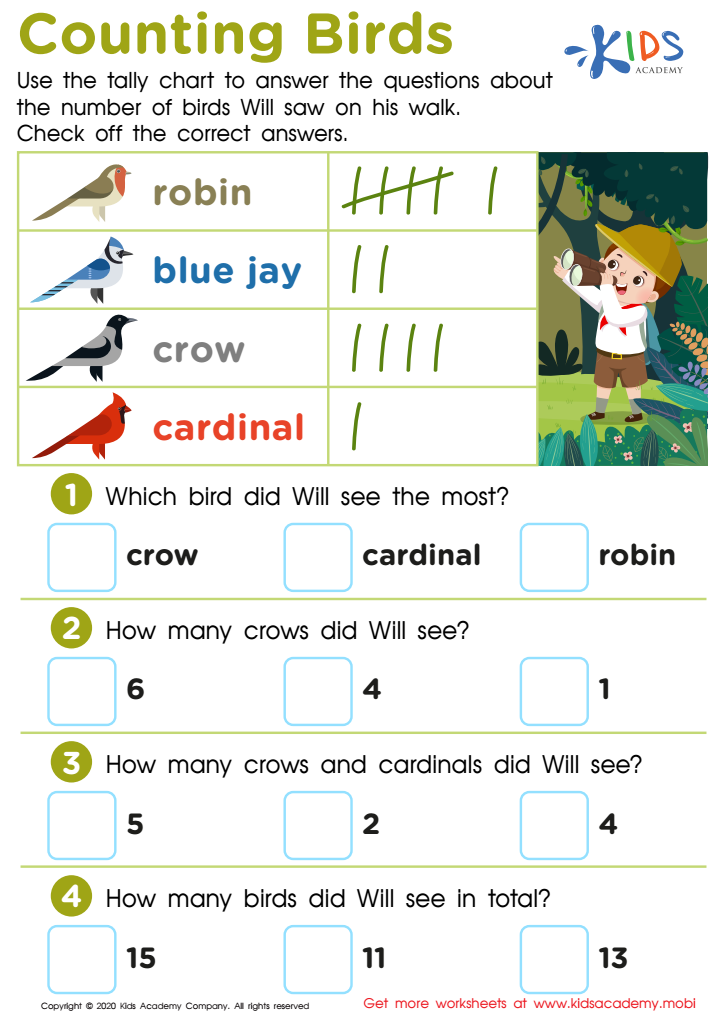
Counting Birds Worksheet
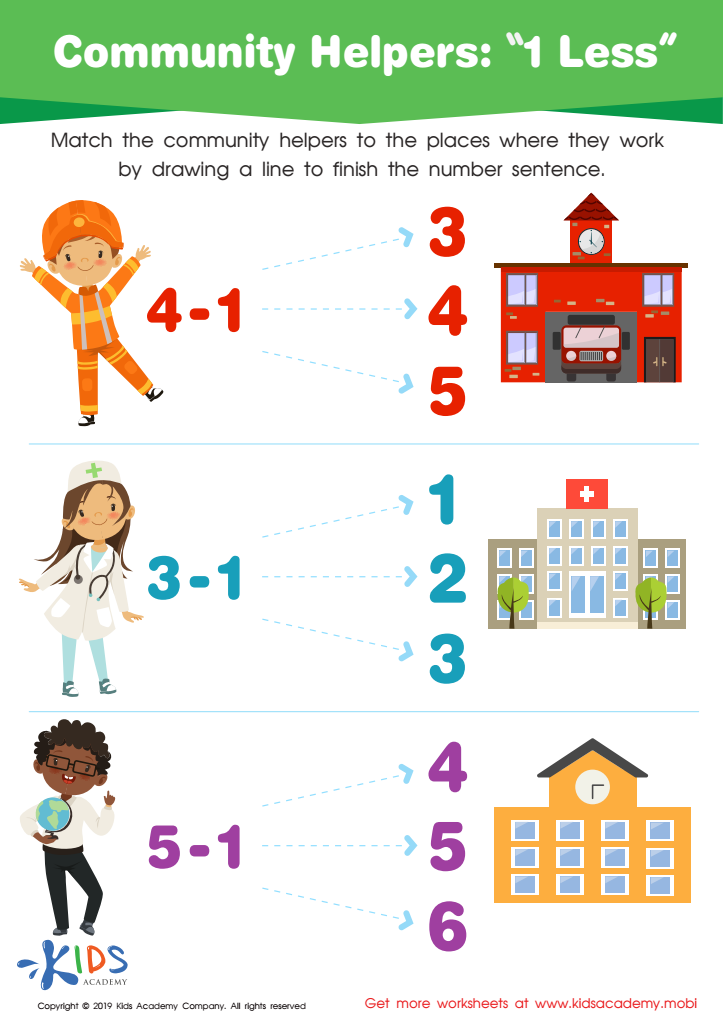
Community Helpers: 1 less Worksheet







Basic counting skills are fundamental for children aged 5-7 and play a critical role in their overall development. Parents and teachers should care about nurturing these skills because they lay the groundwork for mathematical understanding and cognitive processes. Counting isn’t just about numbers; it's about developing a sense of quantity, which helps children understand concepts such as addition, subtraction, and comparison.
In early education, counting encourages children to engage with their environment. For instance, counting objects, steps, or even the number of friends at play fosters their observational skills and enriches their vocabulary. Moreover, understanding numbers promotes problem-solving abilities and boosts confidence in tackling more complex concepts later on.
Implementing fun activities that challenge basic counting can solidify these skills in an enjoyable manner. Games involving counting and sequencing not only capture children's interest but also stimulate their critical thinking and concentration. These foundational skills build their readiness for future academic challenges and facilitate a lifelong appreciation for mathematics.
In summary, focusing on basic counting skills in early education positively impacts cognitive growth, academic readiness, and problem-solving abilities, emphasizing why parents and teachers should prioritize this essential component of learning.








