
Comparing sizes Extra Challenge Worksheets for Ages 5-7
6 filtered results
Difficulty Level
Grade
Age
-
From - To
Subject
Activity
Standards
Enhance your child's understanding of size concepts with our "Comparing Sizes Extra Challenge Worksheets" designed for ages 5-7. These engaging worksheets provide a fun and interactive way for young learners to practice identifying and comparing different sizes. Featuring a variety of colorful illustrations and tasks, these worksheets encourage critical thinking and foster essential math skills. As children complete the activities, they'll gain confidence in their abilities while enjoying diverse challenges tailored to their developmental stage. Perfect for both classroom settings and at-home learning, these worksheets make size comparison enjoyable and memorable. Download now to spark your child's curiosity and boost their learning journey!
Favorites
With answer key
Interactive
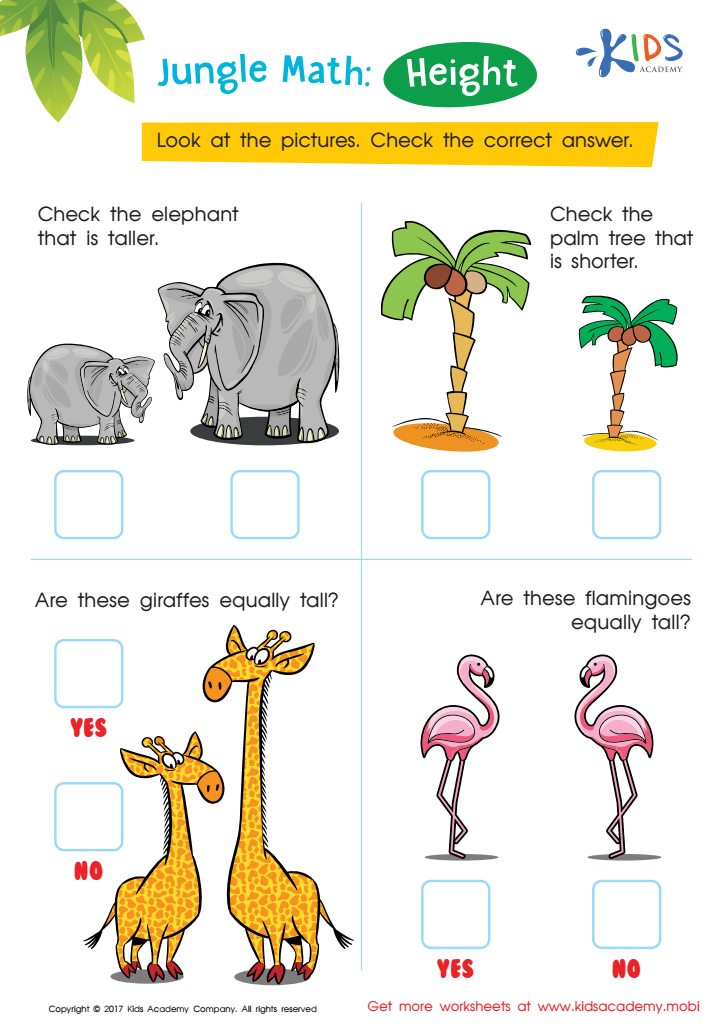
Which Is Taller Worksheet
Help your kindergartner learn about height with this fun worksheet! They'll love comparing zoo animals and deciding which are taller, shorter, or equal. It's a great way to practice math and have fun!
 Assign to My Students
Which Is Taller Worksheet
Worksheet
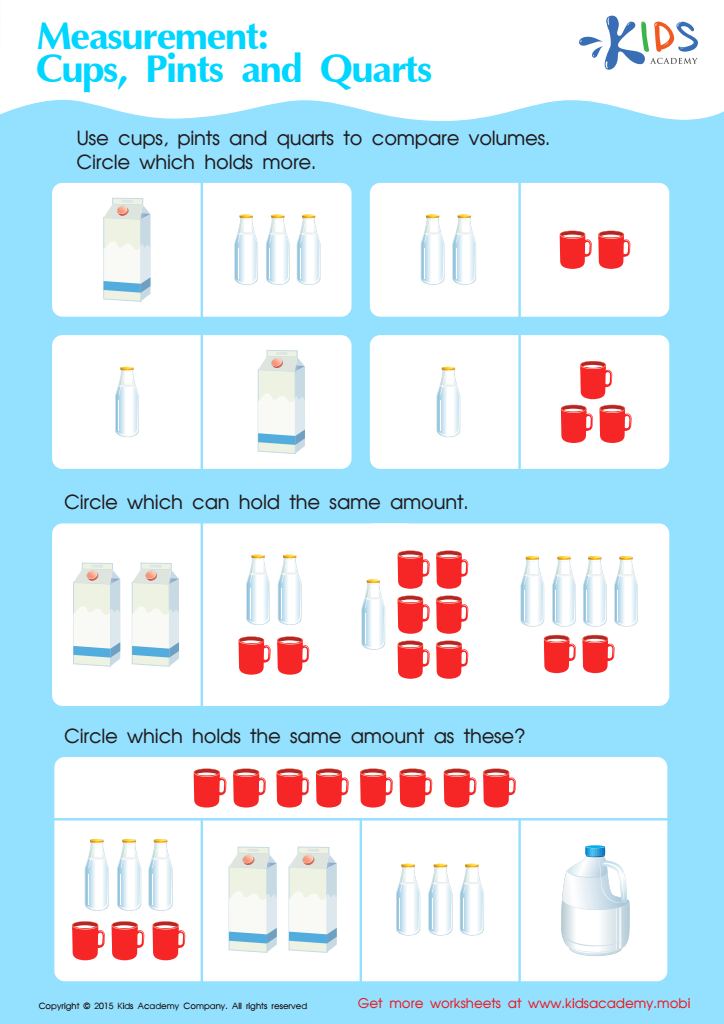
Measurement: Compare Volumes Worksheet
Compare volumes with Kids Academy and have fun! (80 words)
Practice measuring with Kids Academy and have fun! Compare volumes in pictures and circle which holds more. Keep learning with free math worksheets available on our website. Enjoy the process and have fun!
Measurement: Compare Volumes Worksheet
Worksheet
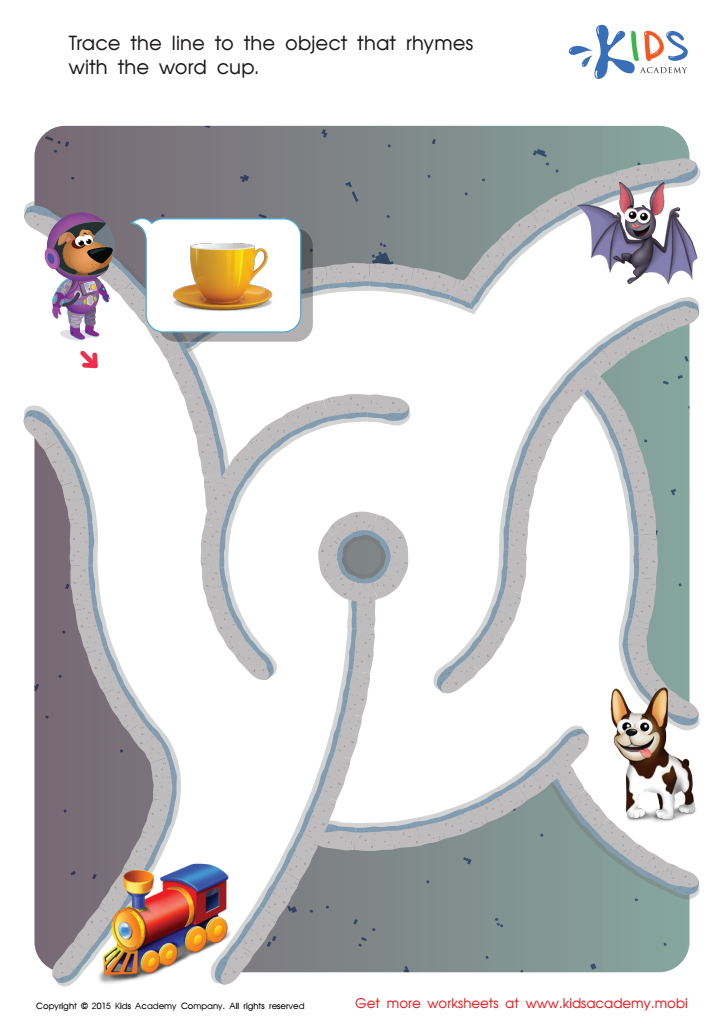
Cup Rhyming Words Worksheet
Kids Academy offers funny worksheets to help kids practice their vocabulary. Try the new one with the dog, matching objects to their rhyming words! Explore more activities and worksheets to learn English Language words and phrases.
Cup Rhyming Words Worksheet
Worksheet
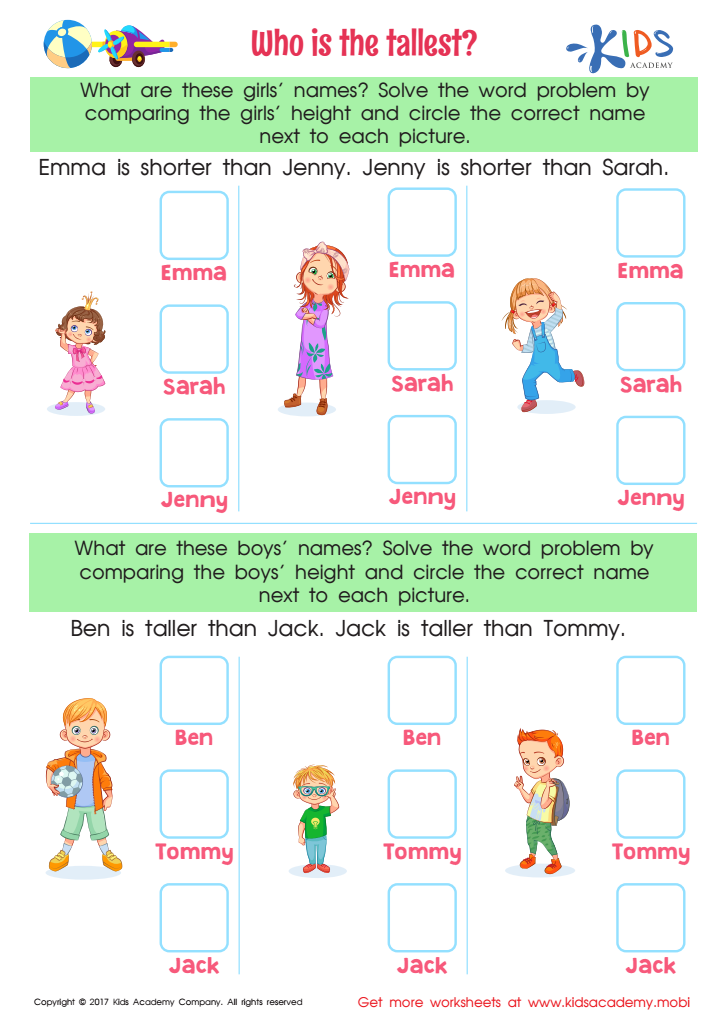
Who Tallest Printable
Help your child observe the kids in the worksheet and compare their heights to answer the question: Who is the Tallest? This is an excellent way for them to practice and better understand measurement concepts.
Who Tallest Printable
Worksheet
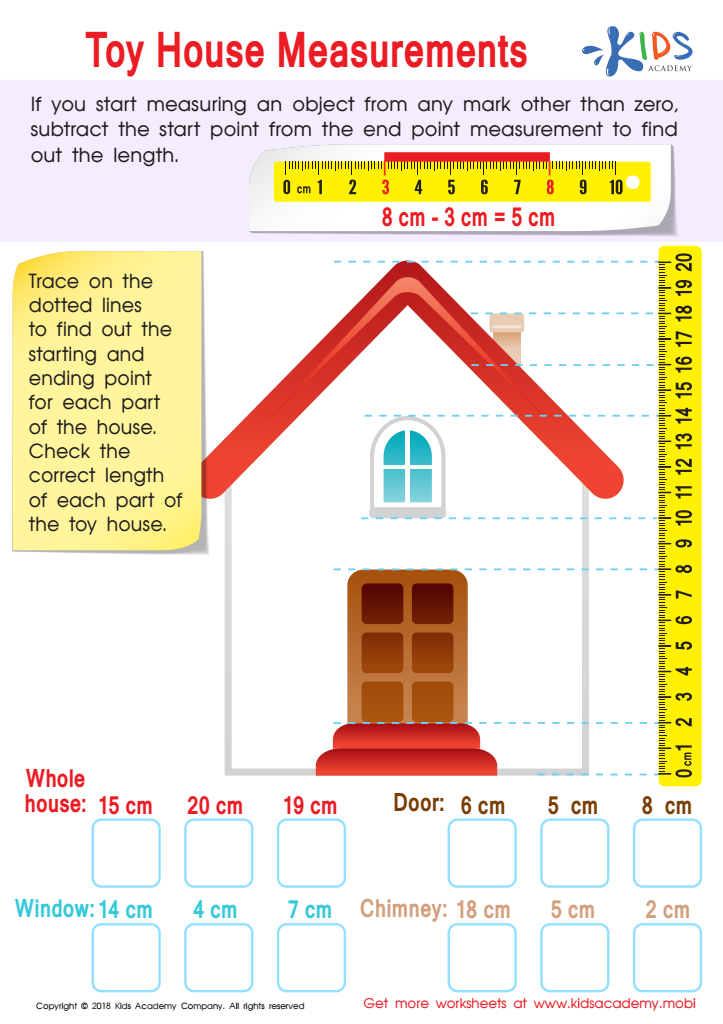
Toy House Measurements Worksheet
This worksheet requires math and measuring skills. When measuring an object from a non-zero starting point, subtract the start point from the end point to get the correct length. Kids must trace the dotted lines to get the right length for each part of the house.
Toy House Measurements Worksheet
Worksheet
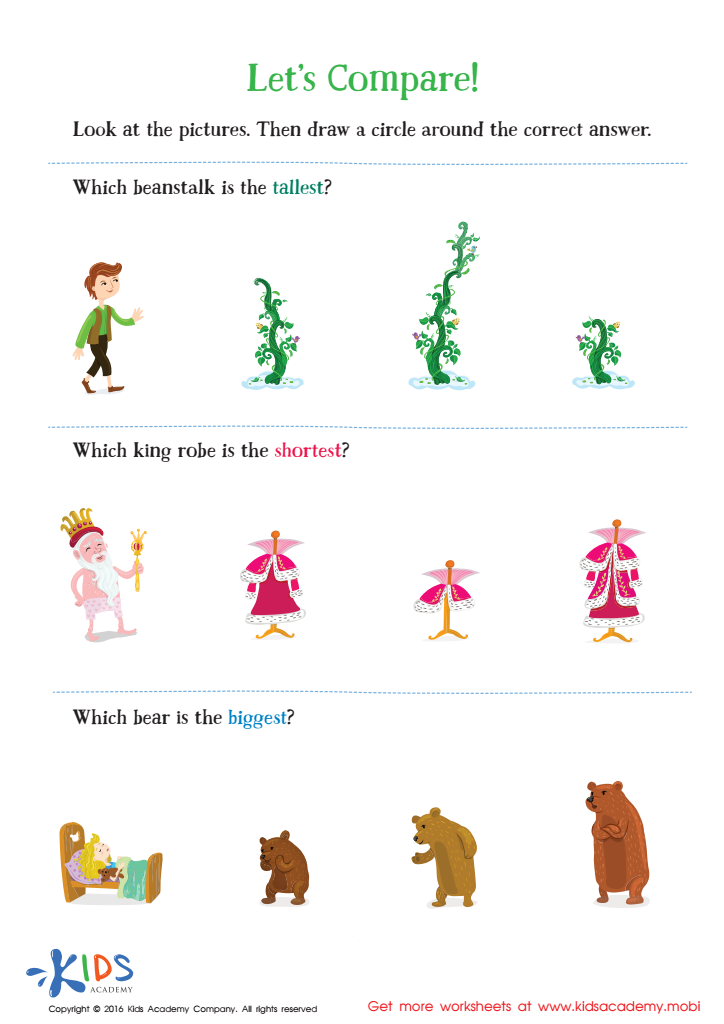
Fairy Tale Worksheet: Let's Compare
Preschoolers need to recognize different sizes of objects. This worksheet combines fun fairy tales with size practice, helping them read, problem solve, and sort through pictures. Your child will love the images and be eager to complete it. Enhance their learning by talking about the tales to build comprehension.
Fairy Tale Worksheet: Let's Compare
Worksheet
Join Kids Academy for Free
Who is primarily going to use this learning content?






Comparing sizes is a fundamental skill that plays a crucial role in early childhood development, making it important for parents and teachers to engage young learners in this extra challenge. At ages 5-7, children are at a pivotal stage for developing their cognitive abilities, and mastering size comparison helps strengthen their logical reasoning and critical thinking skills.
When children compare sizes, they learn to observe and categorize objects, enhancing their vocabulary with terms like "bigger," "smaller," "taller," and "shorter." This activity supports math concepts, such as measurement, and lays the groundwork for later mathematical understanding, like quantities and fractions.
Moreover, size comparison activities cultivate spatial awareness, which is essential not only in mathematics but also in everyday life skills. It encourages creative play and problem-solving, as children may discover ways to arrange objects based on size or incorporate them into imaginative scenarios.
By prioritizing this extra challenge, parents and teachers can create enriched environments where students feel empowered to explore their surroundings and develop a deeper understanding of the world. Ultimately, fostering these skills during a child's formative years boosts their confidence and sets them up for future academic success.








