Comparing objects Extra Challenge Worksheets for Ages 5-8
3 filtered results
-
From - To
Boost your child's learning with our "Comparing Objects Extra Challenge Worksheets for Ages 5-8"! Designed to enhance critical thinking and observational skills, these engaging worksheets provide an exciting way for young learners to compare size, shape, and quantity. Each activity is tailored to challenge students while reinforcing essential math and logic skills in a fun, interactive manner. Perfect for at-home learning or classroom use, our worksheets encourage both independent and collaborative problem-solving. Let your child explore new concepts, improve their analytical skills, and gain confidence in their abilities. Discover the joy of learning with our thoughtfully crafted resources!
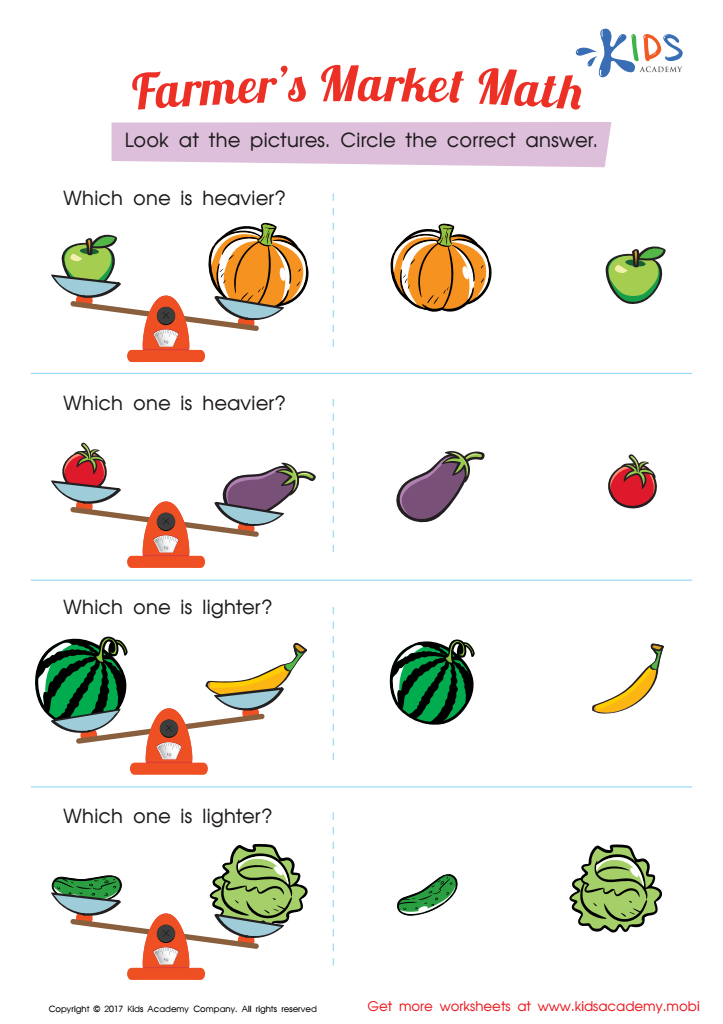
Which One Is Heavier Worksheet
 Assign to My Students
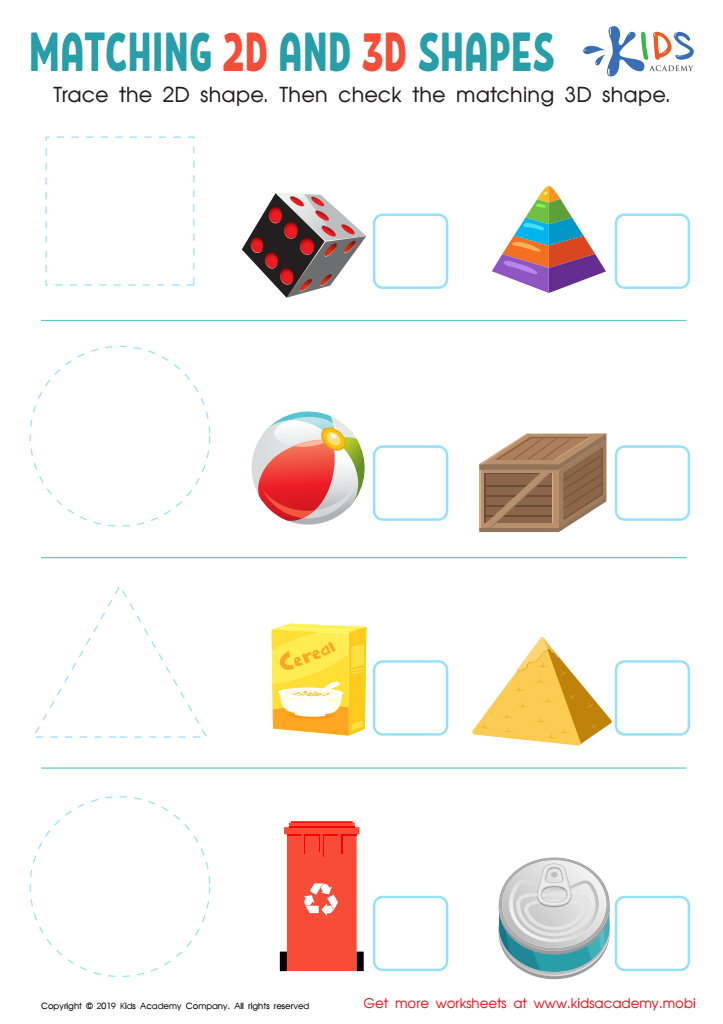
Matching 2D and 3D Shapes Worksheet
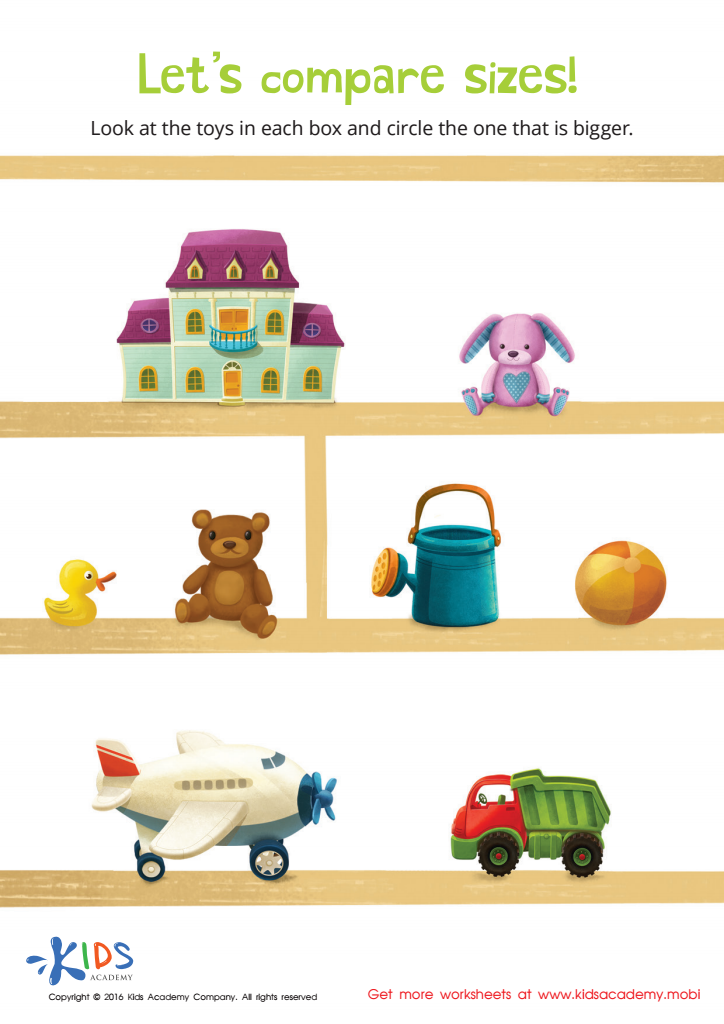
Classifying by Size Sorting Worksheet




.jpg)

Comparing objects is a vital skill for children ages 5-8, as it lays the groundwork for critical thinking and mathematical understanding. When parents and teachers engage children in this extra challenge, they encourage observation and analytical skills that transcend basic computation. Through activities where children compare sizes, weights, lengths, and quantities, they learn to make distinctions and express their observations verbally, enhancing their language skills.
This skill fosters cognitive development, as children begin to categorize information, recognize patterns, and draw conclusions based on their comparisons. For example, by comparing the heights of different plants or the weights of various fruits, children can develop an early appreciation for science and the world around them.
Moreover, engaging in comparing activities can also promote social interaction and collaboration, as children may work together to discuss their findings. This cultivates teamwork and communication skills.
Ultimately, parents and teachers should prioritize comparing objects because it is a fundamental component of early learning that promotes curiosity, problem-solving skills, and confidence, setting the stage for lifelong love of learning and exploration. When children express ideas and reason through comparisons, they build a solid academic foundation critical for future success in school and beyond.








