Shape Recognition Extra Challenge 2D Shapes Worksheets for Ages 5-8
7 filtered results
-
From - To
Unlock your child's potential with our "Shape Recognition Extra Challenge 2D Shapes Worksheets" designed specifically for ages 5-8! These engaging worksheets take learning to new heights, offering fun and interactive ways to identify and differentiate between various 2D shapes. Ideal for enhancing spatial awareness and critical thinking skills, each activity encourages children to explore shapes in diverse contexts, while reinforcing essential math fundamentals. Perfect for reinforcing classroom lessons or facilitating at-home learning, these extra challenges make shape recognition exciting and dynamic. Help your young learners master shapes and boost their confidence with these educational resources tailored to inspire curiosity and creativity!
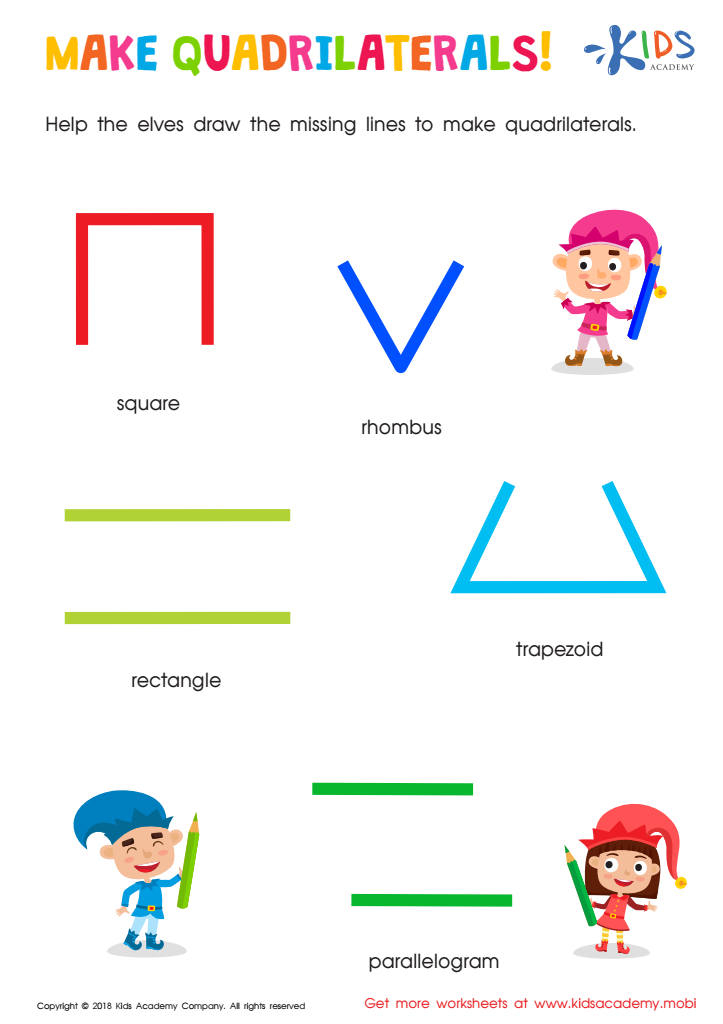
Make Quadrilaterals Worksheet
 Assign to My Students


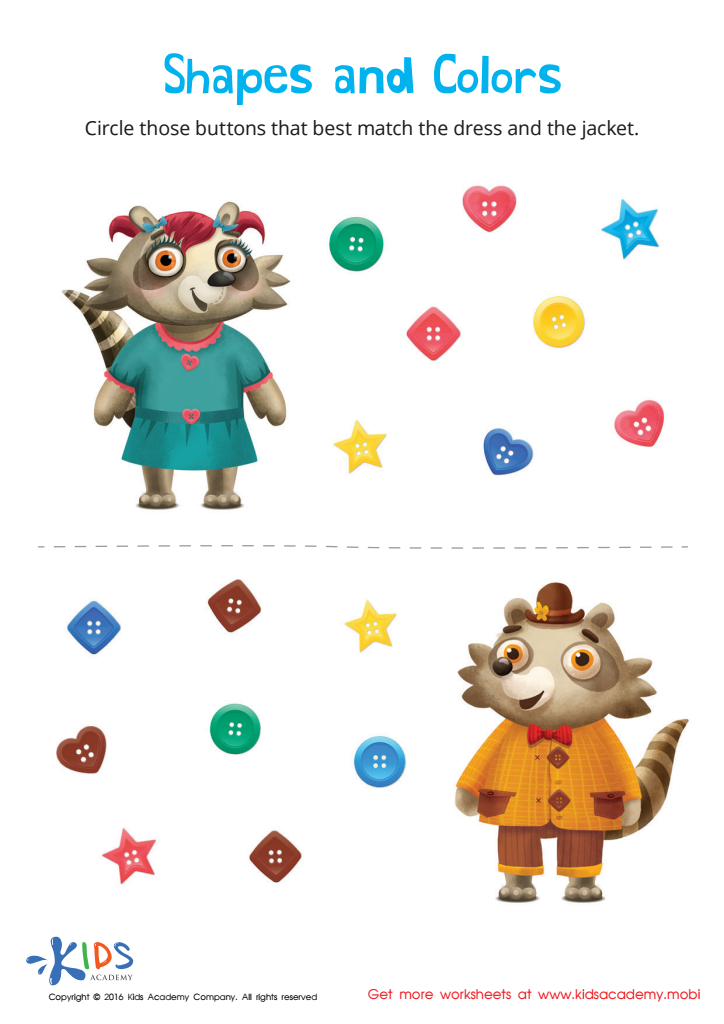
Matching: Shapes and Colors Worksheet
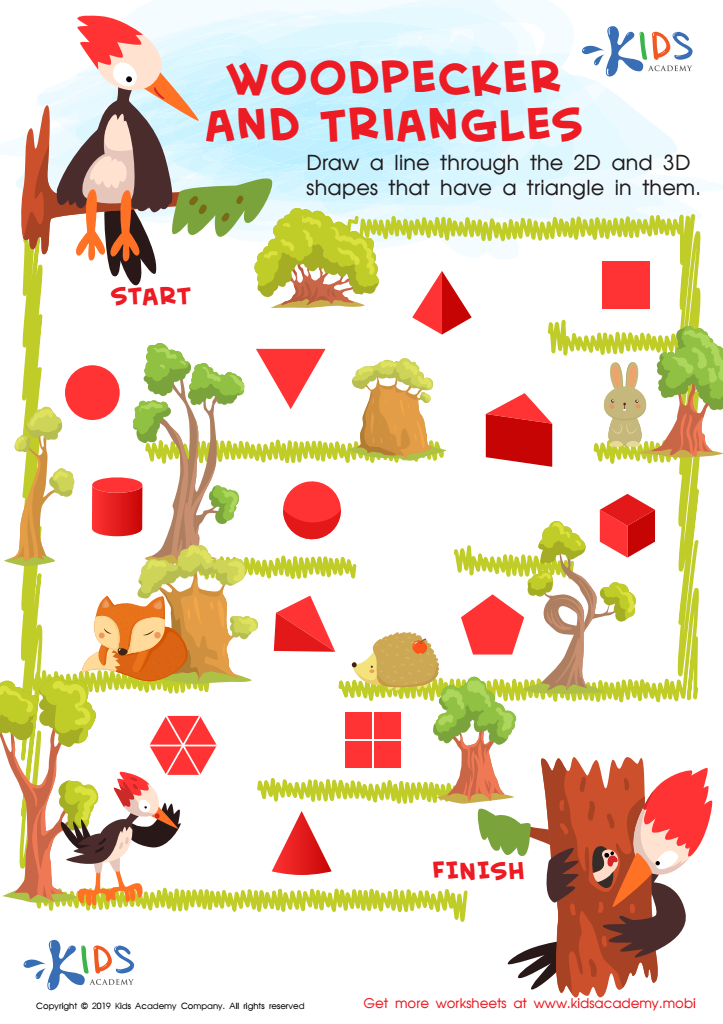
Woodpecker and Triangles Worksheet
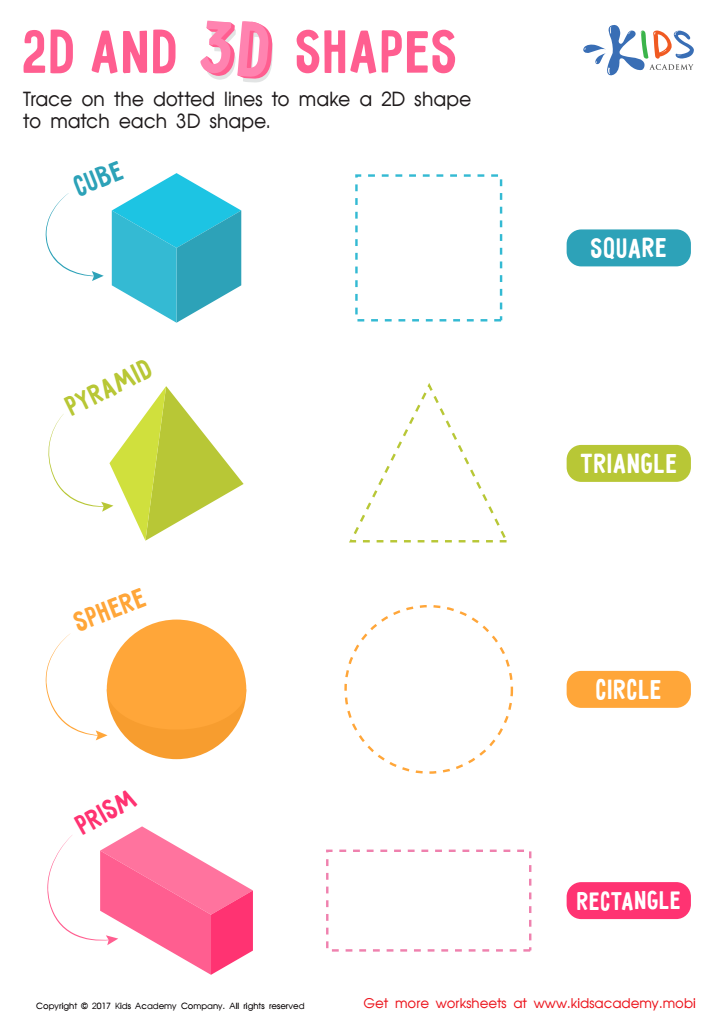
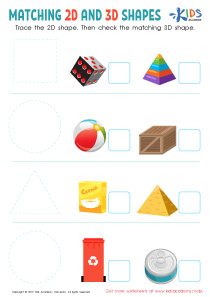
2D and 3D Shapes Worksheet
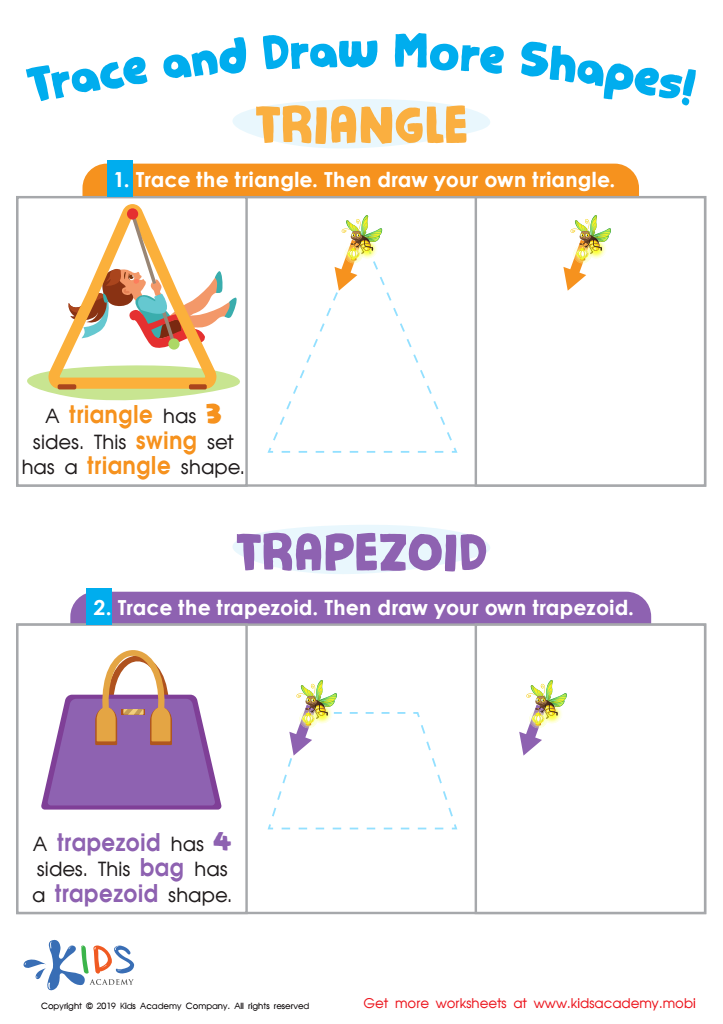
Trace and Draw More Shapes Worksheet
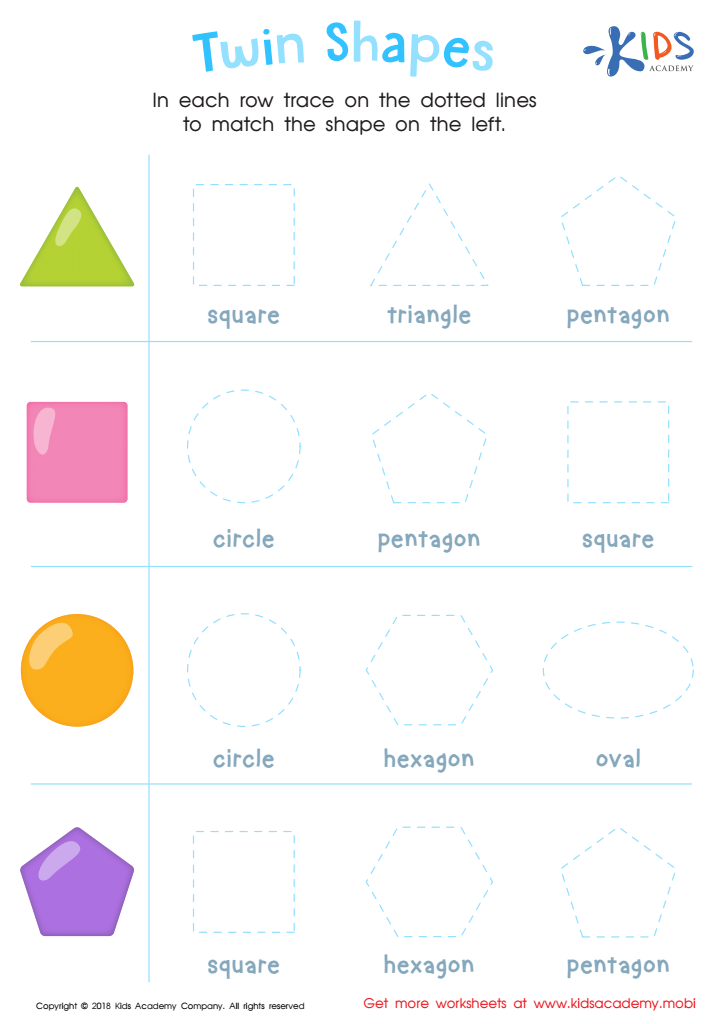
Twin Shapes Dot-to-Dot Worksheet
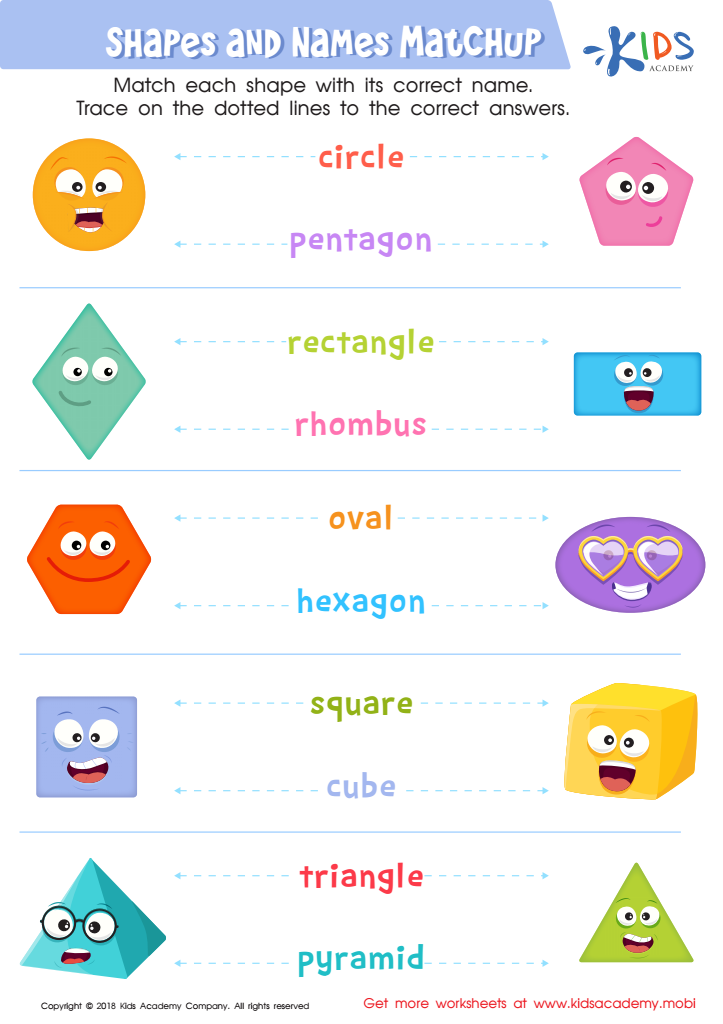
Shapes and Names Matchup Worksheet








Shape recognition is a fundamental skill that lays the groundwork for various cognitive and spatial abilities in young children. For parents and teachers, incorporating Shape Recognition Extra Challenge 2D Shapes for ages 5-8 is vital for several reasons.
Firstly, shape recognition helps improve children's critical thinking and problem-solving skills. Understanding different shapes can encourage creativity and innovation, as children learn to categorize and manipulate these shapes in real-life contexts.
Secondly, this activity fosters early math skills, as recognizing shapes is closely linked to geometry concepts. Early exposure to shapes prepares children for more complex mathematical operations in later grades and enhances their overall mathematical fluency.
Moreover, engaging with shapes supports hand-eye coordination and fine motor skills. Activities involving manipulating physical shapes can boost dexterity while also reinforcing shape identification.
Additionally, exploring shapes can offer teachers and parents opportunities to integrate fun, hands-on learning activities that engage children intellectually and emotionally, making education enjoyable and meaningful.
Ultimately, prioritizing shape recognition not only nurtures critical academic skills but also boosts confidence, laying a strong foundation for future learning endeavors in mathematics, art, and science.